DbcultAccessing Vault...
5.5/10
Senior Film Conservator
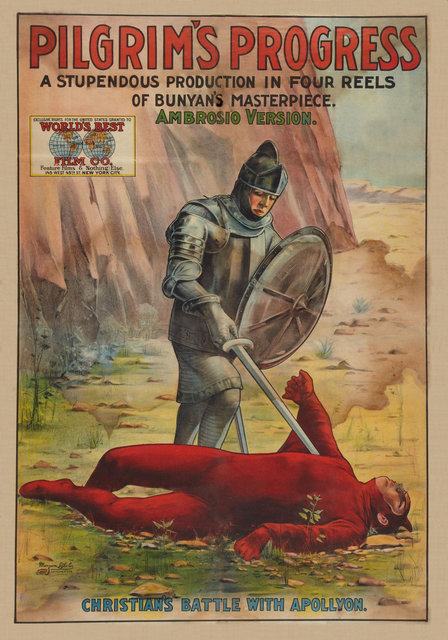
A definitive 5.5/10 rating for a film that redefined the boundaries of cult cinema. Pilgrim's Progress remains a cornerstone of transgressive art.
Stepping into the cinematic landscape of "Pilgrim's Progress" feels akin to unearthing a time capsule, a silent testament to an era when the nascent art form grappled with monumental literary and spiritual texts. This ambitious adaptation, drawing from John Bunyan's perennial allegory, represents a significant undertaking for its time, attempting to translate the profound theological journey from the printed page to the flickering screen. It's a dual-pronged narrative, commencing with a biographical exploration of Bunyan himself before plunging into the heart of his immortal work. The very aspiration to capture such a dense, symbolic narrative speaks volumes about the early filmmakers' vision and the cultural weight of Bunyan's original text.
The initial two reels are dedicated to "The Life of John Bunyon," a segment that endeavors to contextualize the genesis of the allegory. Here, we are presented with a depiction of the man behind the myth, a figure whose steadfast faith and unyielding convictions led him through periods of profound persecution and incarceration. This biographical preamble is crucial, providing an empathetic lens through which to view the subsequent allegorical journey. It illustrates the socio-religious climate of 17th-century England, a world where dissenting spiritual beliefs could lead to severe penalties. The film, through its silent narrative, strives to convey the internal fortitude and unwavering spirit that allowed Bunyan to transform his personal suffering into a universal narrative of salvation. While the historical accuracy of every detail might be debated through a modern academic lens, the film's intent is clear: to portray Bunyan as a figure of immense spiritual gravitas, whose experiences directly informed the allegorical struggles of Christian. The performances, notably from the era's acting sensibilities, aim for a dramatic earnestness that underscores the gravity of Bunyan's plight.
Following this foundational biographical sketch, the film transitions into its primary objective: the visual rendition of "The Pilgrim's Progress" across three compelling reels. This is where the true interpretive challenge lies. Bunyan's text is rich with abstract concepts, personified vices and virtues, and deeply symbolic landscapes. The filmmakers were tasked with materializing these intangible elements into a tangible, albeit silent, cinematic experience. Christian's initial burden, depicted often as a literal weight upon his back, immediately establishes the central metaphor of sin and redemption. The early scenes, featuring the City of Destruction and Christian's frantic flight, set a tone of urgency and spiritual desperation.
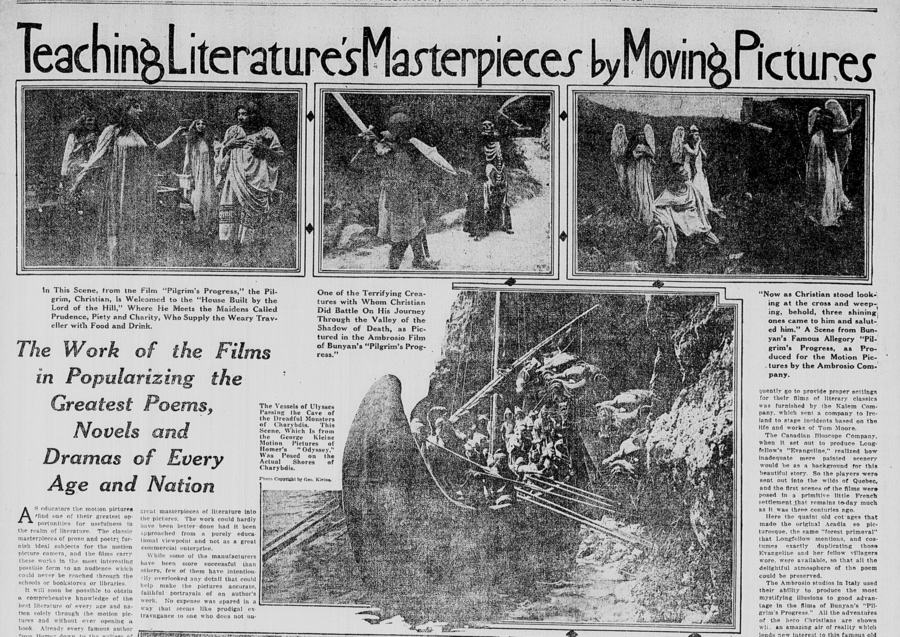
The casting in these early cinematic ventures often played a pivotal role in conveying character without the benefit of spoken dialogue. Ethel Clayton, known for her strong screen presence, likely brought a certain gravitas to her role, possibly as a figure of virtue or temptation depending on the specific allegorical character she portrayed. Warner Oland, an actor of considerable range even in this early period, would have been instrumental in embodying the more menacing or deceptive figures within the narrative, such as the formidable Apollyon or the cunning inhabitants of Vanity Fair. Clifford Leigh, too, would have contributed to the ensemble, each actor relying on exaggerated gestures and facial expressions, a hallmark of silent film acting, to communicate their character's spiritual or moral alignment.
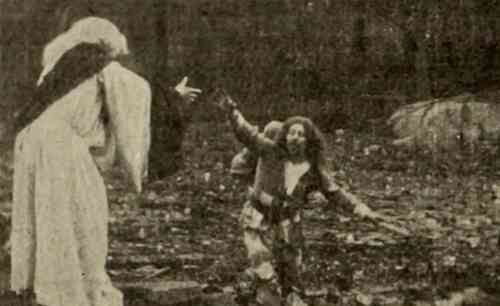
Christian's journey is a relentless succession of trials and triumphs. The Slough of Despond, a mire of doubt and guilt, is rendered visually as a treacherous bog, a literal obstacle that mirrors the internal struggles of the soul. His encounters with characters like Obstinate and Pliable, who represent different reactions to the call of faith, are depicted through interactions that, while simple, aim to convey the philosophical underpinnings of Bunyan's work. The arrival at the Wicket Gate and the subsequent guidance by the Interpreter offer moments of spiritual illumination, often visualized through symbolic imagery and carefully composed scenes that attempt to evoke a sense of divine intervention and instruction.
One of the most iconic confrontations in Bunyan's allegory, Christian's battle with Apollyon in the Valley of Humiliation, would have been a significant technical and dramatic challenge for early filmmakers. Depicting a demonic entity and a spiritual battle without sophisticated special effects required ingenuity and a reliance on theatrical staging. Warner Oland, with his imposing screen presence, could have brought a truly memorable, albeit silent, menace to the role of Apollyon, making Christian's struggle feel genuinely perilous. This scene, like many others, relies heavily on the audience's familiarity with the source material to fill in the nuanced theological implications that silent film, by its very nature, struggled to articulate fully.
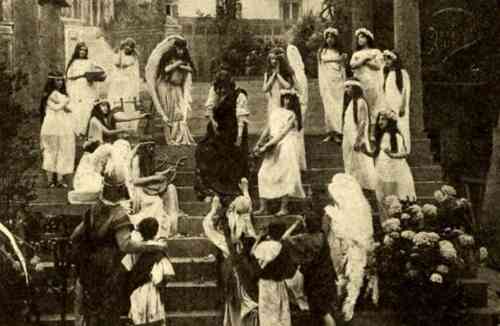
The journey through Vanity Fair is another crucial juncture, representing the world's seductive temptations and corruptions. This segment would have allowed for a more expansive and visually dynamic set, contrasting the stark, often desolate landscapes of Christian's earlier trials with the bustling, opulent, yet morally bankrupt atmosphere of the fair. The filmmakers would have used crowds, elaborate costumes, and perhaps even early forms of montage to convey the sensory overload and moral dangers inherent in this allegorical marketplace. The subsequent imprisonment of Christian and Faithful, and Faithful's martyrdom, would have provided a stark reminder of the cost of adherence to truth in a fallen world, a theme that resonates deeply with the biographical segment on John Bunyan himself.
The technical limitations of early cinema are, of course, evident throughout "Pilgrim's Progress." The camera was largely static, editing was rudimentary by modern standards, and sound was non-existent. Yet, it is within these constraints that the film's artistic merit must be assessed. Like The Story of the Kelly Gang, an early feature-length narrative, "Pilgrim's Progress" demonstrates a nascent understanding of cinematic storytelling, even if its pacing and visual language feel quaint today. Intertitles, the textual explanations interspersed throughout the film, played an indispensable role in conveying dialogue, internal monologues, and the complex allegorical meanings that could not be visually expressed. These titles, likely drawn directly from Bunyan's prose, would have served as vital bridges between the visual narrative and the profound literary source.
In comparing "Pilgrim's Progress" to other religious epics of its time, such as From the Manger to the Cross or Life and Passion of Christ, one observes a shared ambition to bring sacred narratives to a mass audience through the burgeoning medium of film. While those films focused on direct biblical accounts, "Pilgrim's Progress" tackled an allegorical work, presenting a different set of challenges in terms of visual interpretation. The film's reliance on established iconography and symbolic representation aligns it with a tradition of religious art, attempting to translate that visual language into a moving image format. Similarly, the biographical segment on Bunyan finds parallels in early historical dramas or "great man" biopics, though perhaps less overtly political than something like Les amours de la reine Élisabeth.
The latter stages of Christian's odyssey, including the treacherous Doubting Castle and his encounter with Giant Despair, continue the pattern of externalizing internal struggles. The journey through the Enchanted Ground and the final crossing of the River of Death, leading to the Celestial City, are moments of profound spiritual culmination. The challenge for the filmmakers here was to convey transcendence and heavenly glory within the confines of early cinematic effects. While perhaps not achieving the awe-inspiring grandeur that later epic films would, the effort to visualize these spiritual climaxes with the available technology is commendable. The final scenes, depicting Christian's triumphant entry, would have aimed to evoke a sense of peace and divine reward, a powerful resolution to the arduous pilgrimage.
The performances of Ethel Clayton, Warner Oland, and Clifford Leigh, though constrained by the silent film aesthetic, are integral to the film's impact. Their ability to convey complex emotions and moral states through gesture and expression, often in wide shots with minimal close-ups, is a testament to their craft. Oland, in particular, would have excelled at portraying the more villainous or formidable characters, a skill he would refine throughout his career. Clayton's presence, whether as a guiding spirit or a tempted soul, would have anchored various scenes, providing the human element amidst the grand allegory. The subtle nuances we expect from modern acting were not yet part of the cinematic lexicon; instead, a more theatrical, often melodramatic, style prevailed, which was perfectly suited to the overt symbolism of Bunyan's tale.
This film stands as a fascinating artifact of early cinema, illustrating the ambition to adapt complex literary works even before the full vocabulary of film had been established. It predates more sophisticated adaptations of classic literature like Oliver Twist or Jane Eyre by several years, showcasing an early attempt to bring the gravitas of a literary masterpiece to the screen. The choice of "Pilgrim's Progress" itself underscores its enduring cultural relevance and its status as a cornerstone of English literature. The film, therefore, serves not only as an entertainment piece but also as a historical document, revealing how a deeply spiritual narrative was interpreted and presented to audiences at a time when cinema was still finding its voice.
The enduring thematic relevance of Bunyan's work — the universal human struggle with sin, temptation, and the quest for spiritual enlightenment — is what makes this early film adaptation more than just a historical curiosity. While the cinematic techniques may appear rudimentary compared to later epics like Dante's Inferno, which also tackled a challenging allegorical journey, "Pilgrim's Progress" holds its own as a pioneering effort. It speaks to the early recognition of film's potential to convey profound moral and spiritual messages, reaching audiences who might not otherwise engage with the written text.
The film’s historical placement is also noteworthy. It emerged during a period when cinema was rapidly evolving from mere novelty to a serious storytelling medium. Its multi-reel structure, a significant undertaking, places it among the longer narrative films of its time. While not a sporting event like The Corbett-Fitzsimmons Fight, which captivated audiences with real-life action, "Pilgrim's Progress" offered a different kind of spectacle: an internal, spiritual drama externalized for the masses. The ambition to render such a revered text visually, especially one so deeply embedded in the cultural consciousness, highlights the burgeoning confidence of filmmakers in their new medium.
Ultimately, "Pilgrim's Progress" is a testament to the power of enduring narrative and the early, intrepid spirit of filmmaking. It may not possess the sophisticated visual grammar of later cinema, but its sincerity, its ambitious scope, and its commitment to translating a foundational work of literature onto the screen make it a compelling subject of study. It offers a unique window into the intersection of faith, literature, and nascent cinematic artistry, reminding us that the desire to tell profound stories has been a constant driving force in human expression, regardless of the medium's stage of development. For those interested in the evolution of film and the adaptation of spiritual narratives, this silent epic remains a crucial, if often overlooked, milestone.
IMDb —
1916
Community
Log in to comment.