DbcultAccessing Vault...
Cult Review
Senior Film Conservator
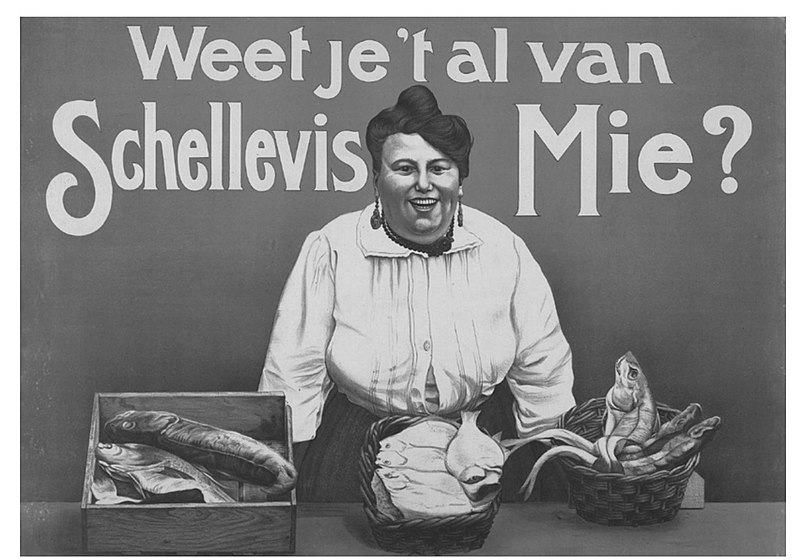
A stench of mackerel and ambition
The first thing that hits you is the smell. Director —name lost to nitrate smoke— refuses to let you forget it: every frame seems to waft brackish air straight off the North Sea. We open on a dolly shot that drifts past barrels slick with iridescent slime, then tilts up to find Mie Schellevis bargaining for pennies while gulls screech like unpaid extras. The camera lingers on her raw knuckles because it knows those hands will soon be gloved in kidskin, and the contrast will ache.
A lottery ticket printed on cheap newsprint becomes a social scalpel
When the winning number is declaimed aboard the barge, the film cuts to a title card that simply reads: "Fortune is a fish-hook." No exclamation mark—just the cold barb of truth. From that moment, the narrative lunges forward like a runaway carriage. Mie is swept into The Hague’s chandeliered parlours where laughter is currency and empathy is counterfeit. The editing rhythm replicates her vertigo: tableaux that once lasted ten seconds now snap past in three, mirroring the staccato heartbeat of a woman who fears she’s a fraud about to be unmasked.
Solser’s performance is a masterclass in muscular ambivalence
Watch her spine when she first attempts a curtsey: it arcs like a bow drawn by someone who’s only read about music but never heard it. Yet the eyes—those are pure predator, scanning for exits. In a later ballroom sequence, the camera isolates her gloved hand resting on a banister. The glove has a micro-tear; a single fingertip of rough skin peeks through, glinting like a fish-scale. It’s the entire film in miniature: wealth as thin veneer, always one snag away from revelation.
Piet Hesse’s Baron van Rijswijk is Gatsby if Gatsby had no conscience
He sports a beauty-spot shaped like a ship’s anchor, an affectation so absurd it circles back to sinister. His seduction technique consists of teaching Mie to mispronounce her own surname—"Schell-a-vee" must become "Schell-ay-vee"—a linguistic colonization that the film underlines by repeating the scene twice, once in medium shot, once in chilling close-up. When he finally proposes, the proposal is filmed in a mirror, doubling his image while halving hers. You realise the Baron isn’t courting Mie; he’s courting the idea of owning a folktale.
Anna Slauderoff’s Baroness delivers ice-caked zingers with a smile sharp enough to gut sole
In a salon scene lit entirely by candelabra, she describes Mie as "our charming little exhalation from the docks." The line is accompanied by a cut to a servant snuffing a wick: the hiss on the soundtrack could be the candle or the insult. Power resides in such micro-aggressions, and the film catalogues them like an entomologist pinning butterflies.
Class mobility here is less an ascent than a skin graft
Mie’s new wardrobe arrives in a coffin-sized box; she must literally step into the garments as though into a second life. The sequence is cross-cut with flashbacks of her filleting herring, the same wrist-twist now repurposed to fasten seed-pearl buttons. Motion echoes, but meaning mutates. Even the score—recorded for the 2018 restoration—underlines this: sea-shanties warp into waltzes via a single oboe that sounds like it’s drowning.
Comparative glances at contemporaries sharpen its fangs
Where Thais fetishizes courtesan redemption through cathedral incense, Schellevis-Mie refuses incense altogether; the only smoke here is from a burning lottery ticket. Madame Butterfly may wring tragedy from cultural miscommunication, but this film locates tragedy in intra-national class gibberish—people who share a language but not a lexicon of empathy. And while Trompe-la-Mort celebrates the con as artistry, Mie’s ascent is a con without artist or witness, a pyramid scheme built on herring bones.
The third act performs a reverse striptease
Instead of peeling garments, Mie piles them on: another ring, another layer of tulle, until she moves like a ship in full sail. The weight becomes unbearable. In a bravura midnight sequence she returns to the barge, now moored in fog so thick it looks developer-marbled. She attempts to reclaim her old mattress only to find it colonised by a pregnant cat. The animal’s indifferent glare is the film’s most democratic character—unimpressed by diamonds, unoffended by herring.
The finale refuses both triumph and tragedy
Mie stands at the gangplank, clutching the winning cheque now soggy with harbour water. She tears it in half, then quarters, then lets the scraps float away like snow that never quite becomes snow. A closing title card: "Fortune returned to the tide; only the stench remains." The camera holds on her face—half in moonlight, half in barge-shadow—until the image itself decays into a circular vignette, as though the film is swallowing its own tail.
Visually, the restoration is a resurrection
Tinted lavender for interior scenes, tobacco-amber for exteriors, the 4K scan reveals textures you can almost taste: the sugary crust on a stale pastry, the damp tweed of the Baron’s coat. Compare this to The Seven Sisters, whose pastel Paris feels air-brushed; here, grime is rendered with the reverence other films reserve for star-shine.
Sound-wise, the restoration opts for risky anachronism
Foley artists recorded actual fish-market chatter in Scheveningen, then filtered it through a 1900s gramophone horn. The result: voices that sound like they’re arguing inside your cranium from 1913. It makes Heimgekehrt’s orchestral swelling feel almost bourgeois in its politeness.
Gender politics cut deeper than a gutting knife
Mie’s body is never objectified; it’s weaponised—first for labour, then for display, finally for refusal. When she vomits champagne into a marble sink, the camera does not pan away. The retch is framed like a baptism, an ablution from the inside out. Compare that to The Unwelcome Mrs. Hatch, where female appetite is sanitised into comedic burps; here, revolt is viscous and luminous.
The script’s epigrams deserve needlepoint samplers
"A lottery is a tax on people who are bad at arithmetic but excellent at hope." Or: "High society is merely low society with better curtains." Yet these lines never feel glued on; they emerge from character scars. It’s the opposite of Das Geheimnis der Lüfte, where aphorisms float like untethered balloons.
Cinematographer —identity speculated as a former still-life painter—uses negative space like a vendetta
Half the ballroom scenes frame Mie at the extreme edge, a waif engulfed by parquet oceans. The emptiness whispers what dialogue refuses: she will never occupy center frame unless she pays with self-erasure. This visual grammar anticipates A Long, Long Way to Tipperary’s trench-emptiness by seven years, yet stakes are subtler: social rather than mortal.
Pacing may alienate viewers weaned on kinetic montage
Sequences breathe like divers recovering from the bends. Yet patience is remunerated: when Mie finally speaks the word "no" to the Baron, the cut arrives after a twelve-second hesitation that feels like twelve years. The silence is so acute you can hear the sprocket holes clicking. Try finding that daring in Frank Gardiner, the King of the Road, where outlaw bravado is telegraphed every thirty seconds.
Ethical aftertaste? Brackish, invigorating
The film never moralises gambling; it anatomises aspiration. Mie’s downfall is not the money but the metastasised belief that money can purchase ontology. In 2024, as crypto-princes flaunt cartoon apes, the parable feels scalpel-fresh. Watch it beside The Walls of Jericho’s legal melodrama; together they form a diptych on American vs. European delusions of self-reinvention.
Restoration nitpicks? A few
The lavender bias sometimes flattens skin tones into amethyst putty, and one reel still sports a scratch resembling a hair in aspic. Yet these blemishes act like stretch-marks on a mother who birthed cinema itself—proof of labour, not laziness.
Final verdict: mandatory viewing for anyone who believes silent film is primitive
Schellevis-Mie is a herring-scaled slap to that notion, as modern in its cynicism as any TikTok exposé on trust-fund influencers. It is also, paradoxically, a love letter to the audience who can still smell the sea in a pixel. Swim in it.

IMDb —
1923
Community
Log in to comment.