DbcultAccessing Vault...
Cult Review
Senior Film Conservator
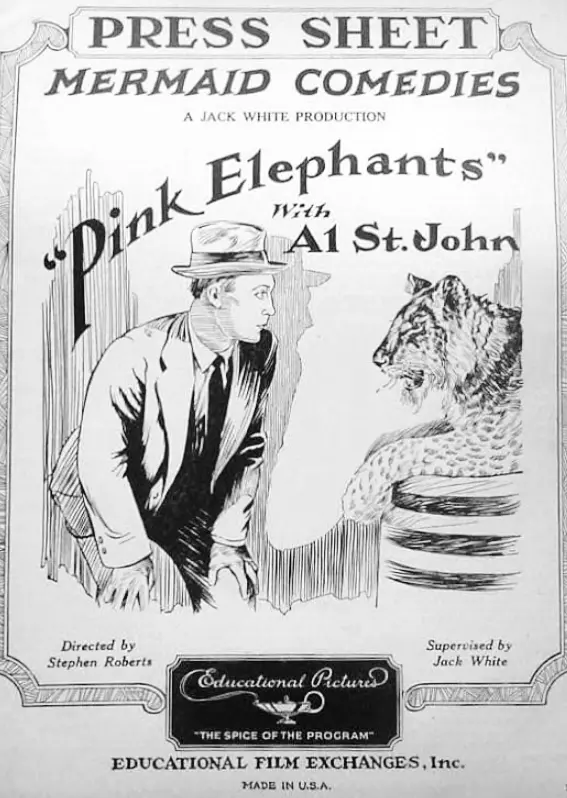
Is Pink Elephants worth watching today? Short answer: yes, but with significant caveats. This 1922 silent short offers a fascinating glimpse into early slapstick comedy and circus melodrama, making it a compelling watch for film historians and silent film enthusiasts, but likely a challenging endeavor for casual viewers accustomed to modern pacing and humor.
It's a curious artifact, a vibrant snapshot of a bygone era of cinematic storytelling. This film is unequivocally for those who appreciate the foundational elements of visual comedy, the raw energy of early cinema, and the historical context of a burgeoning art form. It is decidedly NOT for audiences seeking intricate plots, nuanced character development, or high-definition visual polish. If your patience for intertitles is thin, or your appreciation for broad physical humor limited, you might find its charms elusive.
Pink Elephants plunges us into the microcosm of a travelling circus, a setting ripe for both grandeur and farce. At its heart is Al, portrayed with an endearing, if somewhat clumsy, earnestness by Spencer Bell. Al is the unassuming ticket-seller, a figure on the fringes of the dazzling spectacle, yet yearning for a place within its romantic core. His affections are fixed on Lucille, the bare-back rider, brought to life by Lucille Hutton, whose presence, even in a silent film, conveys a certain grace and vulnerability that makes her an object of desire.
The simplicity of this romantic setup is quickly complicated by the introduction of two antagonists: Phil, the disgruntled former ticket-seller, and the imposing Ringmaster, who also harbors designs on Lucille. This love triangle, a staple of melodrama, serves as the engine for the film’s comedic and chaotic events. The villains, driven by jealousy and malice, hatch a scheme to discredit and terrify Al, planning to don lion skins and stage a mock attack. This initial prank, however, takes a perilous turn when a genuine lion escapes its enclosure, blurring the lines between staged fright and very real danger.
The ensuing pandemonium sees Al and Moonlight, the resourceful circus handyman, scrambling for survival. The climax, a truly bizarre sequence, features Al attempting to rescue Lucille on a bicycle, a heroic effort that goes awry when Lucille falls off, leaving Al to share his two-wheeled escape with the very real, very dangerous lion. This final image, an emblem of silent film's embrace of the surreal, firmly establishes Pink Elephants as a film unafraid to push the boundaries of credulity for the sake of a laugh and a thrill.
The narrative, while straightforward, is less about intricate plotting and more about setting up a series of escalating comedic set pieces. It’s a testament to the era's reliance on visual storytelling and physical comedy, where the plot serves as a mere skeletal framework for the performers to hang their gags and expressions upon. The circus environment itself acts as a vibrant backdrop, its inherent drama and spectacle providing a natural stage for the unfolding chaos.
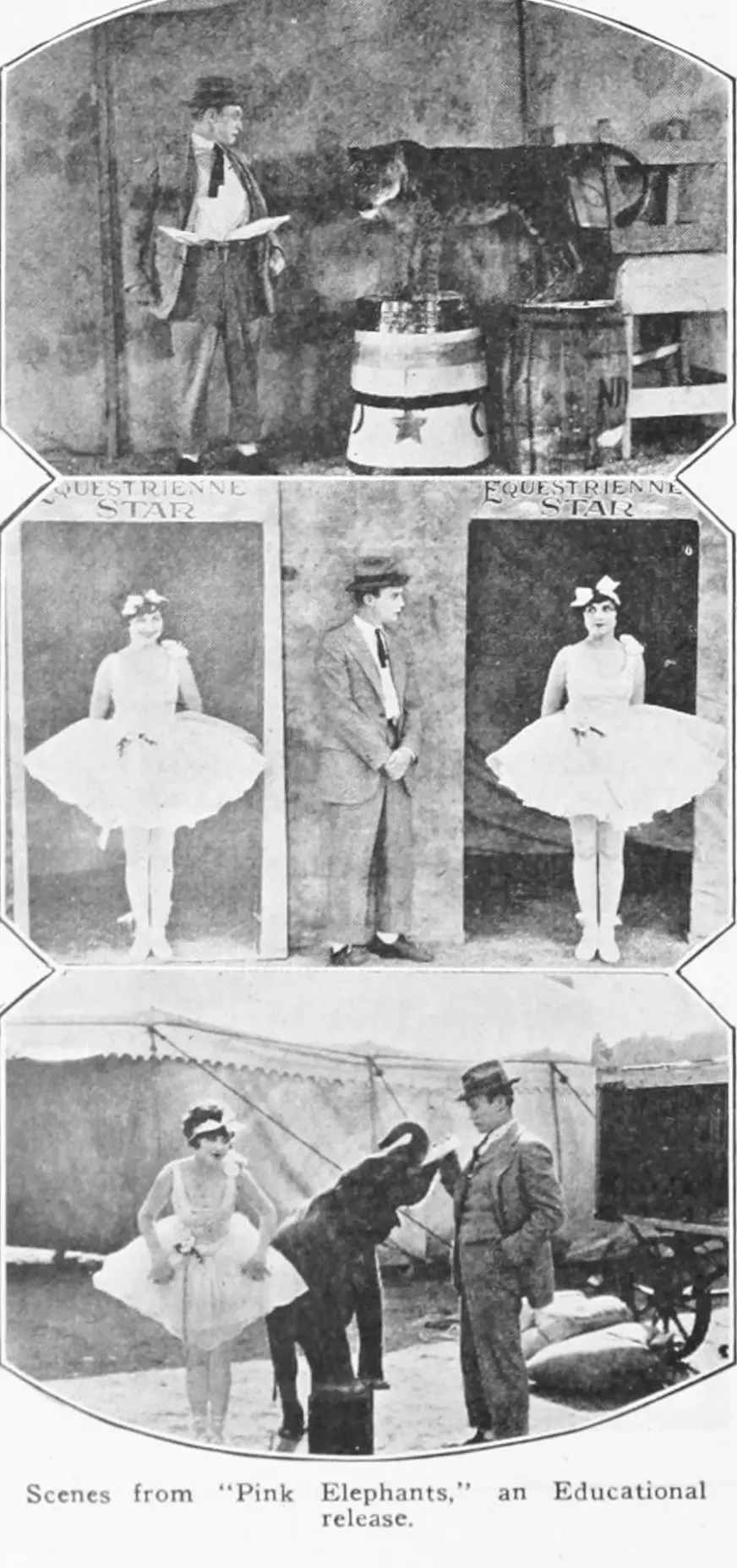
Stephen Roberts, as director, navigates the inherent challenges of the short-form silent comedy with a clear understanding of its demands. The direction in Pink Elephants is functional, prioritizing clarity of action and the effective delivery of physical gags over stylistic flourish. Roberts understands that in a silent film, particularly one with a simple narrative, the camera must always be where the action is, guiding the audience's eye without the benefit of dialogue or complex sound design. We see this in the framing of the villainous plot, where the conspirators' whispers and gestures are exaggerated to ensure comprehension, even through the barrier of intertitles.
The pacing of Pink Elephants is a fascinating study in early cinema's rhythm. For modern audiences, it can feel surprisingly deliberate in its setup, allowing moments for character reactions and establishing shots before plunging into frenetic action. Yet, once the lion escapes, the film shifts gears, accelerating into a chase sequence that, while not edited with rapid-fire cuts, maintains tension through the sheer energy of the performers and the escalating stakes. The initial scenes, establishing the love triangle and the villains' plot, unfold at a gentle trot, punctuated by the broad, pantomime-like expressions of the actors.
However, the transition from staged prank to real danger is handled with a commendable quickness, ensuring the audience grasps the shift in tone immediately. The chase scene, culminating in the infamous bicycle ride, exemplifies Roberts' practical approach. It’s less about intricate camera work and more about capturing the absurdity as it unfolds. The camera largely remains static, allowing the actors and the (presumably very patient) lion to perform within the frame, emphasizing the physical comedy. This approach, while perhaps lacking the kineticism of later action sequences, effectively conveys the chaotic energy of the moment. One could argue that a more dynamic directorial hand might have elevated the chase, but Roberts' method ensures the gags land squarely.
Consider the scene where Al first encounters the 'lions'. The build-up is slow, allowing the audience to anticipate the jump scare. When the real lion appears, the camera doesn't suddenly cut to a close-up of its fangs, but rather holds a medium shot, allowing us to see Al's full-body reaction – a choice that maximizes the physical comedy over pure horror. This is a deliberate pacing choice, prioritizing the theatricality of the performance. The film's overall rhythm, then, is a mix of languid exposition and sudden, often jarring, bursts of slapstick and peril, a signature of many silent shorts.
The performances in Pink Elephants are quintessential silent-era acting: broad, expressive, and heavily reliant on physical comedy and exaggerated facial expressions. Spencer Bell, as Al, embodies the archetypal hapless hero, a figure common in the shorts of the 1920s. His performance is a masterclass in physical vulnerability and wide-eyed terror. When confronted by the 'lions' – and later, the real one – his frantic, flailing movements and contorted expressions are both genuinely funny and convey a palpable sense of fear, even if it's played for laughs. His attempts at heroism, particularly during the bicycle rescue, are clumsy and endearing, making him a character the audience can root for despite his ineptitude.
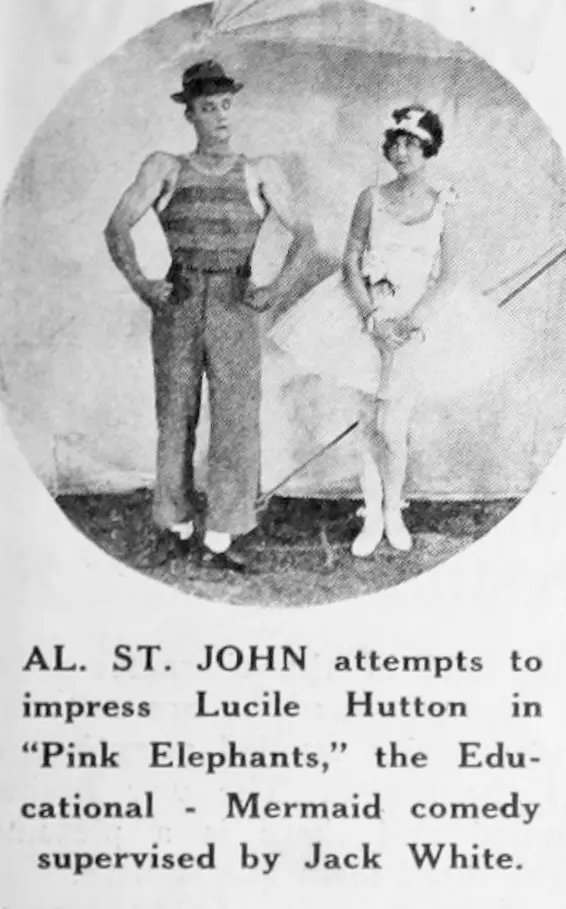
Lucille Hutton, as Lucille, plays the damsel in distress with a grace befitting a bare-back rider. While her role is less overtly comedic than Al's, she provides the necessary romantic anchor for the plot. Her reactions to Al's affections and the Ringmaster's advances are conveyed through subtle tilts of the head and demure glances, contrasting with the more boisterous male performances. Her portrayal, while brief, is effective in establishing her as a prize worth fighting for, adding a layer of dramatic stakes to the slapstick.
The villains, Phil Dunham's Phil and Robert Graves' Ringmaster, revel in their roles with a delightful theatricality. Their conspiratorial whispers and sneering expressions are perfectly calibrated for a silent audience, leaving no doubt as to their nefarious intentions. The Ringmaster, in particular, projects an air of menacing authority, making his eventual comeuppance (or lack thereof, as the focus shifts) all the more anticipated. Their physical comedy, when disguised as lions, is less about grace and more about clumsy intimidation, adding to the comedic chaos rather than detracting from it. The film doesn't delve into their motivations beyond simple jealousy, but for a short, that's entirely sufficient.
The supporting cast, including Al St. John and Clem Beauchamp, contribute to the overall comedic tapestry. Their interactions, though brief, add texture to the circus environment. Al St. John, a prolific silent film actor and director, brings a seasoned presence to his role, subtly elevating the scenes he's in. The entire ensemble works together to create a believable, if exaggerated, world, relying on the universal language of physical comedy and pantomime to tell their story. The performances are not designed for deep psychological exploration, but rather for immediate emotional impact and comedic effect. It works. But it’s flawed.
The cinematography of Pink Elephants is typical of early 1920s filmmaking. The shots are largely static, often medium or wide, capturing the full action within the frame. Close-ups are used sparingly, usually to emphasize a character's reaction or a crucial plot point, like a villain's smirk. The lighting is functional, designed to ensure visibility rather than create dramatic mood. Given the limitations of the era, the clarity of the image, even in digitized versions, is often a marvel, allowing the nuances of physical performance to shine through. There's a raw, unpolished quality that speaks to the nascent stage of cinema, a charm that modern, hyper-produced films often lack.
The tone of the film is a fascinating blend of lighthearted slapstick, romantic comedy, and unexpected moments of genuine peril. It starts with a whimsical, almost innocent romantic rivalry, quickly devolving into farcical villainy. However, the introduction of the real lion injects a surprising jolt of genuine danger, elevating the stakes beyond mere comedic discomfort. This tonal shift, from playful prank to life-threatening escape, is handled with a casual abruptness that is characteristic of the era. The film doesn't dwell on the horror of the situation; instead, it uses the threat as a catalyst for more absurd comedy, culminating in the surreal image of a lion on a bicycle. This blend of tones, where the comedic and the genuinely dangerous coexist, is an unconventional choice that gives Pink Elephants a unique flavor.
One surprising observation is how the film, despite its comedic intentions, manages to convey the underlying grit and danger of circus life. The sets, while simple, feel authentic, grounding the fantastical elements in a tangible world. The presence of the real lion, rather than a poorly rendered prop, adds a layer of unpredictable energy that could not be replicated today without extensive CGI. This willingness to work with live animals, even if challenging, contributes to the film's raw appeal and its slightly unsettling charm. The film’s aesthetic is one of practicality and immediate impact, reflecting the urgency of producing entertainment for a rapidly growing audience.
The visual language of the film is straightforward: what you see is what you get. There are no elaborate tracking shots or complex compositions. Instead, the frame is treated as a stage, with the performers and their actions taking center stage. The use of intertitles is effective, providing necessary dialogue and exposition without bogging down the visual flow. This directness in both cinematography and tone is a hallmark of early silent cinema, and Pink Elephants is a prime example of its efficacy.
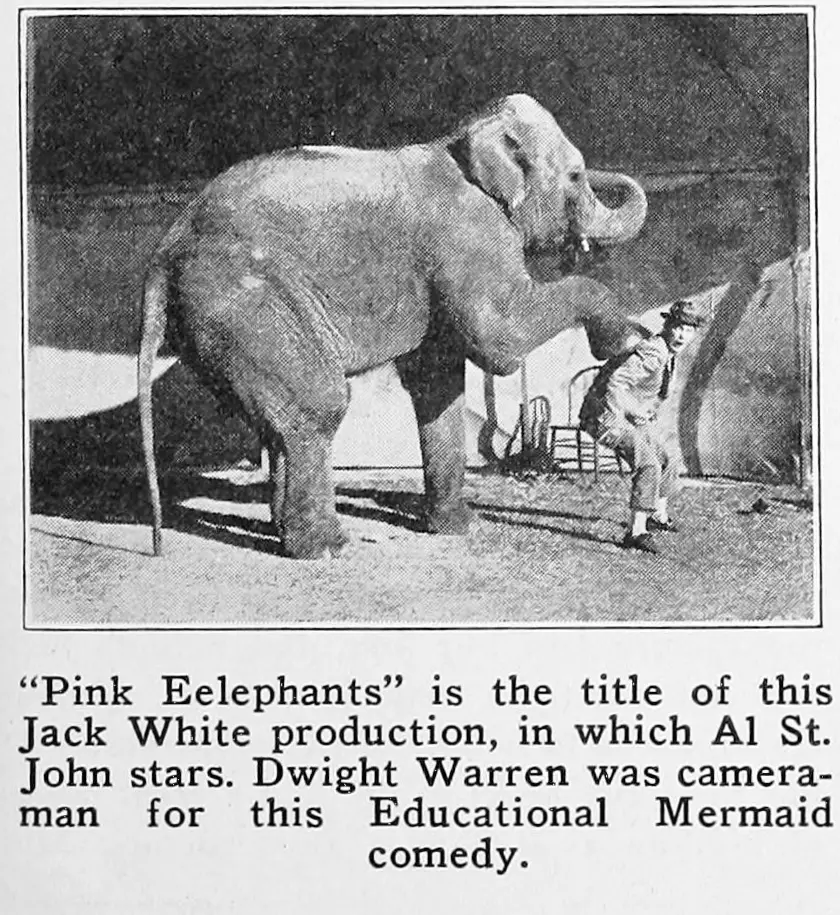
When considering Pink Elephants within the landscape of 1922 cinema, it sits comfortably among the numerous short comedies that were staples of the era. Films like Hard Knocks and Love Taps or Hoarded Assets also relied heavily on physical gags, simple narratives, and broad characterizations. What sets Pink Elephants apart, however, is its specific circus setting and the escalating, almost surreal, nature of its climax.
Many shorts of the time focused on domestic squabbles or workplace mishaps, whereas Pink Elephants leverages the inherent spectacle and danger of the circus. This provides a more visually dynamic and potentially perilous backdrop for its comedy. The use of a real lion, rather than a human in a costume for the entirety of the chase, pushes the boundaries of believability and risk, a characteristic shared with some of the more ambitious action-comedies of the period, albeit in a more condensed format.
While it doesn't reach the comedic genius or narrative sophistication of a Chaplin or Keaton short from the same period, it holds its own as a solid example of the era's entertainment. It lacks the poignant social commentary often found in Chaplin's work or the intricate stunt work of Keaton. Instead, it leans into pure, unadulterated farce and physical humor, a lineage that stretches back to vaudeville and continues through various forms of visual comedy. Its strength lies in its unpretentious commitment to delivering laughs and thrills without overthinking its premise.
The film serves as a valuable historical document, showcasing the types of entertainment that captivated audiences a century ago. It reminds us that even in the early days, filmmakers were experimenting with blending genres – romance, comedy, and even a touch of adventure – to create engaging, albeit brief, cinematic experiences. It's a snapshot of a particular style of filmmaking that, while having evolved dramatically, still influences comedic storytelling today.
Pros:
- Historically Significant: Offers a clear window into early 1920s short-form comedy.
- Engaging Physical Comedy: Spencer Bell delivers a charmingly clumsy performance.
- Unique Setting: The circus backdrop provides a vibrant and dynamic environment.
- Unexpected Twists: The real lion's appearance genuinely escalates the stakes.
- Memorable Climax: The lion-on-a-bicycle scene is iconic in its absurdity.
- Brief and Punchy: Its short runtime makes it an easy historical watch.
Cons:
- Dated Pacing: Can feel slow for modern viewers, despite its brevity.
- Simple Narrative: Lacks depth in plot and character motivation.
- Broad Acting: While effective for the era, it might feel over-the-top to some.
- Limited Visual Sophistication: Cinematography is functional rather than artistic.
- Uneven Tone: Shifts between light comedy and genuine peril can be jarring.
- Availability: Quality of prints can vary, impacting viewing experience.
Pink Elephants is undeniably a product of its time, bearing all the hallmarks of early silent cinema. It’s a film that demands a certain historical empathy from its audience, a willingness to appreciate its charms within the context of its creation. It does not aspire to be a grand artistic statement or a psychological drama; rather, it aims to entertain through simple, physical comedy and a touch of thrilling absurdity. And in that, it largely succeeds.
The film’s greatest legacy lies in its bold, almost surreal climax, an image so bizarre it transcends its humble origins. The sight of a real lion perched on the handlebars of a bicycle, careening through a circus, is not just a comedic peak but a testament to the inventive, boundary-pushing spirit of early filmmakers. It’s a moment that sticks with you, long after the intertitles have faded.
While it may not resonate with every contemporary viewer, Pink Elephants offers a valuable, often hilarious, glimpse into the foundational elements of cinematic comedy. It’s a short, sharp dose of early 20th-century entertainment that, for all its dated elements, still manages to elicit a chuckle and a sense of wonder at the audaciousness of its creators. For those willing to adjust their expectations, it’s a delightful, if slightly dusty, gem from the silent era. It’s worth a watch, especially for the lion.
IMDb 6
1932
Community
Log in to comment.