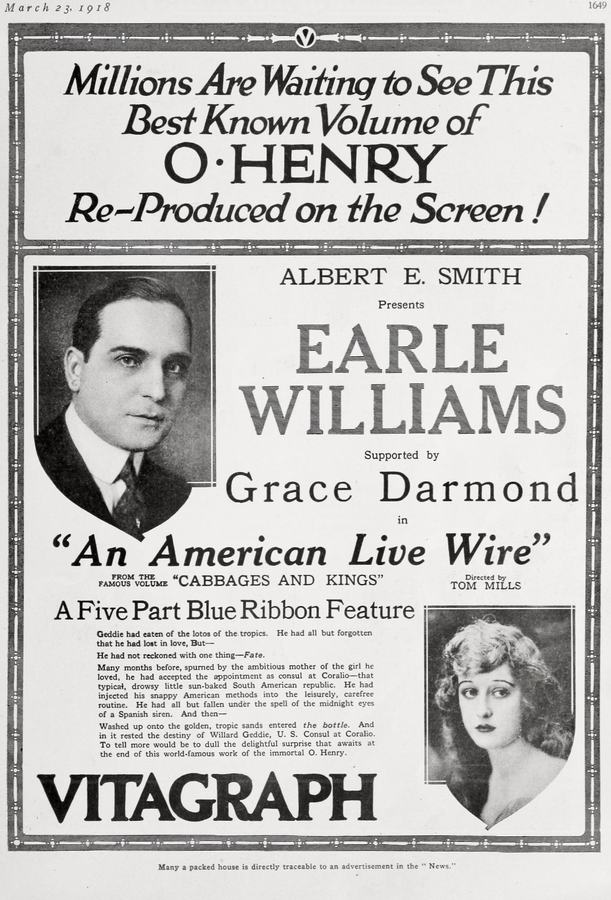
The 1917 Vitagraph production of An American Live Wire serves as a poignant reminder of the era's fascination with the 'Banana Republic' motif—a genre that O. Henry himself largely codified through his short stories. Directed with a keen eye for both the sprawling vistas of imagined South American ports and the intimate nuances of heartbreak, the film is a fascinating artifact of early cinematic storytelling that bridges the gap between high-society melodrama and the burgeoning adventure-comedy.
The O. Henry Inflection and Narrative Elasticity
Adapting O. Henry requires a delicate touch; one must balance the cynical observation of human nature with the whimsical coincidences that define his plots. In this adaptation of the Willard Geddie saga, the screenwriters successfully translate the author's prose into a visual language of kinetic energy. Unlike the more somber explorations of social duty found in Mothers of Men, this film leans into the absurdity of the expatriate experience. Willard Geddie, portrayed with a certain world-weary charisma by Earle Williams, is the quintessential American protagonist of the period—capable, yet momentarily derailed by the fickleness of fate and the cruelty of class-based matchmaking.
The narrative trajectory is fueled by a lie, a classic trope that sets the stage for a grander exploration of identity. When Ida Payne’s mother intervenes, she isn't just protecting her daughter’s financial prospects; she is inadvertently launching a diplomatic comedy of errors. The transition from the rigid drawing rooms of New York to the lawless, humid atmosphere of Coralio is depicted with a sharp contrast in lighting and pacing. Where New York feels claustrophobic and governed by social mores, Coralio is wide, bright, and dangerously unpredictable.
The Performance of Earle Williams and Grace Darmond
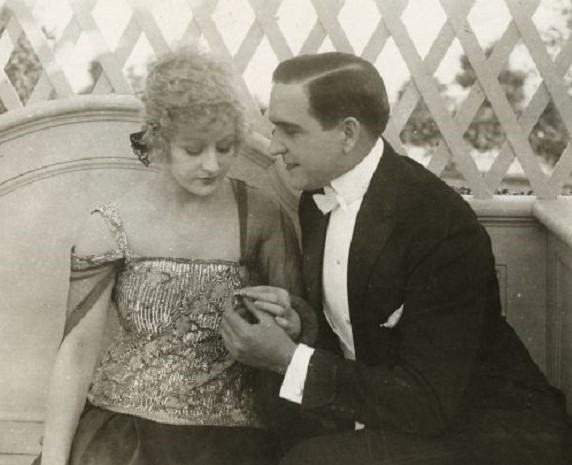
Earle Williams brings a specific 'Vitagraph' gravitas to the role of Geddie. His transition from a heartbroken jilted lover to a man of action—the titular 'Live Wire'—is handled with a subtlety that was often lacking in the histrionics of early silent cinema. There is a moment in the first act where Geddie accepts his official position in South America; his expression is not one of excitement, but of a man choosing a slow death over a broken heart. This level of emotional nuance elevates the film above standard genre fare like Love Aflame, providing a psychological anchor for the subsequent madness.
Grace Darmond’s Ida Payne is equally compelling. Often, the female lead in such adventures is relegated to a passive prize, but Darmond imbues Ida with a sense of agency. Her journey to South America is a bold defiance of her mother’s wishes and the social expectations of the time. When she is mistaken for the President's mistress—the American opera singer—Darmond conveys a mixture of indignation and bewilderment that provides the film's most effective comedic tension. This confusion of identities serves as a biting satire on the way foreign officials and American expatriates viewed one another: through a lens of suspicion and stereotypes.
Geopolitical Satire and the Comedy of Errors
The subplot involving the President of Coralio and the American opera singer is where the film’s satirical teeth are most visible. The notion of a head of state absconding with the national treasury was a common trope, yet here it is played with a frantic energy that mirrors the pacing of The Rummy. The irony of Geddie capturing an American insurance embezzler while looking for the corrupt President is a masterstroke of O. Henry-esque plotting. It highlights the universality of greed; whether in the corporate towers of Manhattan or the presidential palaces of the tropics, the impulse to flee with 'other people’s money' remains constant.
The suicide of the embezzler provides a surprisingly dark pivot in an otherwise lighthearted romp. It serves as a narrative memento mori, reminding the audience that while Geddie’s adventures are whimsical, the stakes of financial ruin and social disgrace are absolute. This tonal shift is handled with more grace than the jarring transitions seen in The Last of the Ingrams, grounding the film’s eventual happy ending in a sense of earned relief.
Visual Craft and the Vitagraph Aesthetic
Technically, An American Live Wire showcases the high production values that made Vitagraph a powerhouse of the silent era. The use of location shooting (or expertly crafted sets that mimic the Caribbean) creates a tangible sense of place. The 'Coralio' of the film feels lived-in; the dust on the streets and the glare of the sun are almost palpable. This commitment to atmosphere is comparable to the atmospheric depth found in Tepeyac, though the themes here are far more secular and satirical.
The cinematography utilizes the 'American shot' (medium-long) to great effect during the scenes of confusion at the docks. When the New York detective arrives, the framing captures the chaotic intersection of local law enforcement, the fleeing President, and the bewildered Ida Payne. This choreographed movement within the frame prevents the plot's complexity from becoming confusing to the viewer. The visual clarity is a testament to the directing prowess of the era, ensuring that even as the identity mix-ups reach a fever pitch, the audience remains tethered to Geddie’s perspective.
Thematic Resonance: Redemption Through Accidental Heroism
At its core, the film is about the accidental nature of redemption. Geddie does not set out to be a hero; he sets out to forget. His 'Live Wire' persona is not a result of ambition, but of a man having nothing left to lose. This theme of the 'accidental hero' is a recurring motif in silent cinema, often explored with less humor in films like The Pretender. However, in An American Live Wire, the heroism is tempered by the absurdity of the situation. Geddie catches the wrong man, yet ends up with the right result. The insurance money he recovers serves as his ticket back to the society that rejected him, providing a cynical but satisfying resolution: in the world of O. Henry, virtue is rewarded, but only if it’s accompanied by a significant sum of cash.
The resolution of Ida’s plight—being cleared of the 'mistress' label—is handled with a swiftness that characterizes the final reels of many 1917 features. The detective from New York acts as a deus ex machina, a blunt instrument of justice that cuts through the Gordian knot of Coralio’s local politics. While some might find this ending too convenient, it fits the logic of the genre. The film doesn't aim for the epic scale of Joseph and His Coat of Many Colors; it aims for the sharp, satisfying click of a puzzle box being solved.
Legacy and Contextual Significance
Looking back at An American Live Wire through a modern lens, one cannot ignore the colonialist undertones of the American 'official' fixing the problems of a small foreign nation. However, within the context of 1917, the film is remarkably light-handed. It mocks the American embezzler and the New York socialite mother as much as it mocks the corrupt local officials. It shares a certain kinship with Mr. Dolan of New York in its portrayal of the brash American abroad, though Geddie is a far more sympathetic figure than Dolan.
Ultimately, the film stands as a stellar example of the 'star vehicle' during the peak of Vitagraph's influence. It provided Earle Williams with a role that utilized his range and gave audiences a blend of romance, travelogue, and suspense. For those interested in the evolution of the action-comedy, or for fans of O. Henry’s particular brand of irony, this film is an essential watch. It lacks the moralizing weight of The Missing Links or the stagey origins of Help Wanted, opting instead for a brisk, engaging narrative that remains surprisingly modern in its skepticism of authority and its celebration of the 'live wire' spirit.
Filmography References for Further Viewing: For more silent era investigations into identity and social standing, consider Gloria's Romance or the theatrical flair of The Final Curtain. Those seeking more high-stakes pursuit may enjoy Attack on the Gold Escort, while fans of early musical-adjacent stars should look toward the work of Anna Held.