DbcultAccessing Vault...
Cult Review
Senior Film Conservator
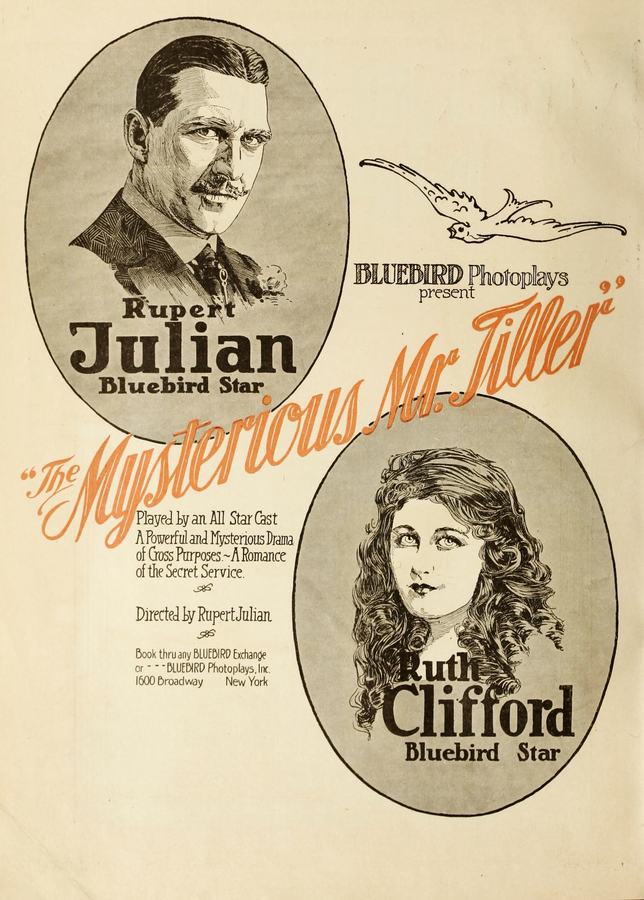
Moonlit nitrate crackles back to life in The Mysterious Mr. Tiller, a 1923 seven-reel fever dream that feels as if Fritz Lang’s Masked Ball were dunked in American bootleg whiskey and left to dry on a Los Angeles rooftop. The plot pirouettes around a stolen necklace smuggled from post-war Europe—each bead a bullet of history—but the film’s heartbeat is the erotics of surveillance: who watches whom, through which peephole, and how badly desire curdles when it collides with duty.
Forget the diamond’s monetary value; cinematographer Friend Baker treats it like a fallen star whose glow contaminates everyone it touches. In close-up, the necklace’s facets trap swirling cigarette smoke, turning each gem into a crystal ball forecasting betrayal. When it vanishes from an evidence vault that looks more like a Byzantine chapel—arches, iron grillework, incense of paranoia—citywide manhunts erupt across rain-slick streets whose cobblestones glisten like obsidian teeth.
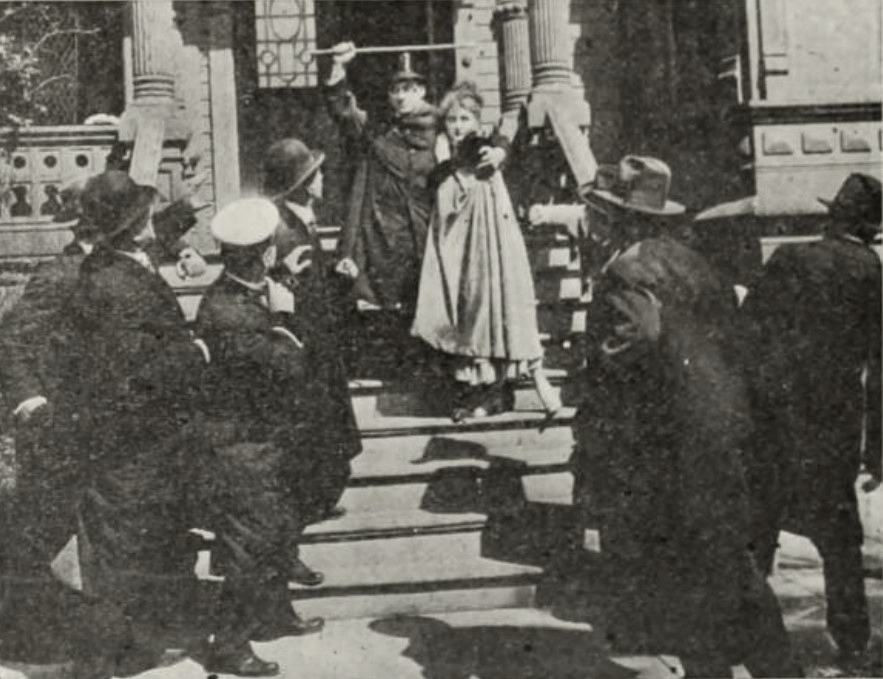
Director Rupert Julian (also essaying the leering Mordant) blocks these sequences with operatic relish: silhouetted constables march in lockstep through sheets of rainfall, their capes ballooning until they resemble avenging gargoyles. Compare this tactile urban labyrinth to the antiseptic corridors of The Pillory or the pastoral fatalism of För sin kärleks skull, and you’ll see why Julian’s city is a breathing organism—one that exhales coal-smoke and inhales secrets.
Ruth Clifford’s Clara upends the vamp archetype by weaponizing empathy. She listens—truly listens—to henchmen boasting in gin joints, letting their words pool in her lacustrine eyes before she strikes. Notice how she modulates her fan: a snap conveys impatience, a languid flutter implies seduction, a sudden freeze betrays calculation. The performance anticipates Stanwyck’s noir queens by two decades, yet Clifford adds a patriotic ache; her covert mandate means every kiss is a betrayal of something—either her country or her circulatory system.
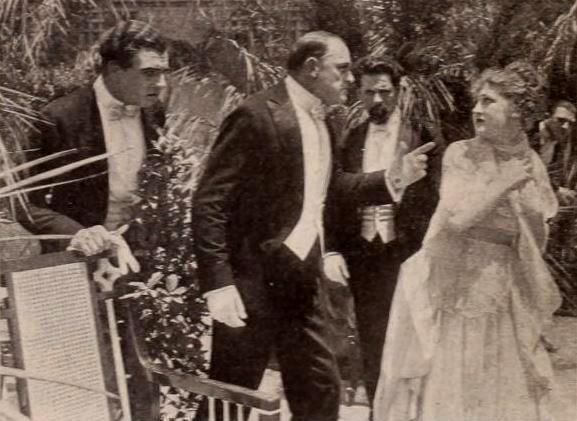
Her wardrobe deserves its own monograph. A velvet evening coat the color of arterial blood flares like a bruise against the monochrome cityscape; later, a diaphanous tea-rose negligee floats in the haze of a boudoir scene whose erotic voltage rivals anything in Camille. Costume designer Violet Morris stitches symbolism into every seam: the higher Clara’s collars rise, the tighter her noose of dual identity becomes.
Rupert Julian’s prosthetic make-up for “the Face” is a triumph of expressionist horror: a melted wax landscape of scars, one eye drooping like a dying sunflower, the mouth a diagonal slash that suggests both a grin and a wound. Yet Julian’s acting—yes, he plays both puppet-master Mordant and the disfigured stalker—refuses to calcify into caricature. In a startling close-up lit solely by a sulphur match, the Face’s good eye glistens with a loneliness so raw it demagnetizes the viewer’s disgust. That single orb functions as the film’s moral gyroscope; we rotate around it, seeking ethical north.
Character actor Rattenberry, best known for avuncular judges and bumbling burgomasters, here pulls off one of silent cinema’s great rug-snaps. For five reels we assume Tiller is a pompous bureaucrat, background furniture wheeled in to dispense exposition. Then, in a sepulchral train yard, the Face lifts his mask and the camera lands on Rattenberry’s placid, almost boring visage—suddenly terrifying in its banality. The reveal reframes every prior scene: the way Tiller absently adjusted his pince-nez while Clara detailed the robberies now reads as predator savoring prey’s pulse. The moment rivals the transfiguration of Coletti in Where Is Coletti?, yet achieves its frisson without special effects, relying purely on casting against type.
Clawson’s intertitles deserve audible recitation; he compresses noir poetry into haiku-like bursts: “Midnight wore a leper’s smile.” or “Love—just another forged signature on the cheque of doom.” More importantly, he structures the story as a Möbius strip: every pursuit loops into its inverse, so detectives and thieves orbit the same moral drain. Compare this to the linear vengeance of Jack Chanty or the operatic crescendos of La voix d’or, and you appreciate how Tiller anticipates postmodern noir half a century early.
Baker’s cinematography exploits high-contrast orthochromatic stock: faces bleach to lunar white while backgrounds sink into tar. In one bravura shot, Clara’s gloved hand enters frame from below, clutching a derringer that points straight at the lens—a proto-lens flare of menace. The camera’s shallow depth of field collapses urban sprawl into expressionist voids, a technique later echoed in Satana though without the fiscal luxury of German studio sets. Here, Los Angeles itself morphs into a back-lot nightmare, its trolley cables slicing skies like black cat-gut strings.
Surviving prints circulate with a 1998 restoration score by composer Alexander Raskatov, who wields a detuned piano and glass harmonica to evoke tinnitus-like dread. Syncopated heartbeats under the interrogation scenes trigger subliminal panic; during the necklace transfer, a celesta plays a lullaby in reverse, suggesting innocence unspooling. If you can snag the Blu-ray, listen on headphones: the mix embeds distant sirens sampled from 1920s Chicago police archives, a spectral overlap of fiction and documented crime.
Sit Tiller beside The Shadow of a Doubt and you’ll spot shared DNA: the dapper uncle whose affability masks a chasm. Pair it with The Rattlesnake for studies in facial disfigurement as moral barometer. Or program a triple bill with Sporting Blood and Der fremde Vogel to trace how 1920s cinema equates physical scars with societal rot. Yet Tiller stands apart for its cynical final nod: law and lawlessness share not just methods but personnel.
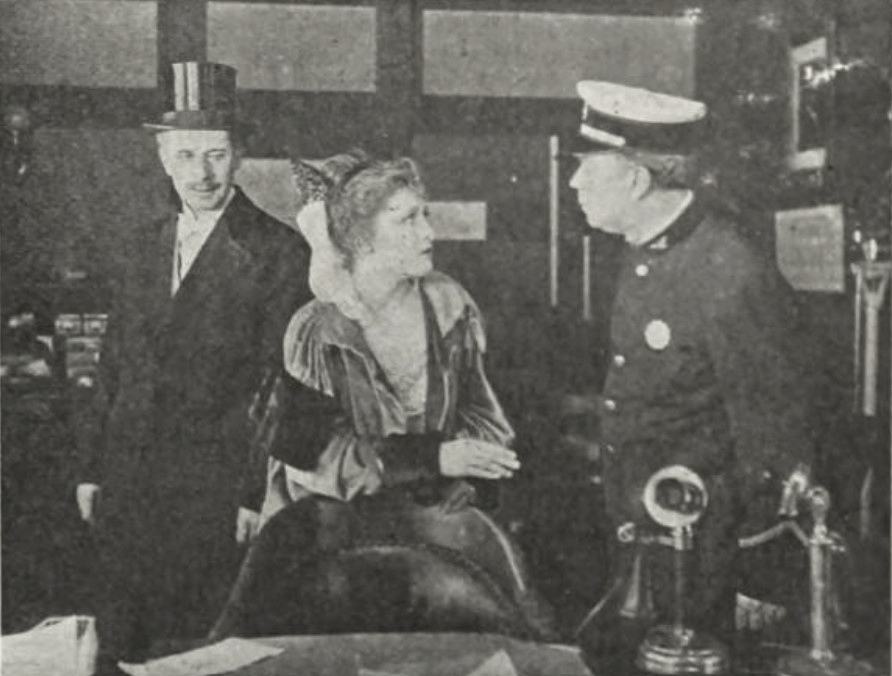
William Higby’s Lt. Bramwell serves as the film’s neurotic superego, forever polishing his wire-rim spectacles until they crack under pressure—a tidy metaphor for surveillance apparatus buckling under human duplicity. E. Alyn Warren’s forensic chemist provides comic relief by sniffing cocaine-like powders (actually talc) then sneezing into evidence bags, yet even this slapstick underscores the era’s anarchic approach to jurisprudence.
Released three years after the 19th Amendment, Tiller both celebrates and fears female agency. Clara’s deductive brilliance outstrips every male colleague, yet the script punishes her with erotic entanglement. The final tableau—Clara clutching the necklace while gazing at Tiller’s departing steam train—freezes her between triumph and heartbreak, a visual ellipsis that refuses patriarchal closure. Feminist scholars will find rich fodder here, especially when contrasted with the domestic shackles of The Unwelcome Mrs. Hatch.
Contemporary trade papers praised the film’s “nerve-jerking tableaux” but scolded its “Byzantine convolution.” Modern festival audiences, weaned on Nolan-esque puzzle-boxes, embrace that very density. The 2019 Pordenone screening triggered a five-minute standing ovation—ironic for a film once dumped into second-tier regional circuits as a “programmer.”
In an age when digital pixels can fabricate any heist, Tiller reminds us that suspense germinates in moral ambiguity, not macro-budget explosions. Its DNA strains through Vertigo, Heat, even Inception—works obsessed with doppelgängers, professional impersonation, and the thin membrane separating hunter from hunted. Yet none replicate the chill of Rattenberry’s calm smile when he murmurs, “Law is just another disguise, Miss Hawthorne.”
Seek the 4K restoration; let the sepia wash over you until your own living room feels like a speakeasy where truths cost more than lies. And when the final iris-in closes around Clara’s arrested tear, ask yourself which mask—if any—you’ve removed tonight.
Verdict: Masterpiece status, with reservations only for its too-rapid denouement. Watch it twice; the first for plot, the second for the existential aftertaste that lingers like cigarette smoke on vintage velvet.
IMDb —
1915
Community
Log in to comment.