DbcultAccessing Vault...
Cult Review
Senior Film Conservator

The opening sequence of Pitfalls of a Big City greets the viewer with a sun‑kissed meadow, where the camera lingers on the gentle sway of wheat and the easy cadence of a farmhand's routine. Jack Duffy, embodying the archetypal country lad, exudes an earnestness that feels almost palpable through the grainy celluloid. When the narrative thrust propels him onto a rattling train bound for the city, the director employs a series of rapid intertitles that juxtapose pastoral simplicity with the looming complexity of urban life. This contrast sets the tonal foundation for a film that oscillates between slapstick exuberance and a subtle, almost elegiac, meditation on displacement.
\Unlike many contemporaneous comedies where the metropolis merely serves as a backdrop, here the city assumes an almost anthropomorphic presence. Its streets pulse with a frenetic energy, rendered through kinetic editing and a kaleidoscopic palette of black‑and‑white chiaroscuro. The bustling avenues, illuminated by flickering streetlamps, become a stage upon which Duffy's protagonist is repeatedly tested. In a particularly memorable tableau, the hero finds himself amidst a chaotic sidewalk parade, where Ben Turpin's exaggerated limp and Kewpie Morgan's over‑the‑top gestures create a visual cacophony that mirrors the protagonist's internal turmoil.
\The ensemble cast delivers a masterclass in physical storytelling. Duffy's comedic timing, though rooted in the broad gestures of silent cinema, carries an undercurrent of pathos that hints at the character’s yearning for home. Priscilla Bonner, portraying the city’s enigmatic chanteuse, balances coquettish allure with a fleeting vulnerability; her eyes, framed by the soft glow of a streetlamp, convey a narrative that words could not articulate. Meanwhile, the ever‑reliable Teddy the Dog provides comic relief while simultaneously acting as a silent confidant, his expressive bark echoing the protagonist’s unvoiced doubts.
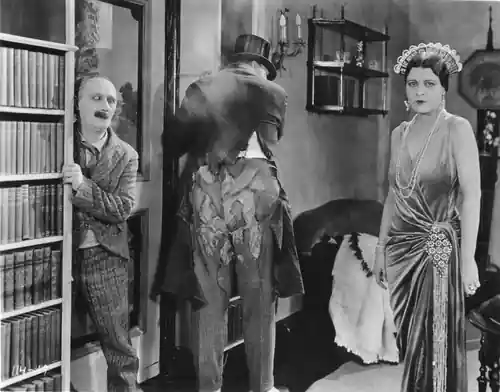
At its core, the film interrogates the mythos of the American Dream, juxtaposing the promise of prosperity against the erosion of authenticity. The protagonist’s flirtation with the city's temptations—gambling dens, vaudeville stages, and the seductive allure of quick fame—serves as a microcosm of the broader cultural anxieties of the 1920s. The narrative arc, culminating in a poignant return to the countryside, suggests a nostalgic endorsement of rural virtue over urban excess, a sentiment echoed in contemporaneous works such as The Honor of the Range and A Daughter of the Poor.
\The director’s use of cross‑cutting amplifies the protagonist’s sense of disorientation, especially during the frenetic chase sequences where the hero is pursued by a trio of swindlers portrayed by Mack Swain, James Finlayson, and Billy Bevan. The editing rhythm quickens, interspersed with exaggerated close‑ups that capture the panic in Duffy’s eyes, the sly grin of a con artist, and the bewildered stare of a city dweller. The film’s intertitles, rendered in a jaunty, decorative font, not only convey dialogue but also serve as visual punctuation, accentuating comedic beats with a splash of yellow #EAB308 that stands out against the stark monochrome.
\When examined alongside In the Spider's Grip, one notices a shared fascination with the city as a predatory entity, ensnaring unsuspecting protagonists. However, Pitfalls of a Big City diverges by infusing its narrative with a lighter, more whimsical tone, leaning heavily on slapstick rather than the darker suspense that defines the former. Similarly, the film’s romantic subplot bears a faint resemblance to the tender melancholy of Love's Redemption, though the resolution in Duffy’s tale leans toward a reaffirmation of rustic fidelity rather than tragic sacrifice.
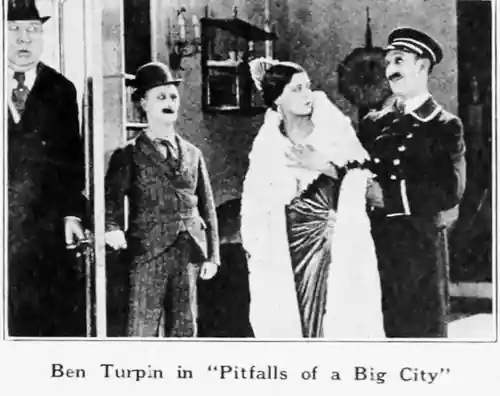
Although the film predates synchronized sound, contemporary screenings often featured a live piano accompaniment that underscored the emotional beats. The score oscillates between jaunty ragtime during the bustling city scenes and a plaintive, string‑laden melody as the protagonist reflects on his longing for home. This auditory dichotomy reinforces the visual contrast, allowing modern audiences to sense the internal tug‑of‑war between aspiration and nostalgia.
\While Pitfalls of a Big City may not occupy the same pedestal as Chaplin’s masterpieces, its contribution to the silent comedy canon is undeniable. The film’s exploration of urban alienation prefigures later cinematic examinations of similar themes, such as the existential wanderings in L'imprevisto and the cultural dissonance portrayed in Midnatssjælen. Moreover, the film’s reliance on visual storytelling offers a valuable study in how narrative can thrive without spoken dialogue, a lesson that resonates with contemporary creators exploring minimalist or silent formats.
\In sum, Pitfalls of a Big City stands as a vibrant artifact of early twentieth‑century cinema, marrying slapstick exuberance with a quietly potent critique of modernity’s seductive peril. Its cast delivers performances that are both broad and nuanced, its visual composition balances chaos with clarity, and its thematic resonance endures beyond its ninety‑minute runtime. For scholars of silent film, enthusiasts of early comedy, and anyone intrigued by the perennial tension between rural roots and urban ambition, this 1923 gem offers a richly layered experience that rewards repeated viewings.
IMDb 4.8
1934
Community
Log in to comment.