DbcultAccessing Vault...
7.2/10
Senior Film Conservator
A definitive 7.2/10 rating for a film that redefined the boundaries of cult cinema. The Money Master remains a cornerstone of transgressive art.
Shot in the chiaroscuro twilight of 1915, The Money Master arrives like a half-remembered fever dream excavated from the tar pits of American capitalism. The film’s very emulsion seems steeped in petroleum: every frame glistens with that dark iridescence, as though the camera itself were complicit in Haggleton’s industrial plunder. Sam Reid’s patriarch exudes the predatory languor of a man who has mistaken balance sheets for biblical scripture; his frock coat hangs like a judgment he hasn’t yet recognized.
From the prologue—where a vault-door clang reverberates like a gavel—director Paul McAllister stages morality with the stark cadence of a morality play but the visual sophistication of a chiaroscuro canvas. Note how the camera lingers on the parchment evidence of planned arson: the document is not merely a MacGuffin; it is a palimpsest of American rapacity, edges singed by the very fire it portends. When Anne Meredith’s unnamed wife clutches her infant and that scroll, her exit feels less like spousal defection than an exorcism of the nation’s conscience.
Time fractures; a dissolve flings us into the cramped bakery where Jenny Moran kneads dough and trauma in equal measure. Fania Marinoff embodies Jenny with feral grace—eyes that have catalogued every insult male hands can inflict, yet still spark with hunger for tenderness. The East Side set reeks of yeasty warmth and clammy despair: steam coils like ghost-labor above tin trays, while shadows pool in the corners as though poverty itself were a living organism. It is here that the film quietly detonates the myth of bootstrap salvation.
Enter Philip Ames, shoulders squared with the rectitude of a man who believes he has no dynasty. Bert Gudgeon plays him with an intriguing ambivalence: the gestures of a moral zealot but the gaze of someone perpetually discovering the world anew. His courtship of Margaret Lawrence—a nurse whose uniform is as crisp as her ethical certitude—unfolds in hospital corridors awash with septic light. Their flirtation by gurney-side feels almost sacrilegious, a whispered insurrection against the cathedrals of capital rising uptown.
The film’s midpoint pivot—Haggleton’s self-immolation into the working class—could have lapsed into Dickensian stunt. Instead, the screenplay by Cleveland Moffett treats it as ontological experiment: a monarch abdicating not only wealth but epistemology. Reid’s gait slackens; the prowling oil wolf now shuffles, flour dusting his cuffs like penitential ash. The electrical bakery he engineers becomes a humming synecdoche for industrial transition: gleaming turbines versus calloused palms, efficiency versus livelihood. McAllister frames these clashes in depth, foregrounding Moran’s furrowed brow while background contraptions whirr like distant thunder.
Morality here is no ledger of saints and serpents. Haggleton’s philanthropic gambit lacerates as many lives as it salvages; laid-off bakers spew vitriol that curdles into anarchist threats. The film refuses the sentimental balm of “conscious capitalism,” insisting that every mechanical advance births its own mutilated shadow. Malcolm Duncan’s Moran, once ruined financier now oven-stooped agitator, delivers a tirade against bread-trust monopolies that feels torn from today’s headlines on gig-economy precarity.
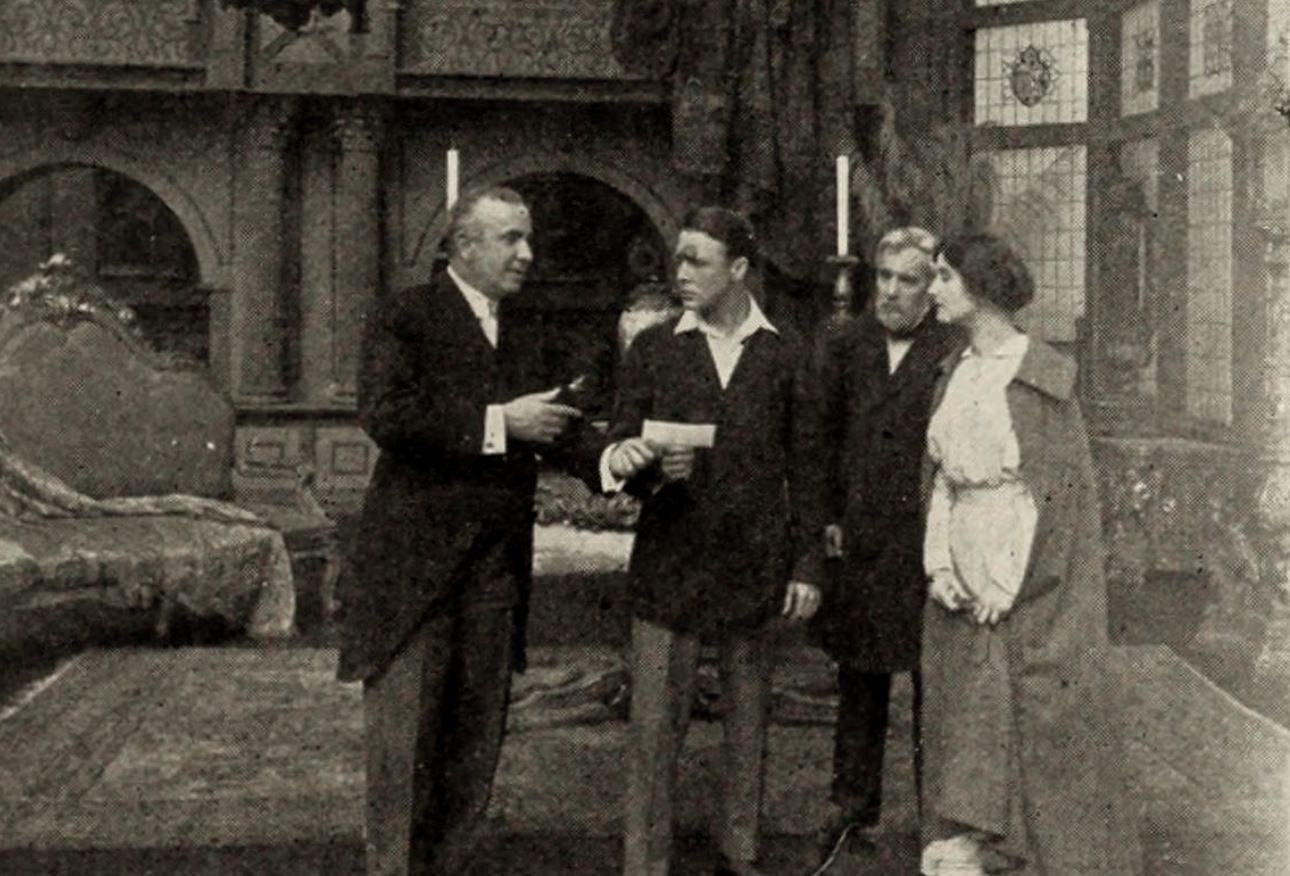
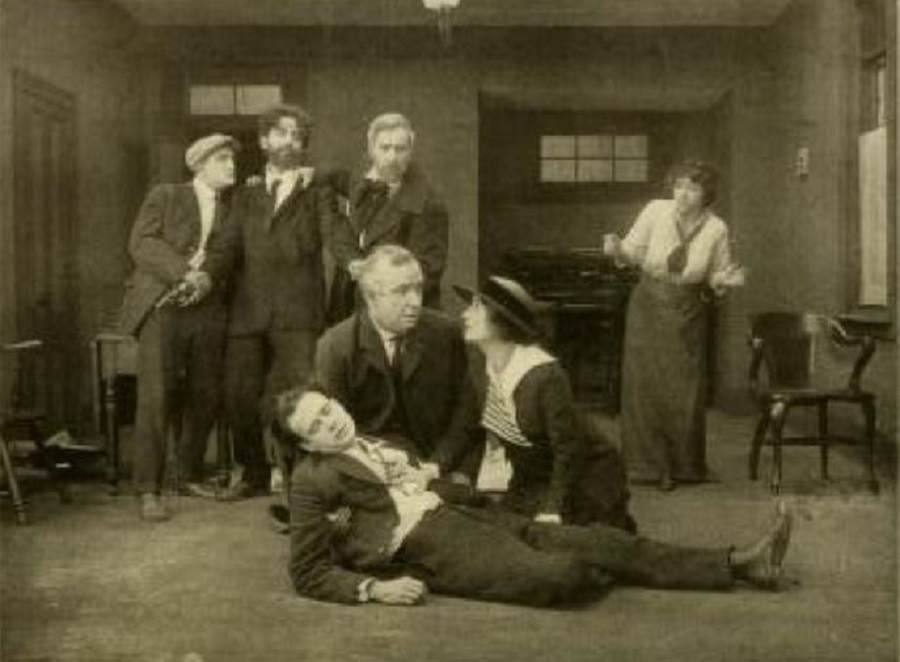
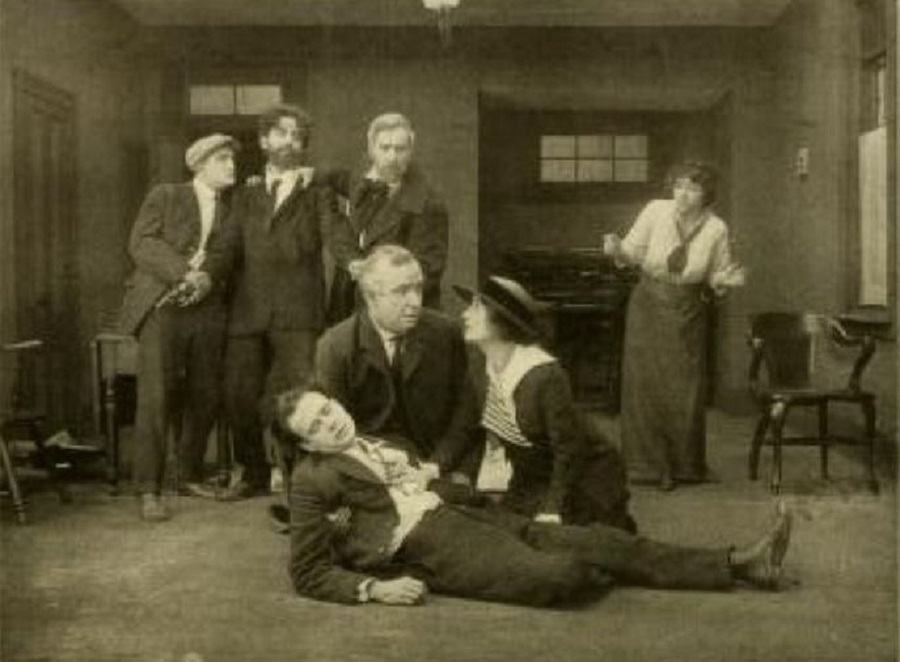
When the bullet meant for Haggleton pierces Philip instead, the mise-en-scène crystallizes into pietà: father cradling son on flour-slick cobbles, gaslamps flickering like votive candles. The blood—tinted crimson by hand-applied dye on certain prints—oozes across the monochrome with almost expressionist violence. It is here that the film’s dialectic collapses into raw corporeal cost; ideology exits the lungs in ragged breaths.
Convalescence unfolds in a Fifth Avenue palace whose cavernous halls echo with the hush of mausoleums. Margaret’s nursing ministrations grow strained once she learns her patient’s patrimony; her ethical calculus—should love absolve blood-guilt?—plays out in a moonlit conservatory where windows frame a city whose lights mock every moral absolute. Anne Meredith, in a cameo reincarnation as Margaret’s confidante, offers the film’s most lacerating line: “Forgiveness is the luxury of the un-ruined.”
Jenny’s climactic disclosure—that her own despoiler was Margaret’s brother—functions less as melodramatic coincidence than as narrative coup de grâce against the edifice of spotless lineage. The revelation detonates Margaret’s pride, forcing her to confront the rot inside her own genealogical oak. Reconciliation is not soft-focus embrace but a stoic pact: resources redirected toward tenement uplift, a foundation chartered for structural, not symbolic, reparation.
Visually, the picture’s final movement is bathed in a chiaroscuro of sea-blue dawn. Haggleton, stripped of bombast, stands at a waterfront pier as refrigerated barges haul his erstwhile empire’s grain. McAllister holds a protracted shot: the tycoon’s silhouette recedes, dwarfed by machinery he once commanded. The composition rhymes with the opening vista of derricks, but here the architecture dwarfs the monarch rather than venerates him—a visual admission that history’s tectonic plates have shifted.
One cannot discuss The Money Master without invoking its contemporaries. Where The Master Mind mythologizes the cerebral industrialist as Nietzschean übermensch, this film anatomizes him under scalpel of class consciousness. Compared to Martin Eden, both narratives trace self-educated strivers bruised by plutocracy, yet Moffett’s script is less romantic individualism than systemic indictment. The anarchist ferment that bubbles through Moran’s bakery anticipates the revolutionary tremors of In the Lion’s Den, but locates its detonator inside the very mills meant to emancipate labor.
Performances vibrate with silent-era semaphore: brows arched like cathedral flying buttresses, hands that sculpt air into confessionals. Yet within the gestural lexicon, nuance seeps through. Watch Reid’s micro-expression when Philip denounces the venality of “money masters”: a twitch at the corner of his mouth—half smile, half scar—hints at paternal pride warring with ancestral shame. It is the moment where blood recognizes itself across the gulf of ideology.
Composer Calvin Thomas’s original score—performed live at premiers—allegedly interpolated industrial noise: clanking anvils, hiss of steam valves, the threnody of gears. Reports suggest audiences felt the theater itself vibrate, as though the machinery of the narrative were literally grinding beneath their seats. Such synesthetic ambition prefigures the musique concrète experiments of post-war modernism, rendering the picture not mere spectacle but visceral immersion.
Yet the film is not unblemished. Its treatment of Jenny’s redemption veers perilously close to Madonna/whore dichotomy, and the racial homogeneity of its tenement tableau erases the polyglot realities of 1910s Lower East Side. These blind spots, while period-typical, prick contemporary sensibilities like burrs under skin. Still, even these fissures serve as instructive palimpsests: they expose the boundaries within which Progressive-Era social critique could operate before collapsing into radical insurgence.
Restoration efforts have salvaged tinting templates discovered in a decommissioned seminary vault—ochre for interiors, aquamarine for exteriors, amber for moments of epiphany. The palette, once re-instated, transfigures the film’s moral geography: warmth clings to communal loaves, chill to capitalist penthouses. Contemporary viewers encountering the 4K transfer at Il Cinema Ritrovato reported an uncanny sensation—like tasting bread baked from grain harvested a century earlier.
Critical discourse has likened Haggleton’s arc to that of Jean Valjean, yet the comparison limps; whereas Valjean’s altruism is redemptive grace, Haggleton’s is transactional calculus—a bid to purchase heir’s affection. The film’s true literary forebear might be Balzac’s Père Goriot, where paternal love corrodes amid the acid of social ambition. Moffett, a muckraking journalist before turning scenarist, understood that American capital had supplanted European aristocracy as the new fatalité.
Legacy-wise, the picture sank into obscurity once sound revolutionized the artform, yet its DNA infiltrated later sagas of filial schism—from Les Misérables, Part 2: Fantine to television dynastic operas. Economic historians have mined its bakery sequences for depictions of early automation backlash, while sociologists cite its tenement mise-en-scène in treatises on urban poverty. The film survives as both artefact and algorithm: a set of instructions for how to dramatize capital’s human fallout without sentimental anesthesia.
In the final analysis, The Money Master endures because it poses the question America still refuses to answer: can the same hand that rigs markets knead dough for the hungry without leaving blood in the flour? Its closing tableau—Haggleton, Margaret and Philip striding into a sunrise whose light feels less celestial than fluorescent—offers no eschatological bow. Instead, it proffers an unresolved chord, a challenge hurled across the century to a present-day audience still caught in the same churn of speculation and soup-kitchen queues. We are invited, perhaps condemned, to keep kneading.
“Wealth is but a steward’s trust,” the intertitle reads, “and bread, if broken rightly, can become a sacrament.”
Until we decipher that recipe, the film whispers, we remain heirs to both the fortune and the fire.
IMDb —
1923
Community
Log in to comment.