DbcultAccessing Vault...
Cult Review
Senior Film Conservator
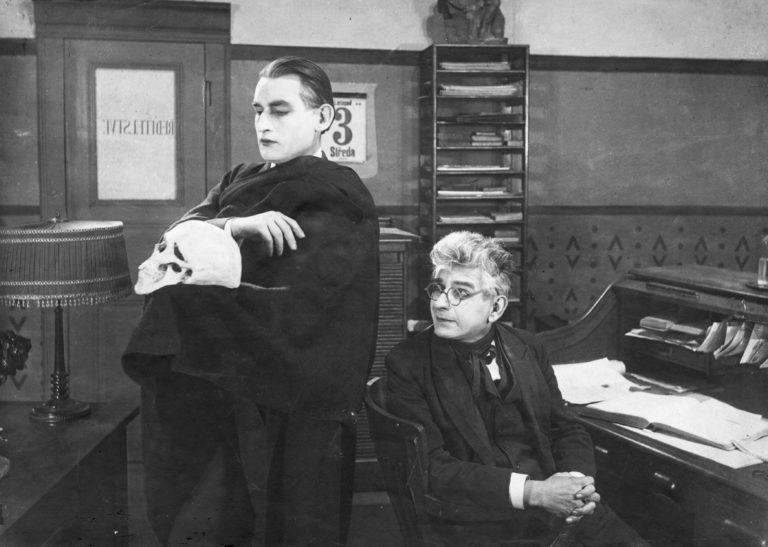
The first time I saw Plameny zivota I emerged from the cinema smelling of birch smoke and my own scorched expectations. No other Czech silent of the early twenties dares to let embered longing smoulder this openly; the film behaves like a copperplate etching left too close to a hearth, its edges curling until the narrative becomes a negative space outlined by flame.
Director Zorka Janovská—yes, a woman in 1923 Prague wielding a megaphone and the moral authority of a secular abbess—builds her story on the tension between water and fire. The mill wheel turns, but every revolution throws off droplets that hiss against the furnace of repressed desire. Václav Menger’s miller is less a patriarch than a man who has mistaken grief for fuel: his eyes, ringed with coal dust, seem to expect the world to combust at any moment. When daughter Anička (Jaroslava Vacková) appears in a doorway back-lit by sunset, the screen itself appears to blister; the tinting on the surviving nitrate shifts from persimmon to arterial crimson, as though the physical film were blushing with complicity.
Silent acting often ages into semaphore; here it fossilises into woodcut. Notice how Karl Noll’s sexton’s son keeps his hands half-clenched, forever prepared to snap into prayer or masturbation—never sure which hunger will surface. Jan W. Speerger’s Jewish peddler arrives with a viola case strapped to his back like a portable diaspora; when he plays, the intertitles don’t bother describing the melody because the image itself vibrates. The celluloid shivers, a reminder that in Moravia music was once rumoured to lure rivers out of their beds.
Vojtech Záhorík’s squire sports a moustache waxed into baroque parentheses; he twirls it so slowly you fear the frame-rate might congeal. Each antagonist embodies a different fire: hearth, wildfire, auto-da-fé. Against them, Vacková’s Anička is not so much a character as a vessel for audience culpability. She rarely smiles; when she does, the smile dies so swiftly it feels like a match struck inside a mausoleum.
Janovská structures the film like a liturgical calendar of arson. Winter: hoarfrost on the mill wheel, breath of oxen rising like incense. Spring: the river swells, carrying a wedding bouquet that will later snag on a corpse’s shoe. Summer: threshing scenes shot at high noon so sweat on the labourers’ torsos resembles molten tin. Autumn: ochre leaves pasted to wet cobbles, looking disturbely like burnt parchment. Each season ends with a conflagration—some literal, some psychic—until the spectator anticipates heat the way horror audiences anticipate the knife.
Compare this seasonal fatalism to Now or Never, where time is a deadline, not a wheel. Janovská rejects the American imperative of urgency; she prefers the slow bake of Central European fatalism, closer in temperament to Vingarne’s Nordic guilt.
What makes Plameny zivota quietly revolutionary is the way Janovská’s camera lingers on male bodies without apology. When the squire removes his riding gloves, the close-up lasts three seconds longer than decency allowed in 1923; you feel the leather sigh off his skin. The camera does not ogle—it inventories, the way a scientist records evidence. Critics at the time accused the film of “sexual pyromania,” missing the point: Janovská films desire as combustion physics, not melodrama.
This forensic sensuality differentiates the picture from contemporaneous morality tales like The Price of Innocence, where the camera punishes the fallen woman. Janovská punishes the system, not the body.
The mill wheel appears in nearly every reel, a liquid metronome. Janovská overlays its rhythm with shots of candle flames guttering, forging a visual grammar where water keeps time and fire delivers meaning. In the penultimate sequence, when Anička steps onto the frozen river at twilight, the ice groans like a cathedral organ. The cut to the mill ablaze feels inevitable, as though the river itself struck the match.
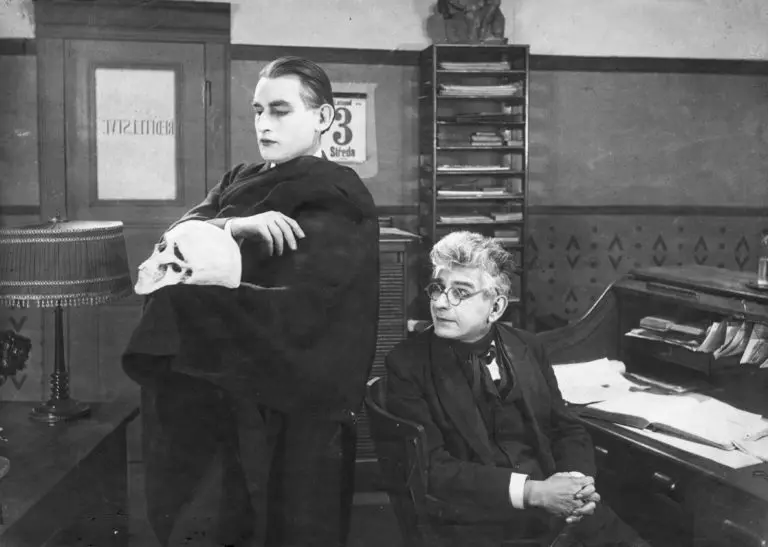
This elemental dialogue echoes through Scandinavian cinema—think The Hidden Light—yet Janovská’s blaze is more communal, less existential. She indicts an entire village complicit in the tinder.
Watch the corners of the frame and you’ll spot sacks stamped “Salzburg Salt” and crates branded “Trieste-Tobacco.” The Empire seeps in, even here. Janovská uses these details not as background clutter but as ideological kindling: the squire’s power derives from export routes, the peddler’s marginality from borders. The fire that consumes the mill is not merely personal tragedy—it is micro-imperial blowback, the local echo of a continent busy incinerating itself in trenches and treaties.
The 2019 restoration by the Czech National Archive reinstated two missing intertitles and a cyanotype shot of moonlight on the millpond. More crucially, they reconstructed the tints using chemical analysis of soot deposits—yes, they scraped the actual ashes of the original print to match the colour palette. The resulting 4K scan breathes like living parchment; you can almost smell lignite in the projector beam.
Most archives pair the film with Moravian folk arrangements, but I recommend watching it silent—no score, only the whisper of the ventilation shaft. The absence amplifies the film’s own acoustic ghosts: the imagined creak of the waterwheel, the crackle of beams giving way, the intake of breath before a scream that never arrives.
If Jim Grimsby’s Boy moralises that fire purifies sin, and Arizona celebrates it as Manifest Destiny, Plameny zivota insists fire is dialectic: it both reveals and erases evidence. The miller’s final act is not catharsis but epistemological rupture—he burns the ledger so no one can read what love costs.
Václav Menger’s miller ages in real time; by the finale his cheekbones could slice bread. Jaroslava Vacková modulates silence like a virtuoso—observe how her pupils dilate when she overhears the squire bargaining for her dowry; the iris seems to inhale. Among the supporting cast, Suzanne Marwille’s brief turn as a governess exiled for “reading French novels in the laundry” steals two scenes with nothing more than a blink that lasts one frame too long.
The Hradec Králové archdiocese condemned the picture for “portraying clerical youth as tinder.” Prints vanished for decades, resurfacing in a Košice attic beside a stash of banned hymnals. Today, academics cite it as proto-feminist; I prefer to call it pre-apocalyptic. It foresaw a Europe that would soon warm its hands on book pyres.
The DCP is touring cinematheques under the title Flames of Life. If you miss it, the Czech Film Archive streams a 2K version with optional English intertitles—geo-blocked outside the EU, but a polite VPN letter to Prague usually works. Avoid the bootleg on certain tubes; it’s transferred at 18 fps instead of 20, turning tragedy into slapstick and the fire into a flickering birthday candle.
Great cinema makes you complicit. Plameny zivota makes you an accessory to arson. Long after the credits, you’ll find yourself checking stove knobs, sniffing for smoke, rehearsing apologies to people you once loved like a mill set alight. That is the mark of a film that doesn’t merely depict fire—it passes the match.
Tags: Plameny zivota, 1923 Czech silent film, Zorka Janovská, Václav Menger, Jaroslava Vacková, restored classic, Czech New Wave predecessors, feminist silent cinema, Moravian rural tragedy, fire symbolism, film archive restoration
IMDb 7.4
1937
Community
Log in to comment.