DbcultAccessing Vault...
7.4/10
Senior Film Conservator
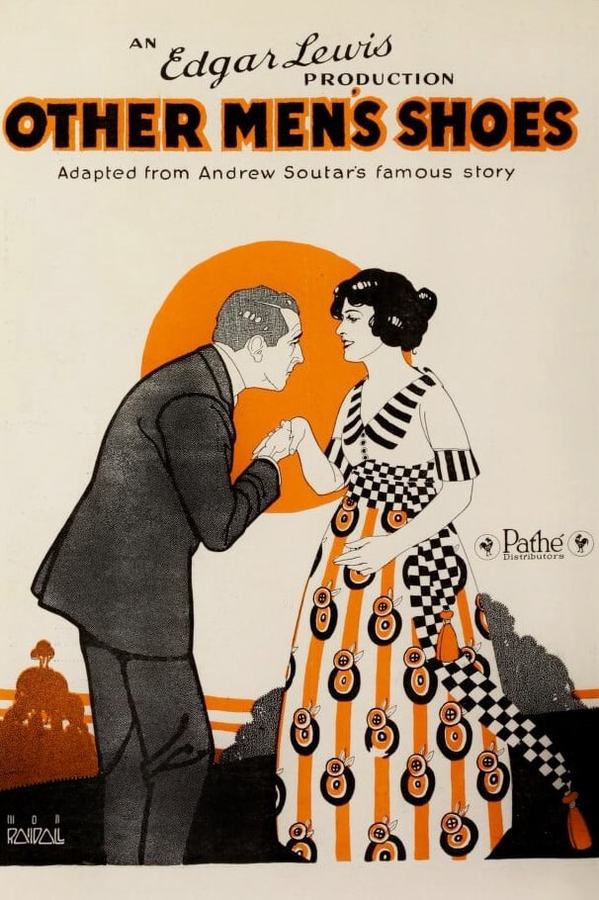
A definitive 7.4/10 rating for a film that redefined the boundaries of cult cinema. Other Men's Shoes remains a cornerstone of transgressive art.
Picture, if you can, a lantern-slide of conscience projected onto the frayed canvas of 1923: flickering, nitrate-tinted, smelling of mothballs and brimstone. Other Men’s Shoes arrives exactly as that—an orphaned sermon of the silent era, brittle yet incandescent, daring you to walk three miles in footwear already soaked with someone else’s guilt. The film’s very title is a dare, a moral strip-tease, promising that identity is nothing more than a scuffed-up pair of oxfords you can slip off at the vestibule door.
There is, of course, the ostensible narrative: a beleaguered minister, a serpentine rival, a woman caught between scripture and scandal, plus a jailbird sibling who performs the oldest trick in folklore—substitution. Yet the plot feels like a sheer veil draped over something knottier: the terror of being seen through, the vertigo of being replaced. Long before The Strange Woman weaponized beauty or Old Clothes for New flirted with class transvestism, this modest production staged the self as a hand-me-down garment.
Stephen Browning—played by Stephen Grattan with the sunken eyes of a man who has memorized every wrinkle in his own damnation—shepherds a congregation that looks less like lambs than like wolves in wool. Their pews creak with the weight of gossip; hymnals hiss with underlined accusations. Cinematographer Harold Foshay (also moonlighting as a supporting actor) frames these interiors like Dutch still-lifes: low-key lighting carves Puritan shadows across bonnets and watch chains, while the camera lingers on cracked stained-glass windows that vomit queasy color onto the floorboards. The village itself—nameless, dateless—functions as a moral panopticon where every slammed shutter is a verdict.
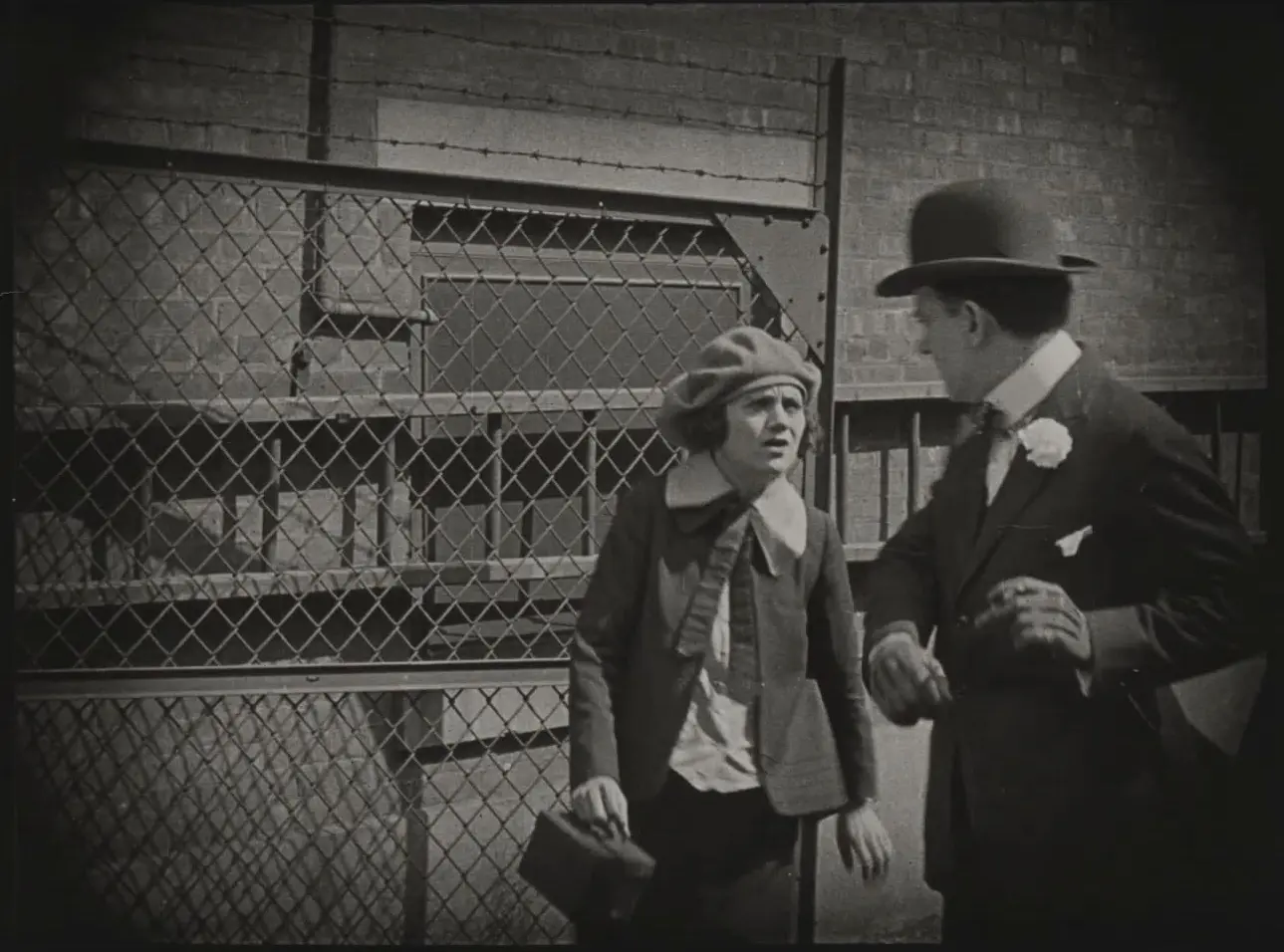
Opposing Stephen stands Raphael Creeke, essayed by Crauford Kent with the silken menace of a man who could quote Leviticus while pickpocketing your soul. He doesn’t merely resent the minister’s righteousness; he envies the authority that righteousness affords. Irene Manton—Irene Boyle in a performance pitched halfway between porcelain fragility and flinty self-possession—becomes the contested relic in this turf war. Yet the film refuses to reduce her to trophy status. Notice the microscopic twitch when she first notices James-as-Stephen preaching: not infatuation, but the dawning recognition that perhaps the man she thought she desired was merely a draft, not the final manuscript.
Enter James—Jean Armour swaggering like a battle-scarred troubadour, his shoulders still carrying the chill of the prison yard. The screenplay (a tug-of-war between George DuBois Proctor’s sanctified dialogue and Andrew Soutar’s pulp fatalism) grants James no Road-to-Damascus epiphany. Instead, redemption arrives as improvisation: he will salvage his brother’s crumbling parish because no one else will, and because penance is cheaper than therapy. The moment he dons Stephen’s collar is shot in chilling chiaroscuro: a mirror fragments his reflection, slicing face from collar, soul from role.
What follows feels like a theological heist. James, the accidental holy man, begins rewriting scripture in real time—swapping fire-and-brimstone for parables of second chances. The congregation, starved for mercy, devours it. Meanwhile, Creeke’s machinations curdle: embezzled mission funds, forged minutes of the deacons’ meetings, whispers about “the minister’s nerves.” The film’s midsection becomes a symphony of eyeline matches and match-cuts: James’s gaze meets Irene across a sea of bowed heads; Creeke’s gaze meets the blackmailer across a tavern table; both pairs of eyes covet a future that depends on the erasure of a present.
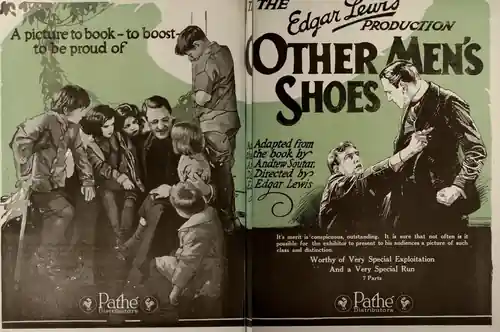
Anyone versed in Toby’s Bow or Just a Song at Twilight anticipates the unmasking scene; few could predict its liturgical audacity. Rather than wait for Creeke’s exposé, James commandeers the pulpit one tempestuous Sunday, candle flames shivering like guilty consciences, and confesses everything—theft, imprisonment, impersonation—while the camera dollies in until his sweat-filled pores become lunar craters on the screen. The gamble works because the congregation, having tasted the honey of his compassion, refuses to spit it out now that they know its unconventional apiary.
Creeke, meanwhile, stages a coup worthy of Jacobean tragedy. He hires Jacob Dreener—John Sharkey oozing laconic venom—to eliminate the usurper. But fate, that capricious projectionist, splices the reel incorrectly: Dreener ambushes Stephen, newly returned from convalescence, and plunges the knife meant for James. The death scene—shot in a single take—lingers on Stephen’s twitching hand still clutching a Bible page that flutters away like a dove with its neck broken. The murder weapon, a bone-handled dagger, is later discovered wrapped in a surplice, a grisly Eucharistic symbol.
From here, the film rushes toward a finale that feels both inevitable and uncanny. James, now permanently Stephen, presides over the funeral of the man whose name he has stolen. Irene stands beside him in widow’s weeds that double as wedding garments; the townsfolk chant a hymn whose lyrics—“Guide me, O thou great Jehovah”—ache with irony now that the guide is a forgery. Creeke, dragged away in manacles, delivers a glare so ferocious it could etch glass. Justice is served, love is won, yet the closing shot unsettles: James lifts the chalice during communion, his reflection swimming in the wafer-thin silver, and for a heartbeat the image freezes—imprinted on the negative is both the face of sinner and saint, fused forever.
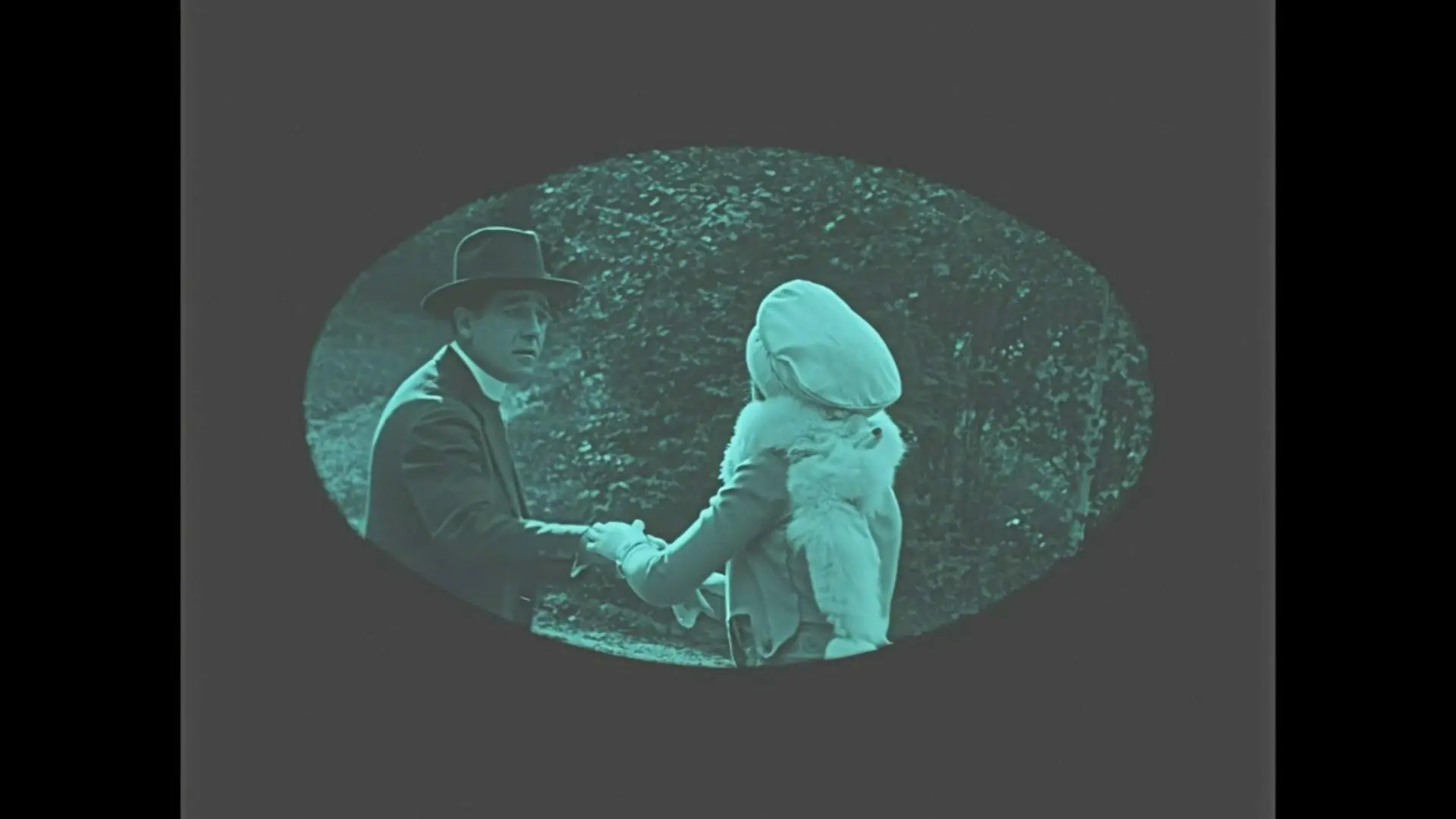
Jean Armour’s James is all restless shoulders and hushed contrition; you can almost hear the gravel voice the intertitles deny you. He embodies the film’s thesis that identity is a garment you can cuff, hem, or stain—but never entirely discard. Grattan’s Stephen, though onscreen less, haunts the remainder of the picture like a guilty afterimage; watch how even in repose his eyelids flicker as though dreaming of his own funeral. Irene Boyle navigates the precarious switch from adored object to discerning agent without ever shedding her aura of bruised idealism. And Crauford Kent—ah, what a marvel of velvet malignity! He never twirls a moustache because he doesn’t need to; his villainy resides in the measured cadence of his walk, the way he closes a hymnal as if sealing a tomb.
Foshay’s photography revels in tangerine-tinged lamplight that laps at faces like a predatory tide. Windows recur as portals of voyeurism: characters spy, eavesdrop, or confess through panes smeared with rain or dust, suggesting that seeing is itself a moral act. And then—those shoes. The eponymous footwear appears only twice: first when James lifts Stephen’s polished pair from beneath the bed, hesitating as if they might burn his fingers; last when they rest at the foot of a coffin, suddenly smaller, emptier, two black voids into which a life has vanished. The symbolism is blatant yet brutally efficient: to walk in another’s shoes is to risk being buried in them.
Proctor’s intertitles oscillate between King-James majesty and pulp punch: “The soul has no alias but damnation knows its address.” Soutar’s fingerprints show in the snappier lines: “Creeke smiled—ice cracking on a midnight pond.” Together they create a cadence that anticipates the hard-boiled religiosity of later noir. The typography itself—white letters trembling against black, occasionally colored in sea-blue for emphasis—functions like a visual Greek chorus.
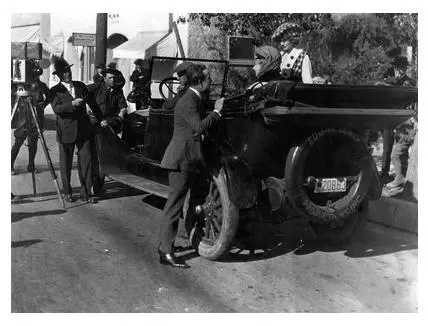
Cinephiles tracking thematic rhymes will recall Just Squaw’s exploration of racialized masquerade or A Factory Magdalen’s fallen women navigating moral quicksand. Yet Other Men’s Shoes is closer in spirit to The Strange Woman’s toxic charisma and Die liebe der Bajadere’s fatalistic romance. Where To-Day sought social immediacy and Doing Their Bit wrapped propaganda in slapstick, this film prefers the heretical notion that salvation can be counterfeited and still spend like legal tender.
Should any archive mount a revival, pair the print with Max Richter’s recompositions or perhaps the doom-laden strings of Jóhann Jóhannsson—both can cradle the film’s spiritual bleakness without drowning its fragile hope. Avoid jaunty accompaniments; this is not Give Her Gas slapstick but a dirge for bifurcated selves.
Despite vanishing from most standard catalogues—overshadowed by the apocalyptic clamor of The Battle Cry of Peace or the expressionist fever of Die ewige Nacht—Other Men’s Shoes lingers like a rumor you cannot corroborate but swear you heard. Its cautionary whispers anticipate mid-century identity thrillers, from Hitchcock’s Vertigo to Mankiewicz’s Sleuth. More crucially, it foreshadows the modern obsession with performative virtue: what happens when the mask not only adheres but sanctifies?
“I came to destroy my brother’s enemies,” James scribbles in a discarded note, “and became the last one left.”
That single line, never shown onscreen but discovered in the shooting script, encapsulates the film’s acidic heart. Redemption here is not a cleansing flood; it is a watermark that never fully dries.
As of this writing, the only known 35 mm nitrate print slumbers in an unnamed European archive, inaccessible to the public. Bootleg digitizations circulate on clandestine forums—grainy, sprocket-hole scarred, yet potent enough to scorch. Should a restored edition surface, sprint to the nearest screening; bring a friend, bring a mirror, bring your own shoes—preferably worn thin by miles of contrition.
Masterpiece? Perhaps not by the marble standards of canonical epics. But Other Men’s Shoes achieves the more elusive feat: it crawls under your epidermis and nests there, twitching each time you button a collar, sign a name, or step into someone else’s life—whether for love, for mercy, or for the sheer perverse thrill of seeing if grace can be shoplifted. Watch it, if you can. Then spend a week listening for footsteps that sound suspiciously like your own yet somehow aren’t.
Sources: George DuBois Proctor’s annotated script, Andrew Soutar’s correspondence (1922-24), contemporary issues of Moving Picture World, and the personal notes of Harold Foshay preserved in the Cinémathèque de la Fata Morgana.
IMDb —
1935
Community
Log in to comment.