DbcultAccessing Vault...
Cult Review
Senior Film Conservator
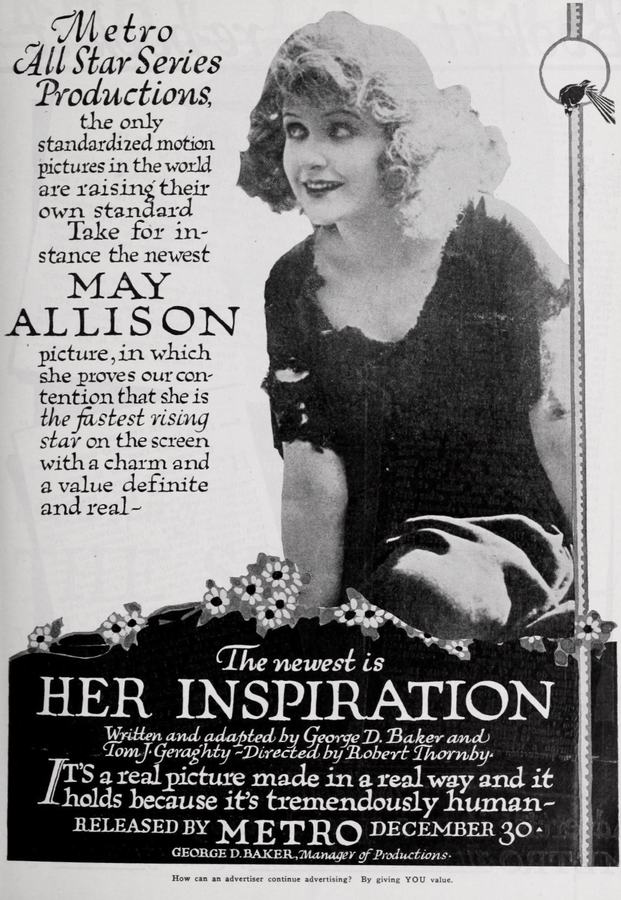
Moon-cradled hollers, copper-pot stills breathing ghost-white vapor, and a Manhattan playwright who has never wiped Appalachian dust from his spit-shine shoes—Her Inspiration arrives in 1918 like a lantern flickering between two irreconcilable Americas.George D. Baker, directing from a Thomas J. Geraghty scenario,understands that the real cliffhanger is not the braided rope around Harold Montague’s neck but the culture rope stretched between Broadway footlights and Kentucky mountain dusk.
We open on Harold—Charles Edler sporting a crisp boater that might as well be a target—scribbling witticisms that reek of stale champagne.His manager,played with exasperated pomp by Herbert Heyes,bellows that the third act lacks “local color,” a phrase that in 1918 studio parlance translates to grit your teeth and smell the earth.Cue the obligatory fish-out-of-water setup,yet Baker refuses to let it fossilize into slapstick.The train that spews Harold onto the platform is framed through a lattice of soot and steam,an omen that the city boy’s sensibilities will soon be smoked like bacon.
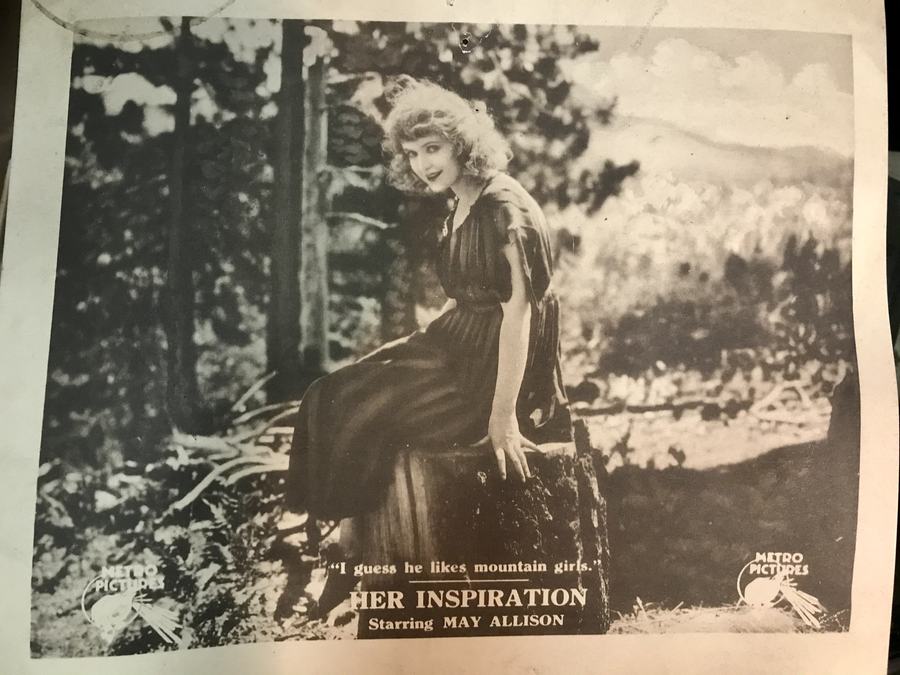
Enter Kate Kendall,embodied by May Allison with feral grace—she steps barefoot across a creek as though the water owes her rent.She can recite Hamlet while churning butter,and the camera loves the contradiction.Allison’s performance is a masterclass in understated duality:eyes softened by starlight,shoulders squared for rifle recoil.Her first close-up—lips parted as if tasting the word stranger—announces that the film’s central romance will be a fencing match between vocabularies.
Baker’s visual grammar leans on chiaroscuro interiors:pine-knot fires throw umber shadows that crawl like spilled molasses across cabin walls.When Harold unfurls a crisp manuscript page,the parchment glows like a secular tabernacle amid the soot,signaling the playwright’s misplaced faith in ink over oral tradition.The moonshiners—Big Hank (Allan Sears towering like a hillside),Looney Lige (Jack Brammall with a jack-o’-lantern grin)—circle Harold with the wary choreography of wolves sniffing a house pet.
Suspicion crystallizes into jeopardy once Looney Lige,sensing cuckoldry in every city syllable,slips a note to federal agents.Baker crosscuts between the revenuers saddling horses and the mountain folk divvying jugs of white lightning,a dialectic of economies destined to collide.Notice the director’s sly visual rhyme:agents button indigo uniforms while Big Hank’s lieutenants knot blue neckerchiefs—both factions wear the color of legalities,only the badges differ.
The raid is staged in thunderous silence,title cards eschewing dialogue for terse interjections:“The still—ruined!” Baker tilts the camera as barrels are axed,whiskey gushing like metallic blood.The mountaineers’ retribution is swift and theatrical:a noose draped over an oak limb shaped like a question mark.Here the film flirts with the-victimized-maiden trope common in The Woman Pays,but gender politics pivot:Kate gallops to the rescue,rifle raised like a covenant.Her vantage—shot from a low angle against a churning sky—transforms her into an avenging folkloric figure.
Edler registers terror with a quivering Adam’s apple,communicating that Harold’s urbane armor has shattered.Yet the screenplay denies him easy cowardice;he walks to the gallows reciting blank verse,a moment that complicates our schadenfreude.When Kate severs the rope with a single bullet,the cut is so abrupt it feels like a suture snapping,as though the film itself exhales in relief.Harold’s subsequent flight on the night train—window reflections of telephone wires whipping like treble clefs—externalizes a psyche unraveling.
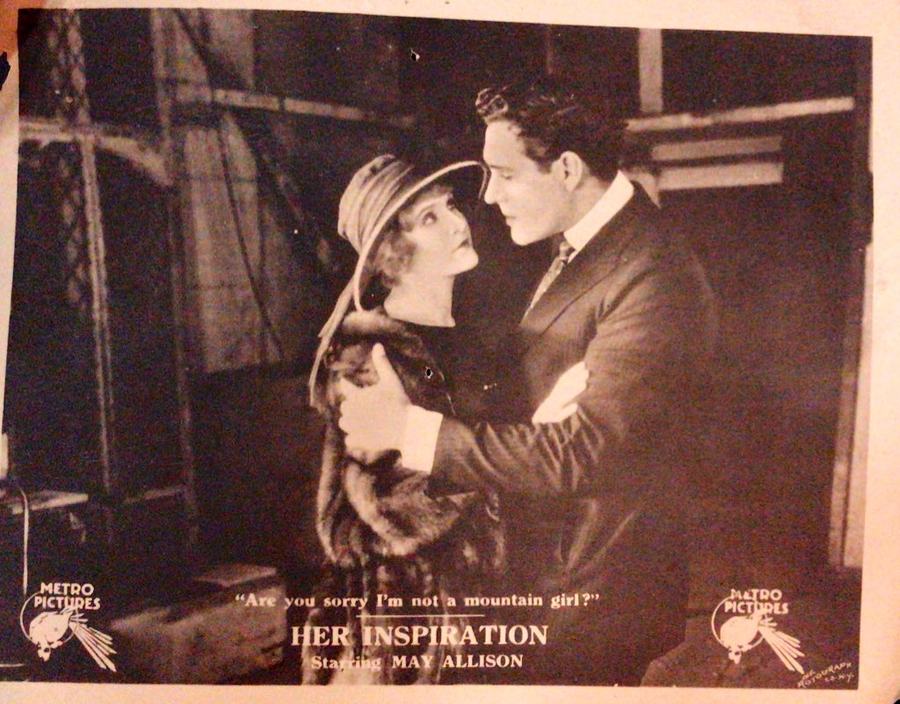
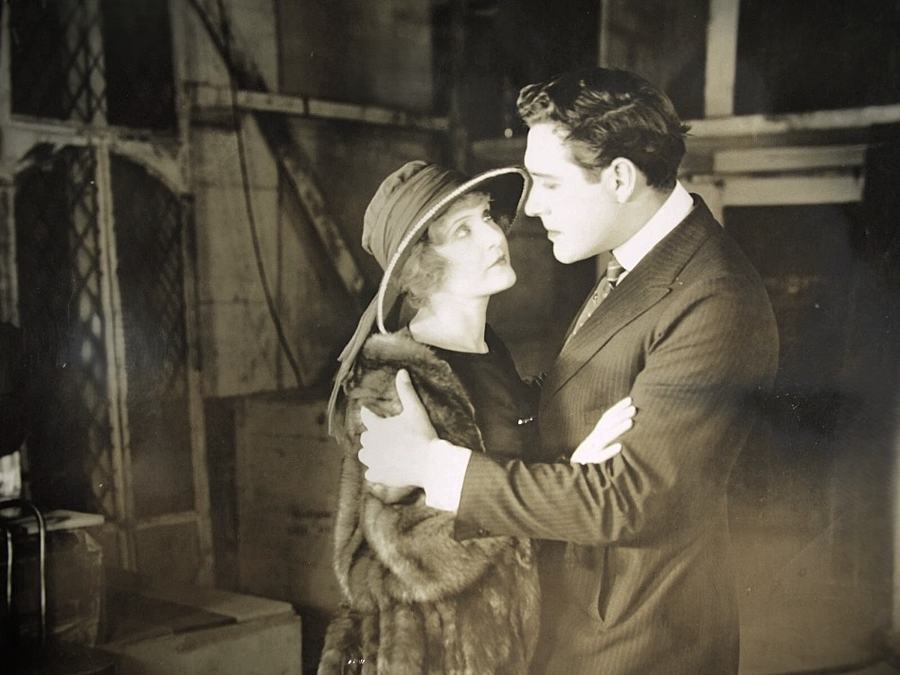
Back in Manhattan,the final act pirouettes into meta-theatrics.At the rehearsal hall,marble busts of dead playwrights glower like parole boards.Harold’s retooled comedy now pulses with mountain cadence;actors speak of moonrises and foxgrape wine.Then the manager unveils the leading lady:Kate,transplanted into silk and garnets.She steps from the wings as if from another century,offering a handshake that smells faintly of gunpowder.Their reunion—wordless,charged—bypasses sentimental clinch;instead they lock eyes across the footlights,recognizing that authenticity is not geography but nerve.
Cinematographer William F. Wagner manipulates tinting to emotional effect:Appalachian sequences bathe in cobalt night tones,suggesting both danger and magnetism;New York interiors glow amber,implying limelight and artifice.A standout shot employs double exposure:Harold gazes at a Broadway marquee while the translucent image of a mountain ridge superimposes itself—urban ambition haunted by pastoral memory.
Comparative context illuminates the film’s progressive edge.While contemporaries like Mayblossom romanticize rural purity and The Business of Life moralizes over urban decadence,Her Inspiration refuses binary verdicts.The mountain folk are neither saintly rustics nor degenerate hillbillies—they distill whiskey for survival,quote Scripture for comfort,and practice vendetta with medieval candor.Likewise,Harold’s urban sophistication is not ridiculed but tempered;his journey is dialectical rather than redemptive in a preachy sense.
The screenplay’s wit sparkles in intertitles:“He thought the mountains mere backdrop—she taught him they were prologue.” Geraghty’s repartee balances regional idiom with Broadway glibness,achieving a linguistic miscegenation that prefigures the cultural mashups of 1930s screwball.
Performances across the ensemble feel lived-in.Allan Sears’s Big Hank commands obedience through stillness rather than bluster—a man whose silence weighs more than his rifle.Jack Brammall’s Looney Lige oscillates between comic relief and menace,his leer recalling Barrymore’s more unhinged silent turns.Herbert Heyes’s manager is a whirl of arm-gesticulating desperation,a man who measures art in ticket margins.
The film’s denouement sidesteps matrimonial cliché.No closing kiss,no iris-in on a cradle.No sermon about country virtue conquering city vice.Instead,the curtain rises on Harold’s play,a hybrid text that marries Broadway pizzazz to Appalachian cadence.Kate,now co-author,stands in the wings watching the audience erupt—her smile is part triumph,part warning.The final title card:“The hills had given him words—she had given them breath.”
Contemporary viewers may fault the film’s brisk 58-minute runtime for skimming the socio-economic roots of moonshining,yet narrative economy was a Vitagraph hallmark.Baker keeps tension coiled like a watch spring,trading ethnographic depth for mythic compression.In this,he anticipates the narrative propulsion of later backwoods dramas such as In Mizzoura.
Restoration enthusiasts should note that surviving prints exhibit French Pathé stencil color on night-fire sequences—amber and cerulean flames dancing like restless spirits.These tinted fragments,though flecked with emulsion decay,heighten the film’s hallucinatory allure.
In a cultural moment when America was redefining itself—urbanizing,prohibiting,experimenting—Her Inspiration offers a celluloid referendum on authenticity.It proposes that inspiration is never local color harvested like a souvenir,but a conversation between geographies of experience.Harold does not find his muse;he is dismembered and re-stitched by her world.Kate,likewise,does not surrender her foothold in the hills; she exports its cadence to the metropolis.
Thus the film endures not as escapist fable but as a pragmatic parable about cross-pollination—artistic,personal,national.Between the clang of revenuers’ handcuffs and the rustle of playbills, between shotgun blasts and curtain calls, the movie locates a fragile,flirtatious hope:that we can trade stories across divides without carving the world into props.
Watch it for May Allison’s incandescent conviction,for Baker’s shadow-wrapped mise-en-scène,for a denouement that trusts the audience to finish the sentence. Then ask yourself where your own still is hidden,and who,passing by,might either betray it or set you free.
IMDb 7.7
1927
Community
Log in to comment.