DbcultAccessing Vault...
Cult Review
Senior Film Conservator
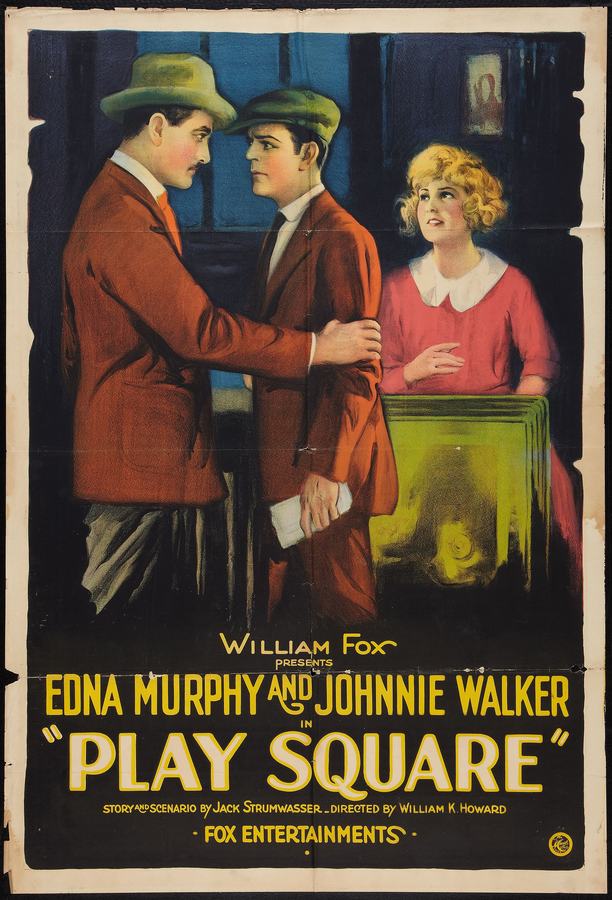
John Stone’s Play Square lands like a well-thumbed penny dreadful yanked from a coat pocket—its pages brittle, its ink still pungent with rain-soaked alleys and the metallic tang of safe-crackers’ tension. The film, clocking in at a brisk five reels, distills the 1920s audience’s twin cravings: moral fables that sting and romance that soothes.
There is no prologue, no velvet curtain; the camera simply plunges beside Johnny Carroll as he threads through top-hatted marks outside a courthouse. The pickpocket ballet is choreographed in glances—Edna Murphy’s eyes reflected in a stolen lorgnette, the judge’s gavel echoing like distant thunder. The editing rhythm, brisk enough to shame many late-silent features, pivots on spatial wit: a cut from the judge’s bench to Johnny’s hometown porch collapses moral geography into a single heartbeat.
Meadville is rendered in chalky whites and soot blacks, a village that feels perpetually Sunday-afternoon drowsy until the gang’s touring car backfires down Main Street. The grocery store set, crammed with pickle barrels and coffee-bean sacks, becomes a boxing ring of conscience. Note how cinematographer George Rizard tilts the counter diagonally when extortion pressures mount—visual shorthand for a world sliding off moral plumb.
Johnnie Walker’s Johnny exudes the restless physicality of a fox terrier, all darting shoulders and sudden soft smiles. Opposite him, Laura La Plante’s Betty is less ingénue than lighthouse: her stillness is strategy, not submission. When she discovers the safe door ajar, the flicker of her eyelids—half fear, half calculation—could power a turbine. Meanwhile, Wilbur Higby’s Judge Kerrigan projects granite authority softened by regional twang, a man who has read the law but also the seasons of a rural boyhood.
Harry Todd’s ringleader lounges in silk collar and menace, delivering ultimatums through a grin that seems carved from a pumpkin left too long on the porch. Al Fremont’s safecracker, all twitchy fingers and cigarette phosphor, supplies the film’s ticking metronome. Their collective threat is less brute force than social acid: the promise to spill Johnny’s past into Meadville’s gossip mill feels more suffocating than any pistol barrel.
Stone’s screenplay flirts with determinism yet lands on agency. The safe, once opened, becomes a confession booth; Johnny’s refusal to transfer the loot is the film’s true hinge. Critic Louise R. Kent famously argued that silent cinema excelled at depicting conversion because close-ups replace interior monologue with visage—Walker’s jaw clenches, the iris-in effect isolates him, and we witness salvation as muscle memory.
Watch for the recurring insert of a brass key sliding into a lock—its three appearances map Johnny’s arc: pickpocket entry, coerced burglary, marital front door. Hands, fetishized in chiaroscuro, are both crime tools and vow-taking instruments. The final lantern-lit two-shot of the betrothed against Meadville’s railroad tracks fuses travel and permanence, a promise that movement can now be chosen, not forced.
Surviving prints are sans cohesive score, yet most 1921 exhibitors paired it with a medley of “Sweetness” by Joseph Lacalle and vaudeville stomps. Modern festivals often commission minimalist guitar, a choice that accentuates the film’s rural noir tension without drowning its whispered prayers.
Unlike The Dodgers, where delinquents remain unrepentant, Play Square insists on moral elasticity. Its small-town peril anticipates the cloistered suspense of Shot in the Dumbwaiter, yet swaps screwball velocity for pastoral dread. The gender dynamics—Betty as rescuer rather than rescued—nod toward Joan the Woman’s militant virtue but ground it in domestic realism, not epic martyrdom.
Once thought lost, a 16 mm dupe surfaced in a Belgian convent archive in 1998; a 4K scan premiered at Pordenone in 2019, revealing granular detail in the grocery’s spice tins. The film languishes in public domain purgatory, streamable on niche channels, though beware muddy transfers. Seek the Edition Filmmuseum Blu bundled with John Stone commentaries and a PDF of the original continuity script.
Play Square is the cinematic equivalent of a hymnal found in a speakeasy—its pages reeking of bootleg whiskey yet inscribed with psalms of second chances. It neither sanctifies rural naïveté nor demonizes urban entropy; instead it stages the skirmish between them inside one man’s ribcage. Ninety-odd years on, its urgency persists: we still juggle keys, still wonder whether the past is a chain or a hinge. Grade: A-

IMDb —
1929
Community
Log in to comment.