DbcultAccessing Vault...
Cult Review
Senior Film Conservator
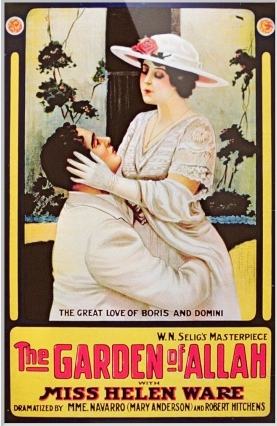
The 1916 iteration of The Garden of Allah, directed by Colin Campbell and adapted from Robert Hichens' sprawling novel, remains one of the most intellectually provocative artifacts of the silent era. It is a film that does not merely depict a story; it interrogates the very nature of the soul’s geography. In an era where cinema was often content with simplistic moral binaries, this Selig Polyscope production dared to navigate the murky waters of sacerdotal crisis and the agonizing friction between divine calling and earthly desire.
From the initial frames, the Sahara is presented not as a mere backdrop, but as a protagonist in its own right—a vast, shifting expanse of sand that mirrors the internal instability of its characters. Domini Enfilden, portrayed with a hauntingly stoic grace by Eugenie Besserer, enters this wasteland not as a tourist, but as a penitent. Her journey to Beni Mora is a flight from the ruins of a life shattered by her father’s blasphemous end. Much like the protagonists in Lost in Darkness, Domini is searching for a light that the civilized world has failed to provide.
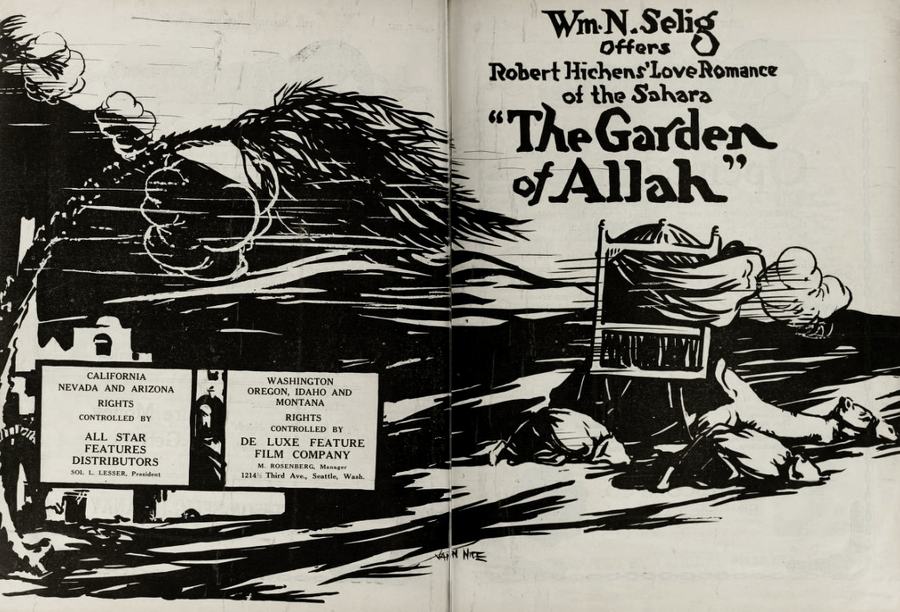
The cinematography, though limited by the technical constraints of 1916, manages to capture the oppressive majesty of the desert. The 'Garden of Allah'—the desert itself—is a place where God is felt in the silence and the heat. It is here that she encounters Boris Androvsky (Tom Santschi), a figure of rugged masculinity whose eyes betray a terror that is more metaphysical than physical. Santschi’s performance is a revelation of silent-era nuance; he conveys a man perpetually on the verge of a spiritual collapse, his every gesture a battle between the asceticism of his past and the burgeoning passion of his present.
The central conflict of The Garden of Allah hinges on a secret that would have been profoundly scandalous to a 1916 audience. Boris is a runaway monk, a man who has broken the most solemn of vows. This thematic core places the film in a league of its own, far removed from the lighter social comedies of the time, such as A Florida Enchantment. While the latter explores the whimsical side of transformation, Campbell’s film delves into the agonizing reality of a man trying to shed his skin only to find that his soul is indelibly marked by the liturgy.
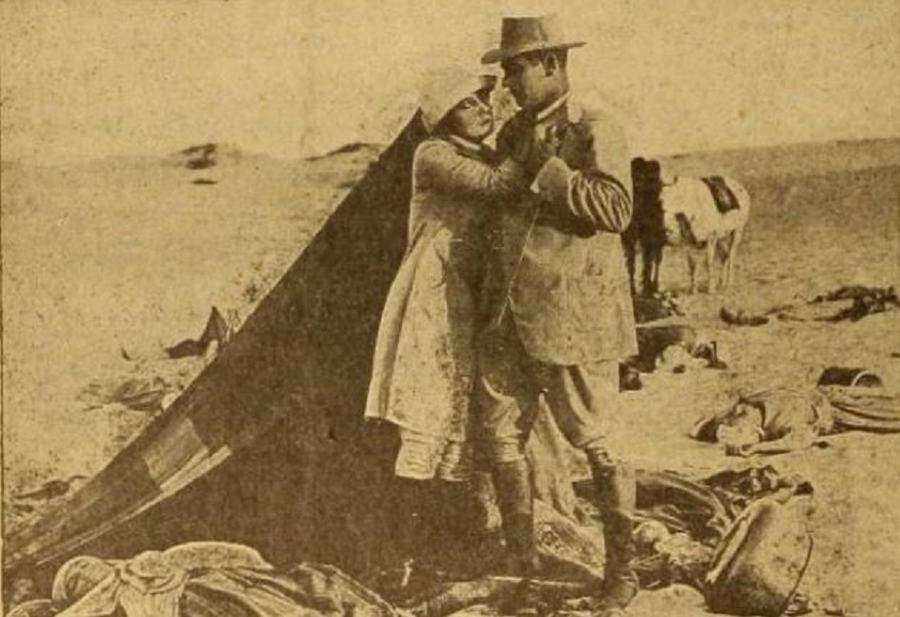
The romance between Domini and Boris is handled with a delicate, almost liturgical reverence. When they are married by Father Roubier, there is a sense of impending doom that hangs over the ceremony—a dramatic irony that the film exploits with masterful pacing. The intrusion of Captain De Trevignac acts as the catalyst for the inevitable 'Anagnorisis.' Unlike the melodramatic twists found in The Million Dollar Mystery, this revelation is treated with a somber, tragic weight. Boris is not a villain; he is a man whose humanity was too vast for the monastery walls, yet whose conscience is too heavy for the world outside.
When we examine the moral architecture of this film alongside The Victory of Virtue, we see a fascinating divergence in how early cinema treated the concept of 'right action.' While many contemporary films favored a clear-cut triumph of traditional morality, The Garden of Allah offers a more pyrrhic victory. Boris’s return to the monastery is presented not as a joyous homecoming, but as a necessary sacrifice. It is a renunciation of the self for the sake of the divine order, a theme that resonates with the heavy dramatic stakes of The Final Judgment.
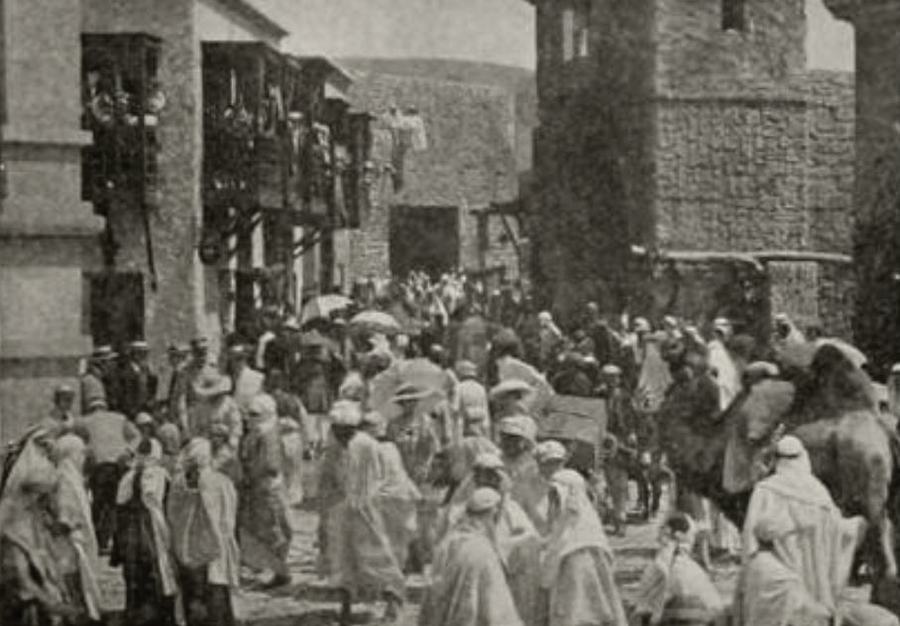
The film’s refusal to provide a standard 'happily ever after' is its greatest strength. Domini’s decision to urge Boris back to his vows is an act of supreme love, yet it leaves her in a state of perpetual solitude. The final act, where she raises their son in the very desert where they found and lost each other, is a haunting image of maternal resilience. It contrasts sharply with the more conventional resolutions found in films like The Suburban or the adventurous escapism of The Diamond from the Sky.
The use of light and shadow in this production is particularly noteworthy. The glare of the Saharan sun serves to expose the characters' flaws, while the cool shadows of the oasis provide a fleeting, deceptive sanctuary. This visual dichotomy is essential to understanding the film’s subtext. The desert is the truth; the garden is the dream. This level of visual storytelling was quite advanced for its time, rivaling the atmospheric density of international works like Obozhzhenniye krylya.
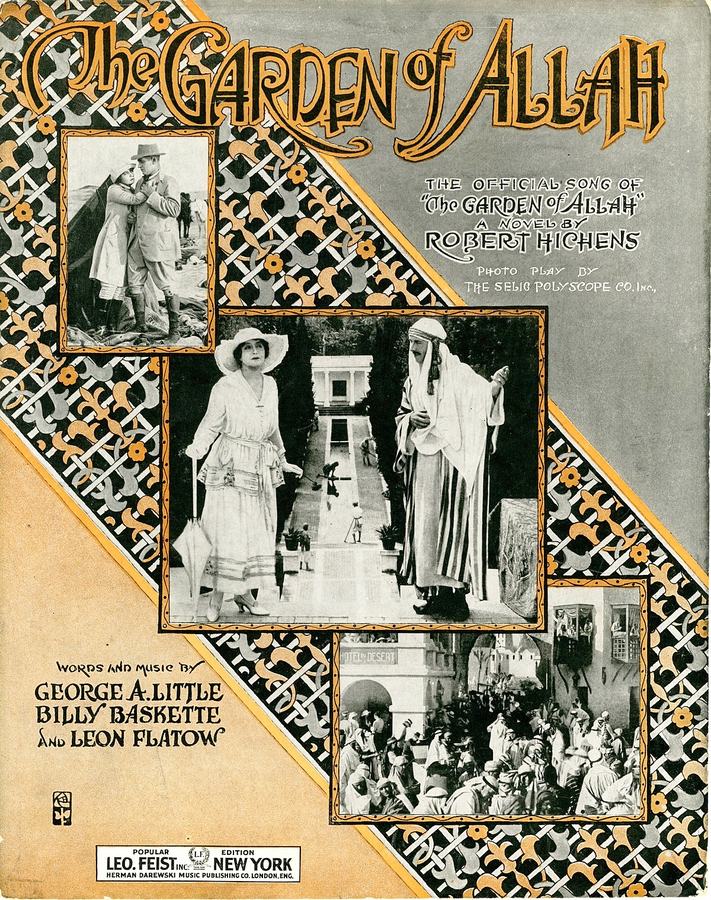
Furthermore, the supporting cast, including Eugenie Besserer and Tom Santschi, brings a level of gravitas that elevates the material. Besserer, in particular, avoids the histrionics often associated with silent drama, opting instead for a performance of quiet intensity. Her Domini is a woman of profound intellect and spiritual depth, a far cry from the more decorative female leads of the era. The presence of actors like James Bradbury Sr. and Harry Lonsdale adds a layer of professional polish to the ensemble, ensuring that even the minor characters feel grounded in the film’s reality.
Why does The Garden of Allah continue to fascinate? Perhaps it is because it touches on a universal anxiety: the fear that our pasts are irredeemable. In the character of Boris, we see the struggle of every individual who has ever felt the weight of a choice that cannot be unmade. The film’s exploration of the Trappist vow—a commitment to silence and seclusion—serves as a powerful metaphor for the isolation of the modern condition. While films like Money or The Price of Crime deal with external social pressures, this film is concerned with the internal court of the conscience.
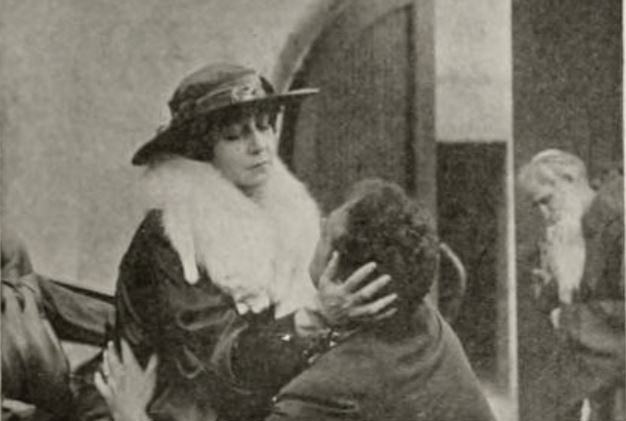
The theological implications are also worth noting. The film suggests that while God may be found in the desert, the path to Him is often paved with personal agony. This is a sophisticated message for a medium that was still in its infancy. It aligns the film more with the literary traditions of the 19th century than with the burgeoning Hollywood studio system. It shares an kinship with the somber, character-driven narratives of A Welsh Singer, focusing on the individual's place within a larger cultural and spiritual framework.
In conclusion, The Garden of Allah is a towering achievement of silent cinema that deserves a place in the pantheon of great religious dramas. It is a film of immense lexical diversity in its visual language, eschewing the easy tropes of the 'desert romance' in favor of a rigorous examination of faith and desire. While it lacks the kinetic energy of a May Day Parade or the swashbuckling intrigue of Captain Swift, it compensates with a profound emotional depth and a philosophical maturity that was rare for its time.
For the modern viewer, the film offers a window into a world where the stakes of morality were absolute. It challenges us to consider what we would sacrifice for our convictions and whether true peace can ever be found in the arms of another when one’s soul is pledged elsewhere. Like the titular garden, the film is a place of both beauty and desolation, a testament to the enduring power of the silent image to capture the most complex of human emotions. It stands alongside works like The Rebel and I my kak liudi as a vital piece of cinematic history that reminds us that the greatest conflicts are often the ones fought in the silence of our own hearts.
Note: This 1916 production is a distinct entity from the more famous 1936 Technicolor version, and it possesses a raw, expressionistic energy that is arguably more faithful to the spirit of Hichens' original text.
IMDb 7
1923
Community
Log in to comment.