DbcultAccessing Vault...
Cult Review
Senior Film Conservator
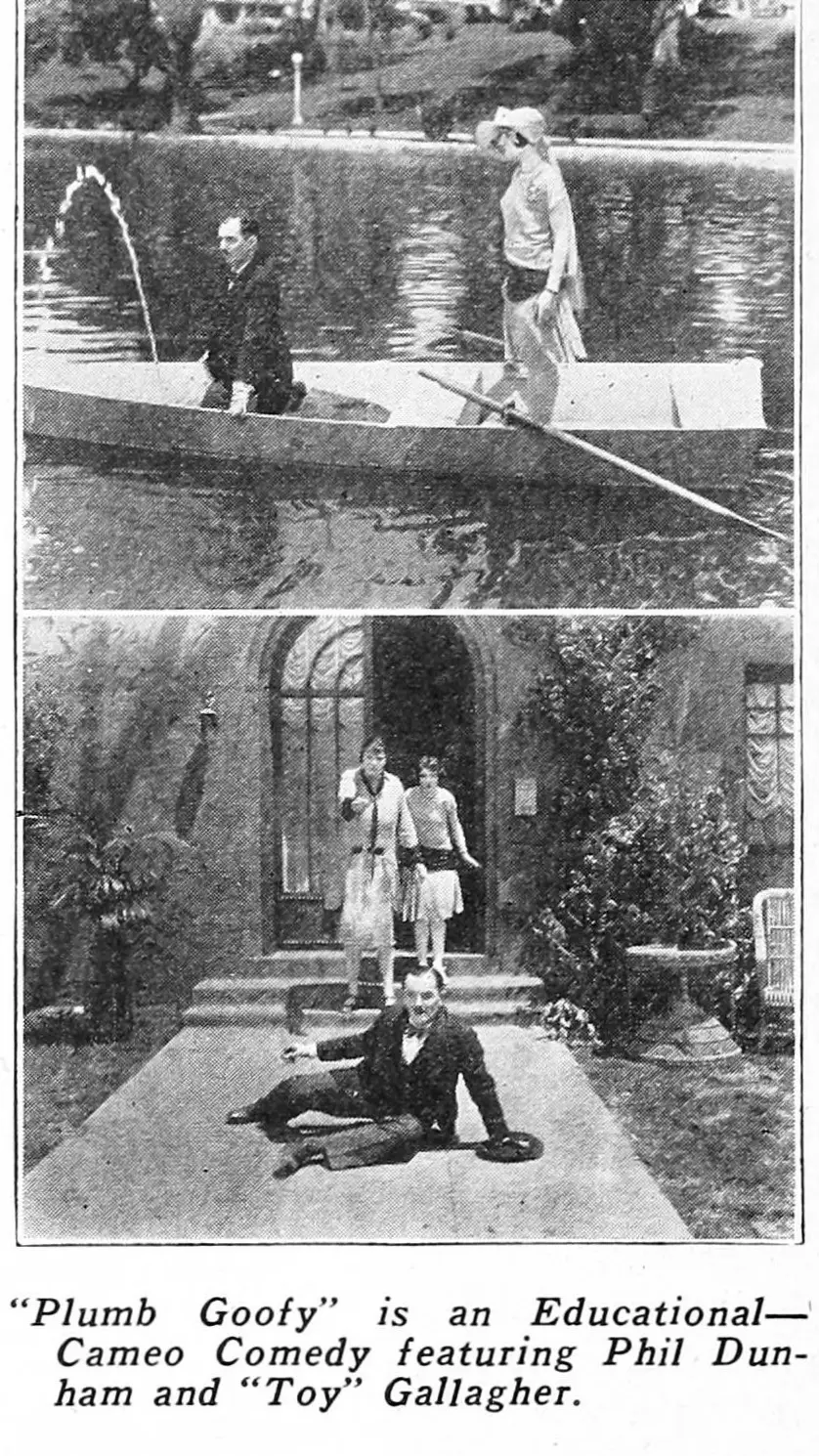
Is 'Plumb Goofy' worth watching today? Short answer: yes, but with significant caveats. This early silent comedy offers a fascinating glimpse into the nascent slapstick genre, making it essential viewing for cinephiles and historians. Yet, its dated humor and relentless rapid-fire pacing might alienate modern casual audiences.
This film is best for those with a deep appreciation for the foundational elements of physical comedy and the raw, untamed energy of early cinema. It is emphatically NOT for viewers seeking nuanced character development, sophisticated plot lines, or quiet contemplation.
The film, a whirlwind of gags and chases, serves as a fascinating artifact. It showcases the sheer inventiveness required to entertain without dialogue, relying almost entirely on visual spectacle and exaggerated performance.
But does it hold up beyond its historical significance? That's a more complex question, one that delves into the very nature of humor and how it evolves.
This film works because of its unapologetic commitment to physical comedy, delivering a barrage of inventive sight gags that were groundbreaking for its era. The sheer audacity of its escalating absurdity is commendable.
This film fails because its lack of narrative depth and reliance on broad, repetitive humor can feel exhausting for contemporary viewers, offering little emotional anchor amidst the chaos.
You should watch it if you are a student of film history, a silent comedy enthusiast, or simply curious about the roots of cinematic humor. Avoid it if you prefer modern pacing, subtle comedy, or a coherent story arc.
'Plumb Goofy' wastes no time establishing its central conflict: the timeless struggle of young lovers against an overbearing paternal figure. The engagement ring, a symbol of commitment, is swiftly overshadowed by the father's violent rejection of his prospective son-in-law. This immediate escalation sets a tone of high-stakes, low-logic pandemonium that defines the entire short.
The initial act of retribution, an electric iron hurled with a note attached, is a surprising moment. It's a darkly comedic gag that hints at a level of domestic absurdity rarely seen in what might otherwise be a saccharine romance. The father's temporary incapacitation isn't just a plot point; it's a statement about the power dynamics within this chaotic family unit.
The subsequent cascade of suitcases, caught with the precision of a football player, is pure vaudeville. It’s a testament to the film’s commitment to visual spectacle over narrative realism. This sequence, featuring Jack McHugh as the beleaguered suitor, establishes his character not as a romantic hero, but as a resilient, almost acrobatic, participant in the unfolding mayhem.
The introduction of the mischievous younger brother is where the film truly embraces its chaotic heart. His theft of the elopement car isn't just an obstacle; it's a deliberate act of playful sabotage that continually steers the lovers into increasingly ridiculous situations. This character, often played by child actors in silent films, serves as a disruptive force, a living embodiment of the film’s 'goofy' title.
The journey across the stream by boat, pursued by the irate parents (likely Blanche Payson as the mother, playing a more reactive role to Phil Dunham’s father), adds another layer of physical comedy. The father's fall into the water is an expected, yet effective, payoff to the chase. It’s a classic silent film trope, designed for immediate, visceral laughter.
However, the climax, with the brother repurposing the life-line into a tow-line, is where the film's inventiveness truly shines. The image of the lovers being unceremoniously dragged through Hollywood streets, arriving at the church in a flurry of dust and indignity, is memorable. It subverts the traditional romantic elopement, transforming it into a public spectacle of comedic humiliation. The wedding journey, a return trip in the same street-borne boat, merely solidifies the film's commitment to its own brand of whimsical, relentless chaos.
In 'Plumb Goofy,' the performances are less about nuanced character arcs and more about physical presence and exaggerated reactions. This is the essence of early silent comedy, where every gesture, every facial expression, had to convey meaning without the aid of dialogue.
Jack McHugh, as the determined suitor, embodies a remarkable resilience. He's not just a romantic lead; he's a human punching bag, a skilled catcher, and a bewildered participant in the escalating madness. His ability to maintain a sense of purpose amidst the constant physical abuse is key to the film's comedic engine. Watch his reaction shots during the suitcase barrage – they are priceless.
Phil Dunham, likely playing the irate father, is a master of the blustering, authoritarian figure. His initial fury, his exasperated pursuit, and his eventual dunking in the stream are all delivered with a theatricality that speaks to the stage roots of many silent film actors. He is the immovable object against McHugh’s unstoppable force, and their dynamic drives much of the physical humor.
Blanche Payson, often cast as formidable or comedic matriarchs, likely plays the mother here. Her role, while perhaps less central to the physical gags, would have provided a crucial grounding presence, or perhaps an equally exaggerated counterpoint to Dunham's paternal rage. Her reactions would have served to amplify the absurdity of the situation.
The true standout, however, is the unnamed actor portraying the mischievous younger brother (Toy Gallagher is listed, which fits). This character is the catalyst for much of the film's unique brand of humor. His actions, from stealing the car to the ingenious misuse of the life-line, are not merely plot devices; they are acts of pure, unadulterated impishness. The humor derived from his actions is surprisingly modern in its subversive quality, almost like a precursor to the 'agent of chaos' archetype seen in later comedies.
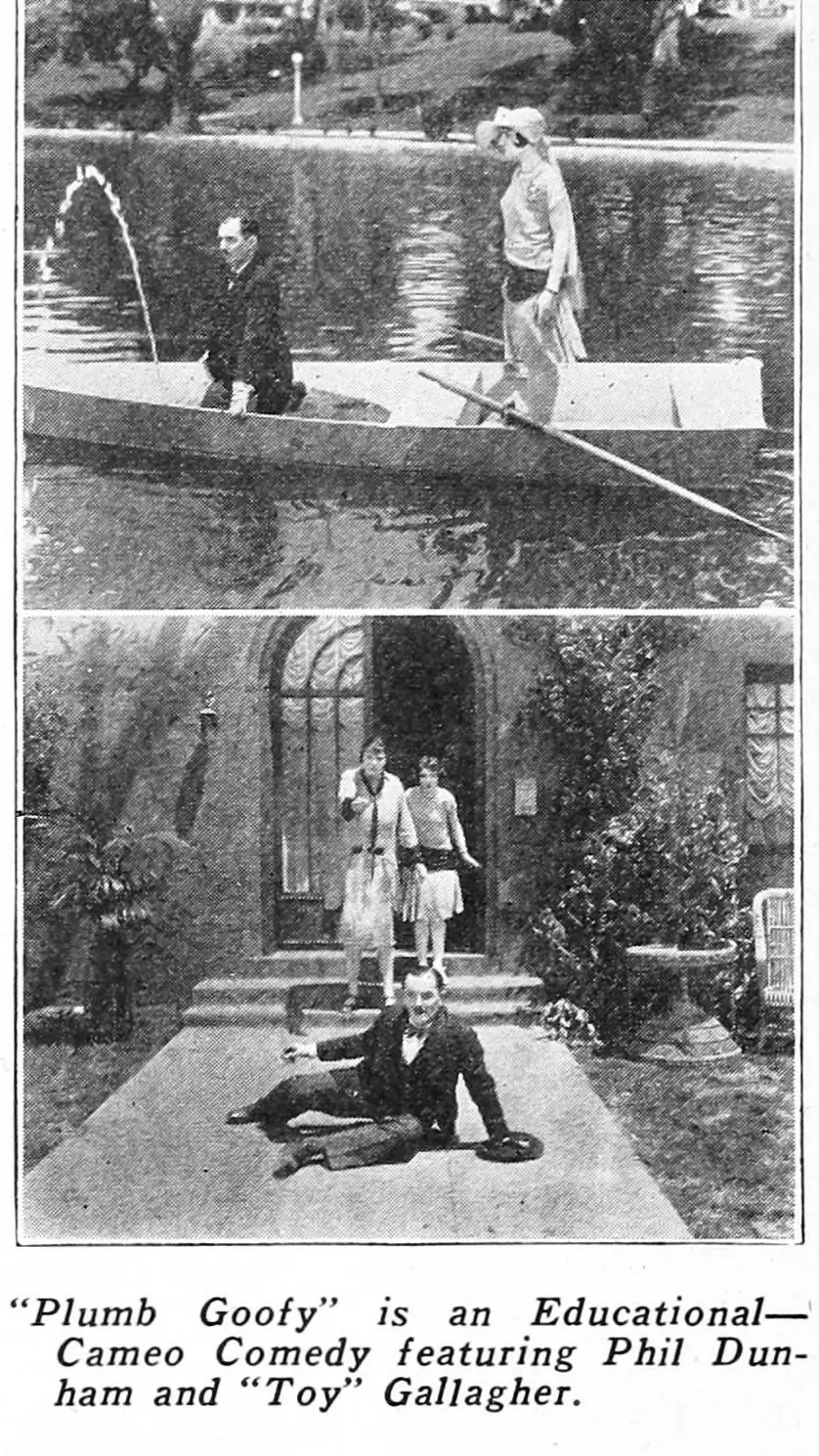
The physicality of the entire cast is paramount. Without dialogue, communication relies on broad gestures, pratfalls, and chases. The actors commit fully to the bit, throwing themselves into the gags with admirable abandon. This isn't subtle acting; it's robust, athletic performance designed to elicit immediate, hearty laughter.
The direction in 'Plumb Goofy' is, by necessity, focused on clarity of action and relentless pacing. The film moves at a breakneck speed, typical of many early short comedies. Director Jack Lloyd (also listed in the cast, which was common for the era) understands that silent comedy thrives on momentum. There is little time for lingering shots or character introspection.
The cinematography, while rudimentary by modern standards, effectively captures the kinetic energy of the gags. Shots are generally wide, allowing the audience to take in the full scope of the physical comedy. Close-ups are sparse, used primarily for reaction shots or to highlight a crucial prop, like the note on the electric iron.
Pacing is arguably the film's most defining characteristic. From the initial expulsion to the final, absurd wedding procession, the film rarely pauses. This relentless forward motion ensures that even if one gag doesn't land, another is just around the corner. It's a strategy that keeps the audience engaged, even if it occasionally feels like being caught in a comedic blender.
The tone is undeniably lighthearted and farcical. Despite the aggression of the father and the potential dangers of falling irons or watery plunges, there's never a sense of genuine threat. The world of 'Plumb Goofy' operates on cartoon logic, where injuries are momentary setbacks and consequences are purely comedic.
One unconventional observation is the almost subversive use of everyday objects. The electric iron, a symbol of domesticity, becomes a weapon and a communication device. Suitcases, typically for travel, become projectiles. The life-line, meant for rescue, becomes a tool for comedic coercion. This playful reinterpretation of common items showcases a cleverness in visual storytelling that transcends mere slapstick.
The humor in 'Plumb Goofy' is rooted deeply in the traditions of vaudeville and circus clowning. It’s a testament to the fact that certain comedic archetypes and physical gags are timeless. The angry patriarch, the resourceful lover, the mischievous child – these are characters that resonate across generations, albeit with different comedic packaging.
While the specific gags might feel dated, the underlying principles of slapstick remain relevant. The exaggerated reactions, the pratfalls, the chases, the unexpected twists – these are the building blocks of much modern comedy, from animated cartoons to action-comedies. Viewing 'Plumb Goofy' is like watching a master class in the fundamentals.
However, it's also important to acknowledge that humor evolves. What was uproarious in the 1920s might elicit only a chuckle or a polite smile today. The film's reliance on repetitive gags, while effective for its era, can feel less sophisticated to an audience accustomed to more varied comedic styles and narrative complexity.
One could argue that the film's greatest strength, its sheer commitment to chaos, is also its biggest weakness. It sacrifices any semblance of character depth or emotional resonance for the sake of the next laugh. Is this a flaw, or simply the nature of the beast? For a film titled 'Plumb Goofy,' perhaps it’s entirely intentional.
It works. But it’s flawed.
For film scholars and silent cinema enthusiasts, absolutely. 'Plumb Goofy' offers invaluable insight into the origins of screen comedy, showcasing the raw energy and inventive spirit of its time. Its historical significance alone makes it a worthwhile viewing experience.
For the casual viewer, it's a more challenging proposition. The lack of dialogue, the rapid-fire pacing, and the broad, physical humor might not appeal to everyone. If you're looking for a relaxing, easily digestible comedy, this might not be it. However, if you approach it with an open mind and an appreciation for its historical context, there are genuine laughs to be found.
The film is a relic, but a vibrant one. It's a snapshot of a particular moment in cinematic history when filmmakers were still discovering the language of the moving image, especially for comedic effect. Its influence, though perhaps indirect, can be felt in countless films that followed.
'Plumb Goofy' is more than just its title suggests; it's a vibrant, if unpolished, gem from the silent era, brimming with an infectious, chaotic energy. It stands as a testament to the raw inventiveness of early filmmakers who had to craft laughter purely through visual means. While it undoubtedly shows its age, particularly in its lack of narrative sophistication and the sheer relentlessness of its pacing, its historical value is undeniable.
The film's strength lies in its unapologetic commitment to slapstick. From the hurled electric iron to the street-borne boat ride, every frame is dedicated to eliciting a chuckle or a guffaw. The performances, particularly the athletic resilience of Jack McHugh and the impish glee of the younger brother, elevate the material beyond mere spectacle.
However, it's not a film for everyone. Modern audiences accustomed to more subtle humor or intricate plotlines might find its charms elusive. It demands an appreciation for the foundational, almost primitive, forms of cinematic comedy. It's loud, it's frantic, and it’s unapologetically silly.
Ultimately, 'Plumb Goofy' is a valuable piece of cinematic history, a wild ride that offers genuine insight into the birth of screen comedy. It's a film that earns its place in the archives, even if it doesn't always translate perfectly to contemporary tastes. For those willing to embrace its unique brand of early 20th-century pandemonium, it’s a surprisingly engaging, if exhausting, experience. It’s certainly more than just a footnote; it’s a riotous, if slightly unrefined, blueprint for laughter to come.
IMDb 5.3
1934
Community
Log in to comment.