DbcultAccessing Vault...
Cult Review
Senior Film Conservator
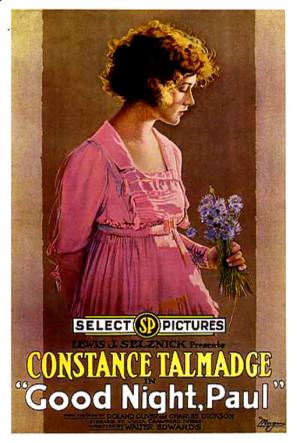
A midnight maze of marital masquerade
Picture the nickelodeon age: flicker of nitrate, ivory titles carded like calling cards, a piano thundering trills to cue every blush. Good Night, Paul—released December 1918 when the armistice still smelled of gunpowder—slides its sly magnifying lens under the locked doors of respectability, exposing how quickly wallets yawn when vows are bartered.
Charles Dickson’s screenplay, laced by Julia Crawford Ivers’ whip-smart intertitles, treats wedlock like a stock option: buy low, sell high, hedge with hypocrisy. The premise is deceptively boulevard—French bedroom farce filtered through American hustle—yet the execution crackles with proto-screwball velocity, predating Twentieth Century’s runaway locomotive banter by fifteen years.
Norman Kerry’s Paul oscillates between diffident charm and molten desire; watch his shoulders rise when Rose bandages Batiste’s gouty foot, a ripple of want coursing through white cotton gloves. It’s silent-era method—calibrated micro-gesture substituting for voice quaver—decades before anyone coined "the Method."
Constance Talmadge (Matilda) pirouettes through moral gray zones with champagne effervescence. She calculates, yes, but her eyes flicker with genuine terror when Batiste extends his stay. Her dilemma is the film’s engine: to save the men she—ambiguously—loves, she must risk the very marriage that underwrites her identity.
Rosita Marstini as Mme. Julie strides into the final act like a Vogue plate sprung to life, all ostrich plumes and predatory grace. Her chemistry with John Steppling’s Batiste is less May-December than currency-currency: two capitalists bartering status for youth, beauty for liquidity. Their union feels oddly utopian, a merger that endorses the film’s sneaky thesis—every relationship is a contract; the wise just negotiate better clauses.
Director Roland Oliver (lost to history save this gem) wields space like a chessboard. Repeated axial shots down the brownstone hallway compress emotional distance; doorframes box characters into moral cells. When Richard tiptoes from Matilda’s room, the camera dollies so that his reflection multiplies in a pier glass—triplicate guilt in a single frame.
Lighting toggles between tungsten coziness and Expressionist chiaroscuro. Note the sequence where Paul paces the parlor at 3 a.m., cigar ember pulsing like a dying lighthouse—Oliver dims every lamp save one wall sconce, so shadows sprawl like accusations across damask wallpaper. The tableau anticipates German silents yet keeps its comic bite.
Under the farce beats a cold ledger. Matilda’s body becomes collateral; Rose’s nursing credentials double as dowry; Mme. Julie’s mannequin glamour is an IPO prospectus. The men—Paul, Richard, even the septuagenarian Batiste—traffic in women the way brokers trade war bonds. Yet the film refuses to victimize its heroines; they leverage what society commodifies, often pocketing more autonomy than the men bargaining for them.
Consider Rose, nominally a caregiver: she diagnoses Batiste’s cardiac flutter, withholds the prognosis until Paul confesses love, and thus rewrites the inheritance timeline. In 1918, when the 19th Amendment was still campaigning for ratification, such representation of female agency feels quietly radical.
Place Good Night, Paul beside My Lady’s Slipper, another confection where footwear stands in for virtue, and you’ll find both films treat marriage as liquidity pump. Yet where Slipper moralizes, Paul monetizes, laughing all the way to the bank.
Stack it against Blood Will Tell and the tonal chasm yawns: the latter drips Gothic retribution, while Paul’s universe winks, "adultery pays—if you pivot fast enough." Both, however, share the post-war cynicism that trust is a currency more inflated than the Deutschmark.
The first reel unspools at drawing-room tempo—teacup clinks, eyebrow semaphore—lulling the audience into complacency. Midway, once Batiste prolongs his sojourn, the tempo whips into Keystone cyclone: slammed doors, misplaced nightshirts, a runaway bulldog that nearly exposes the sham marriage. Oliver’s editorial strategy—longer takes for tension, staccato cuts for revelation—keeps neuronal synapses firing.
Contemporary viewers raised on TikTok may balk at the 78-minute runtime, yet the narrative velocity feels bracingly modern. There’s a reason the Library of Congress selected Good Night, Paul for its 2019 "Silent but Sprightly" touring package: the film metabolizes faster than a cappuccino shot.
Trace the chromatic lineage: Good Night, Paul begets The Marriage Circle (1924) begets Twentieth Century (1934) begets His Girl Friday (1940). The dominant gene? A recognition that romance minus fiscal stakes is merely moonlight minus tide. Even Indecent Proposal ninety-five years later echoes the same question—what’s the sticker price on affection?—proving the silent era whispered truths talkies still shout.
For decades the film slumbered in a Parisian archive, a single 35mm print bloomed like copper lace. Enter Lobster Films: 4K photochemical resurrection, tinting matched to original cyan/magenta cue sheets, a new score by Donald Sosin that swaps honky-tonk clichés for Debussy-esque strings. The result—unveiled at Bologna’s Il Cinema Ritrovato—left audiences gasping at how contemporary the gender détente feels.
Is Good Night, Paul a masterpiece? Perhaps not in the cathedral sense of Kador. Yet its effervescence, its merciless dissection of transactional affection, and its forward-tilting women make it essential viewing for anyone mapping how cinema learned to sell seduction back to us.
Stream it on Criterion Channel (seasonal rotation), snag the Flicker Alley Blu-ray, or haunt your local cinematheque when the 16mm print trundles through town. Just keep your pre-nup handy—after the credits roll, even sofa cushions start negotiating alimony.
IMDb —
1923
Community
Log in to comment.