DbcultAccessing Vault...
Cult Review
Senior Film Conservator
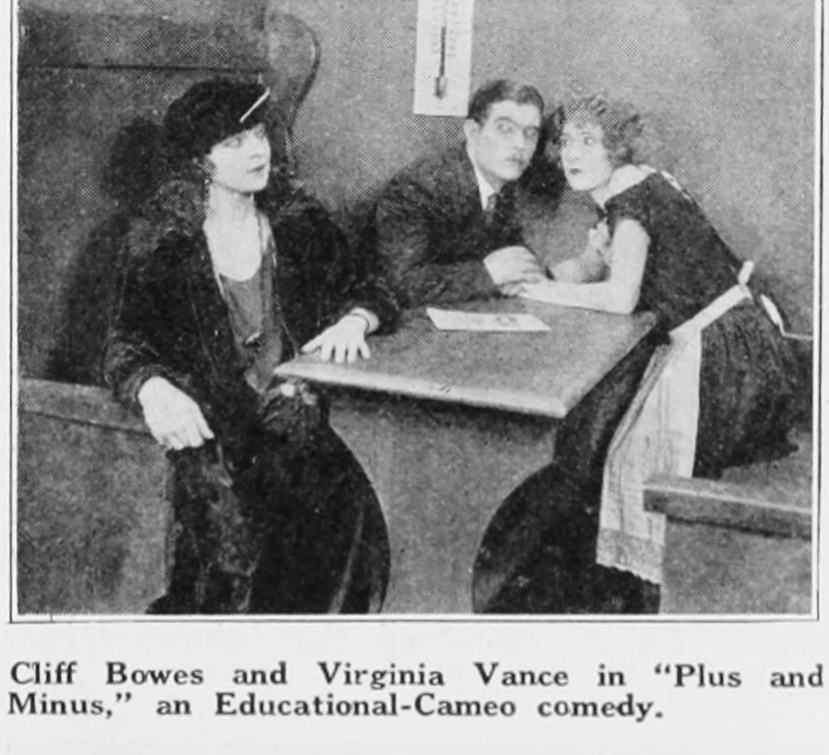
When the title Plus and Minus first flickers across the screen, the viewer is immediately thrust into a world where arithmetic becomes a metaphor for moral accounting. Cliff Bowes, the film’s eponymous protagonist, embodies the archetype of the hapless tenant whose ledger is perpetually in the red. The premise—an unpaid rent notice, a fabricated postcard, and a reluctant benefactor—might appear deceptively simple, yet the film leverages this simplicity to interrogate broader social anxieties of the 1920s, particularly the precariousness of urban existence and the thin veneer of respectability that could be shattered by a single misstep.
The central contrivance—a self‑addressed postcard announcing an uncle’s death—functions as both plot catalyst and thematic fulcrum. Bowes’ meticulous staging of the forgery, from the careful selection of stationery to the exaggerated flourish of the ink, is rendered with a kinetic energy that belies the film’s silent format. The audience, privy to the deception, experiences a dramatic irony that amplifies the tension between appearance and reality. This device mirrors the narrative strategies employed in contemporaneous works such as The Heir to the Hoorah, where inheritance and pretense similarly drive the plot forward.
Cliff Bowes delivers a performance that oscillates between frantic physicality and subtle, almost imperceptible facial cues. His eyes, wide with desperation, convey a silent soliloquy that complements the film’s reliance on pantomime. Opposite him, Virginia Vance portrays the landlady with a layered complexity; she is not merely a stern matriarch but a character whose occasional softening hints at an underlying empathy. Vance’s occasional glances toward the camera break the fourth wall, inviting the audience to question the societal expectations imposed upon women in positions of authority during the era.
The cinematography, though constrained by the technological limits of its time, employs chiaroscuro lighting to underscore the protagonist’s moral ambiguity. Scenes set within the cramped boarding house are bathed in stark, high‑contrast illumination, casting elongated shadows that echo Cliff’s looming financial debt. Conversely, the moments when the landlady extends her loan are suffused with a softer, diffused glow, subtly suggesting a tentative redemption. This visual language resonates with the aesthetic choices in The Veiled Marriage, where light functions as a narrative agent.
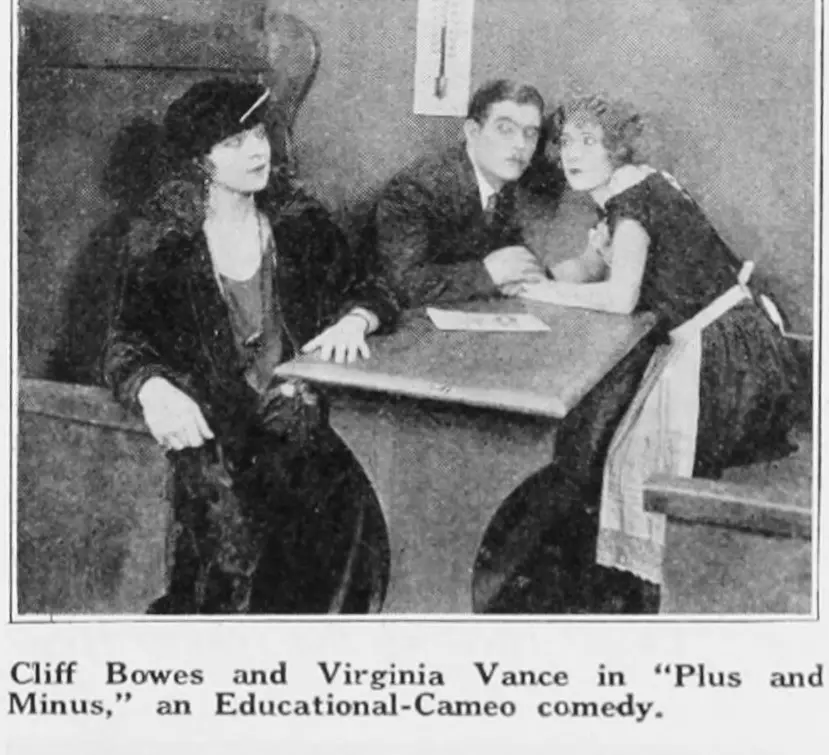
Beyond its comedic veneer, Plus and Minus offers a poignant commentary on the socioeconomic pressures that compel individuals to fabricate realities. Cliff’s desperation is not merely personal; it reflects a collective anxiety prevalent in post‑World War I America, where inflation and housing shortages forced many into precarious living arrangements. The film’s resolution—where the landlady’s reluctant generosity averts eviction—does not provide a tidy moral lesson but rather underscores the fragile interdependence between tenant and landlord, a relationship fraught with power dynamics that remain relevant today.
While Plus and Minus stands as a singular artifact, its narrative motifs reverberate through later cinematic endeavors. For instance, the theme of a fabricated inheritance reappears in Her Night of Nights, albeit with a more melodramatic tone. Moreover, the film’s exploration of landlord‑tenant tensions anticipates the social satire found in The Melting Pot, where class conflict is rendered through comedic misunderstandings. These intertextual connections enrich the viewing experience, positioning Bowes’ work within a broader tapestry of early twentieth‑century cinema.
Although the credited writers remain anonymous, the script exhibits a disciplined economy of narrative beats. The film progresses through a series of escalating obstacles: the overdue rent notice, the creation of the fraudulent postcard, the landlady’s discovery, and the eventual loan. Each act is punctuated by a visual gag—a slipping chair, a misdelivered letter, a startled cat—that serves both as comic relief and as a narrative bridge. This rhythmic pacing mirrors the structural precision found in Novoye platye korolya, where comedic timing is meticulously calibrated.
Intertitles in Plus and Minus are sparingly employed, allowing visual storytelling to dominate. When they do appear, they are rendered in an elegant serif font, colored in the sea‑blue hue #0E7490, providing a visual contrast against the black background and white text of the surrounding narrative. These intertitles convey crucial plot points—such as the content of the forged postcard—without interrupting the film’s kinetic flow. The restraint shown here is reminiscent of the minimalist approach in Fresh Paint (1922), where dialogue cards are used only to accentuate pivotal moments.
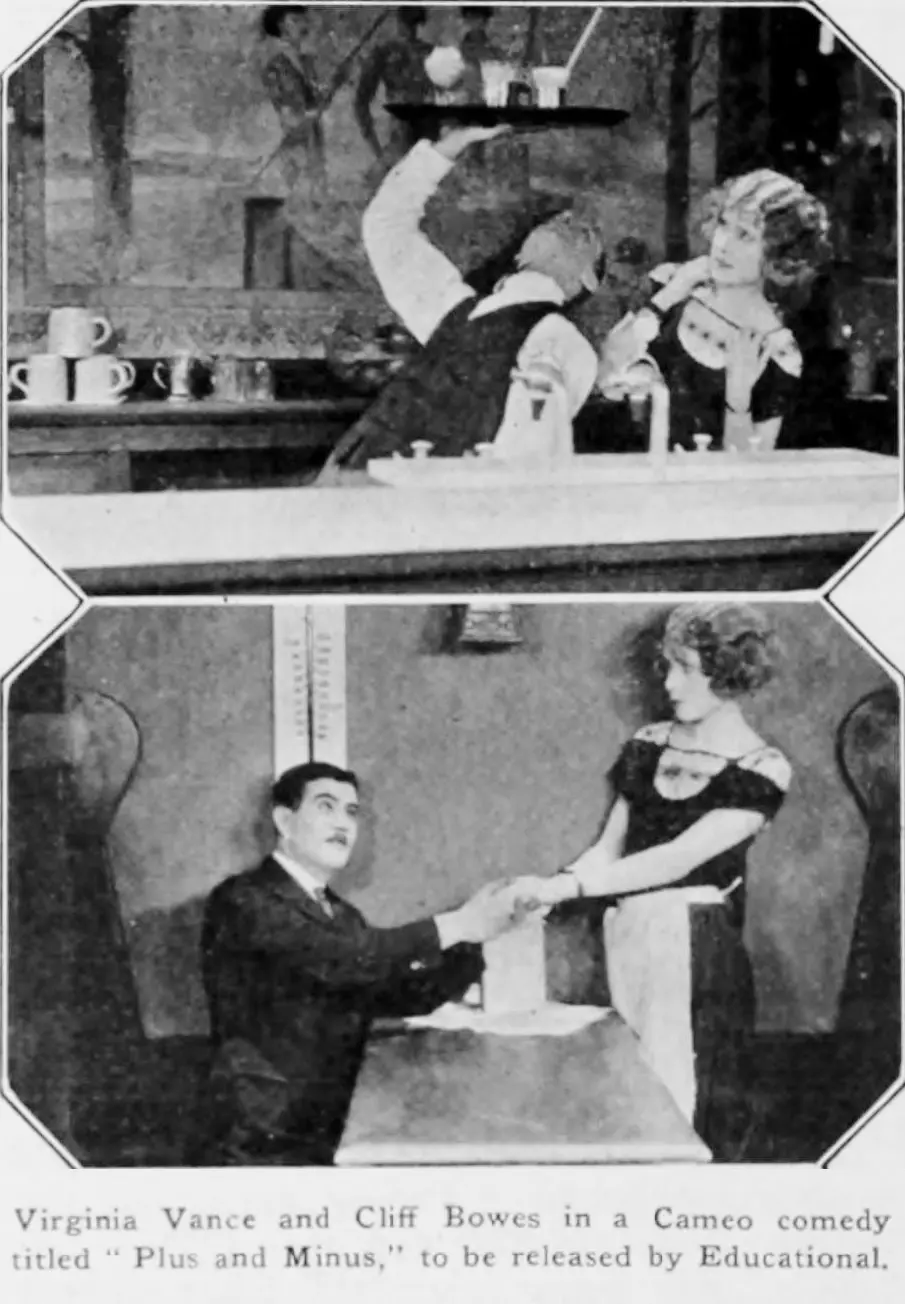
The boarding house itself emerges as a silent protagonist, its cramped corridors and creaking floorboards echoing the protagonist’s internal turmoil. Set designers employed weathered wood, threadbare curtains, and a single, sputtering oil lamp to evoke a sense of economic austerity. The meticulous attention to period‑accurate details—such as the brass mailbox and the patterned floor tiles—grounds the narrative in a tangible reality, enhancing audience immersion. This level of detail parallels the atmospheric construction in Ducks and Drakes, where setting functions as an extension of character psychology.
Virginia Vance’s portrayal of the landlady subtly subverts contemporary gender norms. While she initially embodies the archetype of the stern, profit‑driven proprietor, her eventual decision to extend credit reveals an agency that challenges the era’s patriarchal expectations. This nuanced depiction aligns with the progressive characterizations seen in Kathleen Mavourneen, where female leads navigate societal constraints with resilience and cunning. The interplay between Cliff’s desperation and the landlady’s reluctant generosity underscores a delicate negotiation of power, reflecting the shifting dynamics of post‑war American society.
Though Plus and Minus did not achieve the commercial heights of contemporaneous blockbusters, its thematic preoccupations and stylistic choices have reverberated through subsequent decades. Modern filmmakers continue to draw upon the motif of a fabricated inheritance as a catalyst for comedy, evident in recent indie productions that echo Bowes’ blend of slapstick and social commentary. Moreover, the film’s exploration of economic vulnerability anticipates the narrative concerns of later works such as The Evil Eye, where financial desperation precipitates moral compromise.
Contemporary reviews from the 1920s praised Bowes’ kinetic timing and Vance’s nuanced performance, noting the film’s “sharp wit” and “authentic portrayal of urban hardship.” Modern critics, revisiting the work through a retrospective lens, commend its “timeless relevance” and “masterful economy of storytelling.” The film’s inclusion in curated retrospectives, such as the Screen Snapshots, Series 1, No. 2, underscores its enduring scholarly interest.
In sum, Plus and Minus transcends its modest runtime to offer a layered meditation on deception, compassion, and the fragile arithmetic of human relationships. Through Bowes’ expressive physicality, Vance’s layered characterization, and a deftly constructed visual palette, the film invites viewers to contemplate the ethical calculus that governs survival in an unforgiving world. Its legacy persists, not merely as a relic of silent comedy, but as a resonant commentary on the perennial tension between necessity and integrity.

IMDb —
1927
Community
Log in to comment.