DbcultAccessing Vault...
5.7/10
Senior Film Conservator
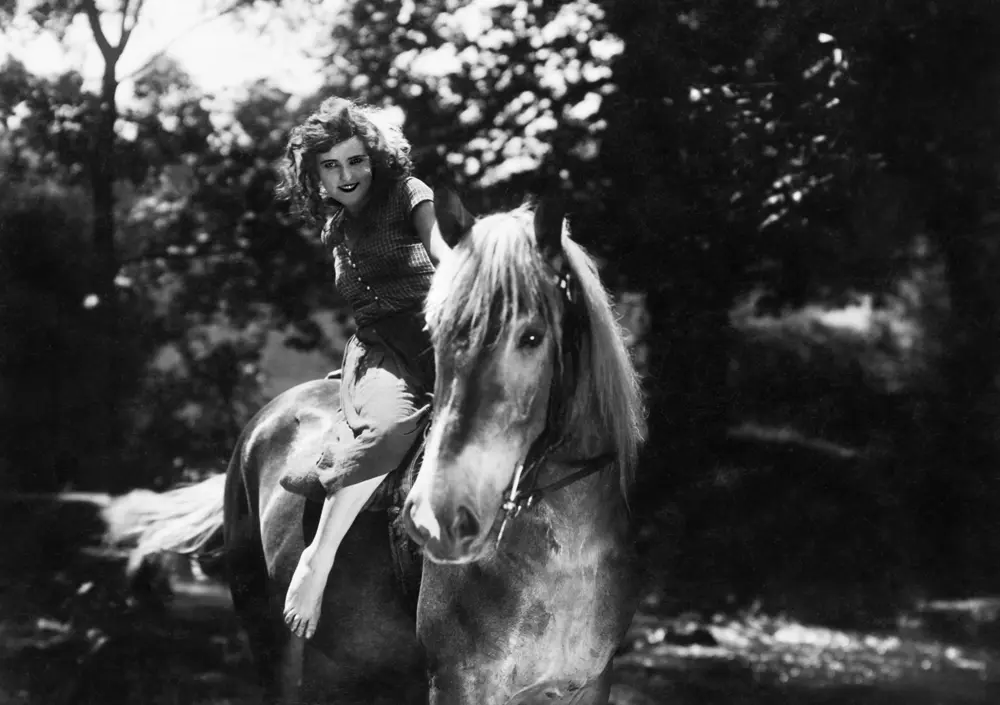
A definitive 5.7/10 rating for a film that redefined the boundaries of cult cinema. Pohádka máje remains a cornerstone of transgressive art.
Is Pohádka máje worth watching today? Short answer: yes, but with significant caveats that demand a certain cinematic palate. This film is an absolute must-see for ardent cinephiles fascinated by early 20th-century European romantic drama and the foundational elements of Czech cinema, yet it will likely prove a challenging, even alienating, experience for those accustomed to modern narrative rhythms or seeking immediate gratification.
It's a journey into a bygone era, both in its storytelling and its technical execution, and as such, it caters specifically to viewers who appreciate historical context and a more contemplative pace. This film is for those who find beauty in the slow unfolding of character and atmosphere, rather than plot-driven urgency. Conversely, if your viewing habits lean towards contemporary blockbusters, sharp dialogue, or rapid-fire editing, Pohádka máje will test your patience rather than reward it.
Pohádka máje, or 'A May Fairy Tale,' is more than just a film; it’s a living artifact of early Czech filmmaking, a lyrical adaptation of Vilém Mrstík’s beloved novel. It tells the story of Růženka, a young woman steeped in the quiet beauty of a rural village, whose life takes an unexpected turn with the arrival of Václav, a law student from Prague. Their romance is painted with broad, almost idyllic strokes, emphasizing the purity of nature and the innocence of burgeoning love.
The film’s plot, while simple, is deeply resonant. Růženka, played with an almost ethereal fragility by Betty Kysilková, embodies a rustic naivety that feels both charming and, at times, a little bewildering to a modern audience. Václav, portrayed by Jan Richter, is the archetypal 'city boy' – ostensibly dissolute, yet possessing an underlying kindness that draws Růženka into his orbit. Their interactions are less about dramatic conflict and more about the delicate dance of discovery, set against a backdrop that often feels like a character in itself.
This film works because of its unwavering commitment to its romantic ideal, its pioneering visual poetry for the era, and the authentic, if stylized, emotional core it manages to convey. It's a genuine attempt to capture the essence of a tender, innocent love story on screen.
This film fails because its pacing is glacially slow by contemporary standards, its melodramatic flourishes can feel overwrought, and some of its gender dynamics are undeniably dated, requiring a significant suspension of modern sensibilities.
You should watch it if you possess a deep appreciation for cinematic history, particularly early European drama, if you are drawn to slow-burn character studies, or if you simply wish to witness the formative stages of Czech cinematic language. It’s an acquired taste, but a rewarding one for the right viewer.
Václav Wasserman’s direction in Pohádka máje is a fascinating study in nascent cinematic language. Released in the early 1920s, the film predates much of what we now consider standard narrative technique. Wasserman leans heavily on visual storytelling, often allowing long takes of natural landscapes to convey mood and emotion. One particularly memorable sequence involves Růženka wandering through a sun-dappled forest, the play of light and shadow on her face speaking volumes about her inner state, far more than any dialogue could.
The cinematography, while rudimentary by today’s standards, is remarkably ambitious for its time. There’s a conscious effort to capture the idyllic beauty of the Czech countryside, transforming it into a romanticized canvas for the unfolding love story. The use of natural light, often filtered through tree canopies or reflected off water, creates an almost painterly quality. While it lacks the dynamic camera movement we expect, its static compositions are often meticulously framed, demonstrating an early understanding of visual balance and depth.
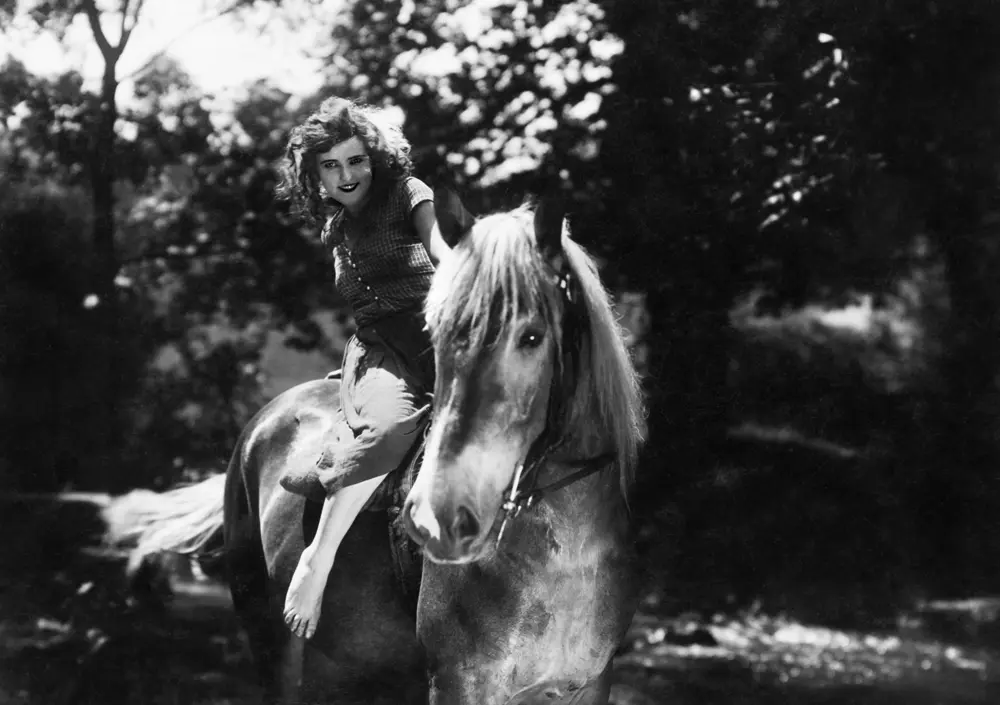
However, this commitment to visual lyricism also contributes to the film's deliberate, almost languid, pace. There are moments when the camera lingers perhaps a touch too long on a picturesque vista, or a character’s pensive expression, which can test the patience of a modern audience accustomed to more rapid scene transitions. It’s a testament to a different era of storytelling, and frankly, a challenging watch for many. This approach stands in stark contrast to the more frenetic energy one might find in a contemporary silent film like Felix the Cat Trumps the Ace, highlighting the diverse stylistic choices even within early cinema.
The performances in Pohádka máje are very much products of their time, characterized by broad gestures and expressive facial work common in the silent era. Betty Kysilková, as Růženka, is the emotional anchor of the film. Her portrayal of innocence is captivating, often conveyed through wide, guileless eyes and a posture that speaks of youthful vulnerability. There's a particular scene where she first encounters Václav, her initial shyness slowly giving way to a hesitant curiosity, which is beautifully articulated through subtle shifts in her gaze and body language.
Jan Richter, as Václav, brings a certain charm to his 'dissolute' law student. It's important to note that 'dissolute' in the context of early 20th-century Czech society likely meant little more than enjoying city life and perhaps a few too many late nights – a far cry from modern interpretations of the word. Richter manages to convey Václav’s underlying good nature and genuine affection for Růženka, preventing him from becoming a mere cad. His performance, while occasionally veering into theatricality, maintains a sense of sincerity that makes his transformation believable.
The chemistry between Kysilková and Richter is understated but effective. It’s not a fiery, passionate romance, but rather a slow-burning affection built on shared moments and quiet understanding. Their interactions, often wordless, rely heavily on their ability to convey emotion through gesture and expression, a skill that was paramount in silent cinema. The supporting cast, including Bozena Svobodová and Elsa Vetesníková, provide solid, if less nuanced, performances, grounding the idyllic romance within a community context.
The pacing of Pohádka máje is, without exaggeration, an endurance test for many contemporary viewers. It moves at a deliberate, almost meditative speed, allowing scenes to unfold with a leisurely grace that prioritizes atmosphere over narrative propulsion. This is not a flaw in the film itself, but rather a stylistic choice deeply embedded in the cinematic sensibilities of its period. Films like The Mysteries of Myra, from a similar era, often shared this unhurried approach, focusing on building tension or mood through prolonged sequences.
The tone is overwhelmingly lyrical and romantic, almost dreamlike. There’s a pervasive sense of innocence and an unwavering belief in the purity of love, which can feel both refreshing and, at times, saccharine. The film avoids cynicism almost entirely, presenting a world where genuine affection can overcome social divides and personal flaws. This earnestness is its greatest strength, giving it a timeless appeal for those who seek solace in uncomplicated narratives of love.
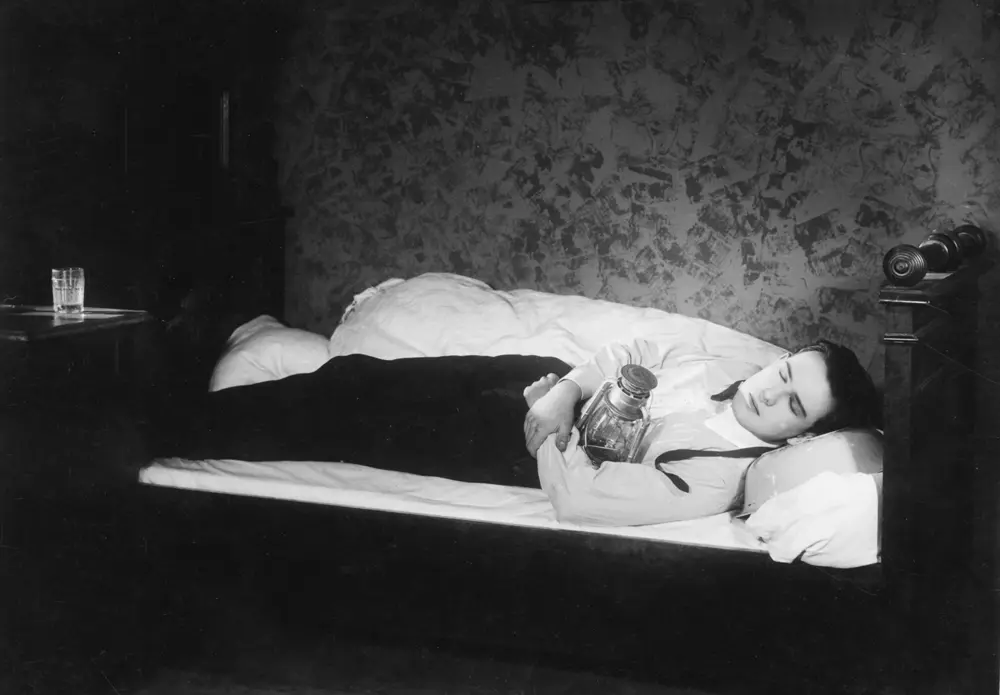
At its heart, Pohádka máje is a profound exploration of the interplay between innocence and experience. Růženka embodies an almost elemental purity, her world shaped by the rhythms of nature and the simplicity of rural life. Her naivety is not presented as a weakness, but as a source of strength and an undeniable charm. She is uncorrupted, a blank canvas upon which Václav’s more worldly experiences are gently painted.
Václav, on the other hand, represents the 'experience.' His Prague upbringing, his legal studies, and his somewhat 'dissolute' reputation all mark him as someone who has seen more of life's complexities. Yet, it is Růženka's innocence that ultimately grounds him, stripping away any pretense and revealing his inherent kindness. The film suggests that true love lies not in finding an equal, but in finding someone who complements and enriches your own perspective, bridging the gap between two disparate worlds.
One could argue that the film’s portrayal of these themes is somewhat idealized, even simplistic. It doesn't delve into the darker aspects of either innocence lost or experience corrupted. Instead, it chooses to focus on the redemptive power of love, presenting a vision that is undeniably optimistic. This is where the film takes its stance: love, in its purest form, can elevate and transform, a notion that feels almost radical in its unwavering sincerity today.
Pohádka máje is a film that demands patience and an open mind, but rewards those willing to meet it on its own terms. It is not a cinematic thrill ride, nor is it designed to be. Instead, it offers a window into a simpler time, a tender exploration of love’s first bloom, and a foundational example of Czech cinematic artistry. Its unwavering sincerity and visual beauty are its greatest assets, providing a unique counterpoint to the often cynical and fast-paced narratives of today.
For the dedicated cinephile, particularly those interested in the evolution of romantic drama or European silent film, Pohádka máje is an essential watch. It’s a beautifully preserved piece of history that, despite its archaic rhythm, still manages to whisper a universal truth about the enduring power of human connection. For everyone else, approach with caution, a comfortable chair, and a willingness to slow down and simply absorb. It might just surprise you with its quiet charm, or it might just put you to sleep. But it will certainly leave an impression.
Ultimately, Pohádka máje is a film that stands as a testament to the enduring power of simple, heartfelt storytelling. It’s a gentle whisper in a world that often shouts, and for that, it deserves our attention, if not always our unqualified adoration. It’s a film that exists, and persists, on its own terms, and that in itself is a quiet triumph.

IMDb 5.9
1935
Community
Log in to comment.