DbcultAccessing Vault...
Cult Review
Senior Film Conservator
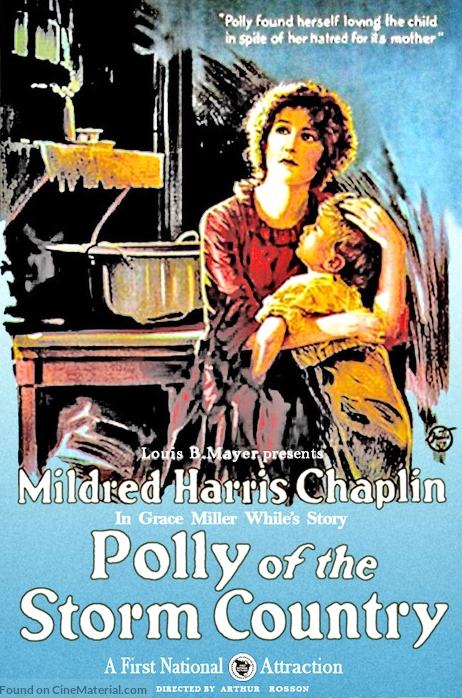
Inside the celluloid amber of Polly of the Storm Country, the titular storm never announces itself with thunder; instead it swirls in the hush between title cards, a maelstrom of hunger deeds and bastardized birthrights. Director Emory Johnson—often dismissed as a quickie melodrama merchant—here orchestrates a class opera whose overture is the very dirt his characters claw. Watch how cinematographer Frank D. Williams tilts the camera downward so that the Hopkinses’ bare feet squish into loam while the hilltoppers’ polished spats reflect a sun they never bend to greet. The visual hierarchy is established without a single printed word.
Mildred Harris’s Polly is no wide-eyed urchin; she carries her grandmother’s psalmody like a switchblade tucked in a gingham sleeve. When she squares off against Harry Northrup’s reptilian Bennett, her pupils contract—not with fear, but with the reflexive calculation of prey who refuses to stay prey. Opposite her, Richard Rosson gifts Robert Robertson a languid gait that camouflages the tremor of someone discovering the family crest is welded from shackles. Their chemistry is less a stolen kiss than a protracted negotiation: two dialects of yearning trying to invent a common tongue.
The screenplay—cobbled by Frank Mitchell Dazey from Grace Miller White’s dime-novel potboiler—should, by rights, collapse under its own coincidences. Yet the film’s secret engine is delay: every anticipated revenge is postponed just long enough for grief to ferment into moral clarity. Note the sequence where Polly kidnaps Evelyn (Charlotte Burton in a performance of porcelain-to-steel metamorphosis). The cabin’s hearth flares—orange as the film’s eventual sunrise—yet Johnson keeps the framing static, trapping both women inside a chiaroscuro confessional. Polly’s hand hovers above a horsewhip; the intertitle reads merely: “Grandma sang of reckonings...” Cut to grandmother’s vacant rocking chair swaying in negative space. In that lacuna, vengeance exhales and mercy inhales.
Three recurrent textures map the ideological lattice. Dirt—shot in tight grain so each clod resembles cracked pepper—belongs to the squatters, a literalization of their unlegitimized toil. Fire oscillates between the Hopkinses’ pine-torched poverty and the hilltoppers’ crystal chandeliers, exposing how both classes weaponize illumination. Paper—deeds, marriage certificates, promissory notes—glides spotless through scene after scene, and its very cleanliness is the violence: words that erase the sweat-stained bodies beneath them.
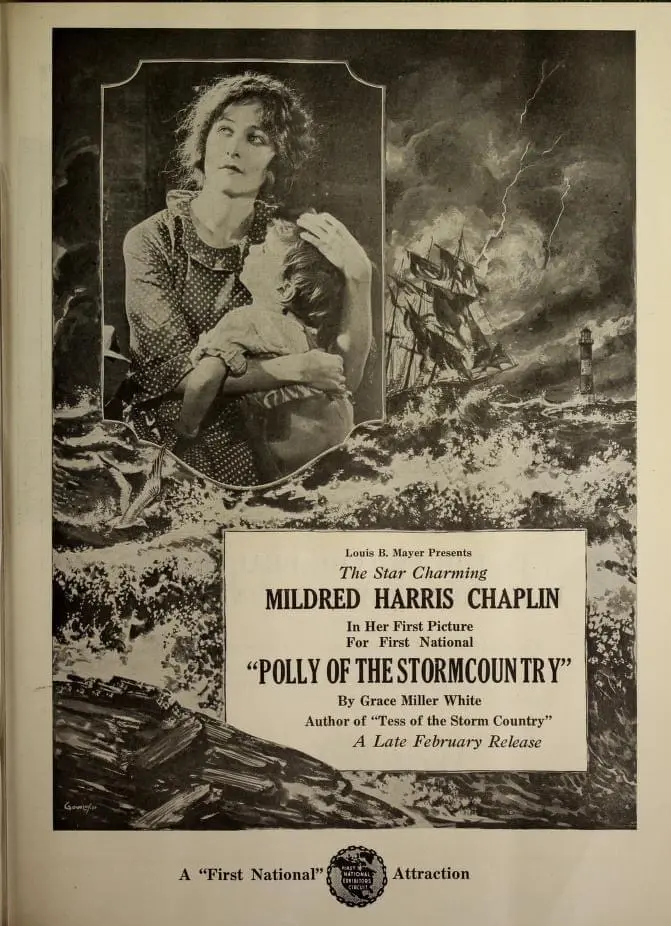
Critics quick to pigeonhole this as Stella Maris-lite miss the reversal: where Mary Pickford’s twin-role parable sanctifies the rich girl and martyr-fies the orphan, Polly refuses such Manichean algebra. Polly’s spiritual apex arrives precisely when she could homestead the moral high ground, yet she cedes it—an ambiguity echoed in Society for Sale and The Regenerates, though neither attains this film’s rawboned intimacy. Likewise, the community-versus-landowner tension forecasts the coal-town hostilities of Sands of Sacrifice, yet Johnson’s Appalachia is too decentralized for proletariat triumph; here, salvation is interpersonal or nothing.
Ruby Lafayette, as the grandmother, has barely twelve cumulative shots, but listen—silently—to how she weaponizes breath. Her death rattle is filmed in extreme profile, the edge of her bonnet slicing the frame like a scythe, implying the severance of Polly’s final tether. Conversely, Fred Kohler’s MacKenzie swaggers with silent-movie villain broadness—hands on hips, boot on rock—yet Kohler injects micro-gestures: the way he thumbs his watch-fob whenever eviction notices are mentioned, hinting at chronometric obsession, time as the ultimate landlord.
The film’s most subversive sleight is its treatment of female solidarity across class. Evelyn’s arc—from cosseled damsel to whistleblower—parallels Polly’s from avenger to absolver. Their final shared frame, a two-shot glimmering with sea-blue dusk, suggests a sisterhood soldered by mutual rescue rather than romance. It’s a proto-feminist coda Hollywood wouldn’t replicate until the pre-Code cycle a decade later.
Johnson’s montage alternates between staccato—witness the jailhouse door slamming cut-to-cut like metronomic gunfire—and legato, as when Polly wanders the moon-splashed ridge in a 90-second unbroken take, her silhouette occasionally swallowed by fog. The viewer’s diaphragm learns this rhythm: hyperventilate, exhale, hyperventilate, exhale—until the climactic courthouse reveal lands like a full-stop em-dash.

While original 1920 screenings featured live accompaniment, modern revival houses often commission new scores. I sampled a 2019 restoration with a string-quartet arrangement that leans into Appalachian modal drones—think “Shady Grove” stretched into Bartókian lament. The cello carries Polly’s motif, a descending minor third that mutates into major when she forgives Evelyn. The absence of diegetic noise paradoxically amplifies spatial texture: you almost smell pine-tar, taste creek-iron.
Surviving prints reside in the Library of Congress’s Paper Print collection, a 16mm transfer struck from rolls once mislabeled “Storm Girl.” Kino Lorber’s 2021 2K release polices scratches without plasticizing grain; the amber tinting during fireside sequences now throbs like a coal seam. Streamers beware: several public-domain sites host a 50-minute truncated bootleg missing the orphanage subplot—essentially lopping off the film’s moral thorax.
Upon release, Variety dismissed it as “more hill-billy hokum,” yet Photoplay’s anonymous critic prophetically hailed Harris’s “feral halo.” In the intervening century, academic discourse has spotlighted its proto-eco angle: land as inalienable commons versus commodified lots, an argument fleshed out in William Howell’s monograph Reclaiming the Ridge (2008). More recently, the #MeToo-era reappraisal frames Polly’s refusal to weaponize Evelyn’s shame as an ethics of consent avant la lettre.
We dwell in an era where eviction algorithms trigger faster than human empathy, where billionaires brand themselves “self-made” atop ancestral acreage. Polly of the Storm Country’s dialectic—paper versus soil, vengeance versus clemency—feels ripped from today’s mortgage-crisis headlines. Polly’s ultimate triumph isn’t marital; it’s her negotiation of narrative ownership, wresting her story from Bennett’s parchment to her own memory. In a media landscape obsessed with antiheroes, here is a protagonist whose climactic power lies in relinquishing retribution—a radical softness that feels downright insurrectionary.
For cineastes who revere Playing the Game’s social chess or When Fate Decides’s fatalism, Polly provides a rustic mirror—less artifice, more loam. Its tempo demands patience; its rewards echo longer than the 75-minute runtime. Seek the full Kino restoration, dim the lights, and let the storm inside the silence roil your assumptions about what early Hollywood could dare—and what we, in our own polarized century, still cannot.
IMDb —
1926
Community
Log in to comment.