DbcultAccessing Vault...
Cult Review
Senior Film Conservator
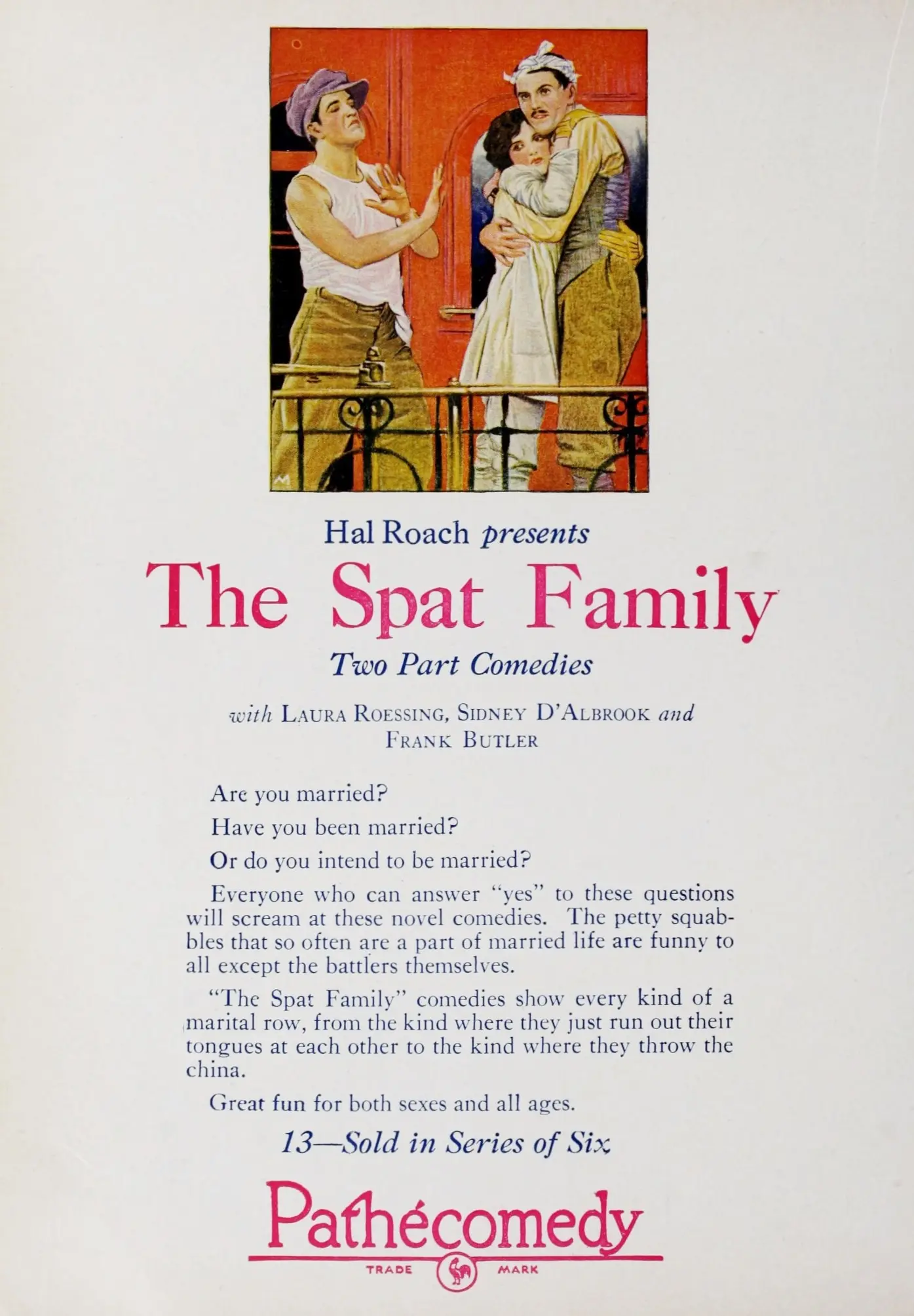
Stepping into the flickering glow of early cinema, one often encounters narratives that, despite their simplicity, resonate with a surprising depth of human experience. Hal Roach's Political Pull, a delightful comedic offering from 1918, is precisely such a film. It masterfully orchestrates a symphony of situational humor from a premise so straightforward it borders on the absurd: a case of mistaken identity at a dinner party that balloons into an unexpected acquisition of construction materials. This seemingly unassuming silent picture, penned by the prolific Hal Roach himself, stars Frank Butler, Laura Roessing, and Sidney D'Albrook, each contributing to a tapestry of comedic timing and exaggerated expression that defines the era.
At its core, Political Pull is a testament to the power of a well-executed misunderstanding. The central conceit—a governor's dinner invitation leading to the arrival of a stock promoter named McGovern—is a brilliant springboard for comedic chaos. What begins as a minor social gaffe rapidly escalates into a bureaucratic nightmare for the hapless protagonist, Ambrose, played with a charmingly bewildered air by Frank Butler. Butler's portrayal of Ambrose perfectly encapsulates the everyman caught in an escalating spiral of absurdity, a common archetype in silent comedies, yet here rendered with a particular nuance that makes his predicament genuinely endearing and funny. His initial politeness, his attempts to navigate the social currents, slowly give way to sheer disbelief as the consequences of a simple signature unfurl before him.
The pivotal moment, of course, arrives when Ambrose unwittingly signs a document, thereby becoming the owner of a 'considerable lot of bricks.' This single act transforms the film from a mere comedy of manners into a commentary on the unexpected burdens life can impose. The bricks themselves become a potent symbol: a tangible, immovable, and utterly unforeseen consequence of a moment's inattention or misplaced trust. It's a comedic metaphor for the weight of responsibility, the unexpected detours our lives can take, and the sheer inertia of bureaucracy once set in motion. Imagine the sheer visual comedy inherent in this revelation: the bewildered look on Ambrose's face as he comprehends the enormity of his new, unsolicited property, the frantic attempts to undo what a moment's absent-mindedness has wrought.
Hal Roach, as a writer, possessed an uncanny knack for crafting scenarios that, while fantastical, felt grounded in a relatable human experience. His comedic sensibility often leaned into the physical and the farcical, but always with a keen understanding of character motivation, however misguided. Here, the humor doesn't solely stem from the mistaken identity itself, but from the escalating, almost bureaucratic, process by which Ambrose becomes irrevocably tied to these bricks. It's a delightful send-up of formality, where adherence to process trumps common sense, leading to hilarious and ultimately absurd outcomes. This kind of escalating chaos, where a small error snowballs into a monumental predicament, is a hallmark of Roach's work, and can be seen echoed in spirit, albeit with different narrative devices, in other comedies of the era.
Frank Butler, though perhaps not as widely known as some of his contemporaries, delivers a performance that anchors the film's humor. His expressions, crucial in the silent era, convey a spectrum of emotions from polite confusion to utter despair, all without uttering a single word. Laura Roessing, likely playing a key supporting role, perhaps the hostess or a romantic interest, would have contributed to the film's emotional landscape, providing a foil or a catalyst for Ambrose's escalating predicaments. Sidney D'Albrook's McGovern, the unwitting catalyst, would have been played with a certain obliviousness or perhaps a sly opportunism, adding another layer to the comedic dynamic. The interplay between these characters, their exaggerated gestures and reactions, would have been meticulously choreographed to maximize comedic impact.
The pacing of silent comedies like Political Pull is often a fascinating study in itself. Without dialogue to propel the narrative, filmmakers relied heavily on visual gags, rapid scene changes, and the sheer energy of their performers. One can imagine the frantic pace as Ambrose attempts to extricate himself from his brick-bound fate, perhaps running from officials, attempting to sell the bricks, or even trying to physically dispose of them. This kinetic energy, characteristic of early slapstick, ensures that the audience remains engaged, laughing at the escalating misfortunes of the protagonist while simultaneously marveling at the ingenuity of the comedic set pieces. The silent era's reliance on universal visual humor meant that films like this could transcend language barriers, finding audiences across diverse cultures, a testament to the enduring power of a good laugh.
Hal Roach's influence on early cinema cannot be overstated. Before he became known for Laurel and Hardy, Roach was a prolific writer and producer, shaping the landscape of comedic film. His understanding of what made audiences laugh, often rooted in relatable human foibles and exaggerated situations, is evident in Political Pull. The film serves as an excellent example of his early comedic sensibilities, showcasing his ability to derive maximum humor from a simple, yet ingenious, premise. It highlights the ingenuity of filmmakers of the era, who, despite technological limitations, managed to create vibrant, engaging, and often hilarious narratives that continue to entertain.
When placing Political Pull within the broader cinematic landscape, one can draw interesting parallels. The theme of mistaken identity, for instance, is a timeless comedic trope. While Sleepy Sam, the Sleuth might explore it through the lens of detective work, and Double Speed perhaps through a more frantic, action-oriented plot, Political Pull grounds its misunderstanding in the mundane yet socially charged setting of a dinner party. This allows for a more subtle, yet equally effective, brand of humor that relies less on physical slapstick and more on the escalating awkwardness and bureaucratic tangle.
The unexpected burden of ownership, symbolized by the bricks, also offers a fascinating thematic link to other films. While diametrically opposed in tone, the idea of an unforeseen, life-altering acquisition or responsibility can be seen in dramatic works like The Price of Her Soul or even the monumental struggles depicted in Tess of the D'Urbervilles, albeit through a purely comedic lens in Roach's film. The absurdity of being saddled with an unwanted, substantial asset resonates with a universal fear of losing control, of being at the mercy of forces beyond one's understanding. It’s the kind of scenario that, while played for laughs, taps into a very real human anxiety about unforeseen consequences and the often-impersonal nature of systems and agreements.
What makes Political Pull, and indeed many silent comedies, so enduringly captivating is their reliance on universal human experiences and reactions. Laughter, after all, transcends language. The visual gags, the exaggerated performances, the clear delineation of character and conflict—these elements speak directly to an audience without the need for dialogue. The sheer ingenuity required to tell a compelling story and elicit genuine emotion through purely visual means is a testament to the artistry of the silent era. It forces the audience to engage more actively, to interpret expressions and actions, making the viewing experience uniquely immersive.
The film also offers a fascinating window into the social mores and anxieties of the early 20th century. The importance of social standing, the formalities of invitations, the power of a signature—these were all aspects of daily life that Roach cleverly satirized. The idea that a simple mix-up could lead to such a profound and comical predicament speaks volumes about the societal structures of the time. It’s a gentle critique, wrapped in layers of humor, reminding us that even the most formal systems are susceptible to human error and the delightful chaos that ensues.
In conclusion, Political Pull may not be as widely celebrated as some of Hal Roach's later, more iconic works, but it stands as a charming and remarkably effective piece of silent comedy. It showcases the foundational elements of his comedic genius: a strong, simple premise, escalating absurdity, and performances that convey a wealth of emotion and humor without a single spoken word. For anyone interested in the evolution of cinematic comedy, or simply in need of a good laugh derived from the delightful chaos of human error, this film remains a compelling and highly enjoyable watch. It’s a testament to the fact that sometimes, the biggest laughs come from the most unexpected, and brick-laden, places. The narrative, though sparse in its initial description, blossoms under the creative direction and performances, transforming a mundane mistake into a memorable comedic escapade. The film reminds us that even in the most structured environments, a single misstep can unravel into a spectacle of delightful disarray, leaving our protagonist, and indeed the audience, thoroughly entertained and perhaps a little wary of what they might inadvertently sign next. It’s a timeless piece, demonstrating that the essence of comedy, much like the bricks themselves, can be both weighty and wonderfully absurd.
IMDb —
1921
Community
Log in to comment.