DbcultAccessing Vault...
Cult Review
Senior Film Conservator
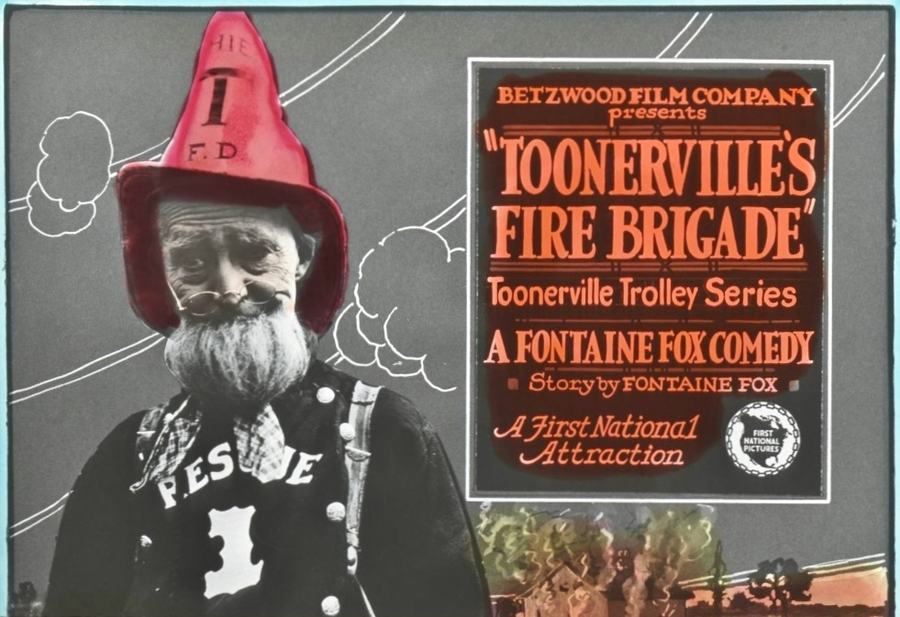
The transition from the static, inked panels of a comic strip to the kinetic energy of the silent screen is a perilous journey that many franchises attempted in the early 20th century, yet few managed with the idiosyncratic grace of the Toonerville Folks series. At the heart of this success lies Toonerville's Fire Brigade, a film that captures the rhythmic absurdity of small-town life with a precision that feels both archaic and strangely prophetic of modern bureaucratic incompetence. Directed with a keen eye for spatial comedy, the film serves as a showcase for the visceral physicality of Dan Mason, whose portrayal of the Skipper remains a masterclass in character-driven slapstick.
To understand the narrative gravity of this short, one must first acknowledge the source material. Fontaine Fox was not merely a cartoonist; he was a social cartographer of the American suburb before the concept fully solidified. His 'Toonerville' was a microcosm of societal friction, where the march of progress—represented by the temperamental trolley—constantly clashed with the stubborn eccentricities of its inhabitants. In Toonerville's Fire Brigade, this friction is redirected toward the newly minted fire department. Unlike the high-stakes melodrama found in contemporary works like Sacred Silence, Fox and his cinematic collaborators lean heavily into the mundane, finding the hilarity in the Skipper's transition from an efficient trolley operator to a dogmatic fire chief. The 'Book of Rules' becomes a secondary character, a physical manifestation of the Skipper's inability to adapt his rigid internal logic to the fluid, unpredictable nature of a fire.
The film eschews the sweeping vistas of South of Santa Fe, opting instead for a localized, almost claustrophobic sense of community. This intimacy is vital; we aren't just watching a fire; we are watching our fire, in our town, being handled by a man we trust to drive a trolley but perhaps not to save our burning heirlooms. The stakes are simultaneously trivial and existential, a tonal balance that few silent comedies managed to strike with such consistency.
Dan Mason’s performance is nothing short of revelatory. In an era where many actors leaned into the exaggerated pantomime popularized by Chaplin or Keaton, Mason finds a middle ground rooted in a very specific kind of American grumpiness. His Skipper is not a clown; he is a professional who happens to be trapped in a clownish situation. This distinction is crucial. When he consults his rulebook while a house smolders in the background, he isn't doing it for a laugh—he’s doing it because he truly believes that the authority of the written word outweighs the immediacy of the flame. This psychological depth elevates the film beyond mere pratfalls. It mirrors the social satire found in Thoughtless Women, albeit through a lens of farcical masculinity rather than domestic melodrama.
His interactions with Wilna Wilde provide a necessary domestic counterpoint, grounding the Skipper’s delusions of grandeur in the reality of Toonerville’s social hierarchy. While the film lacks the romantic complexity of Oltre l'amore, it compensates with a robust ensemble dynamic that makes the town feel lived-in and authentic. The townspeople are not merely spectators; they are victims of the Skipper’s 'efficiency,' and their collective drenching in the final act serves as a communal purgation of his ego.
Technically, Toonerville's Fire Brigade is a fascinating artifact of early 1920s editing. The first half of the film is deliberately languid, focusing on the pageantry of the fire brigade’s parade. This slow burn (pun intended) builds a sense of anticipation that contrasts sharply with the frantic energy of the second half. This rhythmic shift is far more sophisticated than the relentless pacing of shorts like Pep. The director understands that for the fire to be funny, the preparation for the fire must be tedious.
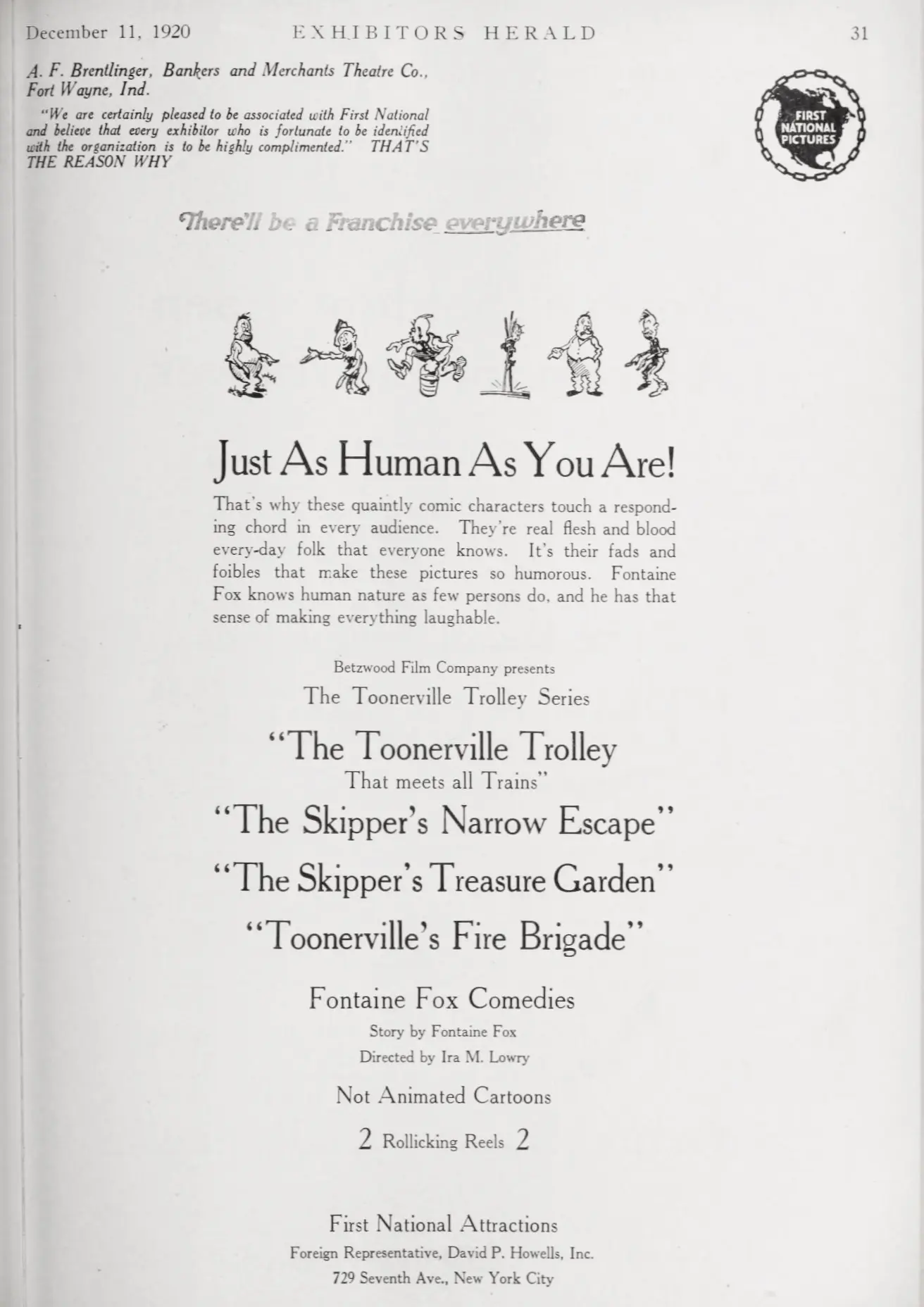
The climax itself—the actual fire—is a masterpiece of logistical chaos. The fire engine, a temperamental beast of brass and rubber, mirrors the Skipper’s own stubbornness. When it finally decides to cooperate, its output is indiscriminate. The visual gag of the entire town being soaked is executed with a scale that suggests a significant budget and a willingness to destroy the set for the sake of a punchline. This level of commitment to the 'bit' is what separates the Toonerville series from the more ephemeral comedies of the period. It has the bite of Men Who Have Made Love to Me, though directed at civic duty rather than interpersonal scandal.
When placed alongside other films of the era, the Skipper’s adventures occupy a unique niche. It lacks the religious gravity of The Scottish Covenanters or the legalistic tension of The Divorce Trap, yet it shares with them an obsession with the structures that govern human behavior. Whether it’s a rulebook, a covenant, or a legal decree, the silent era was deeply preoccupied with the conflict between the individual and the 'The Law.' In Toonerville, the Law is simply the Skipper’s interpretation of how a fire should be fought.
The film’s visual language is also worth noting. While it doesn't possess the artistic artifice of The Image Maker, there is a rugged, documentary-like quality to the street scenes. We see the real textures of the era—the mud, the wooden shingles, the heavy wool of the uniforms. This realism makes the eventual descent into slapstick all the more effective. It’s the same groundedness that made Over Night or By the Sea resonate with audiences; the comedy isn't happening in a vacuum, but in a world the audience recognizes.
One of the most profound elements of the film is its subtle critique of the 'expert.' The Skipper is appointed chief not because of his experience with fire, but because of his reputation for 'thoroughness' in another field. This Peter Principle in action is as relevant today as it was in 1920. We see echoes of this in The Middleman, where bureaucratic intermediaries often exacerbate the problems they are meant to solve. The Skipper is the ultimate middleman between the fire and the water, and his insistence on following 'the best authorities' nearly results in the total destruction of the property he is sworn to protect.
Despite the destruction, there is an inherent optimism to the film. The town survives. The Skipper, though soaked and likely facing a litany of complaints, remains undeterred. This resilience is a hallmark of the Toonerville spirit. It’s a softer, more whimsical version of the perseverance seen in So ein Mädel or the professional striving in Striking Models. It suggests that while our institutions may be flawed and our leaders may be incompetent, the community will somehow endure the deluge.
In the final analysis, Toonerville's Fire Brigade is more than a relic of a bygone era; it is a vibrant, breathing piece of comedic cinema that transcends its origins as a comic strip. It captures a specific American vernacular, both in its dialogue-free storytelling and its depiction of small-town ambition. It shares the adventurous spirit of Up the Road with Sallie, but replaces the open road with the chaotic confines of a burning house. For those interested in the evolution of visual comedy, or for those who simply wish to see a grumpy man in a tall hat get hit with a high-pressure hose, this film is essential viewing. It reminds us that the best humor is often found in the gap between who we think we are and the reality of our own clumsy humanity.
The Skipper's journey from the trolley tracks to the fire house is a testament to the enduring power of Fontaine Fox’s world-building. In an age of digital spectacles, there is something profoundly satisfying about the tactile, messy, and utterly human comedy of Toonerville. It is a film that doesn't just ask for your laughter; it earns it through a meticulous construction of character and a fearless embrace of the absurd.
IMDb —
1924
Community
Log in to comment.