DbcultAccessing Vault...
Cult Review
Senior Film Conservator
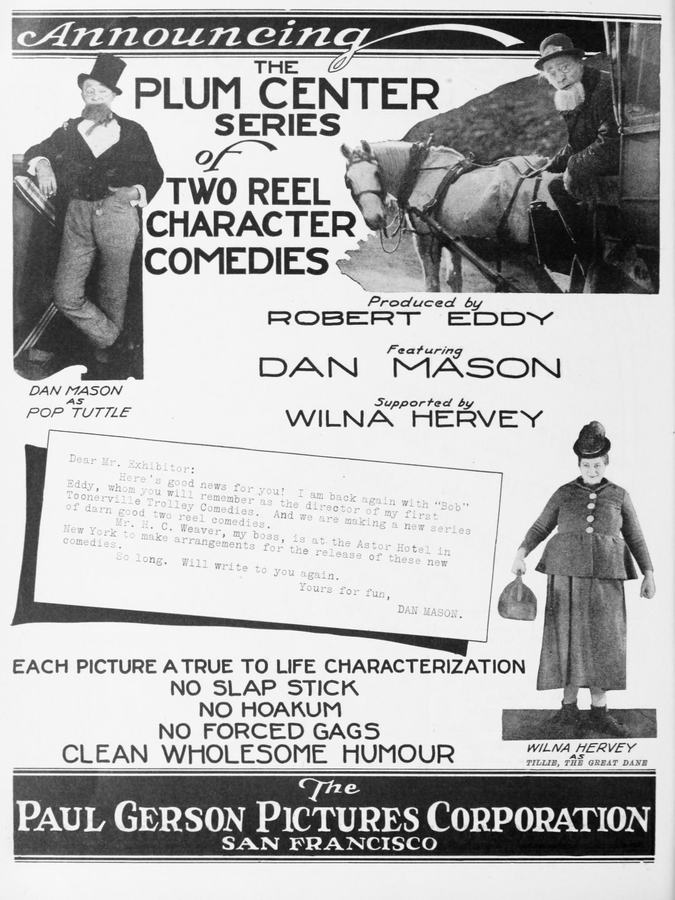
The flickering shadows of early cinema often served as more than mere entertainment; they were canvases for societal reflection, mirrors held up to an evolving world. In this vein, Pop Tuttle's Movie Queen emerges not just as a narrative, but as a fascinating cultural artifact, a vibrant commentary on the nascent power of Hollywood and the enduring friction between progressive entertainment and entrenched puritanical morality. Set in the unassuming hamlet of Plum Centre, the film introduces us to Pop Tuttle, a character embodying the quintessential American spirit of resourcefulness and genial entrepreneurship. He is simultaneously the town’s indispensable transport link, driving the 'bus that meets all trains,' and its sole purveyor of moving pictures. This dual role immediately establishes him as both a practical necessity and a harbinger of modern escapism, a figure perched precariously between tradition and the tantalizing future. His picture show, a humble yet vital hub of communal experience, becomes the unwitting battleground for a simmering culture war.
The antagonists, if one can label them so distinctly in this nuanced satire, are the formidable members of the Purity League. These self-appointed guardians of public morals perceive Pop Tuttle's establishment not as a source of innocent amusement, but as a 'den of vice,' a dangerous wellspring of corrupting influences threatening the moral fabric of Plum Centre. Their determination to extinguish his cinematic light sets the stage for a compelling clash of ideologies: the desire for wholesome, controlled order against the burgeoning, untamed allure of mass media. This isn't merely a local squabble; it's a microcosm of the broader societal anxieties that gripped America during the early 20th century as new forms of entertainment challenged long-held social conventions. One might draw parallels to the moral fervor depicted in films like The Divine Sacrifice, where societal expectations and individual desires often collide with devastating consequences, though Pop Tuttle's narrative leans more towards the comedic than the tragic.
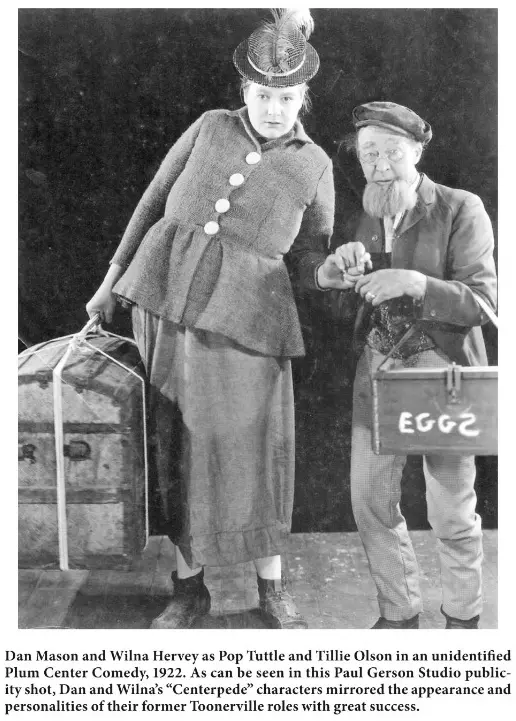
Pop Tuttle, portrayed with a delightful blend of shrewdness and geniality by Dan Mason, is no stranger to adversity. Faced with the Purity League's relentless campaign, he doesn't merely concede or fight head-on. Instead, he orchestrates a brilliant counter-move, a masterstroke of psychological manipulation that underscores his profound understanding of human nature's susceptibility to illusion. His plan? To introduce a 'special attraction,' a manufactured star designed to captivate and disarm his critics. The chosen instrument for this grand deception is a jobless waitress, a woman whose anonymity and everyday existence make her the perfect blank canvas for Pop's grand artistic vision. This transformation is central to the film's thematic core: the idea that celebrity can be fabricated, that aspiration can be cultivated, and that the public, yearning for novelty and glamour, is often willing to believe in the dream, regardless of its manufactured origins.
Jamie Gray, in her pivotal role as the waitress-turned-Movie Queen, carries the weight of this illusion with remarkable grace. Her journey from obscurity to manufactured stardom is not just a plot device; it's a commentary on the burgeoning star system of Hollywood itself, where ordinary individuals could be elevated to mythical status through careful packaging and promotion. The film doesn't delve deeply into the emotional toll of this deception on her character, but her portrayal undoubtedly imbues the role with a sense of wonder and perhaps a touch of trepidation. The contrast between her humble beginnings and her grand, fabricated persona is a poignant reminder of the era's fascination with rags-to-riches stories, often fueled by the very medium she now embodies. This notion of a carefully constructed public identity resonates with themes explored in The Idol Dancer, where characters often navigate the complexities of perception versus reality, albeit in a more dramatic context.
The brilliance of Al Giebler's writing lies in its ability to expose the underlying hypocrisy and pervasive human desire for spectacle. When the 'Movie Queen' is unveiled, presented as a legitimate 'disciple of Hollywood,' the reaction of Plum Centre is nothing short of revelatory. Suddenly, the very townspeople who had quietly harbored reservations about Pop's 'den of vice,' and crucially, the most ardent members of the Purity League themselves, find their moralistic resolve crumbling. They flock to the picture show, drawn by an irresistible curiosity, a primal urge to witness this embodiment of distant glamour. This collective capitulation highlights a universal truth: the allure of celebrity and the promise of escapism often override deeply held convictions, revealing the fickle nature of public opinion and the potent sway of novelty. Charles Gerson, likely portraying a leading figure of the Purity League, would have had to convey this shift from rigid condemnation to eager fascination, a comedic tightrope walk that defines much of the film's satirical edge.
The film's satirical bite is sharp, yet never overtly cynical. It gently mocks the self-righteousness of moral crusaders while simultaneously celebrating the ingenuity of a showman like Pop Tuttle. It suggests that perhaps what people truly crave is not rigid adherence to abstract principles, but rather a touch of magic, a glimpse into a world beyond their mundane realities. The 'Movie Queen' becomes a symbol of this yearning, a living embodiment of the dreams projected onto the silver screen. Wilna Wilde, presumably in a supporting role as a townsperson or a member of the League, would have contributed to the ensemble's portrayal of this collective shift, adding texture to the town's evolving sentiment. The ensemble cast, though details about their individual performances are scarce, collectively brings to life the vibrant, if somewhat naive, community of Plum Centre.
Pop Tuttle's Movie Queen, in its charming simplicity, offers a nuanced critique of the early 20th-century cultural landscape. It speaks to the burgeoning power of mass media to shape public perception, to create idols out of ordinary individuals, and to challenge established moral hierarchies. The Purity League's eventual defeat, not through direct confrontation but through a clever manipulation of their own desires, is a testament to the irresistible force of popular culture. This narrative arc, where a seemingly insurmountable obstacle is overcome by wit and understanding of human psychology, echoes the resourceful spirit seen in films like Beloved Rogues, where characters often navigate social complexities through clever stratagems rather than brute force.
The enduring relevance of this film lies in its timeless themes. We continue to live in an era where celebrity is often manufactured, where public personas are meticulously crafted, and where the lines between truth and illusion are frequently blurred. The internet and social media platforms have merely amplified the phenomena that Pop Tuttle so deftly exploited in his small-town picture show. The Purity League, too, has its modern analogues, groups and individuals who seek to regulate and control popular culture based on their own moral frameworks. The film, therefore, serves as a prescient examination of these perennial conflicts, demonstrating that the human appetite for spectacle and the resistance to perceived moral decay are deeply ingrained aspects of our collective experience.
Al Giebler's script for Pop Tuttle's Movie Queen navigates these intricate societal dynamics with a light touch, ensuring that the film remains an entertaining romp rather than a heavy-handed sermon. The humor derives from the absurdity of the situation, the sudden shift in the townsfolk's demeanor, and Pop Tuttle's almost mischievous delight in his scheme's success. It's a testament to the power of well-crafted satire to deliver profound insights without sacrificing entertainment value. The characterizations, though perhaps broad by modern standards of psychological realism, perfectly serve the allegorical nature of the story, making each figure a recognizable archetype within the drama of small-town life.
Considering the period of its release, Pop Tuttle's Movie Queen stands as an insightful document of its time. The early 1920s saw Hollywood rapidly consolidating its power, establishing its glamour, and facing increasing scrutiny from moral watchdogs. Films like this one, which directly engaged with these societal tensions, were not just reflecting the times but actively participating in the cultural discourse. It highlights the often-overlooked sophistication of silent cinema, demonstrating its capacity for nuanced storytelling and social commentary beyond simplistic melodrama. Comparing it to something like Arizona, which might focus on the rugged individualism of a different frontier, Pop Tuttle's film explores a more domestic, yet equally significant, frontier of social and cultural change.
The performances, even in the absence of spoken dialogue, would have relied heavily on expressive physicality and nuanced facial expressions, a hallmark of the silent era. Dan Mason, as Pop Tuttle, would have conveyed his character's cunning and charm through his demeanor, while Jamie Gray's transformation into the Movie Queen would have been a masterclass in conveying aspiration and manufactured poise. Charles Gerson's portrayal of the Purity League's leader would have required a shift from stern disapproval to bewildered fascination, a comedic arc that underpins the film's central joke. The entire cast, under what we can infer was Al Giebler's guiding hand as writer, contributes to a cohesive and entertaining narrative that, despite its period setting, feels remarkably fresh in its observations about human behavior.
Ultimately, Pop Tuttle's Movie Queen is more than just a historical curiosity; it's a vibrant, witty exploration of the eternal struggle between tradition and modernity, morality and entertainment, and the enduring power of illusion. It reminds us that sometimes, the most effective way to combat opposition is not through direct confrontation, but through a clever understanding of human desires and weaknesses. Pop Tuttle, the genial bus driver and picture show owner, emerges as an unlikely hero, a champion of progress and entertainment, proving that a little bit of manufactured glamour can go a long way in winning over even the most ardent of critics. It’s a delightful cinematic confection that offers both laughter and food for thought, a testament to the enduring charm and insightful commentary possible within the silent film era.
The film's impact extends beyond its immediate narrative, offering a glimpse into the broader cultural shifts that were reshaping American society. The very existence of a 'Purity League' and its fervent opposition to a 'picture show' underscores the seismic changes that new technologies and art forms were introducing. Cinema, once a novelty, was quickly becoming a dominant force in popular culture, and its ability to influence, entertain, and sometimes provoke, was a source of both excitement and apprehension. Pop Tuttle's ingenious solution to his predicament is a celebration of the entrepreneurial spirit, a classic American narrative of outwitting the establishment through sheer cleverness and an understanding of the market – in this case, the market for dreams and spectacle. It’s a narrative that would resonate with audiences then and now, highlighting the universal appeal of a good underdog story, especially one spiced with humor and social commentary. This blend of character-driven narrative and broader social observation is a hallmark of enduring cinema, much like the nuanced portrayals of community dynamics found in Friend Husband, albeit with a distinct comedic flair here.

IMDb 6.9
1934
Community
Log in to comment.