DbcultAccessing Vault...
5.8/10
Senior Film Conservator
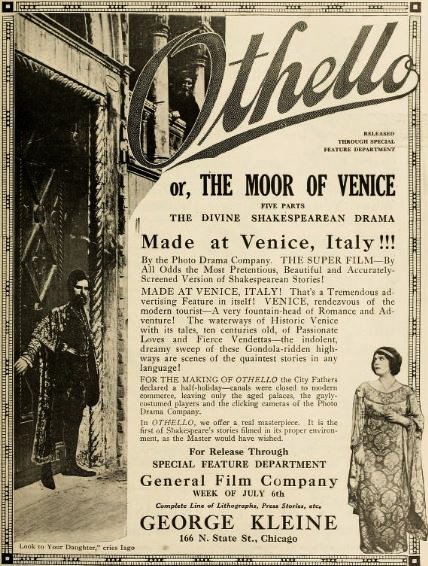
A definitive 5.8/10 rating for a film that redefined the boundaries of cult cinema. Othello remains a cornerstone of transgressive art.
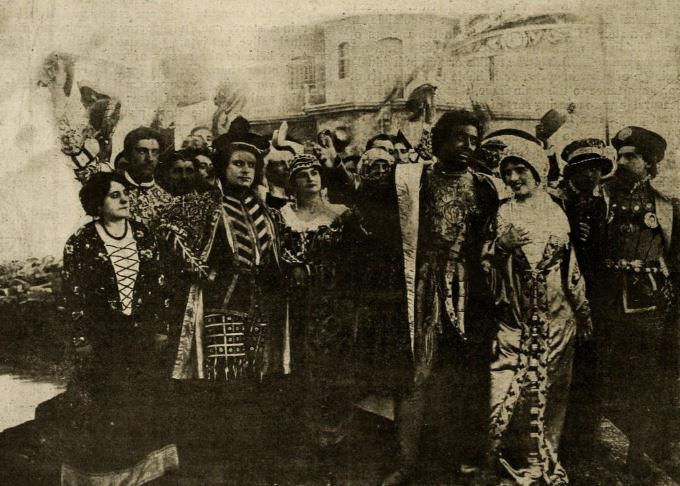
To witness the 1914 iteration of Othello is to step into a temporal vortex where the grandiloquence of William Shakespeare meets the burgeoning visual vocabulary of early Italian cinema. Directed during an era when the medium was still wrestling with its identity as either a mere recording of stage plays or a unique art form, this production—penned for the screen by Arrigo Frusta—leans heavily into the aesthetic of the divismo period. The result is a haunting, monochromatic exploration of human frailty that, despite its lack of spoken dialogue, screams with an emotional intensity that modern blockbusters often fail to replicate.
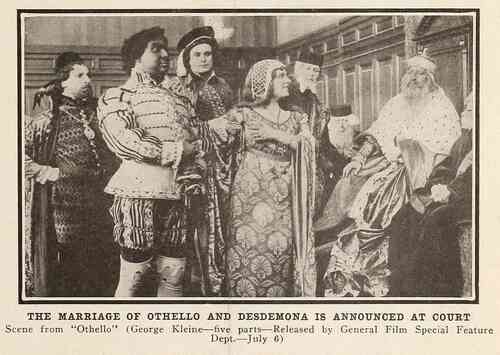
The film’s architecture is built upon the sturdy bones of the 1603 play, yet it finds a specific, visceral energy in the physical performances of its cast. Ubaldo Stefani portrays the Moor not merely as a soldier, but as a man whose very soul is being flayed by the whispers of an adversary he considers a brother. Unlike the more action-oriented narratives found in contemporary works like The Story of the Kelly Gang, this film’s conflict is internal, a slow-acting poison that manifests in the trembling of hands and the widening of eyes.
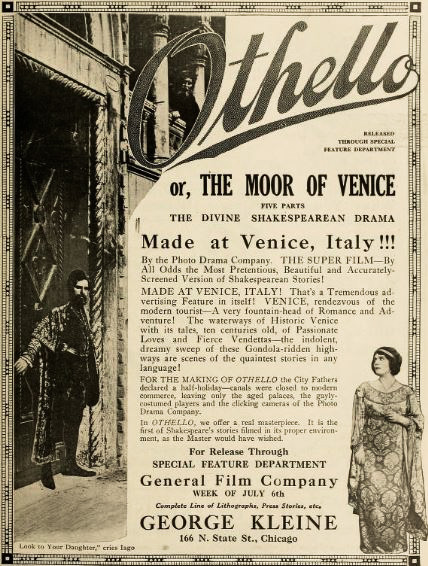
If Othello is the heart of the film, then Riccardo Tolentino’s Iago is its cold, calculating brain. In the pantheon of early cinema villains, Tolentino’s portrayal stands out for its lack of mustache-twirling caricature. There is a terrifying banality to his evil. He operates in the shadows of the Venetian pillars, his movements serpentine and deliberate. This Iago doesn't just want to destroy Othello; he wants to deconstruct the very concept of virtue. His manipulation of Michael Cassio (Paolo Colaci) and the tragic Desdemona (Cesira Lenard) is handled with a narrative economy that rivals the pacing of The Traitress, another film of the era that deals with the devastating consequences of perceived and actual betrayal.
The cinematography, while static by modern standards, utilizes the depth of field to create a sense of entrapment. We see characters in the foreground oblivious to the machinations occurring just a few feet behind them. This spatial tension mirrors the psychological distance growing between Othello and his bride. The use of light and shadow—pre-dating the height of German Expressionism—already hints at the moral chiaroscuro inherent in the script. The Venetian sets are not merely backdrops; they are labyrinthine extensions of Iago’s mind, where every corridor leads to a new deception.
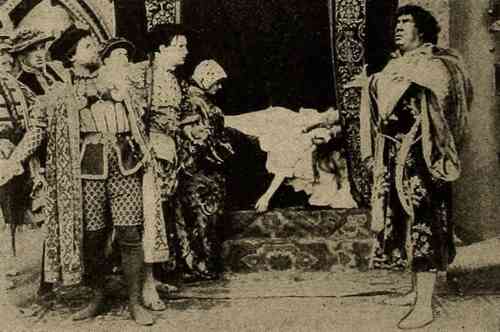
When comparing this 1914 tragedy to other contemporary works, the tonal shift is palpable. While Robin Hood offered audiences a sense of adventurous escapism and moral clarity, Othello plunges them into a murky swamp of domestic violence and racial tension. It shares more DNA with the tragic inevitability found in Anna Karenina, released the same year. Both films examine the societal pressures that squeeze the life out of personal relationships, though Othello’s descent is arguably more violent and sudden.
The film also stands in stark contrast to the religious didacticism of The Life of Our Saviour; or, The Passion Play. Where the latter seeks to elevate the spirit through divine sacrifice, Frusta’s adaptation of Shakespeare seeks to ground the viewer in the terrestrial horrors of envy. There is no redemption here, only the cold comfort of truth revealed too late. Even the lighter fare of the time, such as Brewster's Millions or the whimsical The Ragged Earl, seems like a distant dream when compared to the suffocating atmosphere of the Moor’s bedchamber.
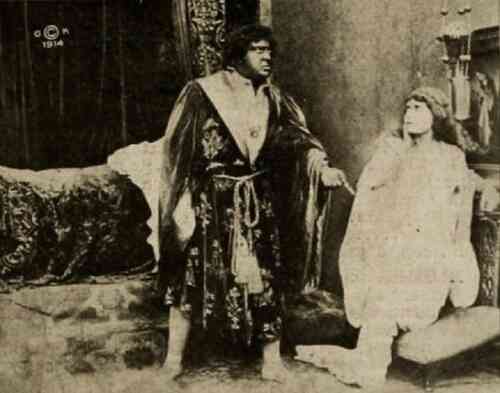
One might wonder how a play so dependent on the eloquence of its prose survives the transition to a silent medium. The answer lies in the "acting of the eyes." Cesira Lenard’s Desdemona is a masterclass in vulnerability. Her performance avoids the over-the-top gesticulation common in 1914, opting instead for a quiet, bewildered grace. When she looks at Othello, we see the reflection of a man she no longer recognizes. This visual storytelling is as potent as any of the Bard's iambic pentameter. It reminds one of the grit found in Germinal; or, The Toll of Labor, where the environment and the physical toll on the actors tell the story more than any title card ever could.
The film’s climax is a harrowing sequence that remains difficult to watch. The pacing slows down, almost to a crawl, as Othello approaches the sleeping Desdemona. The tension is not built through rapid cuts, as one might see in The Master Cracksman, but through the agonizingly slow realization of an impending, preventable catastrophe. It is a moment of pure cinematic dread that rivals the suspense of The Riddle of the Tin Soldier, yet with far higher emotional stakes.
In the broader context of 1910s cinema, this Othello is a testament to the sophistication of the Italian film industry before the devastation of World War I. While American cinema was perfecting the chase and the western—seen in films like Robbery Under Arms—the Italians were perfecting the psychological drama. They treated the camera as a witness to the soul's disintegration. This production doesn't shy away from the darker elements of the source material, unlike some sanitized versions that would follow in the Hays Code era of Hollywood.
The technical proficiency displayed here—the costume design, the use of authentic-looking Venetian locations (or highly convincing studio recreations), and the disciplined editing—places it alongside other ambitious international projects like Evangeline or the mysterious The Mysteries of Souls. It is a film that understands the weight of its literary heritage but isn't paralyzed by it. It breathes new, albeit cold and gasping, life into the characters.
Is the 1914 Othello a perfect adaptation? By modern standards, the pacing may feel deliberate to a fault, and the lack of the original's soaring rhetoric is a loss that no amount of expressive acting can fully compensate for. However, as an artifact of film history and a study in atmospheric storytelling, it is peerless. It captures the essence of Shakespeare’s warning about the fragility of the human ego. It shows us that the most dangerous enemies are not those we meet on the battlefield—as seen in The War Correspondents—but those who sit at our table and call us friend.
The film concludes with a sense of profound emptiness, a silence that lingers long after the final frame. It lacks the sensationalist closure of O Crime de Paula Matos, offering instead a somber meditation on the wreckage left behind by Iago’s malice. For the serious cinephile or the Shakespearean scholar, this version of Othello is an essential viewing experience. It is a reminder that even a century ago, cinema was already capable of touching the most shadowed corners of the human heart, proving that while technology changes, the anatomy of betrayal remains eternally the same.
In the end, we are left with the image of Othello—not as a hero, not as a villain, but as a victim of his own capacity for belief. It is a haunting image that resonates through the decades, a silent scream in the dark gallery of cinematic history.
IMDb 7.1
1929
Community
Log in to comment.