DbcultAccessing Vault...
Cult Review
Senior Film Conservator
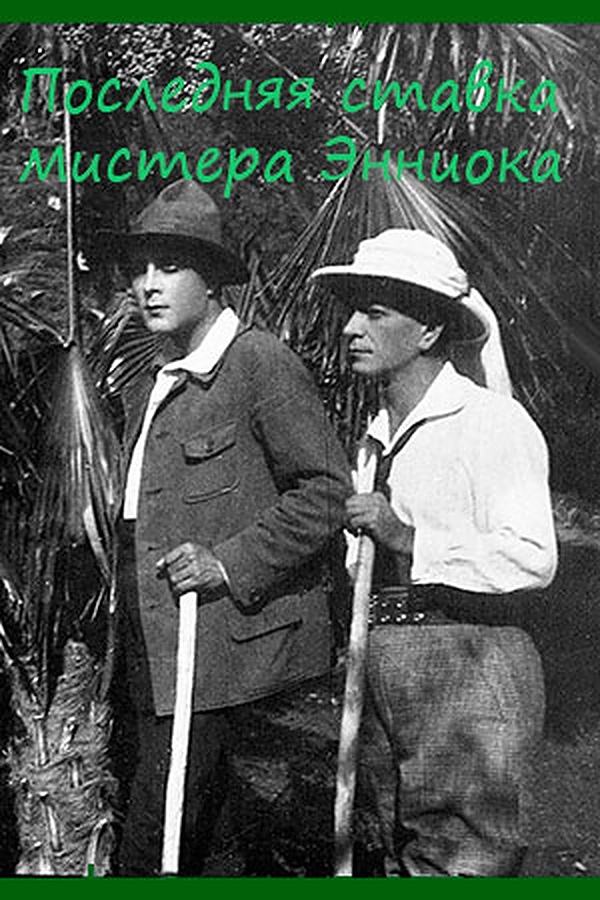
Stepping into the world of Poslednyaya stavka mistera Ennioka (The Last Bet of Mr. Enniok) is akin to unearthing a forgotten treasure from the silent era’s gilded age of cinematic storytelling. This isn't merely a film; it's a meticulously crafted tapestry of human ambition, moral decay, and the relentless pursuit of consequence, woven with threads of intrigue and psychological depth that resonate long after the final frame fades to black. Directed with an astute understanding of visual narrative and penned by the formidable G. Vechora and Aleksandr Grin, the film stands as a testament to the power of silent cinema to convey complex emotional landscapes without uttering a single spoken word. Its enduring allure lies not just in its dramatic tension, but in its profound exploration of themes that remain strikingly relevant even a century later.
At the heart of this sprawling drama is Mr. Enniok, a character brought to life with chilling precision by Oleg Frelikh. Frelikh’s portrayal is a masterclass in subtlety and suppressed intensity. He doesn't merely play a wealthy industrialist; he embodies the very concept of power tainted by its illicit acquisition. Enniok is a man perpetually cloaked in an aura of impenetrable reserve, his eyes betraying a constant vigilance, a fear of the past catching up. His every gesture, every calculated glance, speaks volumes about the precarious edifice he has constructed around himself. This isn't the boisterous villain of melodramatic serials; Enniok is a more insidious presence, a spider at the center of a web spun from secrets and the quiet desperation of others. His 'last bet' is not a casual wager, but a desperate, existential gamble, a final attempt to outmaneuver fate and silence the ghosts that haunt his opulent halls. One might draw a parallel to the intricate, psychological chess game seen in films like The Spider, where the protagonist's past becomes an inescapable net, but Enniok's struggle feels uniquely personal, almost operatic in its tragic scope.
The catalyst for Enniok's unraveling arrives in the form of Elara, a character imbued with a captivating blend of vulnerability and steely resolve by the luminous Zoya Barantsevich. Barantsevich, with her expressive eyes and graceful, yet determined, movements, crafts a figure who is far more than a mere plot device. Elara is a living embodiment of Enniok's forgotten transgressions, a tangible link to a past he has desperately tried to bury beneath layers of wealth and influence. Her sudden re-emergence isn't an accident; it feels like destiny, a force of nature disrupting the carefully maintained equilibrium of Enniok's insulated world. Barantsevich’s performance is a delicate balance of quiet strength and palpable emotional weight, making Elara a truly unforgettable presence. Her interactions with Frelikh are charged with an unspoken history, a tension that crackles across the screen, reminiscent of the complex, often tragic, romantic entanglements explored in films like Prodigal Daughters, where past relationships cast long shadows over present lives.
Complementing this central dynamic are the equally compelling performances of Iona Talanov as Inspector Volkov and Vasili Kovrigin as Konstantin. Talanov’s Volkov is the embodiment of unwavering justice, a methodical and relentless investigator whose quiet determination serves as a stark contrast to Enniok's frantic machinations. He is the moral compass of the narrative, the incorruptible force slowly but surely tightening the net around the film’s central figure. His presence introduces a thrilling element of detective procedural, elevating the film beyond a simple character study into a gripping mystery. Kovrigin’s Konstantin, on the other hand, offers a more nuanced perspective. As Enniok’s loyal confidant, he is privy to the darkest corners of his employer’s empire. Kovrigin masterfully portrays the internal conflict of a man torn between loyalty and an awakening conscience, his subtle shifts in expression and posture conveying a growing unease and eventual moral reckoning. His journey from unquestioning allegiance to a tormented witness adds a profound layer of human complexity, echoing the moral quandaries faced by characters in dramas like Yehuda Hameshukhreret, where personal integrity is tested against the backdrop of larger societal corruption.
The screenplay by G. Vechora and Aleksandr Grin is nothing short of brilliant. They construct a narrative that is both intricate and emotionally resonant, meticulously layering plot developments and character motivations. The pacing is deliberate, allowing the tension to build organically, rather than relying on cheap thrills. Each scene feels purposeful, advancing the story and deepening our understanding of the characters’ internal worlds. Grin, known for his fantastical and adventurous literary works, brings a unique poetic sensibility to the dark undercurrents of the plot, while Vechora’s contribution likely grounds the narrative in a realistic, albeit heightened, sense of dramatic urgency. The narrative structure, unfolding like a slow-burning fuse, is a testament to their collaborative genius. They understand that the true terror lies not in jump scares, but in the creeping realization of inevitable doom, a psychological pressure cooker that keeps the audience enthralled. This thoughtful construction distinguishes it from more straightforward thrillers such as A Scream in the Night, opting for psychological suspense over overt horror.
Visually, the film is a triumph of silent era aesthetics. The cinematography employs stark contrasts of light and shadow, creating an atmosphere that perfectly mirrors the moral ambiguity of its characters. The opulent settings of Enniok's estate are juxtaposed with the grittier, more utilitarian environments of Volkov's investigation, emphasizing the class disparities and the hidden machinations beneath the veneer of societal polish. The use of close-ups is particularly effective, allowing the audience to intimately connect with the subtle emotional shifts on the actors' faces – a crucial element in silent film storytelling. Director's choice of framing often isolates characters, visually reinforcing their internal struggles and the vast chasm between their public personas and private torments. The set design and costuming are period-perfect, immersing the viewer fully in the world of the early 20th century, adding another layer of authenticity to the drama. The visual storytelling here is as compelling as any modern cinematic spectacle, proving that sometimes, less is indeed more when it comes to evocative imagery.
The thematic depth of Poslednyaya stavka mistera Ennioka is perhaps its most compelling aspect. It delves into the corrupting influence of unchecked power, the corrosive nature of guilt, and the universal human desire for redemption, however fleeting or elusive it may be. The film questions the very foundations of success when built upon deceit, suggesting that true prosperity cannot be sustained without a moral core. Enniok's desperate attempts to cling to his empire illustrate the tragic irony of a man who has gained everything material, only to lose his soul in the process. This exploration of moral decay and its consequences brings to mind the cautionary tales found in films like How to Be Happy Though Married, though with a far darker and more existential bent. The 'bet' of the title transcends a mere financial transaction; it's a gamble with one's very essence, a wager against the universe that ultimately, justice will find its way, even if through the most circuitous paths.
The performances by the entire ensemble are uniformly excellent. Zoya Barantsevich, in particular, radiates a quiet power that anchors much of the film's emotional weight. Her ability to convey deep sorrow, simmering resentment, and a fragile hope without dialogue is truly remarkable. Oleg Frelikh, conversely, excels in portraying a man slowly cracking under pressure, his stoic facade gradually eroding to reveal the terrified, desperate individual beneath. The chemistry between them, though often adversarial, is palpable, creating moments of intense, unspoken drama. The supporting cast, including Iona Talanov's steadfast determination and Vasili Kovrigin's conflicted humanity, rounds out a truly formidable ensemble, each contributing meaningfully to the rich tapestry of the narrative. Their collective talent elevates the film from a simple genre piece to a profound work of art, a characteristic shared with other ensemble-driven silent classics like Das Eskimobaby, where character interplay drives much of the narrative.
Ultimately, Poslednyaya stavka mistera Ennioka is a masterful example of silent cinema’s enduring power. It’s a film that doesn’t just tell a story; it immerses the viewer in a world of high stakes, moral dilemmas, and the inescapable consequences of one's choices. The narrative is taut, the performances are compelling, and the visual storytelling is exquisite. It’s a film that demands attention, rewarding the patient viewer with a richly satisfying and thought-provoking experience. For aficionados of historical drama, psychological thrillers, or simply exceptional filmmaking, this is a title that should not be overlooked. It serves as a stark reminder that even in an age without synchronized sound, the human condition, in all its complexity and tragedy, could be portrayed with breathtaking clarity and emotional resonance. Its exploration of crime and consequence is far more nuanced than the straightforward action of Fighting for Gold or Fightin' Mad, focusing instead on the internal battles and societal pressures that shape destiny. It’s a profound cinematic experience that solidifies its place as a significant work in the annals of early film history.
The legacy of writers G. Vechora and Aleksandr Grin is powerfully showcased here, demonstrating their ability to craft narratives that transcend mere plot. They delve into the philosophical underpinnings of ambition and the moral cost of unchecked power, themes that resonate with the timeless quality of classic literature. Grin, particularly, with his penchant for the allegorical and the subtly fantastic, seems to infuse the narrative with an almost dreamlike quality at times, especially in the portrayal of Enniok's mounting paranoia. The film doesn't offer easy answers; instead, it invites contemplation on the nature of justice, the weight of secrets, and the elusive pursuit of redemption. This complexity of character and theme is a hallmark of truly great storytelling, distinguishing it from simpler morality tales like A Daughter of 'the Law', by presenting a world where right and wrong are often muddled by circumstance and personal history. It's a journey into the moral abyss, from which few emerge unscathed.
The impact of Poslednyaya stavka mistera Ennioka extends beyond its immediate dramatic thrills. It's a film that encourages reflection on the cyclical nature of human folly and the enduring power of truth. The way the narrative slowly unwinds, revealing layers of deceit and manipulation, is a masterclass in suspense building. It doesn't rely on cheap tricks but on the inevitable collision of past and present, a confrontation that feels both earned and devastating. The film's conclusion, without giving anything away, is both cathartic and profoundly melancholic, leaving the viewer with a sense of the tragic inevitability that often accompanies lives lived on the edge of moral compromise. It’s a powerful statement on the human condition, expertly delivered through the silent language of cinema, solidifying its place not just as a historical artifact, but as a vibrant, living piece of art. Its intricate plot and character development are on par with sophisticated dramas like The Idle Rich, yet with an added layer of psychological intensity. The film is a reminder that the silent era was anything but quiet in its thematic ambition and emotional resonance.
IMDb 7.4
1931
Community
Log in to comment.