DbcultAccessing Vault...
Cult Review
Senior Film Conservator
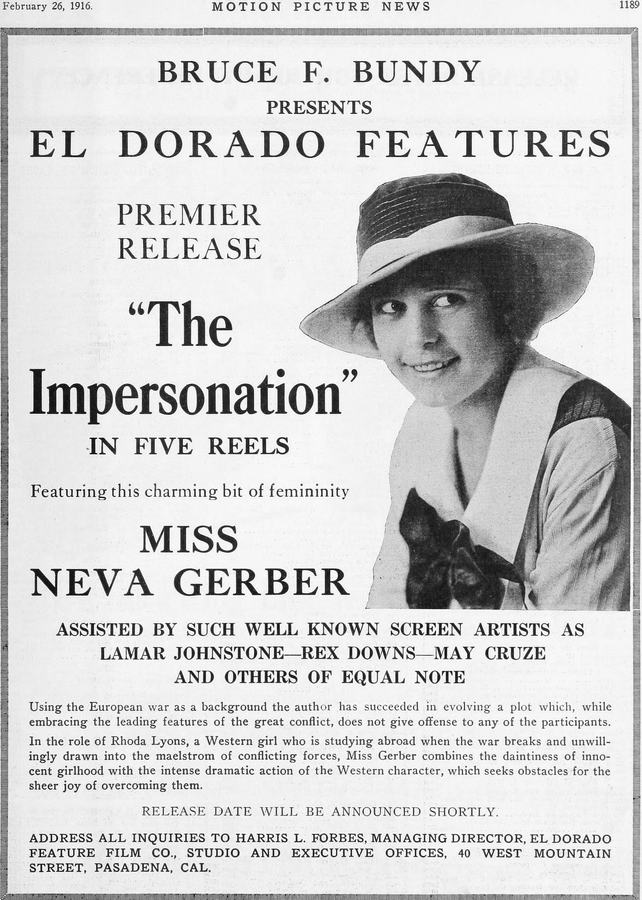
In the grand tapestry of early cinema, where flickering shadows often conveyed more profound truths than spoken words, there exists a rare gem that, despite its potential to be overshadowed by more boisterous contemporaries, resonates with an enduring power. "The Impersonation," a film that plunges headlong into the treacherous waters of identity and societal artifice, stands as a testament to the era's capacity for intricate storytelling and deeply human drama. It is a work that, even in its silent eloquence, speaks volumes about the pressures of class, the allure of deception, and the redemptive power of an authentic heart.
At its core, the narrative unfurls around Elara Vance, a character brought to life with exquisite nuance by the incomparable Neva Gerber. Gerber, known for her magnetic screen presence and ability to convey complex emotions through subtle gestures, imbues Elara with a vulnerability and fierce determination that immediately captivates the viewer. Elara is not merely a woman on the precipice of destitution; she is an artist, her spirit brimming with creative energy, yet stifled by the harsh realities of her circumstance. Her family, once respectable, now faces utter ruin, a fate that propels her into an act of audacious deception. The decision to assume the identity of Lady Beatrice Ainsworth, a distant relative presumed lost at sea, is not born of malice but of a desperate, almost primal, need for survival. This central conceit, while familiar in the annals of melodrama, is handled with a psychological depth that elevates it beyond mere contrivance.
The film masterfully constructs a world where appearances are everything, and the slightest misstep could lead to catastrophic exposure. Elara’s immersion into the opulent, yet suffocating, world of the Ainsworth estate is a perilous ballet. Every social interaction, every inherited mannerism, every piece of forgotten trivia about Beatrice becomes a potential trap. Gerber’s performance here is a tour de force; her eyes, often wide with a mixture of fear and resolve, betray the constant internal struggle of maintaining a facade that is not her own. The cinematography, though characteristic of its era, often uses close-ups to emphasize these moments of silent agony, drawing the audience into Elara’s fractured psyche.
Enter Julian Thorne, portrayed by the distinguished Lamar Johnstone. Johnstone, with his commanding yet empathetic bearing, embodies the principled solicitor tasked with overseeing the Ainsworth legacy. His character serves as the moral compass of the film, a man whose integrity is unquestionable, making his unwitting affection for the 'impostor' all the more poignant. The burgeoning romance between Elara and Julian is handled with a delicate touch, emphasizing the genuine connection that transcends the manufactured identity. Julian falls not for Lady Beatrice, but for the inherent goodness and artistic soul that Elara cannot entirely conceal, even beneath layers of deception. This dynamic adds a rich layer of tragic irony, as the very qualities that draw Julian to her are the ones that threaten to expose her.
No tale of deception is complete without the shadow of suspicion, and in "The Impersonation," this role is chillingly fulfilled by Rex Downs as Silas Croft. Downs delivers a performance that is both subtle and menacing, his character a constant, lurking threat to Elara’s carefully constructed world. Silas is not a cartoonish villain; rather, he represents the cynical, opportunistic underbelly of high society, a man whose keen intellect and avarice make him a formidable adversary. His suspicions are not arbitrary; they are rooted in a shrewd observation of inconsistencies, a testament to the film's intelligent writing. The tension between Elara and Silas is palpable, a silent game of cat and mouse played out through lingering gazes and veiled questions, reminiscent of the psychological suspense found in films like The Unpardonable Sin, where moral transgressions carry heavy, inescapable consequences.
Adding another layer of social intrigue is May Cruze, whose portrayal of a jealous socialite (perhaps a former rival of Beatrice) provides a crucial counterpoint to Elara’s struggle. Cruze’s character embodies the superficiality and competitive nature of the upper echelons, her disdain for the 'new' Lady Beatrice fueled by envy and a keen eye for social hierarchy. Her presence serves to highlight the constant scrutiny Elara endures, amplifying the stakes of her charade. The film effectively uses these supporting characters not merely as plot devices but as integral parts of the social fabric that both enables and imperils Elara’s deception.
The direction, while perhaps uncredited in some historical records, demonstrates a keen understanding of visual storytelling. The mise-en-scène is meticulously crafted, from the opulent interiors of the Ainsworth mansion to the stark contrast of Elara’s humble artist studio. These visual dichotomies underscore the film's thematic exploration of class disparity and the chasm between aspiration and reality. The use of intertitles is particularly effective, not merely relaying dialogue but often offering poignant insights into characters' thoughts or advancing the narrative with poetic conciseness. This careful integration of visual and textual elements ensures that the story maintains its emotional grip without relying on spoken exposition.
The narrative pacing is deliberate, allowing the psychological tension to build gradually. There are no rushed revelations; instead, the film allows the audience to witness Elara's growing desperation, her moments of near-exposure, and the deepening of her emotional entanglements. This methodical approach is reminiscent of the slow-burn suspense found in films like The Waxen Doll, where the artificiality of a constructed identity or reality slowly begins to crack, revealing the human vulnerability beneath. The climax, when it finally arrives, is not merely a plot twist but an emotional explosion, a cathartic release of long-held secrets and suppressed feelings.
"The Impersonation" delves into themes that remain profoundly relevant today. The film critiques the superficiality of social standing, highlighting how easily identity can be manipulated or constructed in pursuit of acceptance or survival. It questions the very nature of authenticity: is one's true self defined by birthright, by circumstance, or by the choices made in the face of adversity? Elara's journey forces us to consider the ethical complexities of deception, even when born of seemingly noble intentions. Her transformation from a desperate artist to a convincing heiress, and ultimately to a woman stripped bare of her pretenses, is a powerful exploration of selfhood.
The film also touches upon the restrictive roles imposed on women in that era, particularly those without financial independence. Elara’s artistic talent, a source of personal fulfillment, is rendered useless in the face of economic collapse, forcing her into a desperate gambit. This mirrors the struggles of many female protagonists of the era, who, like the spirited lead in The Adventures of a Madcap, often had to defy societal norms or resort to unconventional means to assert their agency and secure their future. The film's resolution, while providing a sense of closure, suggests that true happiness lies not in inherited wealth or assumed identities, but in genuine connection and the courage to live authentically.
While "The Impersonation" may not possess the grand scale of an epic like The Reign of Terror or the overt social commentary of The Jungle Child, its strength lies in its intimate portrayal of human frailty and resilience. It is a film that rewards close viewing, inviting audiences to ponder the intricate dance between truth and illusion, love and duty. The performances by Lamar Johnstone and Neva Gerber, in particular, elevate the material, lending it a timeless quality that transcends the limitations of its silent format. Their on-screen chemistry, built on subtle expressions and yearning glances, is a masterclass in unspoken emotion.
The film's exploration of moral dilemmas, where good intentions pave a road of deceit, resonates with the complex ethical questions posed in dramas such as A Man's Prerogative, where characters grapple with difficult choices and their far-reaching consequences. "The Impersonation" ultimately posits that while the world may judge harshly, the human heart, when truly seen, is capable of profound forgiveness and understanding. It is a powerful reminder that authenticity, though often hard-won, is the most valuable currency of all.
This film, often overlooked in the vast landscape of early cinema, deserves a place in the pantheon of compelling silent dramas. It is a sophisticated piece of storytelling that uses the constraints of its medium to its advantage, allowing the visual artistry and the raw emotion of its performers to carry the narrative weight. For those who appreciate the nuanced beauty of silent film and stories that delve into the depths of the human condition, "The Impersonation" is an essential viewing experience, a captivating journey into a world where identity is a fragile construct and the truth is a double-edged sword.
The enduring legacy of "The Impersonation" lies in its ability to provoke thought long after the final frame has faded. It invites us to consider our own masks, the roles we play, and the moments when our true selves break through. It’s a compelling argument for the power of cinema, even in its nascent form, to hold a mirror to society and reveal the intricate workings of the human spirit. A truly remarkable cinematic artifact that continues to speak across the decades.
IMDb 6.4
1927
Community
Log in to comment.