DbcultAccessing Vault...
5.7/10
Senior Film Conservator
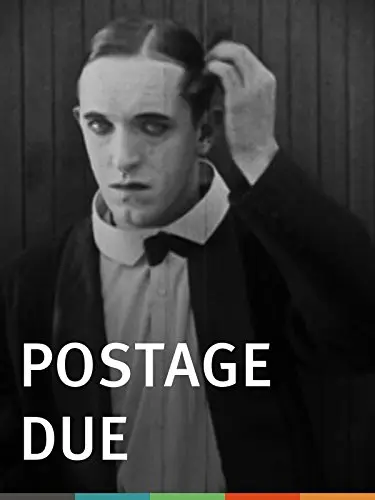
A definitive 5.7/10 rating for a film that redefined the boundaries of cult cinema. Postage Due remains a cornerstone of transgressive art.
The year 1924 stands as a fascinating temporal marker in the annals of cinematic comedy, a period where the grammar of the gag was being rewritten by practitioners who had migrated from the dust of the vaudeville stage to the flickering incandescence of the silver screen. Among these pioneers, Stan Laurel occupied a peculiar, almost liminal space. Before his fated alchemy with Oliver Hardy, Laurel was an experimentalist, a solo performer honing a persona that was far more acerbic and electrically unpredictable than the whimpering, hair-scratching icon he would eventually become. In Postage Due, directed by the former Keystone Kop George Jeske, we witness this evolution in its most concentrated, anarchic form.
The premise of Postage Due is deceptively pedestrian: a man enters a post office to mail a letter. However, in the hands of the Hal Roach studio, this mundane civic duty is transformed into a gauntlet of slapstick surrealism. Laurel’s character, Willy Worst, is a vessel of pure entropy. Unlike the more grounded protagonists found in contemporary dramas like The Hoosier Schoolmaster, Willy functions as a human wrench thrown into the gears of social order. The post office set itself is a marvel of 1920s production design—a labyrinth of brass cages, inkwells, and bureaucratic barriers that serve as the perfect playground for Laurel’s particular brand of kinetic frustration.
The film’s pacing is relentless, reflecting the influence of Jeske’s Keystone background but tempered by the more sophisticated character-driven humor Roach was championing. While earlier shorts like The Star Boarder relied heavily on broad, almost primitive physical gags, Postage Due exhibits a burgeoning interest in the psychology of the loser. Willy Worst isn't just falling over; he is struggling against a world that seems fundamentally designed to exclude him. This thematic resonance provides a layer of depth that elevates the film above the mere "custard pie" antics of its predecessors.
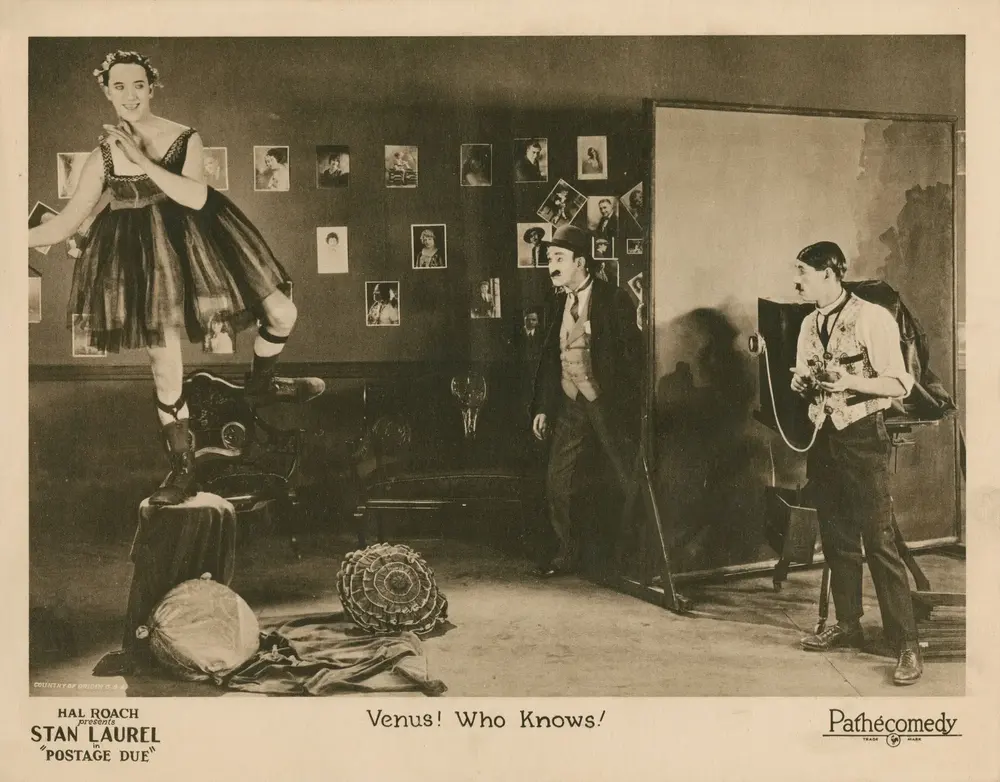
One cannot discuss the efficacy of Postage Due without acknowledging the towering presence of James Finlayson. The Scottish-born actor, with his trademark squint and explosive double-takes, provides the necessary friction for Laurel’s lubrication. Finlayson represents the establishment—the rigid, easily agitated authority figure whose sole purpose is to be dismantled by Willy’s obliviousness. Their chemistry here is a precursor to the legendary dynamics of the later Laurel and Hardy shorts, yet it possesses a sharper, more antagonistic edge. Finlayson’s reactions are not merely comedic; they are a masterclass in facial contortion, a silent scream against the dying of the light of order.
The supporting cast is a veritable who's-who of the Roach lot. From the diminutive Sammy Brooks to the imposing 'Tonnage' Martin Wolfkeil, every background player contributes to the sense of a populated, living world. This ensemble approach creates a dense atmosphere of irritation. When Willy interacts with the various clerks and patrons, it feels less like a series of isolated skits and more like a cascading disaster. This is a stark contrast to the more isolated, singular focus found in films like A Man About Town, where the humor is often more situational and less about the collective breakdown of a public space.
While it may seem hyperbolic to imbue a twenty-minute comedy short with sociopolitical weight, Postage Due offers a biting commentary on the burgeoning bureaucracy of the post-war era. The post office, a symbol of federal connectivity, becomes a site of total disconnection. Willy’s inability to navigate the simple requirements of postage reflects a broader cultural anxiety about the complexity of modern life. In this sense, the film shares a spiritual kinship with the more overtly satirical If, though it swaps intellectual discourse for physical absurdity.
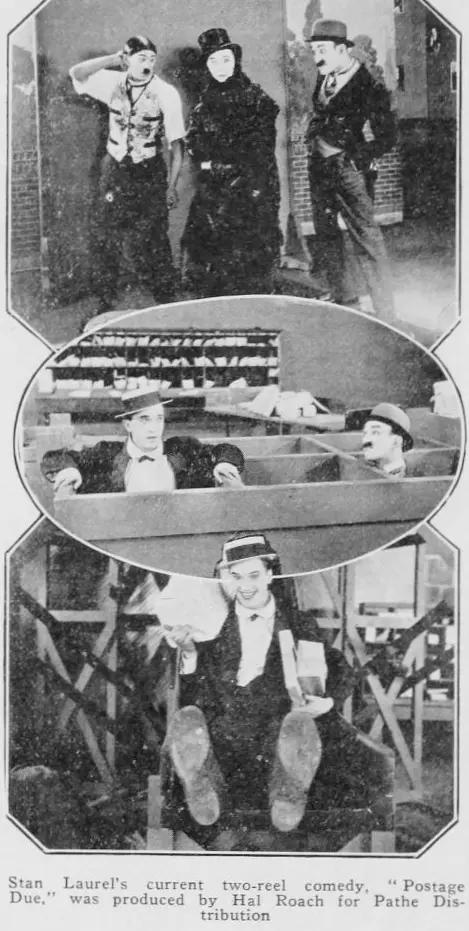
The visual language of the film is surprisingly sophisticated for 1924. The use of depth of field within the post office allows for simultaneous gags to occur in the foreground and background, a technique that would later be perfected by the likes of Buster Keaton. There is a specific sequence involving a rogue stamp and a series of increasingly agitated customers that showcases Jeske’s ability to choreograph chaos without losing the audience's eye. It is this precision that distinguishes the film from the more haphazardly shot comedies of the era, such as How I Became Krazy.
Watching Postage Due is a revelatory experience for those only familiar with the later, gentler Stan. Here, he is lean, fast, and occasionally mean. His movements are staccato, influenced by his time with the Fred Karno troupe, yet there are flashes of the vulnerability that would later become his trademark. When he looks at the camera after a particularly disastrous interaction, we see the seeds of the "Stan" persona being planted. He is an outsider, a man out of time, much like the characters in Love's Outcast, yet he carries a frantic energy that suggests he might just burn the whole system down rather than simply weep over it.
The film also benefits from the high production standards of Hal Roach. Unlike the often-gritty realism of The City of Silent Men or the harrowing imagery of Auction of Souls, Postage Due is polished, bright, and visually inviting. The cinematography by George Stevens (who would later become a legendary director in his own right) is clean and serves the comedy perfectly, ensuring that every nuance of Laurel’s performance is captured with crystalline clarity.
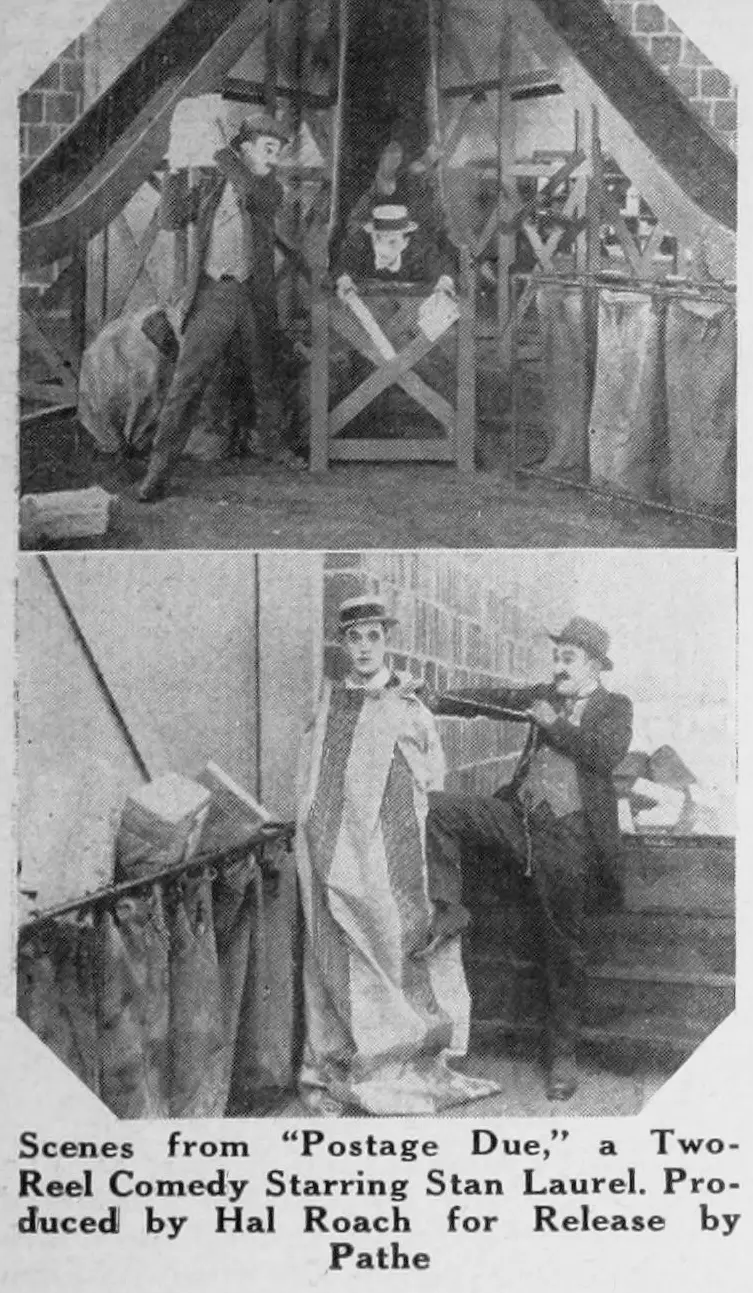
When placed alongside other 1924 releases like The Daredevil or Mark It Paid, Postage Due feels remarkably modern. It eschews the sentimentalism that often bogged down silent comedies, opting instead for a pure, distilled form of slapstick. It lacks the moralizing tone of The Straight Way or the melodramatic flourishes of The Social Leper. Instead, it revels in the joy of the disaster. It is a film that understands that there is something inherently funny about the failure of systems, and it exploits that truth for every possible laugh.
The film’s influence can be seen in everything from the works of Jacques Tati to the modern cringe-comedy of *The Office*. The idea of a public space being the setting for an escalating series of social and physical failures is a trope that Postage Due helped to codify. Even more obscure titles like Invisible Ink or July Days owe a debt to the structural innovations found here. It is a testament to Laurel’s genius that a short film about a post office can remain as vibrant and hilariously relevant a century after its release.
Technically, the film is a masterclass in editing. The rhythm of the cuts mirrors the frantic heartbeat of the protagonist. When the action reaches its zenith, the editing becomes almost percussive, driving the comedy forward with an irresistible momentum. This is not the languid, observational style of Pretty Smooth; this is a film that demands your attention and refuses to let go. The use of title cards is also judicious, providing just enough context to bridge the gaps between the physical set-pieces without slowing down the narrative flow.
In the grand tapestry of Stan Laurel’s career, Postage Due is a vital thread. It represents the moment before the storm, the final refinement of a solo artist before he found his perfect partner. It is a film of immense historical value, but more importantly, it remains a work of immense comedic power. To watch Willy Worst struggle with a simple stamp is to watch a master at work, turning the mundane into the miraculous and the orderly into the delightfully chaotic. It is a reminder that in the world of Hal Roach, no errand is too small to trigger a revolution of laughter.
Final Verdict: A quintessential artifact of the silent era that proves Stan Laurel was a comedic titan long before he ever met 'The Babe'. A must-watch for anyone interested in the mechanics of slapstick and the history of the Roach studio.
IMDb 6.8
1936
Community
Log in to comment.