DbcultAccessing Vault...
Cult Review
Senior Film Conservator
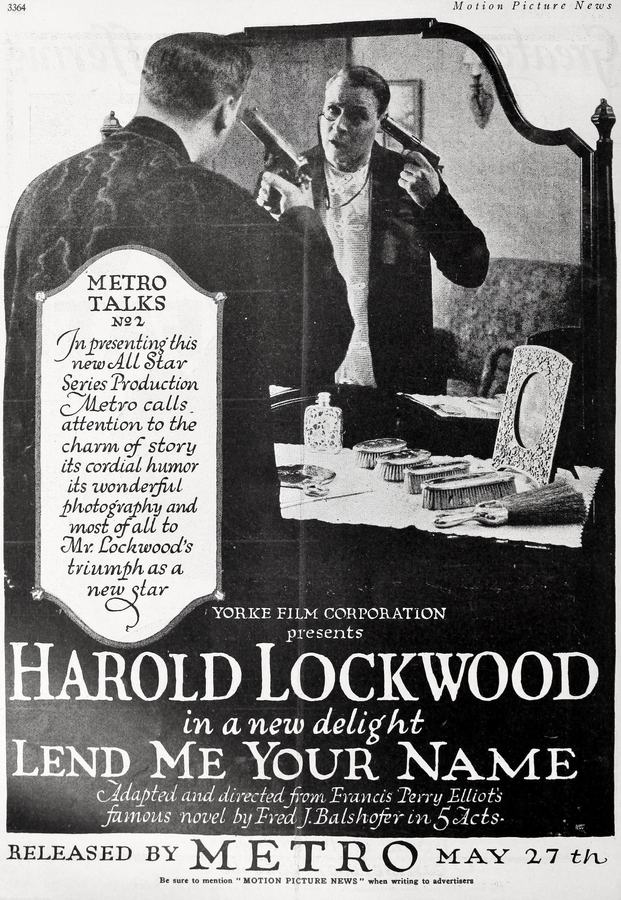
*Lend Me Your Name* (1927) is a film that thrives on the absurdity of human behavior, weaving a tapestry of mistaken identities and emotional crosswires that feel both archaic and startlingly modern. Directed with a deft hand by an ensemble of writers—John B. Clymer, Fred J. Balshofer, and Francis Perry Elliott—the film orbits around the Earl of Gilleigh (Harry DeRoy), a man whose digestive troubles are metaphorically mirrored by the disintegration of his orderly world. When his brother Warren Ellis (Stanton Heck), a freewheeling wanderer, bursts into the Earl’s life with a hunger for both food and mischief, the stage is set for a farcical exploration of duty, desire, and the fragility of social facades.
The narrative hinges on a simple yet audacious premise: the Earl and Warren swap identities to escape their respective burdens. The Earl flees to his country estate to avoid his tempestuous wife, Sophronia (Peggy Prevost), while Warren assumes the role of the Earl, only to be ensnared by the rustic charm of Rosalind (Bessie Eyton), a shepherdess whose innocence contrasts sharply with the Earl’s aristocratic pretensions. The film’s brilliance lies in its ability to balance slapstick humor with moments of genuine pathos, particularly in the way Warren’s transformation from a jaded rogue to a lovesick fool mirrors the Earl’s own journey toward self-awareness.
What elevates *Lend Me Your Name* beyond mere genre fare is its nuanced handling of gender roles and emotional intelligence. Sophronia, initially portrayed as a shrewish harpy, undergoes a subtle but profound shift when she mistakes Warren for her husband. Her jealousy—born of a misplaced assumption—becomes a catalyst for self-discovery, revealing the hollowness of her earlier antagonism. Meanwhile, Warren’s infatuation with Rosalind is not merely a romantic subplot but a critique of the aristocracy’s inability to connect with the lives of those beneath them. The film’s climax, wherein both men confront the consequences of their deceptions, is a masterstroke of visual storytelling, using shadow and light to underscore their internal conflicts.
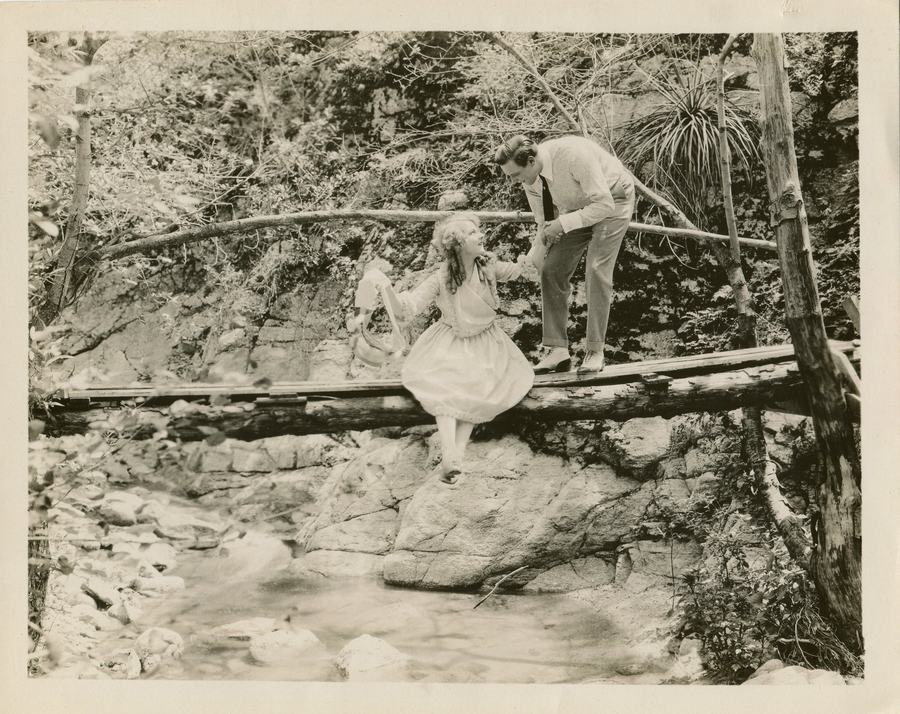
The performances are a study in contrasts. Harry DeRoy’s Earl is a study in repressed frustration, his every gesture a calculated effort to maintain control in a world spiraling into chaos. Stanton Heck, as Warren, delivers a charismatic yet vulnerable portrayal, his physicality—particularly his awkward attempts to mimic aristocratic poise—adding levity to the proceedings. Bessie Eyton’s Rosalind, though given less screen time, embodies a quiet strength that grounds the film’s romantic entanglements. Peggy Prevost, in a role that could have easily devolved into caricature, brings a surprising depth to Sophronia, hinting at the loneliness that fuels her volatility.
Technically, the film is a marvel of early 20th-century cinema. The use of location shots in the country estate juxtaposes the opulence of the aristocracy with the simplicity of rural life, a visual motif that reinforces the film’s central themes. The editing, though rudimentary by modern standards, is efficient, ensuring that the rapid-fire dialogue and physical comedy remain coherent. The score, though largely absent in surviving prints, is imagined as a melancholic string arrangement that underscores the characters’ emotional states.
In the pantheon of early romantic comedies, *Lend Me Your Name* stands out for its refusal to offer easy resolutions. Unlike the tidy endings of films like *Der Ruf der Liebe* (1920), which prioritizes moralizing over character development, *Lend Me Your Name* acknowledges the messiness of human relationships. The film’s themes of identity and deception also echo in later works such as *Sweet Alyssum* (1933), though with a far more cynical outlook on the institution of marriage. Its influence can even be glimpsed in the stark realism of *The Road o' Strife* (1922), albeit filtered through a lighter, comedic lens.
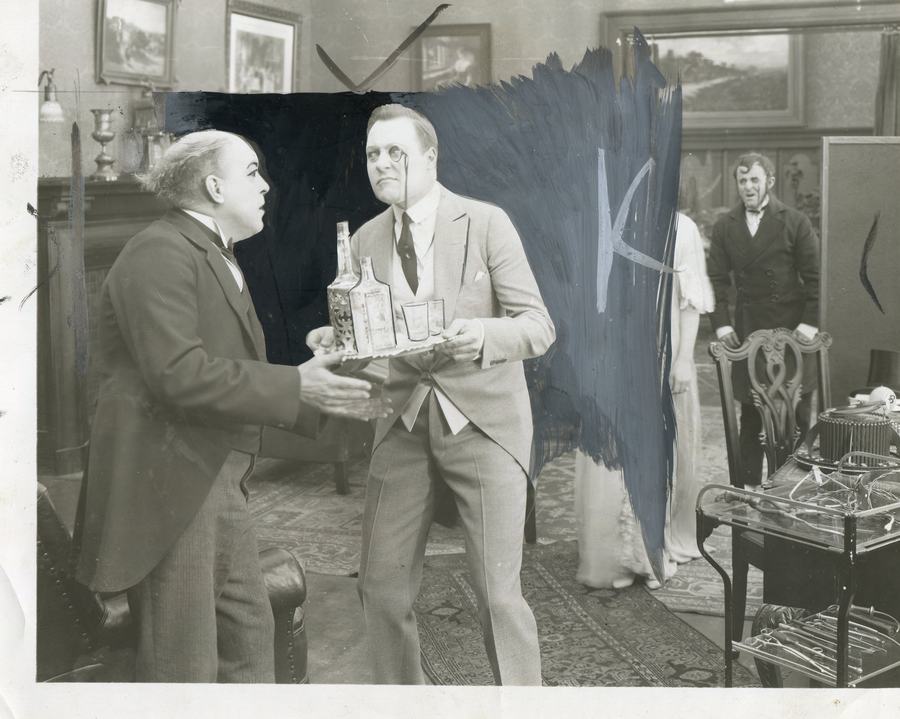
However, the film is not without its limitations. The pacing lags in the second act, particularly during the Earl’s retreat to the country estate, where his introspection feels underdeveloped compared to Warren’s more dynamic arc. Additionally, the subplot involving Pauline Curley’s character—a maid whose romantic entanglements are hastily resolved—distracts from the main narrative, serving more as a placeholder for the era’s penchant for subplots than as a meaningful addition. These quibbles, while valid, do not detract from the film’s overall charm.
For modern audiences, *Lend Me Your Name* offers a fascinating glimpse into the social anxieties of its time. The rigid class structures it critiques have evolved, yet the film’s exploration of identity—how people perform roles to fit societal expectations—remains strikingly relevant. In an age of social media personas and curated online identities, Warren and the Earl’s charade becomes a prescient metaphor for the performative nature of modern life.
In conclusion, *Lend Me Your Name* is a gem of silent cinema that rewards viewers with its wit, emotional complexity, and visual ingenuity. While it may not reach the heights of masterpieces like *The Brass Bullet* (1915) or *Baby Mine* (1924), its blend of farce and introspection makes it a standout entry in the genre. For those seeking a film that balances laughter with pathos, this early 20th-century charmer is an absolute must-watch. Just don’t expect to leave without a few existential questions lingering about your own identity—and perhaps a craving for a shepherd’s pie.
IMDb —
1933
Community
Log in to comment.