DbcultAccessing Vault...
Cult Review
Senior Film Conservator
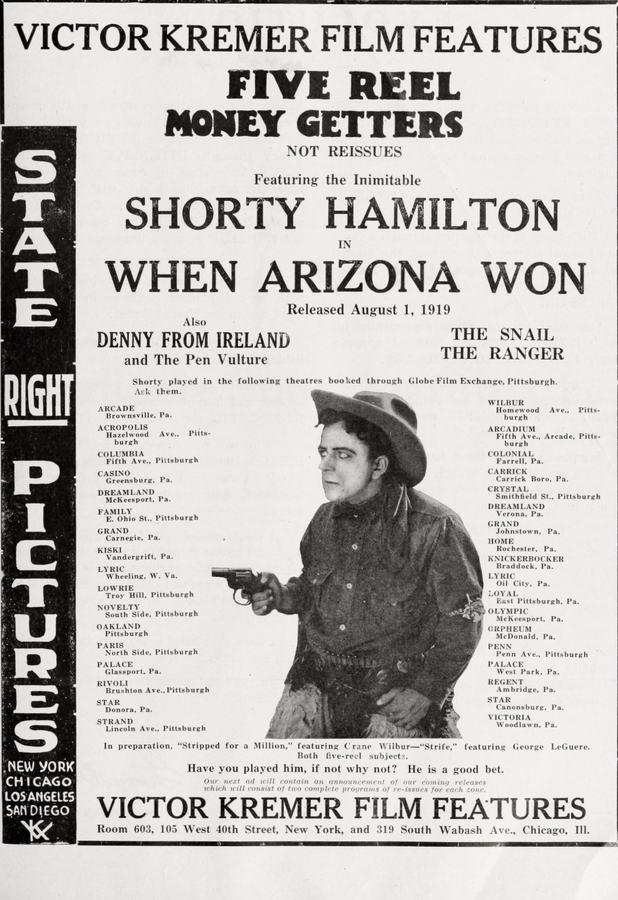
In an era often lauded for its epic narratives and the burgeoning art of cinematic storytelling, 1917’s When Arizona Won emerges not merely as a relic of its time, but as a vibrant testament to the human spirit's resilience, ingenuity, and capacity for profound courage. This film, starring the compelling Virginia Harris and the ever-reliable Shorty Hamilton, sweeps us from the sun-drenched, rugged beauty of an Arizona ranch into the harrowing, smoke-filled skies above war-torn Europe. It's a journey that encapsulates romance, duty, espionage, and an extraordinary display of derring-do, all woven into a tapestry that feels both of its period and yet remarkably timeless in its core themes.
Our story commences with an idyllic, albeit understated, charm on a sprawling Arizona ranch. Here, the everyday rhythms of cowboy life provide the backdrop for a blossoming affection between Anna, the spirited daughter of the ranch's owner, and the assistant foreman. Their connection, portrayed with a quiet intensity typical of the silent film era, suggests a profound bond forged through shared experiences under the vast Western sky. It’s a classic cinematic trope – the ranch owner's daughter and the earnest, hardworking man – but executed with a sincerity that makes their romance immediately engaging. Virginia Harris, in her role as Anna, brings a certain vivacity to the character, hinting at an inner strength that will be sorely tested. Shorty Hamilton, as the assistant foreman, embodies the stoic yet passionate frontiersman, a man of action whose loyalty and courage are palpable even in the film's quietest moments. This initial phase of the film grounds the audience in a sense of peace and burgeoning love, making the subsequent disruption all the more impactful. It establishes the stakes, painting a clear picture of what these characters stand to lose as the world outside their tranquil existence begins to fracture.
The serenity of the Arizona landscape is not destined to last. As news of the escalating conflict in Europe reaches even the most remote corners of the world, the ranch foreman, a proud Scotsman, feels an undeniable pull towards his homeland. His decision to return and rejoin his regiment isn't just a plot point; it's a poignant reflection of the global reach of World War I, drawing individuals from disparate lives into its vortex. The assistant foreman, driven by an unwavering sense of loyalty and perhaps a burgeoning patriotism, makes the momentous decision to accompany his friend. This act of solidarity sets in motion a chain of events that will irrevocably alter his destiny and that of Anna. Simultaneously, Anna's father, a captain in the state militia, is called to active duty, not to the European front, but to address growing unrest along the Mexican border – a subtle yet effective nod to the complex geopolitical landscape of the time, reminding us that the war was not the only concern for American security. This layered approach to conflict, both international and domestic, enriches the narrative, demonstrating the pervasive impact of a world in turmoil. It evokes a similar sense of unexpected, personal sacrifice found in films like The Flash of Fate, where characters are thrust into extraordinary circumstances by external forces.
The narrative takes a truly harrowing turn when, after the United States officially enters the war, Anna and her mother find themselves stranded in Germany. Their innocuous journey to settle a relative's estate transforms into a perilous trap, their American citizenship becoming a barrier to freedom rather than a guarantee. This predicament highlights the profound personal cost of global conflict, where innocent civilians, caught in the crosshairs of international politics, become pawns in a much larger, more dangerous game. The tension here is palpable, a silent scream of helplessness against the backdrop of a nation at war. The film, through this specific scenario, masterfully conveys the anxieties and uncertainties faced by countless individuals during wartime, a theme that resonates deeply even today. It's a stark reminder of how quickly circumstances can shift, turning everyday life into a struggle for survival, a feeling that echoes the desperate situations depicted in films like The Unfortunate Marriage, albeit on a grander, more international scale.
The plot then escalates into a truly audacious display of heroism. The Scotsman, now a decorated colonel, receives word of Anna and her mother's desperate situation. It falls to the assistant foreman, whose journey has taken him from ranch hand to an orderly learning to fly, to undertake a rescue mission of unprecedented daring. The transition from ground-based cowboy to nascent aviator is a fascinating character arc, symbolizing the rapid technological advancements of the era and the adaptability of the human spirit. The decision to use an airplane for the rescue is not just a thrilling cinematic device; it underscores the nascent power of aviation in warfare and its potential for unprecedented feats. This segment is where the film truly earns its stripes as an adventure epic. The assistant foreman's solo flight into enemy territory to rescue the women is a testament to his love for Anna and his unwavering commitment. It's a sequence that, even in a silent film context, must have generated immense excitement and suspense for contemporary audiences, much like the grand, globe-trotting escapades of Around the World in 80 Days, though here with far more perilous stakes.
Having successfully located Anna and her mother, the assistant foreman's mission takes an unexpected turn towards high-stakes espionage. He manages to steal crucial plans for a major German offensive, transforming his rescue into a vital intelligence operation. This audacious act elevates the personal drama to a matter of national security, adding another layer of tension and significance to his already perilous undertaking. The stakes are now immensely high, not just for the lives of Anna and her mother, but for the Allied war effort itself. However, fate, ever a fickle mistress, intervenes. He is forced to land his aircraft in the desolate, treacherous expanse of No Man's Land, a stark symbol of the brutal stalemate of trench warfare. The irony of his subsequent arrest is profound: he, a hero attempting to save lives and steal vital intelligence, is mistaken for a deserter, while Anna and her mother are branded as spies. This twist injects a powerful sense of injustice and peril, placing our protagonists in their darkest hour, facing execution at the hands of those they are ultimately trying to help. It's a narrative device that heightens the dramatic tension to almost unbearable levels, a classic setup for a last-minute rescue that would keep audiences on the edge of their seats, reminiscent of the intricate plots of films like A Bid for Fortune or the moral quandaries in The Man Above the Law.
The climax of When Arizona Won is a masterclass in dramatic timing and resolution, a staple of early cinematic storytelling. Just as the execution of Anna and her mother appears imminent, a dual intervention unfolds. First, the Scotsman, now Colonel, arrives to valiantly vouch for his friend's innocence, clearing his name of the desertion charge. This moment of comradeship and loyalty underscores the strong bonds forged in the crucible of war. Almost simultaneously, Anna's father, having fulfilled his duties on the Mexican border, makes a dramatic entrance with American troops, effectively halting the women's execution. This confluence of events, though perhaps a touch convenient by modern standards, provides a powerful and satisfying resolution for an audience invested in the characters' fates. The stopping of the German offensive, thanks in part to the stolen plans, adds a layer of strategic importance to the assistant foreman's individual heroism, transforming his personal quest into a pivotal moment for the Allied cause. The film concludes with the orderly being decorated with medals, a public acknowledgment of his extraordinary bravery and sacrifice. It’s a triumphant ending that celebrates individual valor and the ultimate victory of good over evil, a narrative arc designed to inspire and uplift. This grand, heroic conclusion, with its emphasis on justice and recognition, finds parallels in the celebratory endings of films like Tom Sawyer, where good deeds are ultimately rewarded, albeit on a much more intimate scale.
Virginia Harris, as Anna, conveys a remarkable range of emotion through her expressions and gestures, from the innocent joy of the ranch to the terror of being trapped in enemy territory. Her performance is a poignant reminder of the power of non-verbal communication in silent film, carrying the emotional weight of her character's journey with grace. Shorty Hamilton, as the assistant foreman, embodies the quintessential silent film hero – brave, resourceful, and unwavering. His transformation from a ranch hand to an aerial hero is compelling, demonstrating his character's growth and adaptability. While early cinema often relied on broader gestures, both actors manage to imbue their roles with a noticeable depth that transcends mere melodrama. The pacing of When Arizona Won is surprisingly dynamic for a film of its vintage. It moves efficiently from the pastoral setting to the urgent call of war, maintaining a steady build-up of tension that culminates in the thrilling rescue and climactic resolution. The film understands the power of escalating stakes, consistently raising the bar for its protagonists, ensuring that the audience remains thoroughly engaged. The narrative, despite its fantastical elements, maintains a logical progression that keeps the viewer invested in the unfolding drama. This methodical yet exciting rhythm is a hallmark of well-crafted narratives, even in the absence of spoken dialogue.
While specific directorial credits for many early films can be elusive or overshadowed by the stars, the overall direction of When Arizona Won demonstrates a clear vision for an adventure narrative. The use of location, from the vastness of the Arizona plains to the implied chaos of the European front, is effective in establishing scale and contrast. The aerial sequences, though undoubtedly rudimentary by today's standards, would have been groundbreaking and immensely exciting for audiences in 1917, capitalizing on the public's fascination with this new mode of transport and warfare. The film's ability to blend romance, war drama, and espionage into a cohesive and thrilling story speaks volumes about its narrative construction. It’s a compelling example of how early filmmakers were already experimenting with genre combinations to create engaging spectacles. In an era where cinema was still finding its voice, When Arizona Won showcases a robust understanding of storytelling principles that remain relevant today. It's a film that, while perhaps not as widely remembered as some of its contemporaries, certainly deserves a deeper look for its ambitious scope and its ability to deliver a gripping narrative. It stands as a testament to the enduring appeal of heroic tales and the transformative power of love and loyalty in the face of overwhelming adversity. Its adventurous spirit and focus on individual courage against a grand backdrop echo the sentiment found in other period pieces, like Mistress Nell, which also champions strong characters in challenging times, or even the more dramatic Die Faust des Schicksals, where fate plays a pivotal role in shaping destinies.
Ultimately, When Arizona Won is more than just a historical curiosity; it's a vibrant piece of early cinema that captures the spirit of an age defined by both profound change and unwavering heroism. It tells a story of love tested by war, of ordinary individuals rising to extraordinary challenges, and of the enduring power of courage and loyalty. From the quiet ranch life to the harrowing skies of Europe, the film navigates its complex plot with a surprising dexterity, delivering thrills, romance, and a deeply satisfying conclusion. It is a testament to the ingenuity of early filmmakers and the timeless appeal of a good adventure story. For those interested in the evolution of cinematic narrative, the impact of World War I on popular culture, or simply a compelling tale of heroism, When Arizona Won offers a captivating glimpse into a bygone era, proving that even a century later, its tale of daring and devotion can still resonate with an audience. It's a journey worth taking, a forgotten triumph waiting to be rediscovered, a narrative that truly embodies the idea that in the face of impossible odds, the human spirit, with a bit of Arizona grit, can indeed win.

IMDb 6.5
1931
Community
Log in to comment.