DbcultAccessing Vault...
Cult Review
Senior Film Conservator
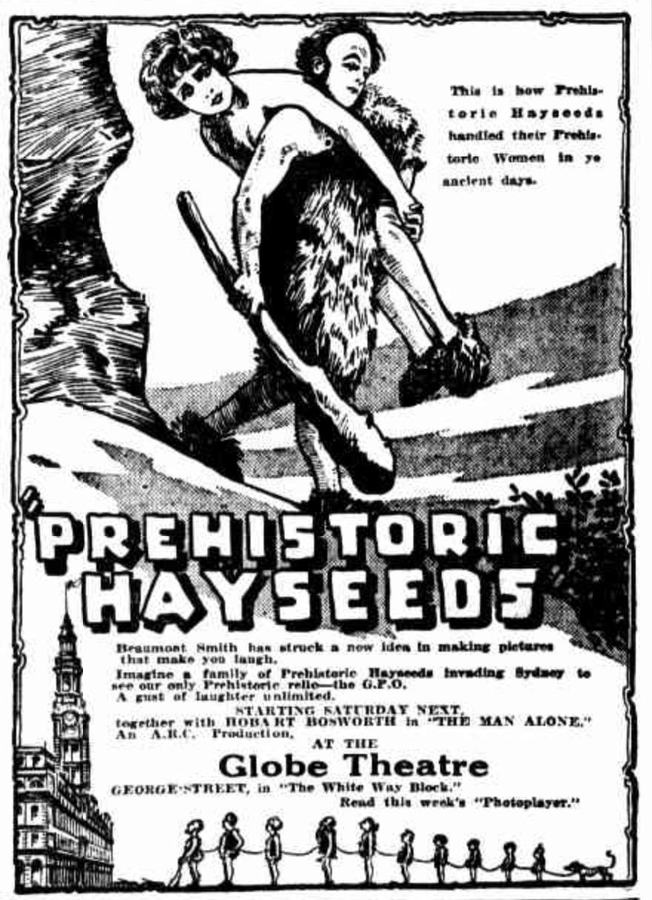
Stepping into the world of Prehistoric Hayseeds is akin to unearthing a forgotten time capsule, a cinematic relic that, despite its vintage, still possesses a peculiar charm and a surprisingly resonant narrative core. From the pen of Beaumont Smith, a name synonymous with early Australian cinema, emerges a tale that deftly blends rural comedy with the grand sweep of archaeological adventure. It's a film that asks us to suspend disbelief and embrace the fantastical, a journey from the familiar comforts of a hayseed farm to the awe-inspiring discovery of a civilization lost to time. And frankly, who could resist such an invitation?
The film introduces us to the titular Hayseeds, Mum and Day, portrayed with endearing authenticity by Lotus Thompson and Pinky Weatherley respectively. Their lives are characterized by a rustic simplicity, a rhythm dictated by the land and the seasons, far removed from the academic pursuits that drive the film’s catalyst. This is where Dunstan Webb enters the frame as Owen Osborne, an archaeologist whose intellectual curiosity burns with an almost zealous intensity. Osborne is not merely searching for artifacts; he’s seeking the very echoes of humanity’s genesis, convinced that the local landscape harbors secrets of prehistoric habitation. The initial interactions between the pragmatic Hayseeds and the erudite Osborne provide a delightful contrast, setting a tone that is both humorous and subtly profound.
Beaumont Smith’s screenplay, while rooted in a seemingly straightforward premise, blossoms into something far more ambitious. The decision to unite these disparate characters on a shared quest is a stroke of narrative genius. The Hayseeds, with their intimate knowledge of the land and their innate resilience, become unwitting but essential partners in Osborne’s grand endeavor. Their journey into the unknown begins with a cave, not just any cave, but one shrouded in local lore and mystery. This subterranean passage serves as more than just a physical conduit; it's a symbolic threshold, a portal separating the known world from the unimaginable. The visual storytelling here, though constrained by the technological limitations of its era, manages to convey a palpable sense of impending discovery and burgeoning wonder.
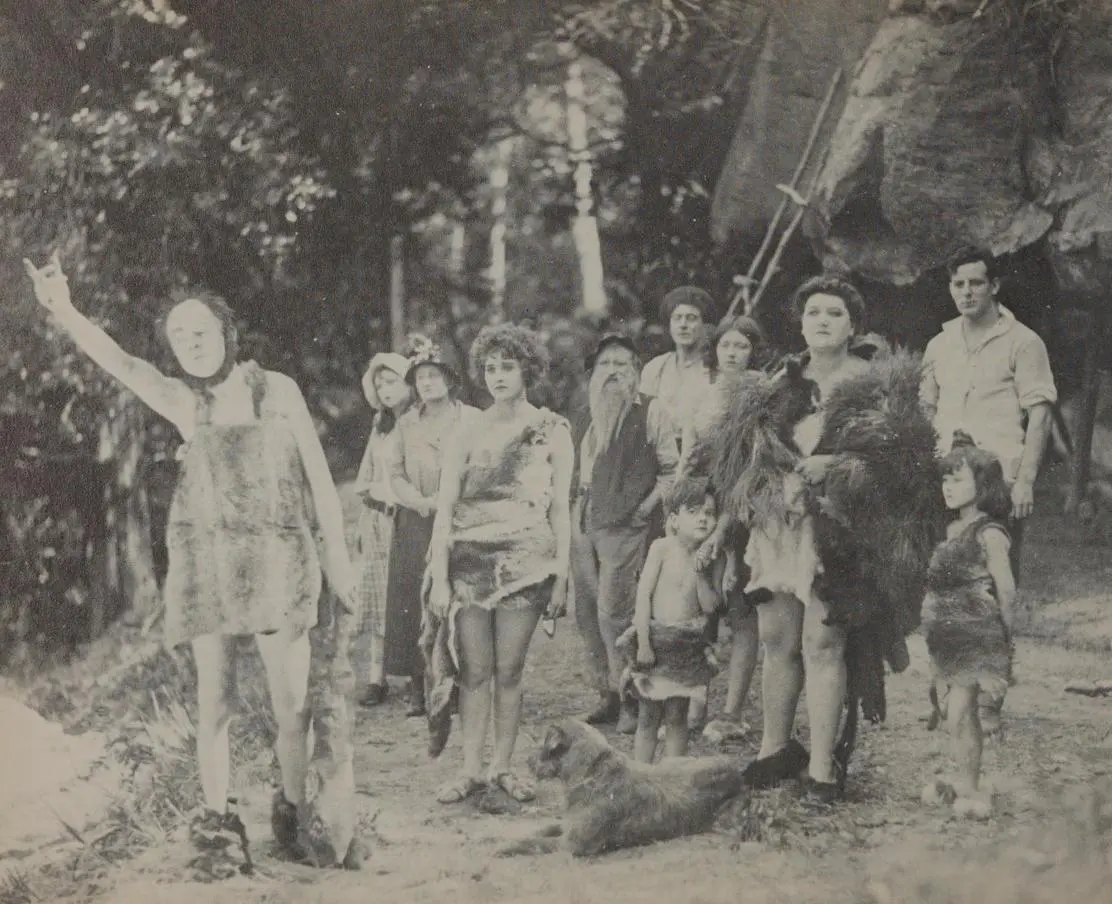
The revelation of the secret valley is, of course, the film's pivotal moment. Here, Prehistoric Hayseeds truly leans into its speculative fiction elements. A lost tribe, living in splendid isolation, untouched by millennia of human progress, is a trope that has captivated audiences across various mediums, from literature to cinema. The film handles this discovery with a blend of scientific awe and humanistic curiosity. How do the Hayseeds and Osborne react to this unprecedented encounter? And more importantly, how does this lost tribe perceive these strange visitors from a future they cannot comprehend? This collision of civilizations forms the dramatic and thematic backbone of the film, raising questions about progress, tradition, and the very nature of human existence.
The ensemble cast, though often overshadowed by the larger-than-life premise, contributes significantly to the film’s texture. Kathleen Mack, J.P. O'Neill, Gordon Collingridge, Nina Dacre, Hector St Clair, and Roy Wilson, though perhaps in supporting roles, collectively populate this newly discovered world, giving it a sense of lived-in reality. Their performances, even in the broader strokes often characteristic of early cinema, ground the fantastical elements in a relatable human experience. The interactions between the 'modern' explorers and the 'ancient' inhabitants are handled with a surprising degree of nuance, considering the genre's tendency towards sensationalism. There's an attempt, however nascent, to explore the cultural chasm that separates them, rather than merely exploiting it for shock value.
Beaumont Smith, as both writer and director, demonstrates a clear vision for this ambitious project. His directorial style, while not overtly flashy, is effective in building suspense and conveying the sense of adventure. The pacing, a crucial element in any narrative, particularly one spanning such a grand discovery, is managed with a steady hand, allowing the audience to absorb the unfolding wonders without feeling rushed. One might draw a parallel to the earnest, exploratory spirit found in films like Enchantment, which, while different in subject, shares a similar desire to transport its audience to realms of wonder and mystery. The film’s strength lies in its ability to maintain a delicate balance between lighthearted moments and the more serious implications of its central discovery.
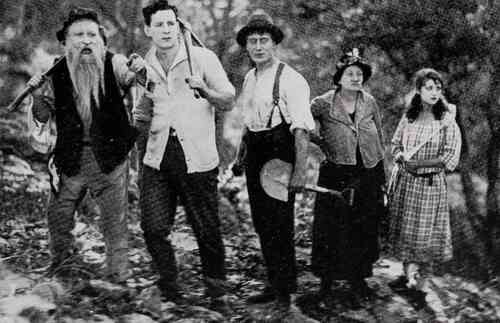
The aesthetic choices, too, are noteworthy for their time. The depiction of the prehistoric tribe, while undoubtedly influenced by contemporary ethnographic understanding (and perhaps misunderstandings), aims for a degree of verisimilitude. The costumes, the setting of the hidden valley, and the portrayal of their customs are crafted to immerse the viewer in this alternative reality. The film doesn't shy away from the inherent dangers and challenges of such an encounter, but it also emphasizes the potential for understanding and connection across vast cultural divides. This nuanced approach elevates Prehistoric Hayseeds beyond mere escapism.
In an era when cinema was still finding its footing, pushing boundaries was a common ambition. Films like The Cheat (1915) explored moral complexities, while Within Our Gates tackled societal issues with unflinching directness. Prehistoric Hayseeds, in its own right, pushes a different kind of boundary – that of imagination and scientific speculation. It belongs to a lineage of 'lost world' narratives that have fascinated humanity for centuries, from Jules Verne to Arthur Conan Doyle, translating that literary wonder onto the silver screen with admirable zeal. The film doesn't just present a discovery; it invites contemplation on what it means to be human, to be isolated, and to suddenly confront an alien 'other' that is, paradoxically, also deeply human.
The performances are, for the most part, a testament to the actors' ability to convey character through expressions and gestures, a necessity in the silent or early sound era. Lotus Thompson's Mum Hayseed is a figure of grounded wisdom, her reactions to the extraordinary events unfolding around her often serving as the audience's anchor. Pinky Weatherley's Day Hayseed complements this with a blend of good-natured humor and a surprising capacity for courage. Dunstan Webb's Owen Osborne, the intellectual driver of the plot, embodies the scientific spirit, his initial academic detachment slowly giving way to a profound sense of wonder and responsibility. The supporting cast effectively contributes to the unfolding drama, each playing their part in rendering the hidden valley and its inhabitants credible within the film's fantastical framework.
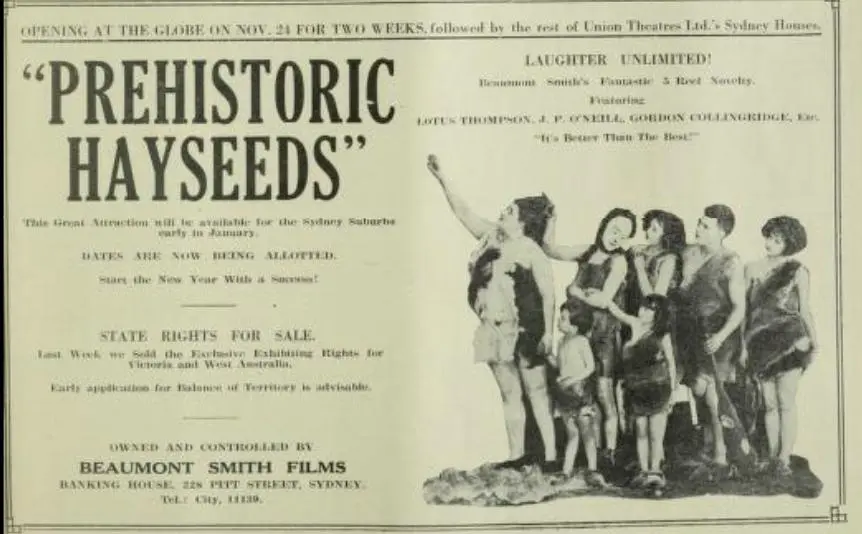
One cannot discuss the film without acknowledging Beaumont Smith's singular contribution. His career, marked by a prolific output and a keen understanding of popular tastes, saw him navigate the evolving landscape of early Australian cinema. With Prehistoric Hayseeds, he crafted a film that, while perhaps not reaching the dramatic heights of a Manon Lescaut or the intricate character studies of a The Sacrifice of Pauline, carved out its own niche in the adventure genre. Smith understood the allure of the unknown, the thrill of discovery, and the universal appeal of a good story well told. His writing, though subject to the narrative conventions of the period, injects enough originality and character development to keep the audience invested.
The film also subtly touches upon themes of environmentalism, or at least the preservation of untouched wilderness, long before such concepts became mainstream. The secret valley is a pristine ecosystem, a sanctuary that has survived precisely because of its isolation. The arrival of the 'modern' world, even with good intentions, inevitably poses a threat to this delicate balance. This underlying tension adds another layer of depth to the narrative, inviting viewers to consider the impact of human expansion and the responsibility that comes with discovery. It’s a theme that resonates even more strongly today, making Prehistoric Hayseeds surprisingly prescient in certain aspects.
The visual language of the film, while perhaps rudimentary by today's standards, effectively uses the natural Australian landscape to its advantage. The rugged terrain, the hidden grottoes, and the lushness of the secret valley are all integral to the film's atmosphere. The sense of scale, of venturing into truly uncharted territory, is conveyed through clever staging and framing. It reminds one of the pioneering spirit captured in films like Where the West Begins, though traded for an internal, geological frontier rather than a geographical one. The film’s ambition, considering the technical limitations of its production era, is truly commendable.
While some aspects of the 'lost tribe' portrayal might be viewed through a critical modern lens, reflecting the ethnographic biases of the time, it’s important to appreciate the film within its historical context. It attempts to engage with the concept of an isolated culture, rather than merely using them as nameless antagonists. There's a genuine curiosity, perhaps even a nascent respect, for their way of life, which is a significant step beyond simpler adventure narratives. This film, much like Feathertop, which explores the boundaries of reality and perception, delves into the extraordinary to reflect upon the ordinary, albeit through a very different lens.
In conclusion, Prehistoric Hayseeds stands as a fascinating entry in the annals of early cinema, a testament to the imaginative power of storytelling. It’s a film that successfully marries disparate genres – rural comedy, scientific adventure, and speculative fiction – into a coherent, engaging whole. The performances by Lotus Thompson, Pinky Weatherley, and Dunstan Webb anchor the narrative, providing relatable human elements amidst the fantastic. Beaumont Smith’s vision, though perhaps unpolished by contemporary standards, shines through, offering a delightful escape into a world where ancient mysteries still await discovery just beyond the next bend in a cave. It’s more than just a historical curiosity; it’s a vibrant, adventurous romp that continues to entertain and provoke thought, reminding us that the greatest discoveries often lie where we least expect them.
IMDb —
1921
Community
Log in to comment.