DbcultAccessing Vault...
Cult Review
Senior Film Conservator
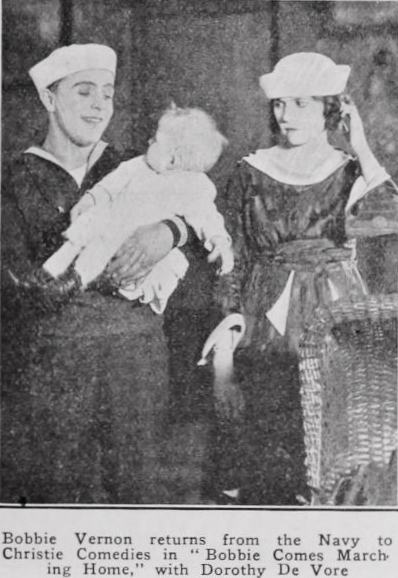
Stepping back into the flickering glow of the silent film era, one encounters a myriad of cinematic gems, some celebrated, others quietly awaiting rediscovery. Among the latter, Bobby Comes Marching Home stands as a surprisingly nuanced piece, a seemingly simple comedy that subtly delves into the complexities of human experience. Starring the inimitable Bobby Vernon and the effervescent Dorothy Devore, this film, while often overlooked, offers a compelling glimpse into the social fabric and comedic sensibilities of its time. It’s not merely a series of slapstick gags, but a thoughtfully constructed narrative that, through its protagonist’s trials, reflects universal themes of belonging and adjustment.
Bobby Vernon, a comedic stalwart of the period, embodies the titular character with a magnetic blend of earnestness and wide-eyed bewilderment. His Bobby is not the boisterous, overtly confident hero, but rather a returning figure — be it from war, a prolonged journey, or perhaps just a period of self-imposed exile — grappling with the disorienting reality of a home that has subtly, yet irrevocably, changed. The film opens not with a grand fanfare, but with Bobby’s somewhat awkward arrival, a scene pregnant with unspoken expectations and the quiet anxiety of reintegration. His uniform, or perhaps just his demeanor, marks him as an outsider, a man out of step with the rapid evolution of his own community. This initial setup immediately establishes a foundation for both comedy and a gentle pathos, a tightrope walk that the film navigates with remarkable grace.
Dorothy Devore, as Bobby’s romantic interest, provides a vibrant counterpoint to his often-clumsy sincerity. Her character is a beacon of modern sensibility, embodying the changing roles and assertiveness of women in the early 20th century. Devore doesn't merely play the damsel in distress; she is an active participant in the unfolding drama, often instigating the very predicaments Bobby finds himself in or, more frequently, attempting to extricate him from them. The chemistry between Vernon and Devore is palpable, a delightful interplay of innocent affection and comedic exasperation that elevates their romantic arc beyond mere plot device. Their relationship becomes a microcosm of the larger societal shifts, where traditional roles are questioned and redefined, even in the context of a seemingly lighthearted comedy.
The film's comedic brilliance lies in its meticulous construction of escalating misunderstandings. Bobby’s well-intentioned efforts to reconnect, to prove his worth, or simply to navigate a changed world invariably lead to hilarious mishaps. A scene involving a misplaced letter intended for Devore, which inadvertently implicates Bobby in a bizarre local scandal, is a masterclass in comedic timing and visual storytelling. The director, whose uncredited work here deserves significant praise, orchestrates these sequences with a keen eye for physical comedy, allowing Vernon’s expressive face and agile body to convey a spectrum of emotions from hopeful anticipation to utter despair. This isn't the broad, often crude humor of some early silent films; rather, it’s a more refined, character-driven comedy that draws its laughs from relatable human foibles.
Beyond the laughs, Bobby Comes Marching Home offers a surprisingly insightful commentary on the notion of 'homecoming.' The film implicitly asks: What does it mean to return to a place that has moved on without you? Bobby’s struggle to find his footing, to understand the new social codes and expectations, resonates deeply. His experiences can be subtly contrasted with the more dramatic and often tragic portrayals of returning soldiers in later cinema, such as the profound psychological toll explored in films like The Fugitive, albeit in a vastly different genre. While Bobby’s journey is comedic, the underlying theme of alienation and the search for belonging remains potent. He's not just marching home; he's marching into a new reality, and the film deftly explores the emotional landscape of that transition.
The cinematography, though rudimentary by today's standards, is effective in conveying the film's tone and narrative. Close-ups are judiciously used to highlight Vernon’s comedic expressions and Devore’s reactions, drawing the audience into their emotional world. The broader shots of the town, while perhaps simple, effectively establish the setting as a bustling, evolving community, a character in itself against which Bobby’s anachronistic presence stands out. The editing maintains a brisk pace, crucial for a silent comedy, ensuring that gags land effectively and the narrative momentum never falters. There’s a particular sequence involving a chase through a local fair that showcases a surprisingly dynamic use of cuts and camera movement, demonstrating an early understanding of cinematic rhythm.
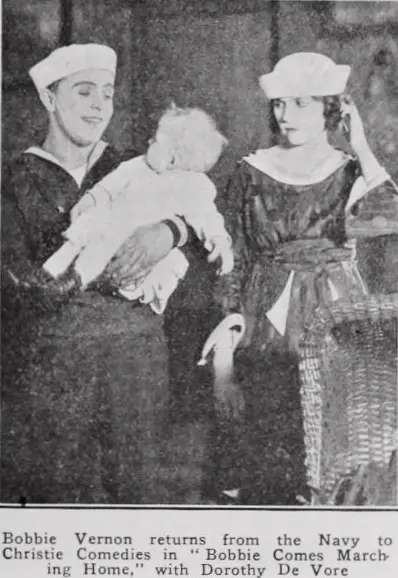
Thematic parallels can be drawn between Bobby’s predicament and the broader anxieties of a society undergoing rapid change. Just as characters in films like A Society Exile grapple with social stratification and the struggle for acceptance, Bobby navigates a social landscape where his past experiences are not easily reconciled with present expectations. His attempts to impress Devore often backfire precisely because his methods are outdated, reflecting a delightful clash between old-world charm and modern pragmatism. This makes the film more than just a series of slapstick routines; it’s a social commentary wrapped in a comedic package, a gentle satire on the difficulties of adapting to progress.
Bobby Vernon’s performance is the undeniable anchor of Bobby Comes Marching Home. He possesses a unique ability to elicit both laughter and empathy. His physical comedy is precise, yet never feels forced. Whether he’s tumbling down a flight of stairs or inadvertently destroying a meticulously prepared dinner, his reactions are always grounded in a believable sense of chagrin and bewilderment. He’s the everyman thrust into extraordinary circumstances, and his vulnerability makes him incredibly endearing. This makes him distinct from the more aggressive comedic styles seen in some contemporaries, leaning more towards the gentle absurdity of a Keaton, rather than the more frantic energy of a Sennett player.
Dorothy Devore, on the other hand, brings a delightful vivacity to her role. Her portrayal is not merely reactive; she drives much of the narrative’s romantic tension and comedic escalation. Her expressions are wonderfully clear, conveying annoyance, amusement, and affection with equal facility. One can easily imagine her character, with her independence and spirited nature, thriving in the modernizing world, much like the resourceful protagonists in films such as Kitty Kelly, M.D., albeit within a comedic framework. Her interactions with Vernon are a highlight, their contrasting energies creating a compelling on-screen dynamic that feels both authentic and endlessly entertaining.
The film also touches upon the often-unspoken pressures placed on individuals to 'succeed' or 'prove themselves' upon their return to society. Bobby’s desperate attempts to secure a job, to impress Devore’s family, and to generally fit in are tinged with an underlying anxiety. This struggle, while played for laughs, hints at the real-world challenges faced by many returning veterans or those who have been away for an extended period. The expectation to immediately slot back into a predefined role is subtly critiqued, suggesting a need for greater understanding and patience. This subtle layer of social commentary elevates the film beyond mere entertainment, inviting deeper reflection on the human condition.
In a broader context, one might compare Bobby's plight, humorously depicted as it is, to the more profound and often tragic narratives of individuals trying to navigate complex societal structures, as seen in the grim realities of Der Weg, der zur Verdammnis führt, 1.Teil - Das Schicksal der Aenne Wolter. While the tones are vastly different, both films, in their own ways, explore the individual's vulnerability against the backdrop of societal demands. Even the comedic elements of Bobby Comes Marching Home can be seen as a coping mechanism against the overwhelming pressures of expectation, much like the satirical jabs at power and influence found in a film like Peanuts and Politics, though with a far more personal focus.
Ultimately, Bobby Comes Marching Home is a delightful and surprisingly insightful piece of silent cinema. Its strength lies in its ability to marry robust physical comedy with a gentle, yet resonant, exploration of character and theme. Bobby Vernon delivers a performance that is both hilarious and deeply human, perfectly complemented by Dorothy Devore’s spirited portrayal. The film's narrative, while episodic in nature, builds a cohesive picture of a man striving to find his place in a world that has subtly shifted in his absence. It reminds us that homecoming is not always a simple return, but often a new journey of adaptation and self-discovery.
For enthusiasts of silent film, or indeed anyone interested in the evolution of comedic storytelling, this picture offers a rich tapestry of early filmmaking techniques and timeless human drama. It’s a testament to the enduring power of visual narrative, proving that even without spoken dialogue, a story can convey profound emotions and spark genuine laughter. Its charm persists, a quiet echo from an era long past, yet its themes remain remarkably pertinent. Do yourself a favor and seek out this charming, understated classic; it’s a journey well worth taking.

IMDb 6.3
1935
Community
Log in to comment.