DbcultAccessing Vault...
Cult Review
Senior Film Conservator
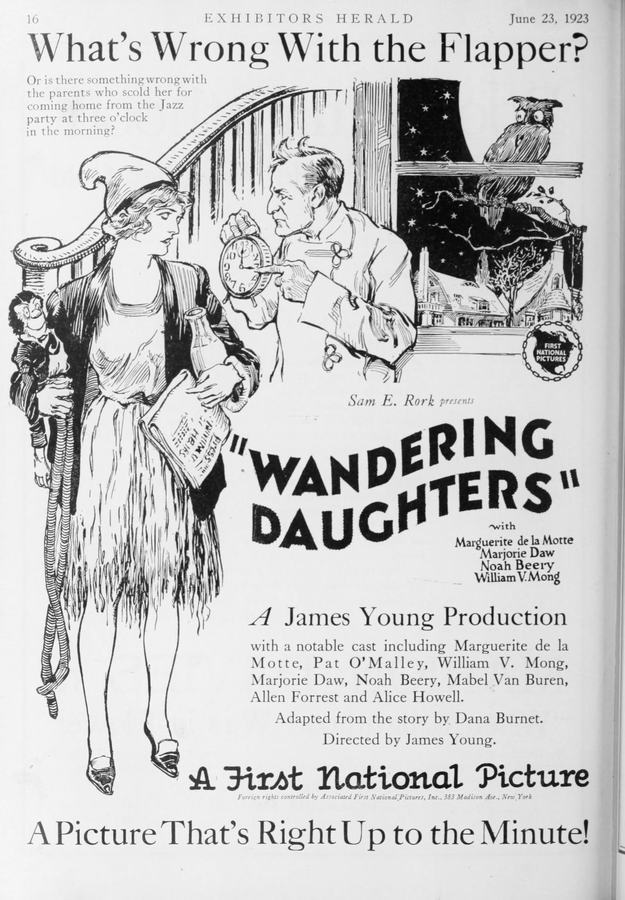
Stepping back into the roaring twenties, the silent film era offered a unique lens through which to examine the burgeoning social changes and moral quandaries of a rapidly evolving world. Among these cinematic artifacts, Wandering Daughters emerges as a particularly poignant and perceptive drama, a narrative tapestry woven with threads of aspiration, disillusionment, and the timeless quest for genuine connection amidst superficial glitter. Directed with a keen eye for human folly and redemption, this 1923 production, penned by the collaborative talents of Dana Burnet, James Young, and Lenore J. Coffee, masterfully encapsulates the spirit of an age grappling with modernity while clinging to enduring values. It's a journey into the heart of a young woman's awakening, a silent symphony of choices that resonate with striking clarity even a century later.
At the core of Wandering Daughters lies Bessie Bowden, portrayed with nuanced vulnerability by Marjorie Daw. Bessie is not inherently rebellious; rather, she is a product of her time, a young woman yearning for something beyond the staid confines of her straitlaced upbringing. Her parents, embodied by the earnest William V. Mong and the quietly dignified Mabel Van Buren, represent a world of diligent work and predictable routines. It’s a comfortable, if unexciting, existence. However, the burgeoning jazz age, with its promise of liberation and excitement, casts a powerful spell. Bessie finds herself irresistibly drawn to the dazzling, albeit ultimately hollow, allure of the 'fast set' – a coterie of individuals who embody a certain superficial glamour. This magnetic pull is personified by Austin Trull, a character brought to life with a captivating blend of charm and smarminess by Allan Forrest.
Trull is the archetypal 'lounge lizard,' an artist of sorts, but primarily a master of appearances. He represents everything Bessie perceives as sophisticated and thrilling, a stark contrast to the dependable, hard-working John Hargraves, played with understated sincerity by Pat O'Malley. John’s virtues are solid and unassuming; Trull’s are flashy and ephemeral. This central conflict is not merely a romantic triangle but a battle for Bessie's soul, a tug-of-war between authentic connection and the intoxicating illusion of high society. The film acutely observes this societal shift, where traditional virtues often seemed dull in comparison to the vibrant, if fleeting, excitement of modern living. Bessie's initial fascination with Trull is understandable; he offers a gateway to a world she’s only glimpsed in magazines, a world promising adventure and status. This narrative thread might remind contemporary viewers of the struggles depicted in films like Young Mrs. Winthrop, where societal expectations and the pursuit of a certain lifestyle often overshadow genuine happiness and connection within relationships.
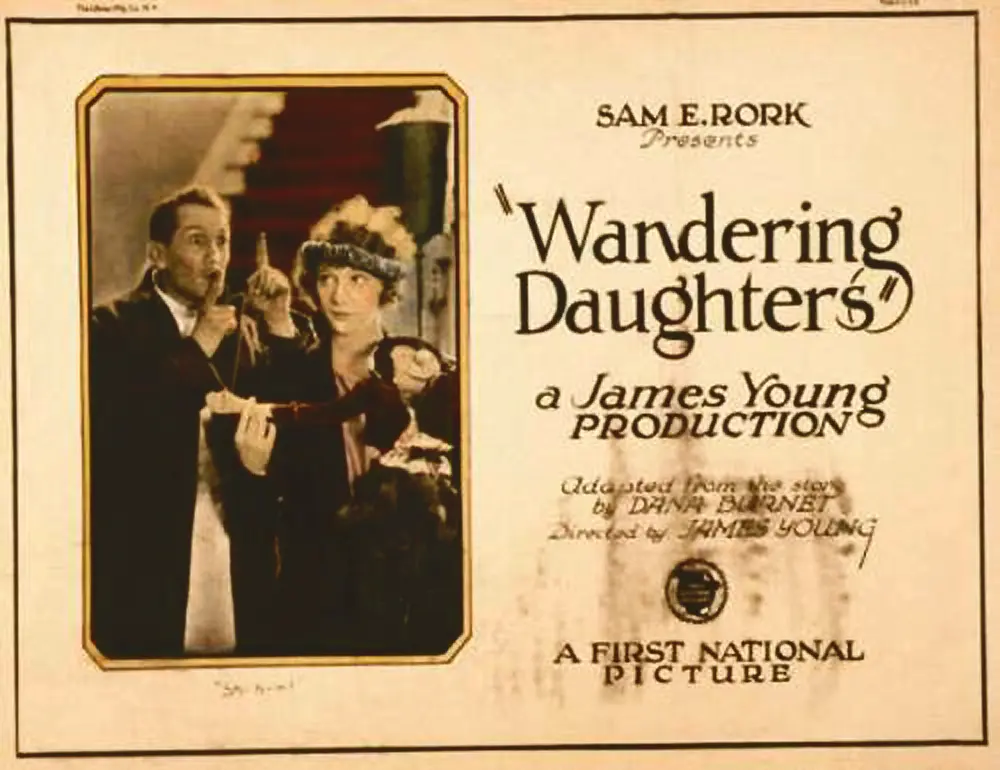
Perhaps the most heart-wrenching aspect of Wandering Daughters is the desperate measure taken by Bessie's father and John Hargraves. Witnessing Bessie’s drift towards Trull and his affluent circle, they succumb to a misguided, yet profoundly loving, impulse: to compete on the fast set’s terms. This involves a catastrophic decision – investing the entirety of the family’s savings into transforming the humble Bowden home into a façade of wealth, an attempt to project an image of belonging to the very social whirl that entices Bessie. This act, born of paternal devotion and romantic hope, is steeped in dramatic irony and foreshadows inevitable collapse. It’s a poignant commentary on the lengths to which individuals will go to secure the happiness of their loved ones, even when those efforts are profoundly misdirected.
The visual juxtaposition of their modest reality against the forced opulence of their newly decorated home speaks volumes without a single intertitle. The silent film medium excels at conveying such visual metaphors, and here, the Bowden home becomes a character in itself – a symbol of strained aspirations and the heavy price of pretension. This storyline also serves as a stark reminder of the economic anxieties of the era, where maintaining appearances could lead to financial ruin. The desperation of Mr. Bowden and John to win Bessie back from the clutches of superficiality is palpable, yet tragically flawed in its execution. Their efforts, while well-intentioned, only underscore the fundamental difference between genuine worth and manufactured status. This theme of exposing the truth behind facades finds parallels in narratives like The Naked Truth, where characters are often forced to confront the harsh realities hidden beneath pleasant illusions.
The narrative arc of Wandering Daughters reaches its emotional zenith with the inevitable unmasking of Austin Trull. His elaborate charade of charm and artistic integrity is ultimately revealed to be nothing more than a meticulously crafted scheme of double-dealing and manipulation. It is Bessie herself, aided by the astute Geraldine Horton (Melba Brownrigg), who finally catches Trull in his web of deceit. This moment is crucial, not just for the plot, but for Bessie's character development. It marks her transition from a naive, easily swayed young woman to one who has learned a profound lesson about discernment and true character. The disillusionment is sharp, but necessary, shattering the glittering illusion she had so ardently pursued.
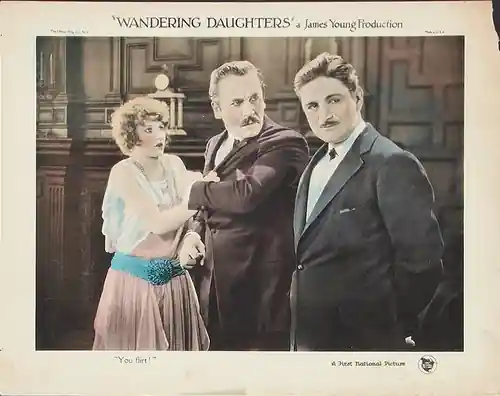
The film handles this revelation with a commendable subtlety, allowing the audience to witness Bessie's dawning realization rather than force-feeding it. Her heartbreak is palpable, but so too is her burgeoning strength. This pivotal discovery is a cathartic experience, not only for Bessie but for the audience, who have witnessed the escalating folly of her family's sacrifices. The exposure of Trull's true nature serves as a powerful moral anchor, reminding us that appearances can be deeply deceiving. The consequences of misplaced trust and the pain of betrayal are universal themes, echoed in countless dramas. One might draw a thematic comparison to the emotional turmoil and difficult choices presented in The Spanish Jade, where characters often navigate intricate webs of deception and passion, leading to profound personal reckonings.
With the artifice stripped away, Bessie wisely returns to the comforting embrace of her home and the steadfast affection of John Hargraves. This resolution, while perhaps predictable by today's standards, feels earned within the context of the film. It's not merely a retreat to the familiar, but a conscious choice for authenticity over superficiality, for enduring love over fleeting infatuation. Her journey has been one of maturation, a painful but necessary process of distinguishing genuine worth from hollow glamour. The film’s ending is a quiet affirmation of traditional values, suggesting that true happiness is found not in social climbing or external validation, but in sincere relationships and an honest life.
The final scenes emphasize the quiet strength of John Hargraves, whose unwavering devotion ultimately wins out. His character embodies the moral rectitude that Bessie initially overlooked in her pursuit of excitement. This resolution reinforces the film's underlying message: while the world may tempt with dazzling distractions, the true treasures lie in loyalty, integrity, and genuine human connection. This thematic conclusion, emphasizing the triumph of substance over style, can be seen as a counterpoint to films that glorify the superficial, such as Modeling, which might explore the very world of appearances that Bessie ultimately rejects.
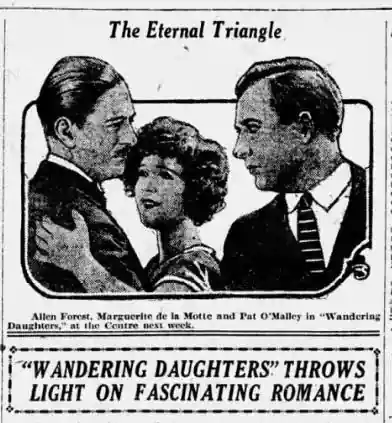
The success of Wandering Daughters relies heavily on the evocative performances of its cast, a common hallmark of the silent era. Marjorie Daw, as Bessie, carries the emotional weight of the film with a delicate balance of youthful naiveté and burgeoning wisdom. Her expressive eyes and gestures convey the inner turmoil and eventual clarity of her character. Allan Forrest as Austin Trull is perfectly cast, embodying the slick, deceptive charm that makes his character so alluring and ultimately detestable. His physical acting, a crucial element in silent cinema, effectively communicates his manipulative nature without the need for dialogue.
The supporting cast, including the steadfast Pat O'Malley as John Hargraves and the well-meaning parents William V. Mong and Mabel Van Buren, contribute significantly to the film's emotional depth. Noah Beery, a prolific actor of the era, also makes an appearance, adding his distinctive presence to the ensemble. The direction, though uncredited in some records, demonstrates a clear understanding of visual narrative, employing close-ups to emphasize emotional beats and wider shots to establish the social milieu. The pacing is deliberate, allowing the audience to absorb the moral lessons unfolding on screen. The reliance on facial expressions, body language, and intertitles to convey complex emotions and plot points is a testament to the artistry of silent filmmaking, and Wandering Daughters is a fine example of this craft. The film's ability to communicate profound human experiences without spoken words is a powerful reminder of cinema's universal language, a skill that many contemporary films still strive to achieve.
Beyond its engaging plot, Wandering Daughters offers rich social commentary that remains remarkably relevant. It explores the timeless tension between societal aspiration and personal integrity. The film critiques the allure of quick wealth and superficial status, juxtaposing it against the quiet dignity of hard work and genuine affection. It speaks to the parental desire to protect their children, even if their methods are flawed, and the universal journey of young people discovering their own values amidst external pressures.
The 'fast set' in the film serves as a microcosm of early 20th-century anxieties about moral decay and the corruption of traditional values. Yet, the film avoids being overly preachy, instead allowing Bessie's journey of self-discovery to carry the moral weight. The ultimate rejection of Trull and the embrace of Hargraves symbolize a return to a more grounded, authentic way of living. This narrative arc, focusing on the consequences of misguided desires and the path to redemption, finds a spiritual kinship with films like Hate, which might delve into the destructive power of negative emotions, or even Bristede Strenge (Broken Strings), suggesting the shattering of illusions and the rebuilding of trust. The film's exploration of these themes ensures its place as more than just a historical curiosity; it is a resonant piece of storytelling that continues to provoke thought on the nature of happiness, love, and societal influence. It prompts us to consider what truly holds value in our own lives and whether we, too, are occasionally drawn to the glittering, yet ultimately empty, promises of fleeting trends.
Wandering Daughters stands as a compelling testament to the power of silent cinema to convey complex human dramas with profound emotional impact. It is a film that, despite its age, speaks directly to contemporary concerns about authenticity, the allure of superficiality, and the enduring search for genuine connection. Through Bessie Bowden's journey, we witness a timeless story of youthful misjudgment, parental sacrifice, and the ultimate triumph of integrity. It's a vivid reminder that while societal trends may shift and the trappings of 'fast' living may change, the fundamental human need for truth, love, and belonging remains constant. This silent gem offers more than just a glimpse into the past; it offers a mirror to our present, reflecting the perennial challenges of navigating a world often too eager to prioritize appearance over substance. A watch well worth the journey for any cinephile appreciating the nuanced storytelling of an almost forgotten era.

IMDb —
1919
Community
Log in to comment.