DbcultAccessing Vault...
6.6/10
Senior Film Conservator
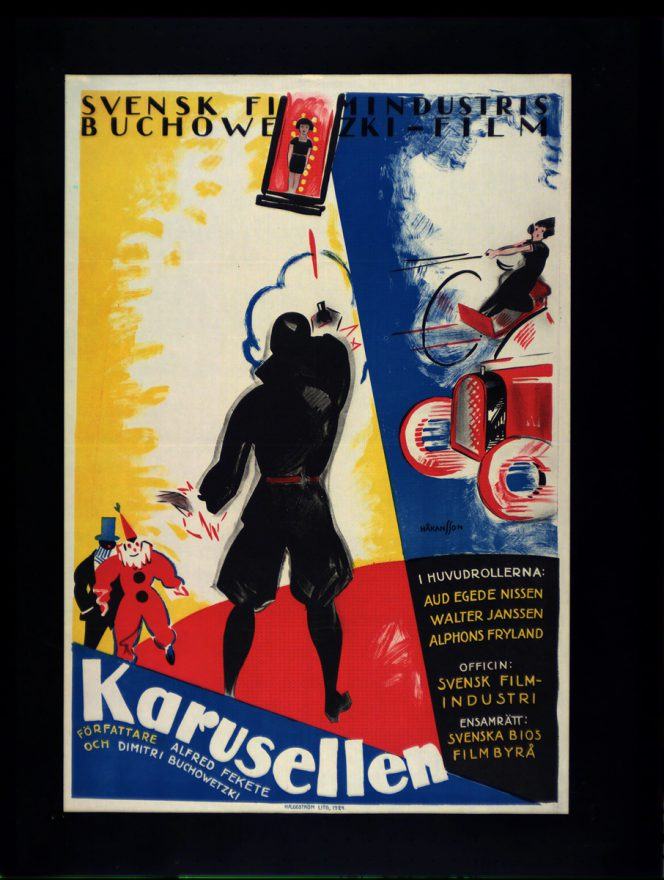
A definitive 6.6/10 rating for a film that redefined the boundaries of cult cinema. Karusellen remains a cornerstone of transgressive art.
The silent era, often erroneously dismissed as a primitive precursor to the talkies, was in fact a zenith of visual storytelling, and Karusellen (1923) stands as a monumental testament to this aesthetic sophistication. At its heart, the film interrogates the friction between the nineteenth-century pastoral ideal and the burgeoning twentieth-century mechanical reality. When Blanche Benton sets out on her carriage, she isn’t merely taking a morning ride; she is inhabiting a world governed by organic rhythms. The sudden appearance of the automobile is not just a plot point; it is a violent disruption of the status quo, a technological encroachment that mirrors the anxieties of a post-war Europe grappling with its own identity. Much like the visual grandeur found in The Devil-Stone, the cinematography here captures the landscape not as a backdrop, but as a participant in the unfolding drama.

The incident involving the spooked horse is staged with a visceral intensity that defies the technical limitations of 1923. As the animal rears, we see the personification of nature’s terror in the face of the machine. Walter Janssen, portraying the driver, brings a nuanced complexity to a role that could have easily been a cardboard archetype. He is the harbinger of the new world, yet he possesses the chivalry of the old. This duality is central to the film’s philosophy. Unlike the more overt social critiques found in The Weaker Sex, Karusellen chooses a more intimate lens, focusing on how grand historical shifts manifest in singular moments of human interaction. The driver’s decision to take Blanche home is the first turn of the titular carousel, a motion that will eventually bring all characters into a shared orbit of consequence.
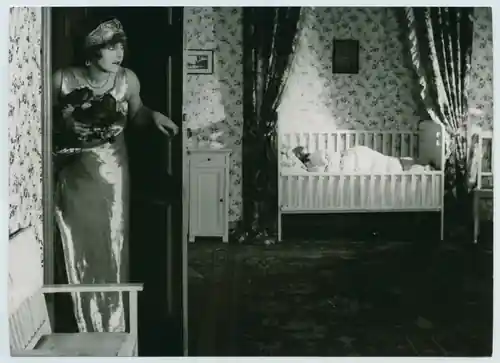
The cast is a veritable who’s who of Weimar-era excellence. Rosa Valetti and Ferry Sikla provide a gravitas that anchors the film’s more melodramatic flourishes. Valetti, in particular, utilizes her facial expressions to convey volumes of unspoken history, a technique that rivals the documentary-like precision of Kino-pravda no. 2, albeit within a fictional framework. Aud Egede-Nissen, as Blanche, delivers a performance of ethereal vulnerability. Her reaction to the automobile—a mix of terror and burgeoning curiosity—is a masterclass in silent acting. She doesn't just play a victim of circumstance; she embodies the transition of a society. The supporting turns by Jakob Tiedtke and Lydia Potechina add layers of domestic realism, reminding us that while the 'carousel' spins, the mundane realities of home life continue to exert their pull.

Writer Alfred Fekete constructs a narrative that is deceptively simple yet structurally profound. By centering the story on a chance encounter, he allows the characters to breathe outside the constraints of heavy-handed plotting. The dialogue intertitles are sparse, allowing the visual language to carry the emotional weight. This approach is a stark contrast to the dense narrative web of The Mystery of Edwin Drood, favoring instead a lyrical flow that mimics the circular motion of a carousel. Fekete understands that in cinema, what is left unsaid is often more powerful than what is articulated. The silence of the film becomes a canvas upon which the audience projects their own understanding of the characters' internal lives.
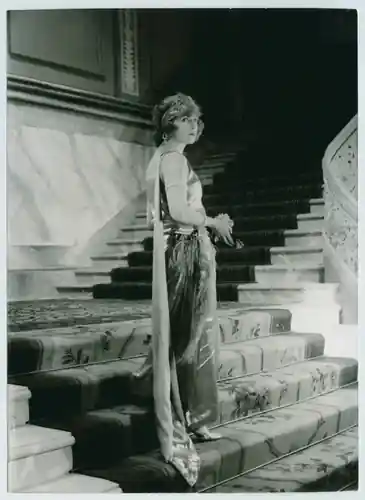
The lighting in Karusellen is nothing short of revolutionary. Using high-contrast chiaroscuro, the director creates a world of deep shadows and brilliant highlights, suggesting a moral complexity similar to that explored in Gambling in Souls. The Benton home is rendered as a sanctuary of the past, filled with heavy drapes and ornate furniture that seem to stifle the characters even as they provide comfort. When the driver enters this space, he is a visual anomaly—his modern attire and energetic presence clashing with the stagnant air of the manor. This visual storytelling is far more effective than any monologue could ever be. It highlights the inevitable obsolescence of the aristocratic lifestyle in the face of a world that is literally and figuratively moving faster.

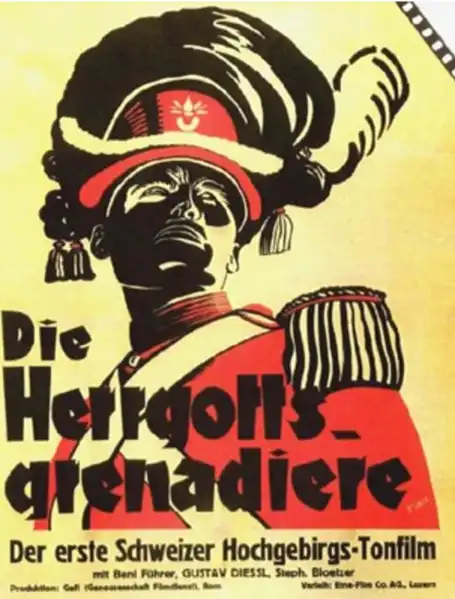
When we compare Karusellen to its contemporaries, its unique position in film history becomes even clearer. While Die Teufelskirche explored the darker, more gothic elements of the human psyche, Karusellen remains grounded in a recognizable reality. It lacks the supernatural elements of The Spirit of the Lake, yet it possesses a haunting quality that lingers long after the final frame. The film’s preoccupation with the 'proper' way of life and the disruption thereof echoes the themes of Miraklet: Tavlor ur det katolska samfundslivet, though it swaps religious piety for secular progress. Even the more lighthearted elements, which might be found in a film like The Chicken Parade, are here tempered by a sense of impending change that feels both exciting and mournful.
The editing in Karusellen is remarkably rhythmic. The way the camera lingers on the carriage wheels before cutting to the spinning tires of the automobile creates a visual rhyme that reinforces the central theme. This is not the frantic montage of later avant-garde movements, but a calculated, deliberate pacing that allows the viewer to absorb the texture of the world. One can see the influence of early suspense serials like The Red Circle in the way the accident is filmed, yet the resolution is far more sophisticated, focusing on the psychological aftermath rather than the physical spectacle. The film’s ability to balance these elements is what makes it a lasting piece of art rather than a mere historical curiosity.
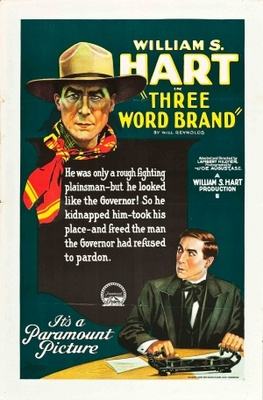
As we look back at Karusellen from a century’s distance, its relevance has only intensified. We live in an era of even more rapid technological disruption, making the anxieties of Blanche Benton feel surprisingly contemporary. The film doesn't offer easy answers; it doesn't condemn the car, nor does it fetishize the carriage. Instead, it observes the transition with a clear-eyed empathy. It is a work that demands multiple viewings to fully appreciate the intricacies of its performances and the depth of its visual metaphors. Like the characters in Three Hours Late, the protagonists of Karusellen are caught in a moment of temporal flux, forced to reconcile their pasts with an uncertain future. It is a cinematic waltz that continues to resonate, a carousel that never truly stops spinning, inviting us to hop on and experience the dizzying beauty of life in motion. Whether viewed as a historical artifact or a living piece of drama, Karusellen remains an essential chapter in the story of world cinema, a film that captures the very soul of a world in transition.
IMDb —
1927
Community
Log in to comment.