DbcultAccessing Vault...
Cult Review
Senior Film Conservator
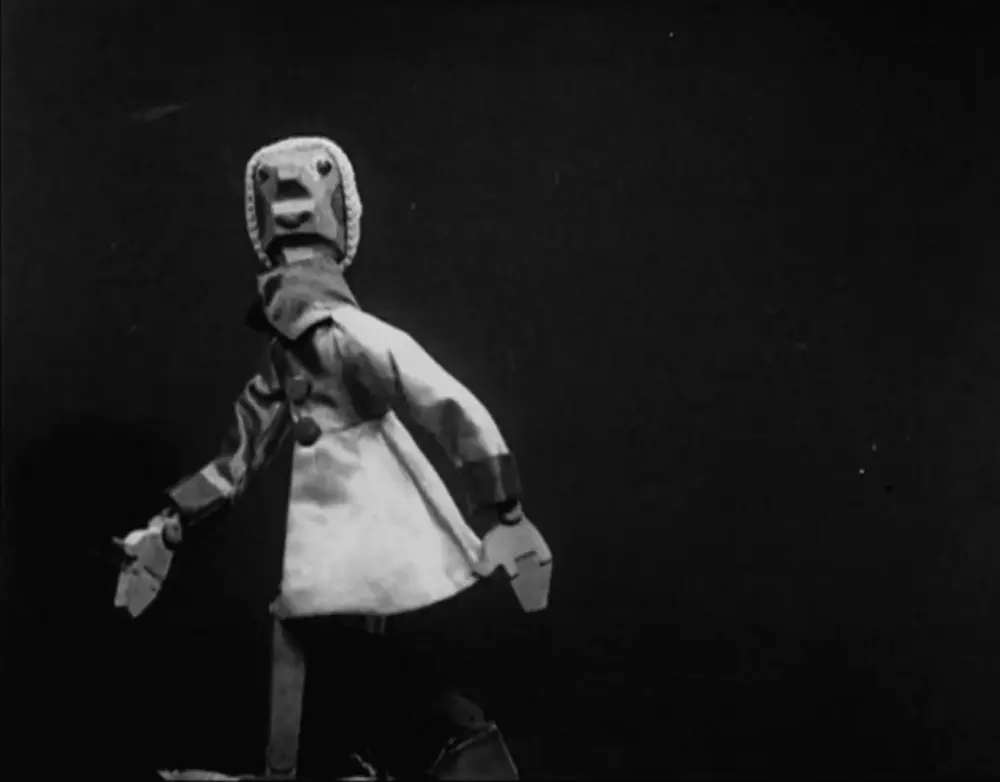
Let’s be direct: Priklucheniya Bolvashki is not a film for everyone, and certainly not for those seeking a compelling narrative or emotional depth. This early Soviet production, centered around the titular doll, primarily serves as an artifact for a very specific audience. It offers little in the way of engaging entertainment by today's standards, or even by the standards of more ambitious films from its own era.
It's a curious piece, a primitive experiment, but one that demands a historical lens to extract any real value. Expect a slow, often dramatically inert experience, devoid of the sophisticated storytelling we now take for granted.
This film works because it offers a rare, unfiltered look into the nascent stages of Soviet children's cinema and early special effects. Its very existence is a testament to the era's ingenuity, however rudimentary. The technical ambition, even if clunky, holds a certain academic fascination.
This film fails because its narrative is barely existent, its pacing glacial, and its attempts at 'adventure' are dramatically flat. There’s no real character development for Bolvashka, nor is there any emotional hook to draw the viewer in. It’s an idea, thinly stretched.
You should watch it if you are a film historian, a student of early animation or Soviet cultural output, or someone with a deep, niche interest in the evolution of cinema's technical capabilities. Otherwise, its appeal will likely evaporate within minutes.
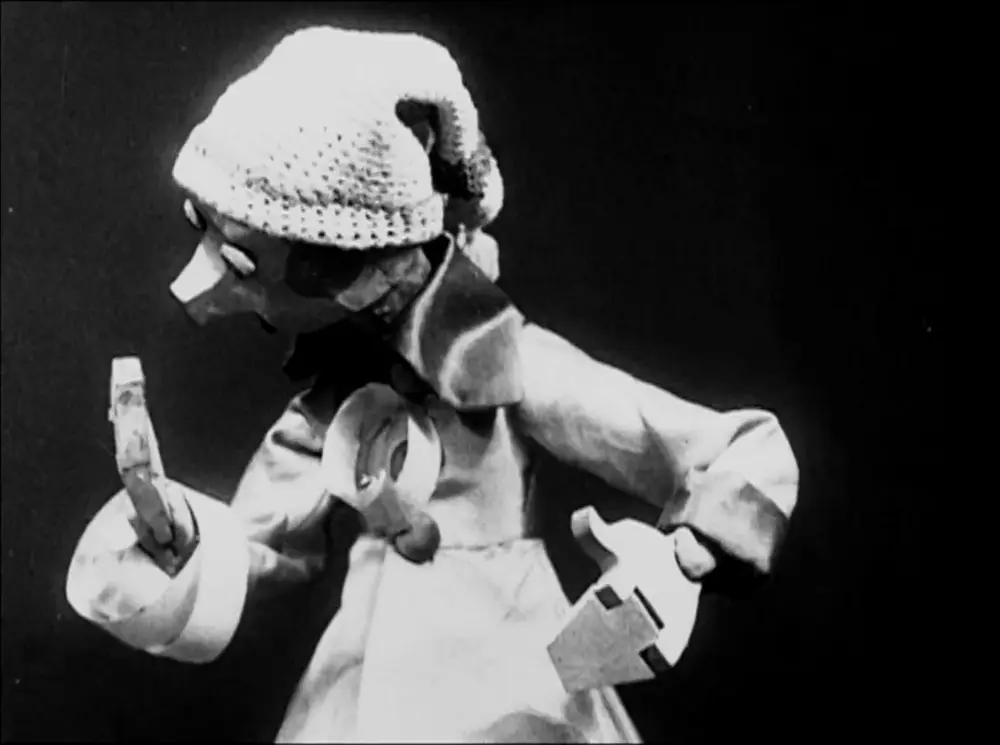
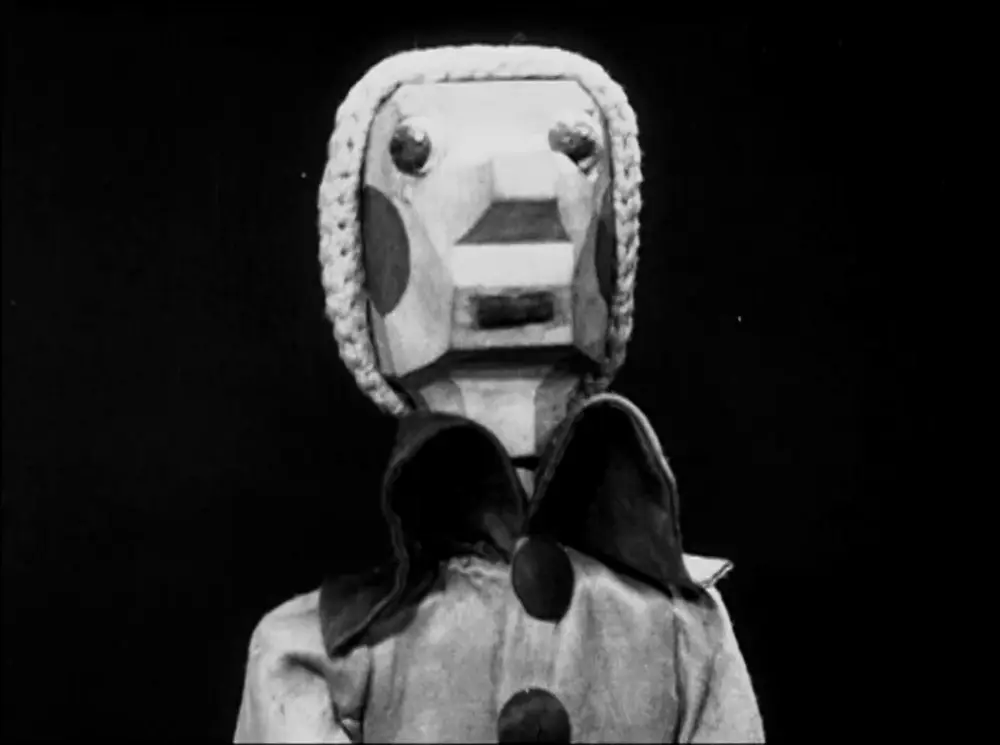
The 'adventures' of Bolvashka are less a story and more a sequence of observations. The film portrays a doll, Bolvashka, seemingly coming to life within a domestic environment. Tatyana Mukhina, credited in the cast, likely acts as the human catalyst, either manipulating the doll or performing alongside it to imbue it with some semblance of agency. The actions are almost painfully mundane: the doll might 'walk' across a table, 'interact' with a teacup, or 'explore' a small corner of a room. There's no antagonist, no real goal, just a series of events that feel more like a demonstration of technique than a narrative drive.
This minimalist approach, while perhaps intentional for a very young audience, renders the film dramatically inert. One could argue its charm lies in this very simplicity, but that feels like an overstatement. The truth is, the lack of stakes or genuine progression makes it a difficult watch. It’s a doll. It moves. That's about it.
The primary interest of Priklucheniya Bolvashki lies squarely in its technical execution. Depending on whether it employs stop-motion or live-action puppetry, the film showcases the rudimentary methods available to filmmakers of the era. The camera work is static for the most part, designed to capture the doll's movements rather than to create dynamic compositions. Lighting is functional, illuminating the small sets without much artistic flair. The 'special effects' are simple, often crude, yet they represent an early attempt to bring inanimate objects to life on screen.
Tatyana Mukhina’s role, if she is operating or interacting with the doll, is crucial in grounding these visual tricks. Her presence, however understated, provides the necessary human element for the doll’s actions to register. Without her, the film would likely feel even more sterile. The raw, unpolished nature of these techniques, while historically significant, also contributes to the film’s overall stiffness. It’s less about illusion and more about obvious manipulation.
To discuss 'performance' in a traditional sense for Priklucheniya Bolvashki is challenging. Bolvashka, as a doll, has no internal life to convey. Any 'performance' comes from the technical wizardry that makes it move. Mukhina’s contribution, if she is the puppeteer, is in the precision and timing of these movements, making the doll's actions believable within the film's limited scope. If she is interacting directly, her challenge is to react convincingly to an inanimate object, which is a subtle art in itself.
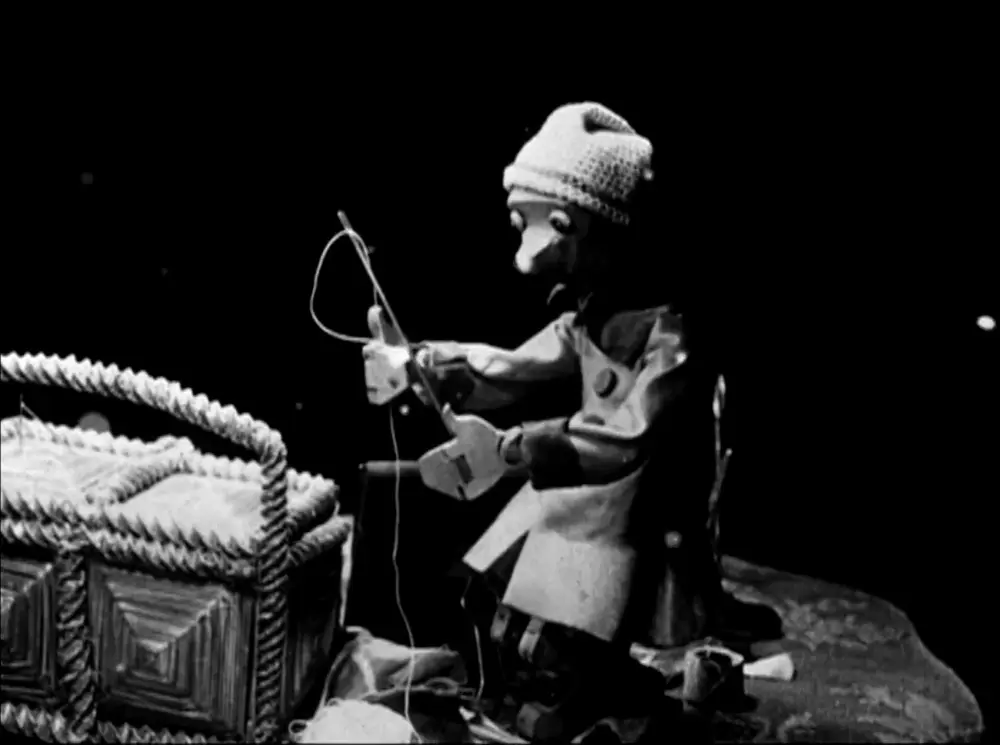
The pacing is deliberately slow, a common characteristic of early silent cinema, but here it feels particularly drawn out. Each movement, each 'discovery' by Bolvashka, is given ample screen time, often bordering on tedious. There's an almost academic deliberateness to the rhythm, as if the filmmakers wanted the audience to fully grasp the mechanics of what they were seeing. This makes for a rather trying viewing experience for anyone accustomed to modern narrative speeds. The film tests your patience, not your empathy.
Priklucheniya Bolvashki stands as an interesting, if minor, entry in the canon of early Soviet filmmaking. It reflects a period when the medium was still defining itself, particularly in the realm of children's entertainment. The film isn't a grand ideological statement, but rather a small-scale exploration of what cinema could do to enchant young audiences. It demonstrates the technical constraints and creative solutions employed by filmmakers who were essentially inventing the rulebook as they went along.
What it reveals about the period is less about soaring artistic ambition and more about practical application. It shows a commitment to engaging new audiences, even if the tools were primitive and the stories rudimentary. Its value is in demonstrating the *act* of filmmaking at the time, the struggle to create something from very little, rather than in any inherent artistic greatness. It’s a building block, not a monument.
"The film's minimalist narrative, often hailed as charmingly naive, is more accurately described as dramatically inert, even for its era."
"While some might see its simplicity as a virtue, the film's reliance on rudimentary visual gags over character development limits its appeal beyond pure archival curiosity."
Priklucheniya Bolvashki is not a hidden gem waiting to be rediscovered by a general audience. It is, by most entertainment metrics, a dull film. Its primary appeal is academic, a brief footnote in the sprawling history of Soviet cinema. For those dedicated to understanding the medium's evolution, its technical efforts, however primitive, offer a point of study. For anyone else, it's an exercise in extreme patience with very little narrative reward. Approach it as a historical document of technique, not as a film to enjoy. You’ll be less disappointed.

IMDb 6.1
1924
Community
Log in to comment.