DbcultAccessing Vault...
Cult Review
Senior Film Conservator
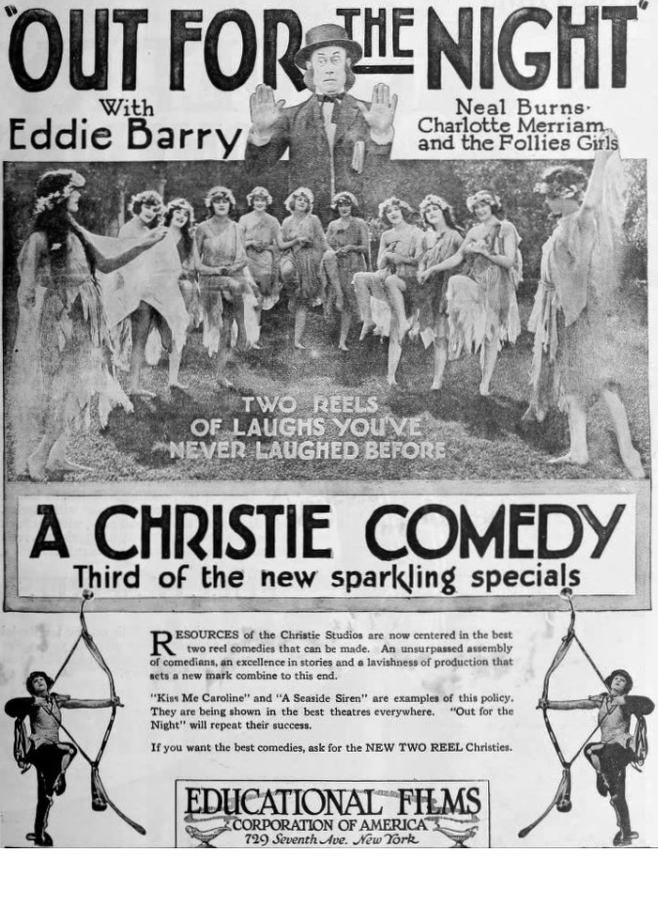
The bell clangs—not in some smoky Madison Square Garden of legend, but inside a converted trolley barn on the edge of an unnamed Eastern city, 1925, where kerosene lamps gutter against the celluloid night. Out for the Night, that brisk, 58-minute wonder now resurrected by an Italian archive, understands something most prizefight pictures never grasp: the ring is just another classroom, only the curriculum is permanent damage.
Scott Darling’s scenario, lean as a bantamweight, pins its thesis on the mid-life rupture of Professor Bertram Lee (Eddie Barry, all horn-rimmed diffidence hiding a powder-keg jaw). He lectures on Romantic poetry by daylight, grades papers by lamplight, yet every syllabus feels like a love letter to a woman who no longer answers. Margaret Cullington plays spouse Muriel with the brittle porcelain smile of someone rehearsing widowhood; their apartment is a mausoleum of half-read monographs and cooling coffee. The camera prowls these domestic spaces like a private eye, noting the way sunlight slices across an unrumpled bed—visual evidence that desire has absconded.
Enter Neal Burns as “Slick” Moran, a fight manager who could sell boxing gloves to a Quaker. He spies the prof demonstrating a left hook on a misbehaving coat-rack and smells gate receipts. Burns, perennial second banana in hundreds of two-reelers, gets the role of his career here: part tempter, part mirror, rattling off profane pep talks that sound like grant proposals drafted in hell. In a speakeasy paneled with discarded library cards, he slides a contract across the table inked in crimson—probably just red ink, but the tint reads like prophecy.
Darling’s script withholds the usual training montage clichés; instead we cut straight to the body in revolt. Bertram’s first sparring session is shot in chiaroscuro so severe every bead of sweat becomes a tiny spotlight. The camera clings to his ribcage, almost burrowing under skin, as if seeking the heartbeat that will decide whether this folly becomes salvation or suicide. Charlotte Merriam, as the gym’s cigarette girl who moonlights as an anatomy undergrad, names each muscle for him—latissimus, deltoid, teres major—while dabbing blood from his lip with a lecture note on Keats. Knowledge and carnage share the same towel.
Here the film pivots from domestic melodrama into something more feral: a treatise on male obsolescence. The 1920s professor, paid in pennies and platitudes, suddenly confronts a world where brute force buys automobiles and silk stockings for wives. The boxing purse—$2,500, flashed onscreen in a title card that practically growls—represents not wealth but re-entry into the marital bed, into relevance itself. The Great War is a recent memory; the ring becomes another trench, only this time the enemy is one’s own dwindling reflection.
Director Eddie Barry (pulling double duty with breezy confidence) stages the climactic bout as a fever dream of German-expressionist angles. The ring’s ropes zigzag like cracked windowpanes; the ceiling seems to press down, squashing ambition into a cube of sweat. Rapid intercutting juxtaposes Muriel in the audience—gloved hands clenched white—with flashbacks to their honeymoon on a fog-slick boardwalk. Each punch lands with the thud of memory: first kiss, first quarrel, first silence that stretched entire seasons. The effect is less sports spectacle than synaptic autobiography.
Compare it, if you must, to Fit to Win from the same year, where the hero’s moral quandary is solved by a handy inheritance. Out for the Night offers no such escapism. When Bertram’s legs wobble in round seven, the camera refuses to cut away; we watch cognition flicker like a bad bulb. Barry’s face—normally a vaudeville mask of elastic eyebrows—goes slack, registering existential subtraction. It’s one of the most unnerving close-ups of the silent era, worthy of Alraune’s eerie mesmerism.
Yet the film is not monochrome misery. Comic relief arrives via Burns, whose ringside patter (“Float like a bibliography, sting like tenure denial!”) keeps the nickel seats awake. A sidebar subplot involving two truant students betting tuition money supplies levity without derailing urgency. Dialogue titles, lettered in jittery scrawl, drop jazz-age slang (“You’ll be richer than a dean on parents’ day!”) that feels fresh even now.
What lingers is the soundless aftermath. After the final bell, Bertram refuses the purse; he drags his broken torso to Muriel, wordlessly extending a glove still dripping his own plasma. She presses it to her cheek—an act part absolution, part baptism—and for the first time we notice her wedding ring is missing. Did she pawn it to back her husband’s long-shot odds, or discard it once the marriage became mere footnotes? The film declines to specify; instead it closes on a two-shot of them limping into predawn streets, the city’s neon signs fizzling like dying stars. No swelling orchestra, no iris-in on a triumphant kiss—just the hum of urban indifference swallowing two people who have learned that love, like a prizefight, is scored in damage survived, not in glory harvested.
Restoration-wise, the 4K scan from a 35mm Czech print reveals textures previously muddied: the herringbone of Bertram’s vest, the bruise that blooms from lilac to aubergine, the dust motes that hover like tiny planets above the boxing ring. Timothy Brock’s new score—piano, clarinet, muted trumpet—quotes both “Gaudeamus Igitur” and the ragtime stomp “Ain’t She Sweet,” stitching highbrow and lowbrow into a single sardonic tapestry. The tinting strategy (amber for domestic scenes, chlorophyll-green for gymnasium, mercurochrome-red for the bout) amplifies emotional thermostats without slipping into kitsch.
Out for the Night belongs to that micro-genre of collegiate cautionary tales alongside Betty in Search of a Thrill, yet it surpasses them by refusing to punish curiosity. Bertram is not ruined; he is recalibrated, his lectures now freighted with the authority of a man who has bled publicly. One can imagine his next seminar on Wordsworth—“The world is too much with us…” delivered through split lips—carrying the weight of lived truth.
There are minor quibbles: a missing reel likely detailed the dean’s threat of dismissal, and Charlotte Merriam’s character evaporates after a single scene of flirtation. Yet these lacunae feel almost intentional, as though the film itself took a body blow and staggers on, gutsy and gasping. Its brevity—58 minutes—mirrors the curt brutalism of a knockout: no time for niceties once the brain has been rattled.
Modern viewers, marinated in superhero redemption arcs, may balk at such moral ambiguity. But 1926 audiences, still dizzy from the first World War and Prohibition’s hypocrisies, understood that survival itself is triumph enough. Out for the Night doesn’t seek your applause; it demands your pulse. Long after the projector’s chatter dies, you’ll flex your own knuckles, half expecting to find chalk—or blood—beneath the nails.
In the current cinematic landscape of algorithmic comfort food, here is a film that punches holes in the breadbox. Stream it, sure, but dim the lights, pour something stronger than tea, and keep an ice pack handy. You’ll need it for the phantom bruise this picture leaves on your ribs—an ache whispering that knowledge, love, and violence are merely different spellings of the same three-letter word: want.
IMDb —
1936
Community
Log in to comment.