DbcultAccessing Vault...
6.2/10
Senior Film Conservator
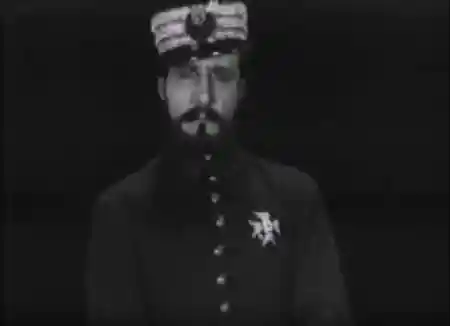
A definitive 6.2/10 rating for a film that redefined the boundaries of cult cinema. Prim remains a cornerstone of transgressive art.
If you are the kind of person who likes to sit down and have a movie explain everything to you, Prim is going to make your head spin. It is basically a speed-run of 19th-century Spanish politics.
I think it's worth watching if you have a soft spot for early sound films or if you just really like seeing men with incredible facial hair arguing in dark rooms. But if you don't know who General Prim was, you will probably be confused for at least the first twenty minutes.
The movie starts with an uprising in 1843, and within what feels like seconds, Colonel Prim is taking over Reus. Then he's giving it up to save the civilians. It moves so fast.
One moment he is being named a Count, and the next he is being accused of trying to poison a guy named Narváez. I actually had to rewind that part because I wasn't sure if I missed a scene or if the movie just decided that subplots aren't that important.
The middle of the film gets a bit better when the war in Morocco starts. The battle of Castillejos actually has some decent scale for a movie made in 1931. The horses look genuinely stressed out, which is something you don't really see in modern movies with all their safety rules.
There is this one shot during the battle where the camera just hangs back and watches the smoke. It felt more real than any of the dialogue scenes. It reminded me a bit of the scale in The Battle of Trafalgar, though maybe a bit more chaotic.
Prim himself is played by an actor who seems to be constantly posing for a statue. He spends a lot of time looking off into the distance while people tell him how great or how terrible he is. It is not exactly a deep psychological study.
Then he goes to London. Then he's back for the September Revolution in 1868. The movie treats history like a series of stamps in a passport. Zip, zap, zoom and now he's the President of the Government.
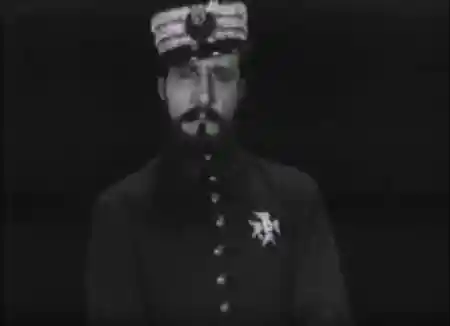
I noticed the sound quality is a bit hit or miss, which is typical for this era. Sometimes the voices sound like they are coming from the bottom of a well, especially during the indoor political meetings.
The women in the movie, like Matilde Vázquez and Carmen Viance, don't get much to do besides look worried. It's very much a "men in uniforms" kind of story. If you've seen Sealed Lips, you'll recognize that specific style of 1930s acting where everyone is a bit stiff and overly dramatic with their hands.
The ending is the part that actually stuck with me. The assassination in Turco Street is shot with this weird, cold atmosphere. It’s December 27, 1870, and you can almost feel the chill in the air through the grainy film stock.
He gets into the carriage, and you know what's coming, but the movie still manages to make it feel unpleasant. The way the carriage just sits there in the dark after the shots are fired is probably the best bit of directing in the whole thing.
It’s not a masterpiece, and it definitely feels like it was made to make Prim look like a hero. But as a piece of film history, it's kind of fascinating to see how they handled such a massive life story in such a short amount of time.
One thing that bothered me was how clean everyone's uniforms stayed, even after battles. I know that’s a nitpick, but it makes it feel more like a stage play than a war movie sometimes.
Also, the music is... loud. It kicks in at the weirdest times and stays there, even when people are just trying to have a quiet conversation about treason.
If you’re looking for a relaxing evening, this isn't it. But if you want to see a movie that feels like someone threw a history book into a blender and hit 'pulse,' then give it a shot. 🇪🇸
IMDb 6.3
1925
Community
Log in to comment.