DbcultAccessing Vault...
Cult Review
Senior Film Conservator
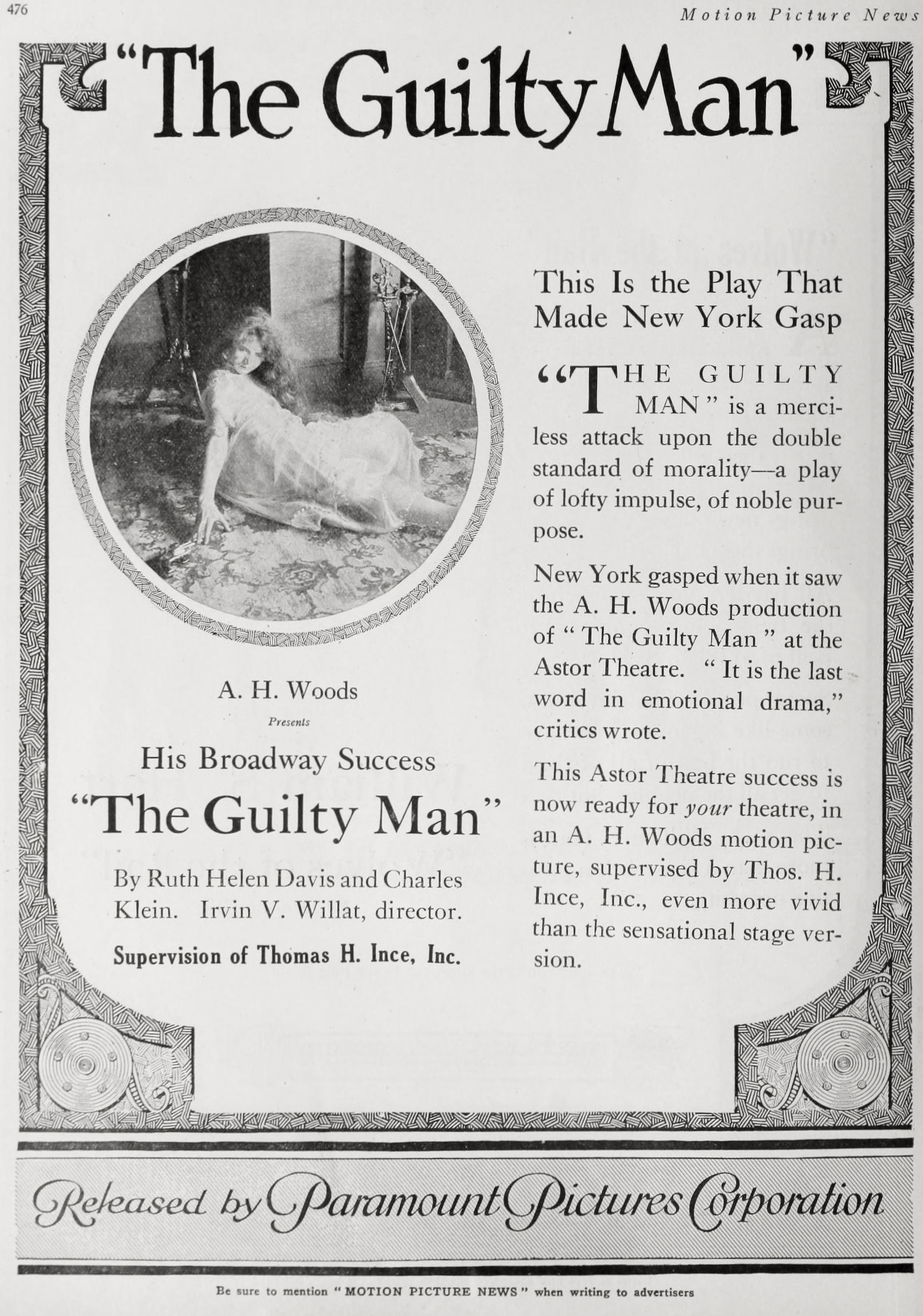
Imagine a film that arrives not like entertainment but like contraband smuggled out of the 19th-century Parisian night—celluloid soaked in absinthe, every intertitle dripping verdant guilt. The Guilty Man, exhumed from 1918, is that contraband. It is less a story than a wound reopened each time the projector clacks: a wound in the shape of Marie Dubois, whose eyes carry the bruised luster of a city that has learned to monetize desire and criminalize the female body.
For contemporary viewers weaned on jump-cuts and Dolby thunder, the picture’s austerity feels almost perverse—its thrills arrive not through velocity but through viscosity. Director Charles Klein lets scenes congeal: a close-up of Marie’s hand trembling above a cradle; the slow drift of steam across a bistro mirror; the moment when Flambon’s knuckles graze Claudine’s cheek and the camera refuses, cruelly, to cut away. We are forced to inhabit the moral claustrophobia of Montmartre, where every cobblestone remembers a betrayal.
Scholars routinely slot the film beside The Doctor and the Woman or Ben Blair as a middle-period morality fable, yet that comparison wilts once you confront the picture’s ferocious interiority. Klein borrows the determinism of Zola, the chiaroscuro of Caravaggio, and the bruised Catholicism of Coppée’s source play, then distills them into a visual grammar that anticipates Italian neorealism by three decades. The textures of poverty—flaking plaster, sour wine, coal smoke—are not backdrop; they are co-authors of fate.
The first reel is a master-class in narrative ellipsis. We never see Claude’s desertion; instead we witness its radioactive fallout: Marie alone in a tenement whose wallpaper perspires, a doctor extracting a promissory note instead of a wedding ring, the baptismal font that refuses the child’s name. Klein’s refusal to dramatize the abandonment paradoxically intensifies our sense of trespass. The camera lingers on an empty chair, a cooled cup of chicory, a crumpled letter—each object a mute witness to masculine abdication. The effect is cinematic negative space that howls louder than dialogue.
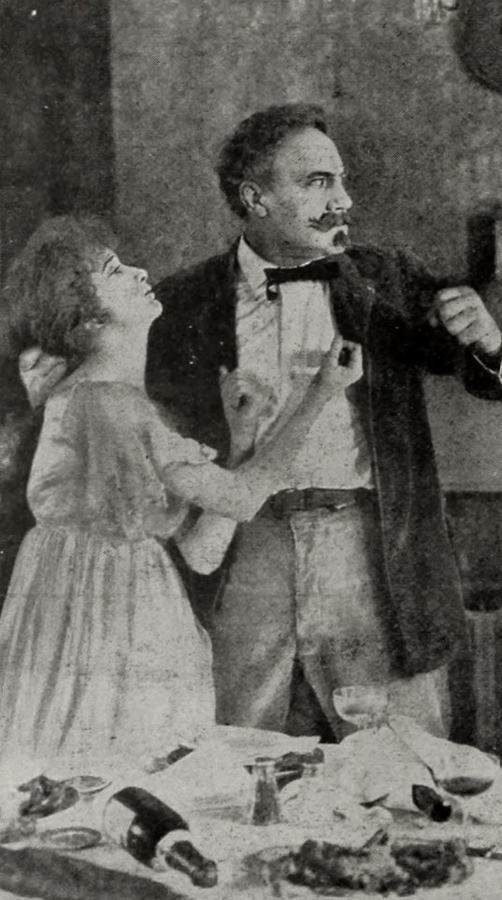
Enter Flambon, essayed by Charles K. French with the physicality of a wounded boar. His bulk seems to occupy more than the frame; it occupies the very oxygen. When he proposes marriage, the gesture carries the weight of a ransom demand. Yet Klein denies us the comfort of a mustache-twirling villain. In a tavern scene lit only by a grease-slicked lantern, Flambon confesses to Marie that he was once “un homme que les femmes regardaient” —a man women used to look at. The line, delivered in a medium-shot that traps both faces in the same funnel of light, complicates our disgust with a filament of pathos. He, too, is a casualty of capital, his body a failing ledger of debts.
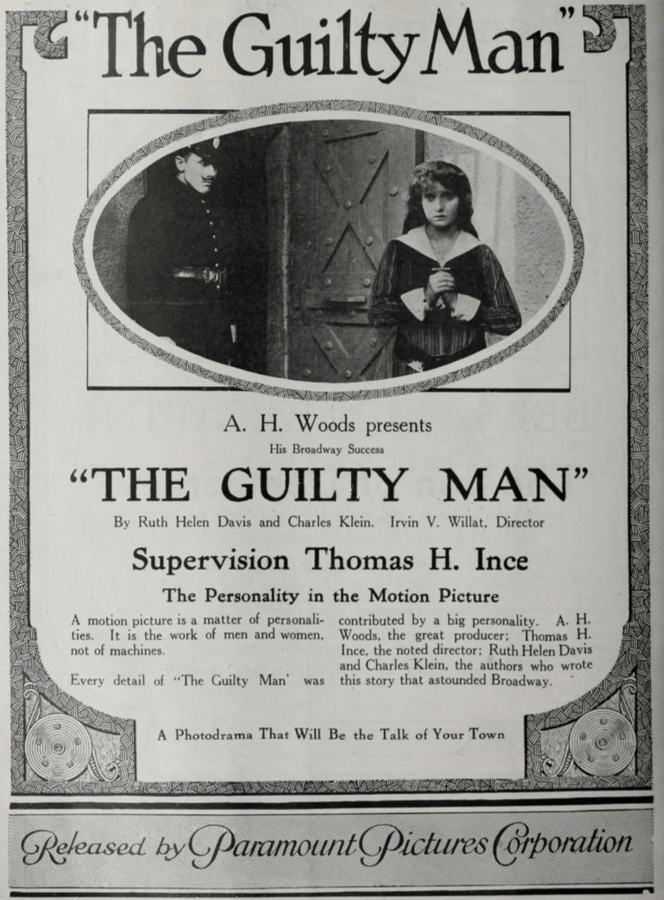
Time jumps forward with the abruptness of a guillotine blade. Claudine—now incarnated by Vivian Reed—enters the café like a reprise of her mother’s earlier innocence, but the echo is distorted. Where Marie once glowed with expectation, Claudine crackles with insurgent curiosity. Klein uses her walk through the cramped bistro as a dolly shot that glides past leering patrons; their gazes adhere to her like burrs, each look a down-payment on future violence. The camera’s slow traversal predicts the predatory choreography that will soon entrap her.
Gaston, the waiter who returns her gaze with something like reverence, could have been a mere prop in lesser hands. Yet Hallam Cooley infuses the role with a proletarian dignity that recalls the later poetry of Marcel Carné. Their courtship unfolds in glances exchanged over spilled trays: a finger brushing a coffee cup’s rim, a shared smirk when a patron’s toupee slips. Klein stretches these micro-gestures across multiple reels, achieving the erotic charge that contemporary films squander on acrobatic coupling. When they finally touch—Gaston’s thumb tracing the half-moon scar on Claudine’s wrist—the moment feels cataclysmic, as though the film itself might combust.
Flambon’s indebtedness to Jean, the café’s former owner, is sketched through ledger books whose columns read like medieval indulgences: so many francs, so many ounces of daughter. The transaction literalizes the period’s traffic in women, but Klein refuses to sermonize. Instead, he stages the betrothal announcement during a Bastille Day feast, the camera swirling through a fog of fireworks and roasted meat. The juxtaposition of jingoistic fervor with chattel slavery is so caustic it nearly mocks the audience’s patriotic reflexes. When Claudine refuses, Flambon’s reprisal is staged in a chiaroscuro hallway where shadows cling to bodies like tar. He does not merely strike her; he appears to unmake her, frame by frame, until only a silhouette remains.
Marie’s intervention—her body thrown between fist and daughter—reprises the Pietà, but Klein withholds transcendence. The beating she absorbs is filmed in unflinching real time: no music, no cutaway, just the wet percussion of flesh on flesh. Gloria Hope’s performance is a tour-de-force of corporeal surrender; every gasp seems scraped from the diaphragm. When Claudine finally seizes the revolver, the gun’s report is accompanied not by a triumphant swell but by the sudden hush of a phonograph needle lifted. The silence is more shocking than any bullet.
The trial sequence, consuming the final third, transmutes the film from domestic melodrama into something approaching sacred theater. Claude Lescuyer—now crowned prosecutor—enters the courtroom cloaked in the ermine of state power. William Garwood’s gait is all clipped entitlement, yet micro-tremors betray the seismic fault beneath. When he lifts the charge sheet and sees Claudine’s birthdate, Klein inserts an extreme close-up: the pupil contracts, the nostril flares, the law itself buckles. It is one of silent cinema’s quintessential instances of facial synecdoche: the entire edifice of patriarchal jurisprudence collapsing into a twitch of cartilage.
The confession—”I am the guilty man”—is delivered in a single, unbroken take that lasts ninety-three seconds, an eternity by 1918 standards. Garwood’s voice, though silenced by the medium, vibrates through the tremor in his shoulders, the spasm of his left eyelid, the way his hand seems to crush the quill it holds. The courtroom extras, recruited from actual Parisian law clerks, respond with spontaneous applause; Klein kept the reaction in the final cut, lending the scene documentary frisson. When the jury foreman tears the verdict sheet in half, the gesture feels less legal formality than ritual exorcism.
Though shot in monochrome, the surviving print (a 4K restoration by Cinémathèque Française) reveals a tinting schema that functions as emotional notation: amber for interiors of desire, viridian for scenes of indebtedness, rose for the fleeting intervals of hope. The palette anticipates the symbolic color fields later refined in Joan of the Woods and The Mating of Marcella, yet Klein’s deployment feels raw, almost fauvist. In one tableau, a lone turquoise coffee cup sits amid a sea of ochre crockery—an accidental objet that becomes, on closer inspection, a visual thesis on anomaly and resistance.
The film’s modernity also resides in its sonic imagination. While officially silent, the negative evidences cue marks for a live orchestra to simulate the café’s hubbub: rusted cymbals for cutlery, a wheezing harmonium for Flambon’s asthmatic rage. Contemporary exhibitors often substituted street organs or barrel pianos, creating a heteroglossia that made each screening site-specific. Today, viewed with a curated score—say, a minimalist string quartet replicating the heartbeat of a city—the film regains its polyphonic terror.
Vivian Reed’s Claudine channels the kinetic innocence of Lillian Gish, but her emotional register is more volatile: a single tear crests, hesitates, then retreats, as though ashamed of its own melodrama. Gloria Hope, as the older Marie, has the exhausted luminosity of a Rembrandt matron, every wrinkle a stanza of renunciation. Yet the film’s most unnerving alchemy is the way these women share physical echoes—both tilt their heads leftward when lying, both cradle their elbows as if guarding a secret embryo—so that when they stand side by side in the courtroom, the resemblance feels hereditary not merely of flesh but of sorrow.
Among the men, William Garwood’s Claude is a portrait of masculine abdication weaponized into authority. His cheekbones seem sharpened by self-loathing; when he removes the prosecutor’s wig, the scalp beneath is mottled, as though conscience itself has left eczema. Charles K. French gives Flambon a gait that predates Brando’s Stanley Kowalski: chest forward, feet splayed, violence always in the offing. Yet in a late shot, after the beating, Klein frames him alone in the café’s empty mirror, his reflection dwarfed by the rows of untouched glasses. The image is a précis of capitalist diminishment: the oppressor reduced to inventory.
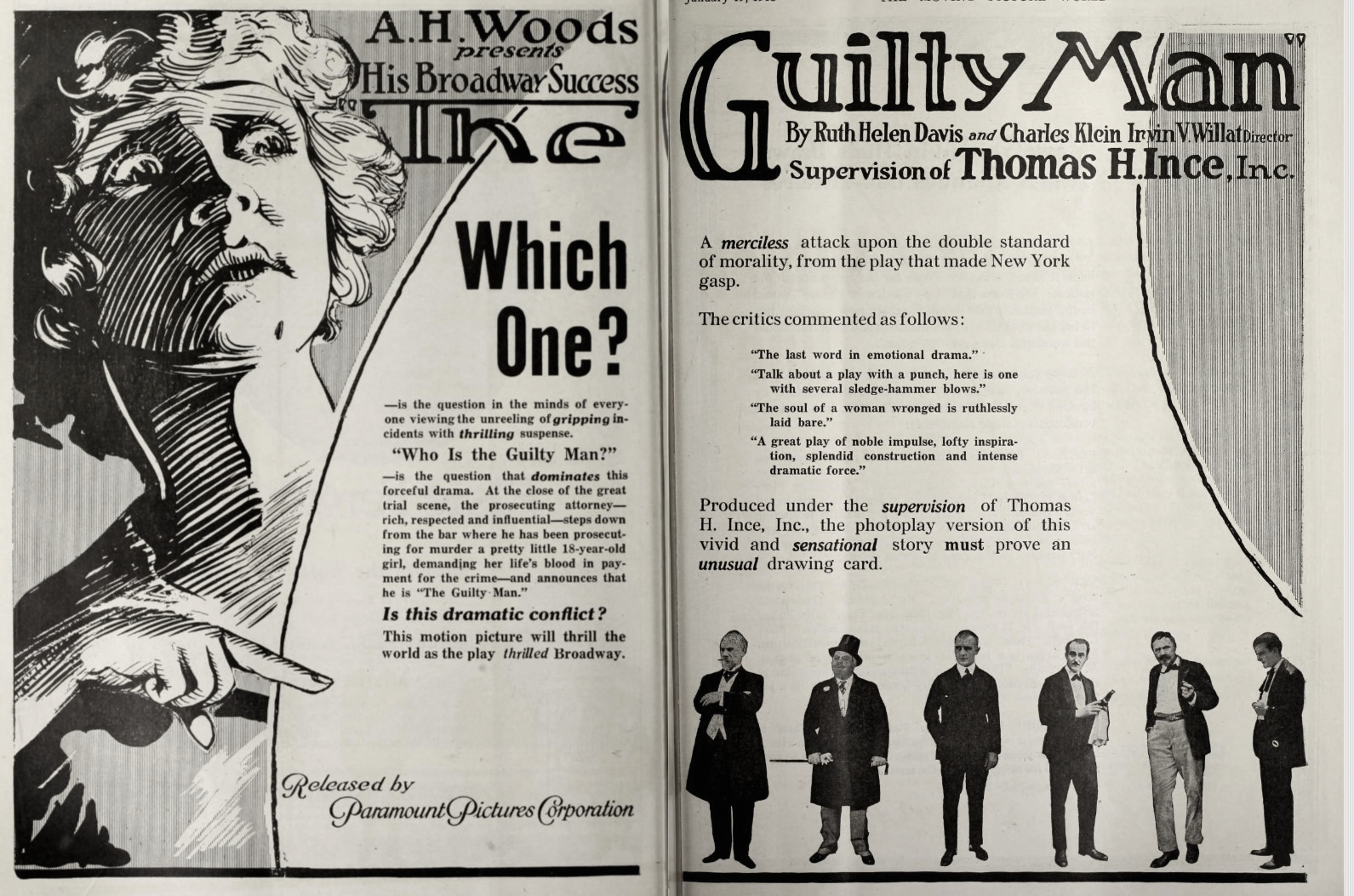
Written by Ruth Helen Davis and adapted from Coppée’s polemical stage piece, the screenplay anticipates later feminist jurisprudence by interrogating the very premise of legal “guardianship.” The trial is less about murder than about the right of women to refuse circulation as currency. Claudine’s refusal to marry Jean is not romantic insubordination; it is a radical rejection of the chattel contract. Klein underscores this by repeatedly shooting Claudine through the iron lattice of the dock, so that her body is literally caged within the visual grammar of property. When the jury acquits, the cage door swings open, yet the camera remains inside, implying that acquittal is not the same as liberation.
The film also indicts the spectator. During the beating, Klein positions the camera at the threshold of the kitchen door, so that viewers occupy the perspective of the café’s clientele—complicit, sipping, watching. The absence of a cutaway forces us to confront our voyeurism, predating Michael Haneke’s Funny Games by eight decades. When Claudine fires the fatal shot, the camera finally cuts—to the horrified faces of the patrons—thereby redirecting the violence of the gaze back onto those who consume suffering as spectacle.
Cinephiles will detect reverberations with Skottet’s snowy fatalism and För sin kärleks skull’s sacrificial motherhood, yet The Guilty Man is more urban, more venal. Where The Secret of the Swamp externalizes guilt through landscape, Klein internalizes it within the stone arteries of Paris. Conversely, the film’s courtroom catharsis foreshadows the confessional histrionics of La loca del monasterio, but with a secular severity that denies the balm of religious absolution.
The 2022 restoration, culled from a decomposing nitrate positive discovered in a Liège basement, required digital grafting of French and American release variants. The result is a hybrid text that exposes the cultural splice: American intertitles preach moral uplift (“Crime never pays!”), while French cards retain Coppée’s sardonic edge (“La dette se paie en chair” — debts are paid in flesh). Rather than homogenize, the restoration preserves both voices, allowing them to argue across the reels—a dialectic between puritan repression and Gallic fatalism.
Contemporary critics wary of resurrecting “orphan” works may question the ethics of re-circulating a narrative that wallows in female torment. Yet to bury the film is to replicate Claude’s original abandonment. Instead, the restoration invites a contrapuntal reading: we restore not to venerate but to interrogate, to let the scars speak. In an era when bodily autonomy is again under siege, The Guilty Man feels less antique than prophetic—a nitrate canary in our own coal mine.
The closing tableau—Claudine and Gaston disappearing into a Paris dawn whose sky looks bruised by absinthe—offers no closure, only evacuation. Klein cuts to black rather than to kiss, implying that freedom is not a destination but a corridor. As the modern viewer sits in the flickering dark, the film’s true verdict is not upon Claudine, nor upon Claude, but upon us—spectators who have inherited the same carceral economies, who still barter flesh for debt, who still watch. In that sense, the guilty man is not merely the absent father on screen; he is the shadow we cast when we leave the cinema and step back into the city’s unforgiving light.
IMDb 4.6
1936
Community
Log in to comment.