DbcultAccessing Vault...
Cult Review
Senior Film Conservator
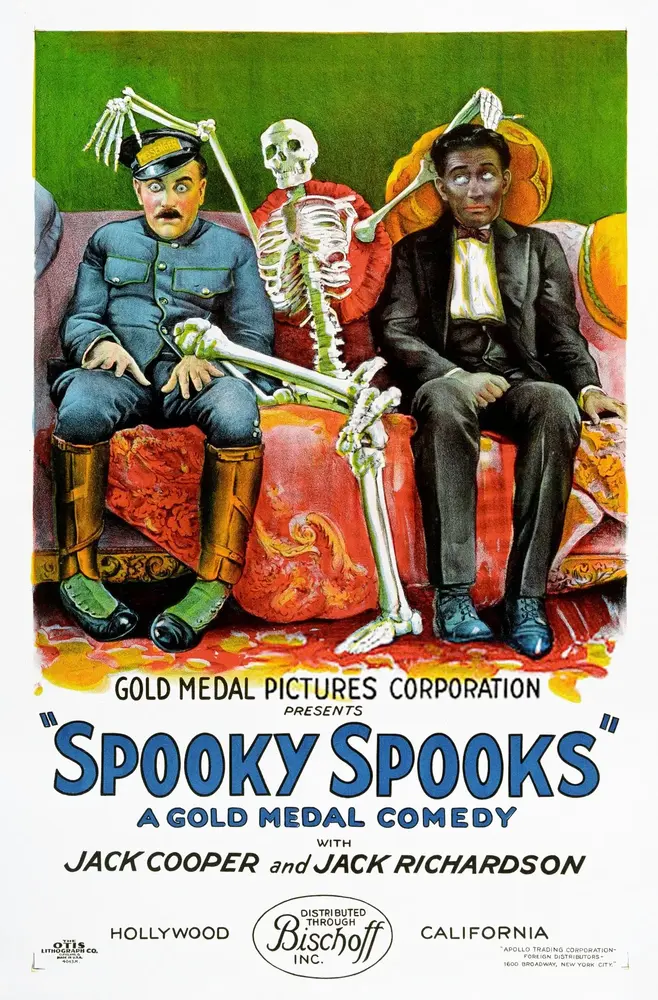
Is Spooky Spooks worth watching today? Short answer: yes, but only if you have a high tolerance for the frantic, unpolished energy of early 20th-century slapstick.
This film is specifically for silent cinema completionists and those who enjoy the 'Old Dark House' trope in its most primitive form. It is decidedly NOT for viewers who require narrative logic or high-stakes drama to stay engaged.
1) This film works because it leans into the absurdity of its 'Sherlock Bones' character, providing a meta-commentary on detective tropes that were already becoming stale by 1925.
2) This film fails because the pacing in the second act becomes a repetitive loop of hallway chases that lack the rhythmic precision of a Buster Keaton production.
3) You should watch it if you want to see how early filmmakers used minimal lighting and physical comedy to bridge the gap between horror and humor.
The plot of Spooky Spooks is a skeletal frame designed to hang a series of physical gags. Jack Cooper plays the messenger boy with a jittery, wide-eyed vulnerability that feels familiar to fans of the era.
Unlike the stoicism found in The Darkening Trail, Cooper’s performance is built entirely on reaction. He is a man perpetually on the verge of a nervous breakdown.
When he is intercepted by the two mysterious men, the tension isn't derived from the threat of death, but from the logistical nightmare of a job gone wrong. It is a blue-collar anxiety that resonates even now.
The substitution of the message is a classic MacGuffin. It forces our protagonist into a world of high-stakes extortion that he is fundamentally unqualified to navigate.
The introduction of Sherlock Bones is where director Albert Herman shows his hand. By 1925, Arthur Conan Doyle’s creation had been adapted and parodied countless times.
Sherlock Bones is a caricature of intellectual arrogance. He possesses the pipe and the deerstalker, but lacks the deductive reasoning that makes the original Holmes formidable.
I’ll be blunt: the detective is an idiot. But he is a necessary idiot. His presence allows the film to mock the very idea of the 'master detective' who can solve any crime.
In one specific scene, Bones examines a footprint with a magnifying glass so large it distorts his own face, a visual gag that perfectly encapsulates the film's unsubtle approach to satire.
Compared to the more serious investigative tones of Stolen Honor, Spooky Spooks is a breath of chaotic air. It doesn't want to be respected; it wants to be laughed at.
Cinematographically, the film is a product of its time—and its budget. The lighting is harsh, often flattening the sets, but this works in the film's favor during the 'spooky' sequences.
The house where the climax occurs is a labyrinth of shadows. Herman uses the darkness to hide the limitations of the production design, creating an atmosphere of genuine unease.
There is a moment where a hand reaches out from behind a curtain that, despite the age of the film, still carries a jolt of primal fear. It’s effective. But it’s flawed.
The editing by Herman is functional but lacks the poetic flow found in The Woman He Married. Here, the cuts are sharp and sometimes jarring, mirroring the frantic movements of the cast.
Yes, Spooky Spooks is worth watching if you are a student of film history or a fan of silent-era comedy. It provides a fascinating look at how early cinema blended mystery and humor.
The film offers a unique perspective on the detective genre. It also showcases the physical talents of Jack Cooper and John J. Richardson in a way that remains entertaining today.
Do not expect a deep narrative. Instead, look for the clever ways the filmmakers used limited resources to create a sense of scale and stakes.
John J. Richardson provides a solid foil to Cooper. While Cooper is all kinetic energy and panic, Richardson brings a grounded, almost menacing presence to his role.
The chemistry between the 'messenger boy' and the 'beautiful girl' is standard for the period. It’s a transactional romance—he saves her, she becomes the prize.
By modern standards, this is regressive. However, within the context of 1925, it’s a trope as common as the ones found in The Spite Bride or The Square Deceiver.
The villains are the most interesting part of the ensemble. They aren't mustache-twirling caricatures; they feel like bureaucratic thugs, which makes their threats feel more grounded.
The tone of Spooky Spooks is inconsistent, and I suspect that was intentional. It oscillates between genuine thriller elements and broad, physical comedy.
One minute, the daughter is facing a death threat; the next, the messenger boy is falling over a piece of furniture in a way that defies physics.
This tonal whiplash is common in films like Back to the Woods, but Herman pushes it further here. He seems to delight in undermining the tension he just built.
“Spooky Spooks is a reminder that before cinema became a polished industry, it was a playground of experimentation where logic was secondary to the gag.”
- High-energy physical performances from Jack Cooper.
- Effective use of 'Old Dark House' atmosphere on a low budget.
- A genuinely funny subversion of the Sherlock Holmes archetype.
- Thin character development for the female lead.
- Some gags feel dated and lack the timeless quality of Chaplin or Keaton.
- The resolution feels rushed and relies too heavily on coincidence.
Spooky Spooks is a fascinating relic. It isn't a masterpiece, and it doesn't try to be. It is a working-class comedy that uses a popular literary figure to poke fun at the establishment.
If you’ve already seen the major works of 1925, like Rob Roy or The Yankee Consul, this is a worthy addition to your watchlist.
It captures a specific moment in time when horror and comedy were starting to realize they were two sides of the same coin. The messenger boy’s triumph isn't just over the villains; it’s over his own insignificance.
I believe Jack Cooper is an underrated talent of this era. His ability to convey absolute terror while remaining funny is a difficult tightrope to walk, and he does it with aplomb here.
Ultimately, Spooky Spooks is a messy, loud, and occasionally brilliant short that deserves to be remembered for its spirit if not its execution.
IMDb 6.2
1922
Community
Log in to comment.