DbcultAccessing Vault...
6.4/10
Senior Film Conservator
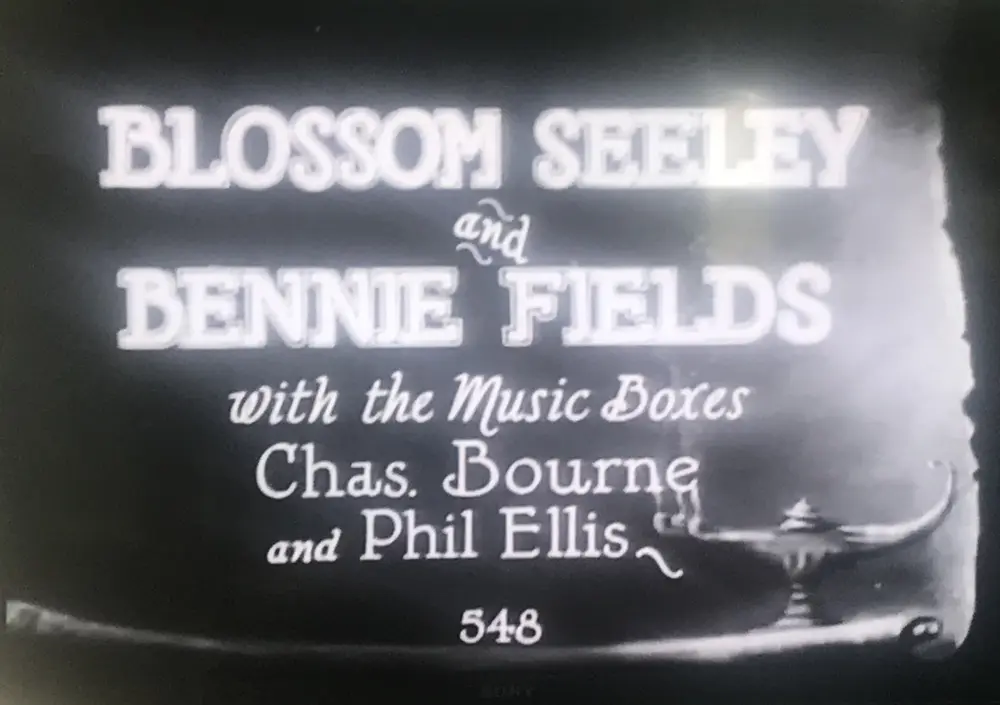
A definitive 6.4/10 rating for a film that redefined the boundaries of cult cinema. Blossom Seeley and Bennie Fields remains a cornerstone of transgressive art.
Is Blossom Seeley and Bennie Fields worth watching today? Short answer: yes, but with significant caveats that pivot on your appreciation for historical performance and the nascent days of cinema.
This film is unequivocally for those with a keen interest in early 20th-century entertainment, vaudeville history, or the evolution of musical performance captured on screen; it is decidedly not for viewers seeking modern narrative complexity, high production values, or fast-paced action.
This film works because of its raw, unadulterated preservation of a live vaudeville act, offering an irreplaceable window into the stage presence and comedic timing of two iconic performers.
This film fails because its inherent limitations as a static, early cinematic recording restrict its ability to convey the full energy and interactive thrill of a live theatrical experience, making it a niche viewing for modern audiences.
You should watch it if you are a student of performance history, a devotee of American musical theater, or simply curious about the foundational elements of popular entertainment that predated the Golden Age of Hollywood.
Stepping into the world of Blossom Seeley and Bennie Fields is less about watching a film in the contemporary sense and more about engaging with a time capsule. This short, early cinematic recording isn't designed to tell a story with a complex plot or character arcs. Instead, it serves as a vital historical document, preserving a slice of vaudeville, the dominant form of popular entertainment in America during the late 19th and early 20th centuries. Vaudeville was a melting pot of variety acts: comedians, singers, dancers, magicians, and novelty performers, all vying for the audience's attention.
The very existence of this film speaks volumes about the early days of cinema. Before feature-length narratives became standard, filmmakers often captured live stage performances, offering a glimpse of popular stars to audiences beyond the major metropolitan theaters. These recordings were crucial for disseminating entertainment and establishing early cinema's commercial viability. They were, in essence, the YouTube of their era, bringing fleeting stage magic to a wider, often regional, public.
For modern viewers, understanding this context is paramount. Without it, the static camera, the simple stage setting, and the direct-to-audience performance style might seem primitive or even dull. But with this lens, the film transforms into a captivating archaeological dig into the foundations of American show business, revealing the raw talent and stagecraft that captivated millions.
Before the main event, the film introduces Charles Bourne and Phil Ellis, credited as The Music Boxes. Seated at two pianos, their initial bars aren't just an overture; they are the rhythmic backbone, the foundational soundscape upon which Seeley and Fields build their entire act. In an era before sophisticated sound mixing or pre-recorded backing tracks, live musical accompaniment was non-negotiable, and these pianists were the unsung architects of the performance's energy.
Their role, though visually secondary, is audibly primary. The swift, confident execution of their opening bars immediately signals a professional, well-rehearsed production. They are the engine, setting the pace and tone for the subsequent vocal and physical theatrics. While we don't see much of their interaction or individual flair, their presence grounds the act in a tangible, acoustic reality. It’s a testament to the collaborative nature of vaudeville, where every component, no matter how seemingly minor, played a crucial part in the overall spectacle.
I'd argue that the true unsung heroes here might be the pianos themselves – not just Bourne and Ellis, but the instruments, which anchor the entire visual spectacle with their unseen, yet undeniable, rhythmic pulse. Their performance, while brief, is a masterclass in supportive musicianship, proving that sometimes, the most powerful contributions are those that subtly elevate others.
When Blossom Seeley makes her entrance, the screen, despite its monochromatic limitations, practically crackles with her energy. Dressed in tulle, a fabric choice that speaks to both lightness and a certain stage glamour, she embodies the quintessential vaudeville star. Seeley was known for her vivacious stage presence and powerful voice, traits that, even through the filter of early film, are palpable.
Her movements, though constrained by the static camera's frame, suggest a performer accustomed to commanding a larger stage. There's a confidence in her posture, a deliberate engagement with the unseen audience that translates directly to the viewer. While we cannot hear the full timbre of her voice, her expressions and the way she carries herself during the musical numbers hint at the vocal prowess that made her a star. She doesn't just sing; she performs, embodying the lyrics with her entire being.
Her transformation for the third number, donning a sombrero and serape, showcases the theatricality inherent in vaudeville. It’s a quick-change artist's flourish, designed to surprise and delight, demonstrating her versatility and willingness to embrace different personas within a single act. This is a performer who understood how to use costume as an extension of character, even if only for a few minutes. Her presence is the undeniable gravitational center of the performance, pulling the viewer into her orbit with effortless charm.
Bennie Fields, by contrast, enters in a classic sport coat, worsted trousers, vest, and tie, carrying a cane and straw hat. His attire suggests a debonair, slightly roguish charm, a perfect foil to Seeley's effervescent glamour. Fields was a comedian and singer, and his stage persona here is one of genial sophistication mixed with an underlying comedic timing.
His 'kibbitzing' about southern music between the first two numbers is a crucial element of their dynamic. This isn't just filler; it's a demonstration of their chemistry and the informal, conversational style that endeared vaudeville performers to their audiences. It’s a break in the musical flow, allowing for personality to shine through, showcasing Fields' ability to engage in lighthearted banter and set up comedic moments.
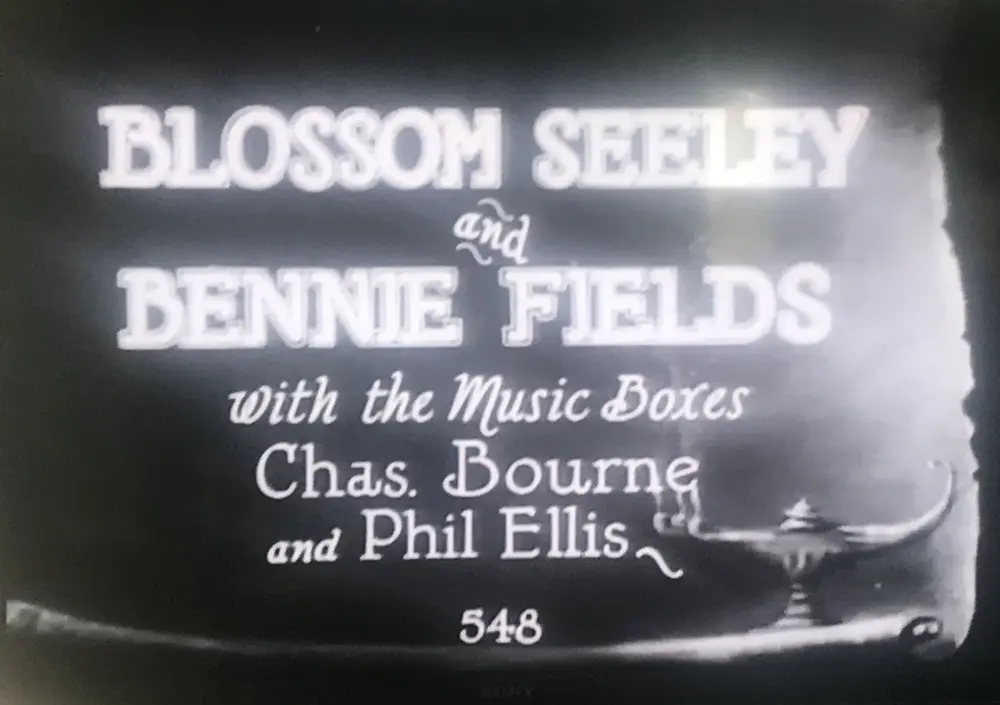
Like Seeley, Fields also embraces a costume change for the final number, sporting a guitar and a gaucho hat. This further cements his role as the versatile showman, capable of shifting from dapper crooner to a more exotic, almost comedic, persona. His physical presence, particularly during the dancing in the third number, reinforces his role as an active participant, not just a static vocalist. He provides grounding, a steady hand to Seeley's more explosive energy, creating a balanced and engaging duo.
The choice of three distinct numbers – 'Hello Mr. Bluebird,' Irving Berlin's 'The Call of the South,' and '(A Pretty Spanish Town) On a Night Like This' – allows Seeley and Fields to showcase their range and the typical variety expected in a vaudeville act. 'Hello Mr. Bluebird' likely served as an upbeat opener, a charming and familiar tune to draw the audience in, establishing a lighthearted atmosphere. It’s a song designed for immediate appeal, a cheerful invitation.
Irving Berlin's 'The Call of the South' shifts the mood, tapping into a popular romanticism surrounding the American South. Berlin, even in this early period, was a master of popular song, and this choice would have resonated deeply with contemporary audiences, evoking nostalgia or a sense of wanderlust. The transition between these two numbers, punctuated by their 'kibbitzing,' feels natural, a conversational bridge that maintains audience engagement.
The final number, '(A Pretty Spanish Town) On a Night Like This,' is the most theatrical, embracing an exotic flair that was a common trope in vaudeville. It’s a full-on spectacle, complete with costume changes and dancing. While charming, the 'Spanish Town' segment, particularly the costume changes, feels like a superficial nod to exoticism rather than a genuine artistic evolution, a common vaudeville trope that hasn't aged gracefully. However, its inclusion speaks to the era's entertainment demands, where novelty and visual spectacle were key.
The narrative flow of the performance is punctuated by specific, deliberate choices that elevate it beyond a mere sequence of songs. The 'kibbitzing about southern music' between the first two numbers serves several purposes. Firstly, it offers a moment of comedic relief and personality, allowing Seeley and Fields to engage with each other and, by extension, the audience, on a more intimate level. This banter humanizes them, making them more than just singers; they become characters.
Secondly, it provides a thematic link, smoothly transitioning from the general cheer of 'Hello Mr. Bluebird' to the more specific regional focus of 'The Call of the South.' This demonstrates a thoughtful construction of their act, where even the pauses are purposeful. It's a precursor to the kind of stage patter that would become a hallmark of many musical acts and stand-up comedians for decades to come.
The shift to the 'Spanish Town' number is the most dramatic visual change. Seeley's sombrero and serape, and Fields' guitar and gaucho hat, are immediate signifiers of a new cultural landscape. This embrace of a 'Spanish' aesthetic, however broad-strokes it might appear today, was a common theatrical device of the time, designed to transport the audience. The inclusion of 'a bit of dancing' during this number is also crucial. It adds a physical dimension, transforming the performance from purely vocal to a more complete, kinetic spectacle, a true variety act in every sense.
Analyzing the 'direction' and 'cinematography' of Blossom Seeley and Bennie Fields requires a different critical lens than one would apply to a modern feature film. This isn't a narrative piece with complex camera movements or intricate editing. Instead, it's a straightforward recording, a documentarian's approach to capturing a live stage event. The camera is static, functioning much like a theater seat in the middle of the orchestra section.
This static framing has both limitations and unexpected strengths. On one hand, it restricts the viewer's perspective, preventing close-ups on facial expressions or details of costume that a live audience member might catch. It also means that the full scope of any dancing or stage movement might be slightly diminished, as the performers must stay within the fixed frame. There's no dramatic cutting to enhance the rhythm or impact of a song; the pacing is dictated entirely by the performers on stage.
However, this simplicity also provides a raw authenticity. There's no artifice, no manipulation of the image to enhance the performance beyond what was genuinely happening. I'd argue that the static, almost voyeuristic camera actually enhances the historical authenticity, forcing the viewer to engage with the act as it truly was, rather than a cinematic reinterpretation. It is a snapshot. A moment captured. This direct, unembellished approach allows the inherent talent and stagecraft of Seeley and Fields to shine through, unmediated by cinematic trickery. It's a window, not a re-creation.
Yes, Blossom Seeley and Bennie Fields is absolutely worth watching, but only if your interests align with its unique historical and cultural value. It's not a film for casual entertainment in the modern sense.
This short offers an invaluable, unvarnished look at vaudeville performance. It showcases the raw talent and stage presence of two significant figures in American entertainment history. Viewers gain insight into the style, humor, and theatricality that defined popular culture a century ago.
It serves as a primary source for understanding early cinema's role in documenting live acts. For historians, performers, or anyone fascinated by the roots of show business, it's essential viewing. For others, it might feel slow or dated, lacking modern cinematic conventions. Its value lies in its authenticity and its place in the historical record.
The very act of filming a vaudeville performance like Blossom Seeley and Bennie Fields marked a pivotal moment in entertainment history. It heralded the slow, inevitable transition from live stage as the sole purveyor of popular culture to the burgeoning medium of cinema. These early recordings were the initial steps in what would become a complex relationship between theater and film, with each influencing and adapting elements from the other.
What this film preserves is not just an act, but a style of performance. The direct address to the audience, the exaggerated gestures, the clear delineation of musical numbers with comedic interludes – these were the building blocks of popular entertainment. Many elements seen here, from the stage patter to the quick costume changes, would find their way into early Hollywood musicals and even later television variety shows. This film is a foundational text for understanding the lineage of American show business.
For contemporary audiences, it offers a stark reminder of how entertainment has evolved, yet also how certain fundamental aspects of engaging an audience remain timeless. The charisma of Blossom Seeley, the dapper charm of Bennie Fields – these are qualities that transcend the limitations of early film technology. They remind us that at the heart of any great performance, regardless of the medium, lies genuine talent and an undeniable connection with the viewer. It's a living museum piece, showing us where it all began.
Blossom Seeley and Bennie Fields is not a film to be judged by modern cinematic standards. To do so would be to miss its profound significance
IMDb —
1929
Community
Log in to comment.