DbcultAccessing Vault...
Cult Review
Senior Film Conservator
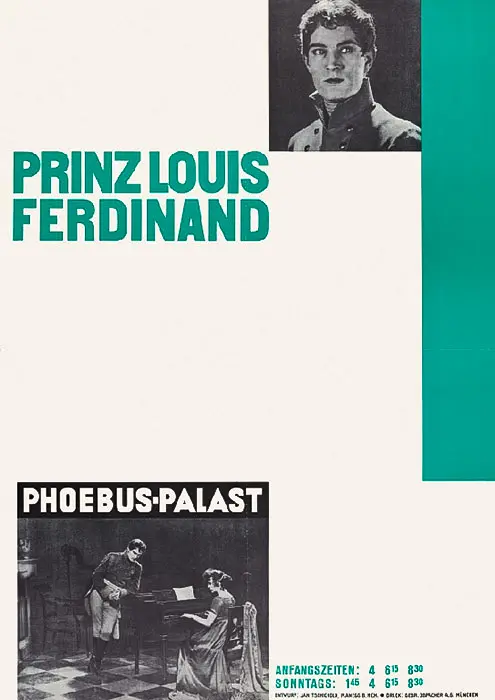
Short answer: Yes, but only if you have an appetite for the slow-burn psychological depth of late silent-era German cinema. This film is for history enthusiasts and those who appreciate the 'Fridericus-Rex' style of Prussian epics, but it is certainly not for viewers looking for fast-paced action or modern narrative efficiency.
1) This film works because it treats its historical subject with a surprising amount of interiority, moving beyond mere hagiography.
2) This film fails because its middle act drags under the weight of courtly etiquette and dense political dialogue that requires a history degree to fully parse.
3) You should watch it if you want to see Theodor Loos deliver a masterclass in restrained, melancholic acting before the advent of sound.
Prinz Louis Ferdinand is a fascinating specimen of the 1920s German 'Prussian' film cycle. Unlike the more bombastic military propaganda that would follow in later decades, this 1927 production feels remarkably intimate. It focuses on the friction between the individual and the institution. Theodor Loos, an actor often overshadowed by his contemporaries in the UFA stable, brings a haunting quality to the Prince. He doesn't play Louis Ferdinand as a hero; he plays him as a man who is tired. You can see it in the way he slumps over the piano—a stark contrast to the ramrod-straight posture he adopts when his uncle, the King, enters the room.
The film’s portrayal of the Prince’s relationship with Pauline Wiesel (played with a sharp, modern energy by Jenny Jugo) is where the heart of the story lies. In one specific scene, the camera lingers on a shared look between them during a formal ball. While the rest of the court moves in choreographed, robotic patterns, their eyes suggest a world of private rebellion. It is a small, quiet moment that speaks volumes about the film's central theme: the suffocating nature of duty. It makes the film feel less like a history lesson and more like a tragedy about a man born into the wrong life.
Hans Behrendt’s direction is steady, perhaps a bit too steady for modern tastes, but it possesses a formal elegance. The writing, credited to Henry Koster and Otz Tollen, is surprisingly nuanced. Koster, who would later find fame in Hollywood, clearly had an eye for humanizing historical figures even this early in his career. The dialogue (conveyed through intertitles) avoids the flowery melodrama common in 1920s cinema. Instead, it focuses on the political stakes of the Napoleonic threat. However, the pacing is a legitimate hurdle. There are sequences involving military planning that feel interminable, lacking the visual flair found in the more personal scenes.
When comparing this to other historical works of the era, such as Allies' Official War Review, No. 3, the difference in intent is clear. While the latter is a document of factual movements, Prinz Louis Ferdinand is an attempt to capture the 'soul' of a period. It succeeds in its atmosphere, even when the plot becomes bogged down in the minutiae of 19th-century diplomacy. It’s a long sit. But it pays off for the patient viewer.
The cinematography by various hands (often uncredited or part of the UFA collective style) utilizes the massive sets to create a sense of isolation. The Prince often looks small in the vast halls of the palace. The lighting is particularly effective in the final act. As the Prince prepares for the Battle of Saalfeld, the high-key glamour of the court is replaced by murky, shadow-drenched tents. This visual shift mirrors the Prince’s internal transition from a dreamer to a soldier. It is a brutal, simple visual metaphor that works perfectly.
The film doesn't have the whimsical charm of something like Orchids and Ermine, nor does it have the gritty realism of The Eternal Grind. It occupies a middle ground of 'Prestige Cinema' that can sometimes feel a bit stiff. There is a scene where the Prince is told he must lead his troops, and the way the light catches the silver of his uniform while his face remains in partial darkness is a stunning piece of composition. It’s these moments of visual brilliance that keep the film from becoming a mere museum piece.
The supporting cast is a 'who's who' of Weimar character actors. Eduard von Winterstein provides a solid, grounding presence as the elder statesman, while Hans Stüwe brings a necessary foil to Loos’ more ethereal performance. The film’s treatment of women is also worth noting. Jenny Jugo’s Pauline is not a passive victim of the Prince’s whims; she is a woman with her own agency, making the inevitable separation feel like a mutual sacrifice rather than a one-sided abandonment. This adds a layer of maturity that is often missing from silent romances like Blind Love.
One surprising observation is how much the film focuses on the Prince’s failures. We are used to historical epics that celebrate victory, but this is a film about a man who dies in a losing effort. There is a profound sense of 'too little, too late' that permeates the final thirty minutes. It takes a stance against the idea of the 'invincible hero,' suggesting instead that even the most talented individuals are often crushed by the gears of history. It works. But it’s flawed in its execution of the battle itself, which feels somewhat staged and theatrical compared to the psychological realism of the earlier acts.
Pros:
The film features exceptional set design that captures the opulence and the coldness of the Prussian court. The chemistry between Loos and Jugo is palpable, providing a necessary emotional anchor. It also offers a rare, non-idealized look at a historical figure often treated as a martyr.
Cons:
The pacing is uneven, with the first hour moving at a glacial speed. Some of the military strategy scenes feel repetitive and fail to build tension. The intertitles are occasionally too wordy, breaking the visual flow of the film.
Prinz Louis Ferdinand is a demanding but rewarding piece of cinema. It avoids the easy traps of nationalism by focusing on the heavy price of duty. While it lacks the raw emotional power of Angel Child or the narrative drive of The Secret Formula, it stands as a testament to the sophistication of late Weimar-era filmmaking. It is a film of shadows and sighs, a portrait of a man who was a prince by birth but an artist by heart. If you can push through the dense political exposition, you will find a deeply moving character study that still resonates today. It is not a masterpiece, but it is a significant work of art that deserves to be remembered for its humanity rather than its history.
IMDb —
1915
Community
Log in to comment.