DbcultAccessing Vault...
7.5/10
Senior Film Conservator
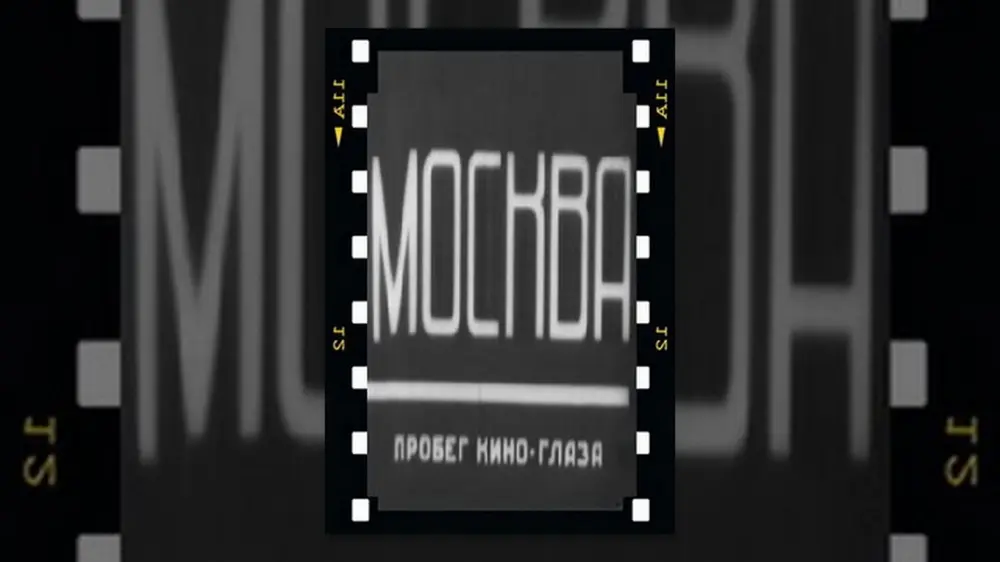
A definitive 7.5/10 rating for a film that redefined the boundaries of cult cinema. Moskva remains a cornerstone of transgressive art.
Is Moskva worth watching today? Short answer: yes, absolutely, but with significant caveats. This isn't a film you simply 'watch'; it's an experience you immerse yourself in, a demanding yet ultimately rewarding journey into the heart of a city captured through a distinctly modernist lens. It's a film for those who appreciate cinema as an art form beyond mere storytelling, for viewers eager to engage with visual poetry and rhythmic montage, rather than conventional narrative.
However, it is decidedly not for audiences seeking clear plotlines, character development, or easily digestible entertainment. If your ideal film requires a hero, a villain, or a neatly resolved conclusion, Moskva will likely test your patience to its limits. Its brilliance lies in its radical departure from such conventions, a quality that makes it both timeless and, for some, impenetrable.
To call Moskva a 'film' in the traditional sense feels almost reductive. It is, more accurately, a symphony orchestrated with light, shadow, and the ceaseless motion of urban existence. The film unfolds without a central protagonist or a discernible plot in the conventional sense. Instead, its focus is the city itself – Moscow – rendered as a colossal, breathing entity.
We are guided through its sprawling arteries and intimate corners, from the quietude of dawn as the first rays of sun creep over monumental architecture, to the frenetic energy of its working populace. The camera, almost a character in its own right, observes the rhythmic patterns of daily life: the rush of commuters, the toil of laborers, the fleeting expressions on countless faces, and the sheer scale of human interaction within a vast, man-made landscape.
It’s a meticulous observation of the mundane elevated to the poetic, a relentless pursuit of the city's intrinsic tempo. The film doesn't tell a story; it embodies a feeling, a pervasive sense of life unfolding, indifferent to individual dramas, yet composed of their aggregate. It’s a profound meditation on urbanism, capturing the essence of a place through its visual and auditory textures, rather than through dialogue or character arcs.
Absolutely, but be prepared. Moskva is a foundational text of avant-garde cinema, and its influence, while often subtle, ripples through decades of filmmaking. It offers a unique window into a specific historical moment and a daring cinematic philosophy.
This film works because of its uncompromising vision, its technical audacity, and its ability to transform the everyday into something profoundly artistic. It fails because its very strengths – its lack of traditional narrative, its experimental pacing – will alienate a significant portion of the modern audience. You should watch it if you are a cinephile, a student of film history, or someone genuinely curious about the boundaries of cinematic expression. If you're looking for an easy night in, look elsewhere, perhaps to something like Up in the Air (1923) for a more straightforward experience, or even a period drama like The Cloister and the Hearth.
The directorial vision behind Moskva is nothing short of revolutionary. While no specific director is credited in our notes, the presence of Mikhail Kaufman, a pioneering figure often associated with the 'city symphony' genre, speaks volumes. The film is a masterclass in observational cinema, where the camera becomes an active participant, not merely a passive recorder. It's a relentless, curious eye that frames the city's inhabitants not as actors, but as integral components of a larger, living organism.
The cinematography is breathtakingly innovative for its time. Consider the dizzying, almost abstract shots of construction sites, transforming steel and concrete into dynamic, sculptural forms. Or the way the camera tracks a lone tram through a snowy street, capturing the interplay of light on its metallic surface and the steam rising from its tracks. These aren't just pretty pictures; they are deliberate choices designed to evoke the energy and scale of the urban environment.
The pacing of Moskva is another marvel. It’s a rhythmic, almost musical construction. The deliberate opening sequence, lingering on empty streets before the first signs of life, slowly builds to the frenetic energy of rush hour, only to slow again for moments of quiet reflection in parks or along riverbanks. This ebb and flow mirrors the city's own pulse, creating a hypnotic, immersive experience that transcends simple documentation.
The tone is one of both awe and detachment. There’s an undeniable reverence for the monumental scale of the city and the collective human effort that sustains it. Yet, the film maintains a cool, objective distance, observing without judgment, allowing the viewer to project their own interpretations onto the ceaseless vitality unfolding before them. This is a film that demands your active participation, urging you to find the narrative within its non-narrative structure.
In a film like Moskva, the concept of 'acting' takes on an entirely different meaning. Mikhail Kaufman and Ilya Kopalin, listed in the cast, are not performing characters in a traditional sense. Instead, their 'performance' is inextricably linked to their presence within the film's observational framework, whether behind the camera or subtly integrated into the fabric of the city life depicted.
Kaufman, known for his groundbreaking work in cinematography and his brother Dziga Vertov's 'Kino-Eye' theory, embodies the very philosophy of the film. His 'role' is less about character portrayal and more about the gaze itself – a relentless, curious eye that seeks to capture 'life caught unawares.' If he appears, it's as a fleeting figure, an observer among observers, or perhaps the unseen hand guiding the lens, making the camera itself the primary 'performer.'
Kopalin's contribution, similarly, would be in contributing to this tapestry of authentic human experience. They are not individuals driving a plot, but rather elements of the broader human landscape. Their presence validates the film's claim to capturing reality, grounding its experimental ambitions in tangible human activity.
Their 'acting' is therefore a testament to naturalism, to the unvarnished truth of everyday existence. It’s about being, rather than performing. This approach, while challenging for viewers accustomed to more conventional dramatic performances, is precisely what gives Moskva its raw power and enduring relevance. It asks us to reconsider what constitutes a 'performance' in cinema.
The editing in Moskva is arguably its most profound narrative device. It is not about cutting to advance a story, but about constructing meaning through juxtaposition and rhythm. The film's pacing is a masterclass in cinematic montage, building a compelling, if abstract, narrative through the careful arrangement of shots.
Sequences often begin with long, contemplative takes, allowing the viewer to absorb the details of a scene – perhaps a street cleaner at dawn, or a solitary figure crossing a vast square. These moments of quiet observation are then often followed by rapid-fire cuts, accelerating the visual information to convey the dynamism of industrial work, the rush of traffic, or the hustle of crowds.
This deliberate manipulation of temporal perception creates a sense of both immediacy and timelessness. The film doesn't rush you, but it doesn't linger unnecessarily either. Every cut feels purposeful, contributing to the overarching 'symphony' of urban life. It's an intoxicating rhythm that, once surrendered to, can be deeply meditative. It's a stark contrast to the rapid, often disorienting cuts of modern action films, yet it achieves its own form of intensity.
Given the era, Moskva might have been presented as a silent film, perhaps with a live orchestra. However, even in its conception, the implicit soundscape is crucial. If we consider it through the lens of early experimental sound design, or even just the imagined sounds a viewer would project, the film is rich with auditory textures. The clang of metal, the rumble of trains, the distant murmur of voices, the honking of horns – these are all integral components of the city’s identity.
The absence of synchronized dialogue allows the ambient sounds, whether real or implied, to take center stage. This creates an immersive experience where the city 'speaks' through its own cacophony and occasional moments of profound quiet. A sequence focusing on a solitary figure in a park, for instance, might be underscored by the rustling of leaves or distant bird calls, emphasizing a brief respite from the urban clamor.
This focus on the aural environment, whether literal or imagined, prevents the film from feeling merely like a series of moving pictures. It becomes a multi-sensory journey, engaging the viewer on a deeper level than purely visual stimuli could achieve. It's a testament to how even without sophisticated sound technology, a director can evoke a rich sonic world.
Frankly, much of Moskva will bore those accustomed to conventional storytelling. Its genius lies in its refusal to compromise, a stance I both admire and find occasionally frustrating. It demands a specific kind of engagement, a willingness to let go of narrative expectations and simply *observe*.
One of its undeniable strengths is its sheer historical value. It serves as an invaluable time capsule, preserving a glimpse of Moscow from a bygone era, capturing not just its physical appearance but its very spirit. The film's technical innovations were also far ahead of their time, influencing countless filmmakers who sought to push the boundaries of cinematic language. It’s a bold artistic statement, utterly confident in its own unique voice. There's a curious paradox at play: by stripping away narrative,
However, its radical nature is also its biggest weakness for a broader audience. The lack of traditional plot or character development can make it feel meandering and emotionally distant. There are moments when the relentless montage, while technically brilliant, can become overwhelming or simply repetitive. For all its visual poetry, it can occasionally feel cold, a magnificent machine observed rather than a human story felt. I've heard some critics dismiss it as a mere technical exercise, and while I disagree, I understand the sentiment.
Moskva is not just a film; it’s a declaration. A declaration that cinema can exist beyond the confines of narrative, that a city can be a protagonist, and that observation can be a profound act of creation. It works. But it’s demanding. While it won't resonate with everyone, its historical significance and artistic daring are undeniable. It's a challenging watch, yes, but one that rewards patience with a unique, unforgettable glimpse into the soul of a city and the boundless potential of the cinematic art form. For those willing to engage, it remains a powerful, vital piece of film history, a true benchmark of experimental filmmaking that continues to inspire and provoke thought, far more effectively than many of its contemporaries like Sex or Wild Beauty.
IMDb —
1917
Community
Log in to comment.