DbcultAccessing Vault...
Cult Review
Senior Film Conservator

In an era saturated with cinematic narratives clamoring for external validation and boisterous spectacle, Robinson Crusoe Hours emerges as a strikingly introspective and profoundly disquieting counterpoint. It is a film that dares to explore the raw, unvarnished landscape of the human psyche when stripped bare of all societal accoutrements, when the only company is the relentless self and the vast, indifferent expanse of nature. This isn't merely a tale of survival against the elements; it is a meticulous, almost clinical, dissection of the psychological toll of voluntary exile, an ambitious endeavor that distinguishes it from more conventional adventure sagas.
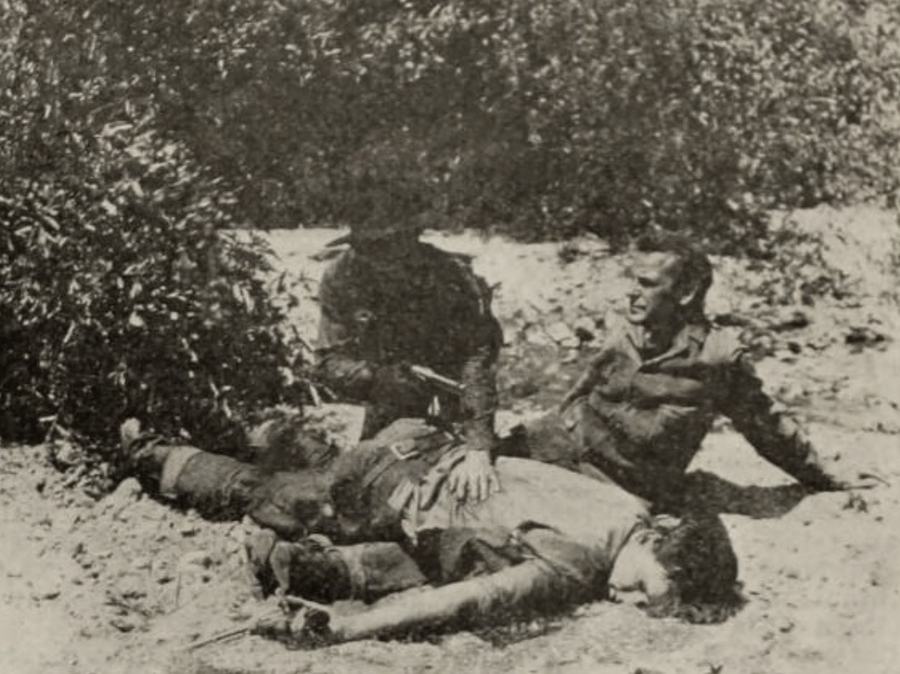
The film’s central conceit, the deliberate self-marooning of Elias Thorne, a celebrated architect weary of the urban grind, resonates with a timeless appeal, tapping into a universal yearning for escape and authenticity. Yet, Robinson Crusoe Hours quickly disabuses the audience of any romantic notions of isolation. What begins as a philosophical experiment, a quest for a purer existence, inexorably devolves into a harrowing confrontation with the self, a journey into the uncharted territories of one’s own mind. The initial shots of Thorne's arrival at the dilapidated lighthouse keeper's cottage, bathed in a melancholic golden hour light, evoke a sense of hopeful desolation, a beautiful sorrow that promises profound revelations. However, this aesthetic quickly gives way to a grittier, more visceral reality, mirroring Thorne's own diminishing idealism.
The directorial choices throughout Robinson Crusoe Hours are nothing short of masterful. The cinematography is a character unto itself, oscillating between breathtaking wide shots that emphasize Thorne’s insignificance against the colossal backdrop of the ocean and claustrophobic close-ups that trap the viewer within the confines of his increasingly fragmented mental state. The camera often lingers on mundane objects – a flickering candle, a worn journal, a single, gnarled piece of driftwood – imbuing them with a potent symbolic weight, transforming them into silent witnesses to Thorne's internal struggle. The use of natural light, particularly the harsh, unforgiving glare of midday and the oppressive gloom of stormy nights, further amplifies the sense of raw authenticity and relentless exposure.
Unlike the more overt action and external threats found in films like The Hell Cat or Fighting for Gold, the peril in Robinson Crusoe Hours is almost entirely internal. The film’s tension is not generated by chases or confrontations, but by the insidious creep of psychological erosion. This makes it a far more demanding viewing experience, yet ultimately a more rewarding one for those willing to engage with its profound depths. The sound design, too, is exemplary, employing the ceaseless roar of the waves and the shriek of the wind not just as ambient noise, but as a relentless, almost sentient antagonist, a constant reminder of Thorne's isolation and the indifference of the world beyond his self-imposed prison.
A pivotal narrative device is the discovery of Silas Blackwood's journal, a chilling premonition of Thorne's potential fate. This intertextual element provides a historical counterpoint to Thorne's contemporary experiment, suggesting that the human response to prolonged isolation is, perhaps, tragically universal. Blackwood's descent into madness, meticulously documented in his frantic scrawl, serves as a mirror, reflecting Thorne's own burgeoning anxieties and hallucinations. This narrative layering elevates Robinson Crusoe Hours beyond a simple character study, transforming it into a meditation on the very nature of sanity and the fragile boundaries that define it. The film cleverly employs the journal's text, sometimes appearing as stark, blue-tinged intertitles, to punctuate Thorne's own deteriorating mental state, creating a haunting dialogue across decades.
The psychological unraveling depicted here is far more nuanced than the clear-cut cases of identity crisis in Der Andere or the dramatic disappearances in The Man Who Disappeared. Thorne's internal conflict is a slow burn, a gradual erosion rather than a sudden break. The film doesn't offer easy answers or convenient resolutions; instead, it plunges the audience into the unsettling ambiguity of a mind teetering on the brink. This unflinching portrayal of mental fragility is what gives the film its enduring power and its unsettling resonance. It forces us to confront our own comfort with constant stimulation and the potential fragility of our own psyches when confronted with absolute solitude.
In a world often preoccupied with romantic entanglements and social dynamics, as seen in films like The Voice of Love or The Love Mask, Robinson Crusoe Hours bravely strips away these external connections to focus solely on the individual. There are no grand declarations of affection, no societal pressures of courtship like those in Miss George Washington or A Seaside Siren. The only relationship explored is Thorne's fraught one with himself and with the unforgiving environment he has chosen. This absence of human interaction, initially perceived as liberating, slowly becomes a crushing burden. The film subtly argues that while solitude can foster self-reflection, absolute isolation can be a destructive force, threatening the very fabric of identity.
The film's deliberate pacing, eschewing the rapid-fire gags of Keystone Comedies or the thrilling suspense of The Mystery of the Yellow Room, allows the audience to truly sink into Thorne's experience. Every creak of the cottage, every distant cry of a seagull, every drop of rain against the windowpane is amplified, drawing us deeper into his sensory world. This immersive quality is crucial for understanding the gradual shift in Thorne's perception, where the line between objective reality and subjective delusion begins to blur. The film doesn't rely on jump scares or overt horror; instead, it crafts a pervasive sense of dread through atmosphere and psychological tension, a far more sophisticated approach than many thrillers of its time.
Unlike the satisfying resolutions often found in adventure stories like In the Days of the Thundering Herd, Robinson Crusoe Hours refuses to offer a neat, comforting conclusion. The ending is ambiguous, unsettling, and profoundly thought-provoking. Thorne's ultimate fate is left open to interpretation, mirroring the unresolved nature of his internal struggle. This deliberate lack of closure is a testament to the film's artistic integrity, refusing to pander to audience expectations for a triumphant return or a clear-cut victory over adversity. Instead, it leaves us with a lingering sense of unease, a powerful reminder of the delicate balance required for mental well-being.
The film's exploration of setting is also noteworthy. Unlike the picturesque landscapes of Unknown Switzerland or the romanticized vistas of The Girl of the Rancho, the coastal setting in Robinson Crusoe Hours is rendered as both beautiful and brutally indifferent. It is not a place of escape or solace in the traditional sense, but a stark, unyielding canvas upon which Thorne's internal drama unfolds. The cottage itself, a character of sorts, becomes a metaphor for Thorne's increasingly fragile mind – a structure battered by external forces, its internal walls crumbling under the weight of isolation.
In its unflinching portrayal of psychological fragility and the corrosive power of absolute solitude, Robinson Crusoe Hours stands as a bold and essential piece of cinematic art. It challenges viewers to look inward, to question the inherent human need for connection, and to ponder the fine line between introspection and self-destruction. This is not a film to be passively consumed; it demands engagement, reflection, and a willingness to confront uncomfortable truths. Its impact lingers long after the final frame, a testament to its profound thematic depth and its masterful execution. For those seeking a truly immersive and intellectually stimulating cinematic experience, far removed from the more contained dramas of Apartment 29 or the straightforward action of Hands Up!, Robinson Crusoe Hours offers a journey into the heart of human vulnerability that is both terrifying and undeniably captivating.

IMDb 6.4
1935
Community
Log in to comment.