DbcultAccessing Vault...
6/10
Senior Film Conservator
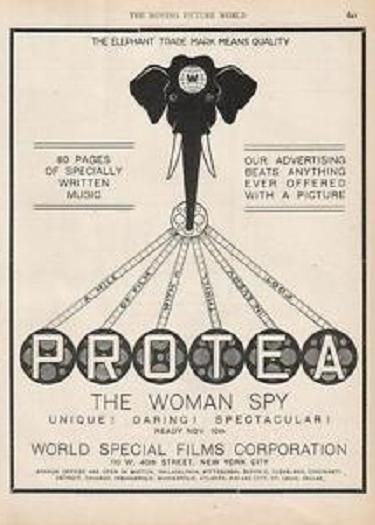
A definitive 6/10 rating for a film that redefined the boundaries of cult cinema. Protéa remains a cornerstone of transgressive art.
Paris, winter 1913. While suffragettes chained themselves to railings, Gaumont studios quietly detonated a revolution of their own: a spy serial fronted by a woman who preferred lock-picks to lockets. Victorin-Hippolyte Jasset’s Protéa—six episodes, barely forty-five minutes surviving today—arrived like a magnesium flare over the Boulevard des Italiennes, announcing that espionage could be silk-stockinged, morally ambidextrous, and female.
The plot, deceptively simple on ledger paper, is a Möbius strip of loyalties. The kingdom of Messinia—imaginary, yet breathing the same thyme-scented air as Montenegro—dispatches its apex operative to snatch a treaty whose clauses could redraw the map of the Balkans. Protéa (Josette Andriot, part panther, part porcelain) accepts the commission with a curt nod, but her eyes already interrogate the righteousness of kings. She is paired with The Eel (Lucien Bataille), a contortionist rogue whose moral compass spins like a weather vane in a hurricane. Together they infiltrate a neighboring court where ambassadors waltz on marble checkered like chessboards and every candelabra shadows a dagger.
What follows is less a linear heist than a fever chart of colonial anxiety. Train-top fistfights anticipate Hitchcock’s The 39 Steps by two decades; rooftop pursuits, silhouetted against nickel-blue nitrate skies, feel like German Expressionism before Germany thought of it. Jasset chops time with guillotine precision: irises swallow characters whole; intertitles arrive like telegrams from a hostile embassy, allusive and cruel. The camera itself seems complicit, craning over parapets to spy on spies, implicating the viewer in the act of voyeurism. We are not watching a thriller; we are accessories after the fact.
Survival rates distort the record—only fragments of episodes three and four circulate in 4K restorations—yet what remains is startlingly modern. Consider the nightclub sequence: a cavern of Art-Nouveau ribs where champagne fizzes like radium and a brass band stomps a tarantella. Protéa, poured into a jet-bead gown, extracts the treaty from a diplomat’s inner jacket while simultaneously planting a counterfeit on his mistress. The cut is invisible, the gesture fluid, but Jasset inserts a three-frame flash of her gloved hand snapping shut like a steel trap—subliminal editing decades before the term existed. Contemporary critics spoke of “photographic prestidigitation”; today we would call it neuro-cut montage.
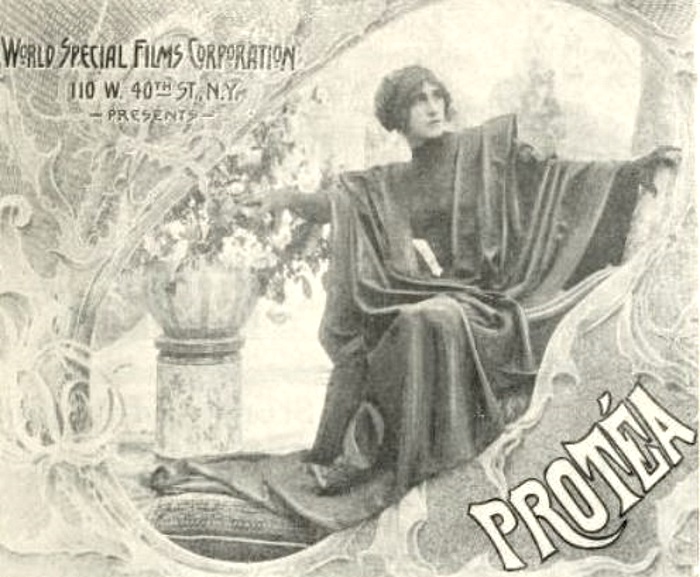
Andriot’s performance is the hinge on which this contraption swings. At rest she has the stillness of a Medici dagger, but motion turns her into liquid mercury. She vaults balconies in a floor-length skirt without violating the era’s decorum; her body is a grammar of concealment. When she smiles at a checkpoint guard, the gesture arrives like a paper cut—delayed, surprisingly painful. Critics compared her to Pearl White of What Happened to Mary, yet White’s heroines squealed for rescue; Andriot’s rescues herself and still has leisure to light a cigarette from the fuse of a detonator.
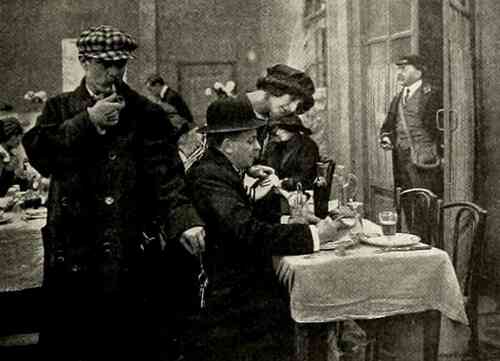
The film’s gender politics corkscrew through every reel. Protéa uses femininity as camouflage, but the narrative refuses to punish her competence. She trades kisses for passcodes, yes, yet each osculation lands like a signature on a contract she intends to enforce. When a male superior attempts to cashier her into marriage, she frames him for treason with the same nonchalance another woman might order tea. Early audiences were scandalized; suffragist newsletters celebrated a “new archetype, no longer Penelope at the loom but Penelope with a revolver tucked among the spindles.”
Visually, Jasset and cinematographer Lucien Nonguet exploit the cobalt limits of orthochromatic stock. Scarlet uniforms bleach into lunar white, making armies look ghostly; Protéa’s auburn hair absorbs light until it becomes a black hole around which the mise-en-scène orbits. Compare this chromatic strategy to the sun-bleached vistas of Glacier National Park or the chiaroscuro pageantry of From the Manger to the Cross; Jasset anticipates both the documentary impulse and the biblical spectacular, yet compresses them into espionage miniatures.
Sound, of course, is absent, but the silence feels tactical. During the climactic train derailment—an actual decommissioned locomotive pushed into a gorge—Jasset withholds on-screen musicians. The absence of score turns every metallic screech in your imagination into a phantom orchestra. Nitrate scratches become Morse code; projector flicker mimics muzzle flash. The effect is so immersive that when the courier finally delivers the document into Protéa’s palm, you half expect the celluloid itself to combust from friction.
Scholars often slot Protéa between Feuillade’s Fantômas and Lang’s Spione, yet Jasset’s serial predates both in crystallizing the spy as pop-culture chimera: part patriot, part anarchist, wholly erotic enigma. The DNA of Bond’s M, of La Femme Nikita, even of Black Widow, coils inside these brittle reels. When Protéa vanishes into a crowd at the quayside, trench-coat collar upturned like a shark fin, she is not exiting the story; she is entering the century’s bloodstream.
Restoration efforts by the Cinémathèque fraternité de Paris have salvaged two reels, tinted amber and sea-green using the Desmet method. The result is less nostalgia than necromancy: faces shimmer as though submerged in absinthe. One particular insert—The Eel’s hand sliding a folded telegram across a café table—survives only because a projectionist in Lyon spliced it into a newsreel about vineyard blight. Such archival serendipity underscores the fragility of spy mythology; empires collapse, treaties moulder, yet a single splice can resurrect a legend.
If the narrative has a flaw, it is the colonial gaze. Montenegro-esque extras are treated as exotic furniture; a Roma camp functions as narrative quicksand. Yet even here Protéa subverts expectation, bargaining with a Romani matriarch not through seduction but through mutual recognition of marginalization. Their whispered conversation, shot in extreme close-up—noses nearly touching the lens—feels like a secret treaty between two ghosts the nineteenth century tried to bury.
The film’s legacy splinters into curious tributaries. Argentine tango halls of the 1920s named a step el paso Protéa, a pivot that conceals a switchblade. During WWII, the French Resistance used “Protéa” as a codename for female radio operators. Andriot herself, post-stardom, opened a fencing academy in Neuilly where girls learned épée under chandeliers. One alumna became a WWII intelligence officer, parachuting into Vichy territory with a cyanide capsule sewn inside a lipstick. She claimed her courage began “the day I saw Protéa vault a parapet and land in a crouch, skirts billowing like the flag of a country no man had ever mapped.”
Comparisons to contemporaneous serial queens—The Mystery of the Rocks of Kador, Les Amours de la Reine Élisabeth—reveal how radically Jasset departs from melodrama. Those films hinge on inheritance, on birthrights unjustly denied. Protéa dispenses with heritage; her only birthright is ingenuity. She is not reclaiming a throne; she is stealing the paperwork that underwrites thrones. In an era when monarchs still claimed divine sanction, such secular larceny felt blasphemous, exhilarating.
Modern viewers, jaded by CGI cartography and shaky-cam parkour, may smirk at the theatricality—ropes visibly slack, train compartments the size of drawing rooms. Yet surrender to the film’s tempo and you discover a kinetic philosophy: action not as spectacle but as dialectic. Every punch, forged in the crucible of political necessity, questions whether violence can ever be hygienic. When Protéa, cornered on a bell tower, unsheathes a hairpin to stab an assassin, the moment lingers longer than gore-loving audiences might prefer. The hesitation is the point: she weighs the cost of murder against the cost of mercy, finds both scales wanting, and acts anyway.
The score, though absent on screen, has inspired modern compositions. In 2019 the Kronos Quartet debuted “Protéa Suite,” a twelve-minute piece blending Balkan polyphony with spy-jazz pizzicato. During the crescendo a solo viola imitates the clack of a telegraph key, a sonic watermark that collapses 1913 into 2019 like a fist crushing a paper flower. Live performances project the surviving footage above the musicians; Andriot’s silhouette, enlarged to twelve meters, dances across cello strings like a shadow puppet freed from its master.
Ultimately, Protéa endures because it embodies cinema’s original promise: to make the invisible visible. The secret document is MacGuffin-flat; what matters is the woman who carries it, whose allegiance is so fluid it mirrors the medium itself—light bent into story, story bent back into myth. When the final iris closes on her disappearing back, you realize the film has pickpocketed your certainties. Nations? Constructs. Gender? Costume. Heroism? A hustle performed under the noses of men too busy reading maps to notice the ground shifting beneath their polished boots.
Verdict: Seek the restoration, preferably in a mildewed revival house that smells of bergamot and nitrate. Sit close enough that the projector’s heat grazes your cheek. When the train derails, grip the armrest; when Protéa smiles, check your pockets. You will leave lighter, not of wallet but of worldview. The spy who never was has just stolen who you thought you were, and she’s already sprinting across the rooftops of history, laughing into the Balkan wind.
IMDb 6.3
1926
Community
Log in to comment.