DbcultAccessing Vault...
Cult Review
Senior Film Conservator
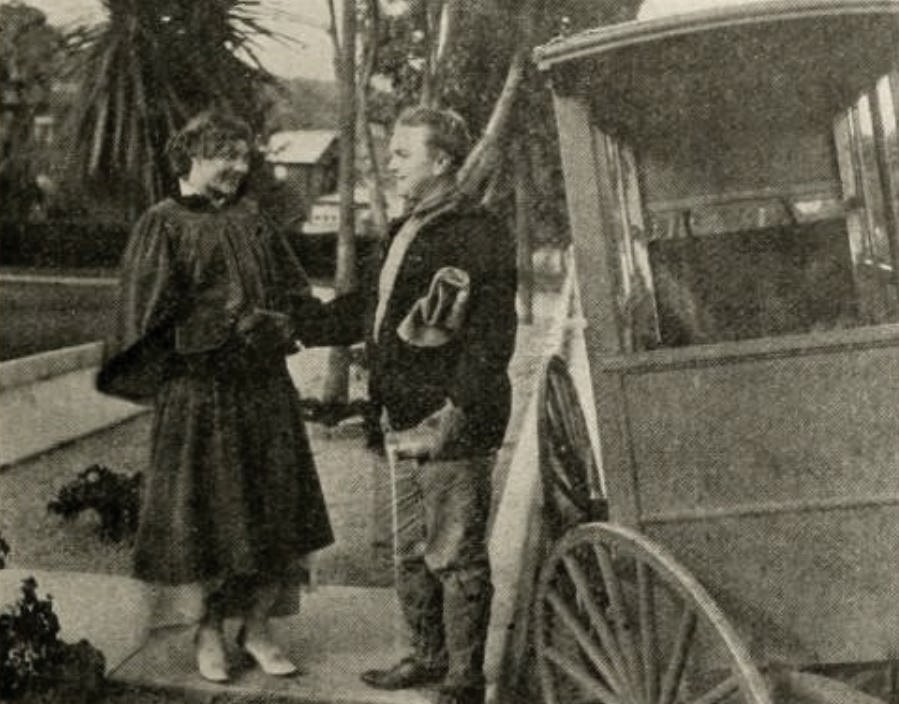
George Bronson Howard’s Snobs—released at the apogee of 1915 when Europe’s trenches were swallowing futures—slips a stiletto under the corset of Edwardian social rigidity and wiggles it with breezy relish. The film arrives like a hand-painted postcard from a world convinced that bloodlines outweigh bankbooks, only to prove that a milkman’s candidacy for nobility can upend the equation more thoroughly than any revolution.
Henry Disney’s dawn route is a liturgy of glass clinking against cobblestones, each bottle a votive to quotidian necessity. Enter Phipps—gaunt, ledger-lined, smelling of parchment and panic—who transmutes this prosaic silhouette into heraldic gold. The solicitor’s stratagem is less conspiracy than choreography: a rehearsed assault, a Samaritan rescue, a house arrest upholstered as hospitality. Yet the script’s true coup is never letting the milkman sip the poison of self-importance; his heart already leans toward Ethel Hamilton, whose ballroom laughter carries the metallic tang of freedom rather than feudal fealty.
The narrative pirouettes on the axis of mistaken identity twice inverted: first when the heir is ignorant, then when he is intoxicated by title, and finally when he chooses identity as fluid as the whiteness he once delivered. The ballroom sequence—shot in glimmering chiaroscuro by cinematographer George Webber—becomes a danse macabre of sycophants; every fan flutter hides a smirk, every toast is a covert jeer. When Ethel rebukes Disney for becoming the caricature the aristocracy expects, the line between heroine and moral lightning rod combusts in luminous silence.
Ernest Joy’s Henry Disney carries shoulders built for yokes yet eyes perpetually mid-blink in disbelief; his body remembers the weight of crates even when cloaked in velvet. Watch the micro-shift when he first caresses the ducal seal: wrists that once balanced wire milk-rings now tremble before wax insignias—an entire class neurosis distilled in metacarpal shivers.
Constance Johnson’s Ethel Hamilton refuses the era’s standard ingénue vapors; her smiles crest slowly, as though she prices the cost of each one, and her dismissal of Disney is delivered with the chill of a January windowpane. Florence Dagmar’s Laura Phipps slinks through parlors like a cat certain of cream soon to sour—every eyelash semaphore a ledger entry of social climbing.
Victor Moore, as a parasitic cousin, anticipates the flustered comic cadence that would later propel his talkie stardom; here he mines humor from the mere act of standing too close to power, a study in peripheral anxiety.
Though bound to monochrome, Snobs orchestrates chromatic suggestion through tonal gradation. Interiors of Phipps Manor swim in slate and ash, a mausoleum of respectability; Disney’s milk-cart excursions bask in overexposed whites that verge on saffron, as though dawn itself endorses his egalitarian spirit. The climactic ball is a kaleidoscope of taffeta shimmer captured in grayscale gradients; every frame could be charcoal on pearl, yet the mind supplies the bruise-purple of snobbery, the jaundice of envy.
Howard’s screenplay, adapted from his own novelette, skewers the commodification of lineage. Titles here function like debentures: traded, inflated, short-sold. When Disney finally denounces his dukedom, the act feels less romantic renunciation than market crash—an implosion of artificial scarcity. The closing negotiation—Ethel’s promise to “educate” him into nobility—slyly suggests that class is not congenital but curated, a syllabus of gestures, vowels, and wardrobe. Love becomes the classroom; the milkwagon, a mobile campus.
Aficionados will detect DNA shared with Captivating Mary Carstairs’ plucky social mobility, yet Snobs tempers melodrama with acerbic aftertaste. Conversely, the film’s fable DNA—commoner thrust into aristocratic maze—anticipates the gender-flipped Alice in Wonderland curiosities of a decade later, though Disney’s rabbit hole is paved with calling cards and cut crystal rather than psychedelia.
A 4K restoration by EYE Filmmuseum in 2022 harvested two incomplete negatives—one Dutch, one American—into a cohesive 78-minute print. The tinting scheme follows archival speculation: amber for interiors, viridian for exteriors, rose for romantic close-ups. The original Desmet color process is mimicked digitally, yielding candle-warm flesh tones that flicker against nocturnal blues. The tinting decision is courageous; purists may carp, yet the emotional legibility gained is incontrovertible.
The score—composed by Maud Nelissen and performed by the Brussels Philharmonic—leaps from jaunty xylophone when bottles clink to Wagnerian brass as Disney unfurls the ducal banner. Syncopated hesitation underscores Ethel’s rejection, milking silence until viewers squirm in empathic mortification.
Over a century later, as follower counts supplant family crests, the film’s satire feels prophetic. The milkman’s trajectory—from obscurity to brand, from brand to self-repudiation—mirrors the influencer who wakes to find their surname trending, then chafes against algorithmic servitude. Snobs warns that when worth is indexed by externals, abdication may be the only honest revolution. And in that final image—two hearts negotiating curriculum in a dawn-lit wagon—cinema whispers its oldest, most heretical assurance: authenticity is the only aristocracy that can’t be bought, only taught, pint by pint, at the doorstep of dawn.

IMDb —
1931
Community
Log in to comment.