DbcultAccessing Vault...
Cult Review
Senior Film Conservator
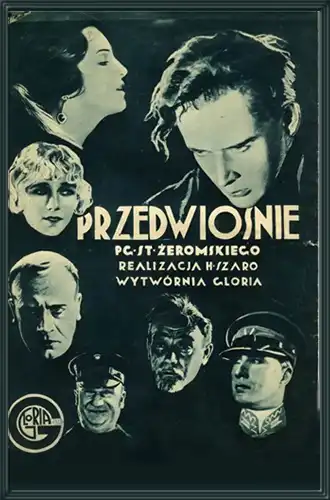
Alright, let's talk about Przedwiosnie. If you’re into sweeping historical dramas, the kind that take their time and really let the atmosphere sink in, then yeah, this one’s probably worth a watch. It’s a bit of a commitment, for sure, a journey through a very specific moment in Polish history, and it feels every bit its age in the best possible way. But if you need fast pacing, jump scares, or tidy resolutions, you might find yourself checking your watch. This is more for the thoughtful types, or anyone curious about how a nation tries to rebuild itself from raw idealism.
The first thing that hits you is just how *lived-in* everything feels. The sets, the costumes – they’re not just props. You almost smell the dust and damp earth. There's this one scene, quite early on, where Janusz Dziewonski's character, Cezary, walks through a market, and the camera just *lingers* on the faces in the crowd. They’re not just extras; they look like they’ve seen things. You feel the weight of a country trying to just, you know, exist.
And speaking of performances, Maria Gorczynska as Laura, she has this quiet intensity about her. Her eyes say so much without her even needing to speak. There’s a particular shot, framed by a window, where she’s just staring out, and the light catches her profile. It’s not dramatic, not in a loud way, but it sticks with you. Like she’s carrying a secret, or maybe just a profound weariness. 🤔
The film’s pacing is something to contend with, mind you. It's slow. Not 'art house slow' trying to be clever, but more like 'life moves at this pace' slow. Some conversations feel like they go on for *just* a beat too long, but then you realize that’s the point. It gives you time to really absorb what’s being said, or, more often, what’s *not* being said. The silence often feels louder than any dialogue.
There's a scene involving a debate, I think it's in a cramped, smoky room, where the arguments about Poland's future just clash. You can almost feel the heat from the arguments, the desperate hope mixed with deep cynicism. It's a lot of talking heads, sure, but the way the camera drifts between faces, catching reactions – a furrowed brow here, a quick, almost imperceptible nod there – makes it surprisingly engaging. Stefan Jaracz, even in a smaller role, just commands attention with a look.
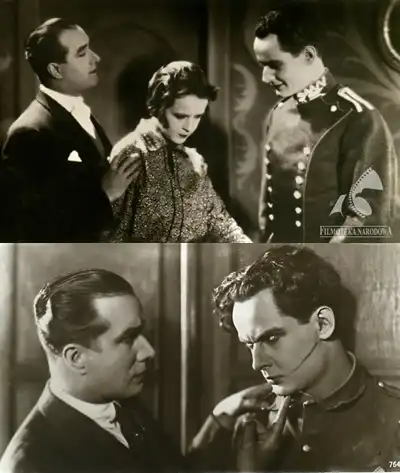
What I found really interesting was how the film uses light. Or maybe it’s just the print I saw. But there’s a persistent kind of muted grey and brown palette, almost like the world itself is still recovering from the war. Then, occasionally, you get these bursts of natural light, like when Cezary is out in the countryside. It’s a stark contrast, and you really *feel* that shift, that glimpse of something purer. 🏞️
Some of the supporting performances really anchor the whole thing. Wladyslaw Walter, for instance, as a crusty, older figure, he just *is* that character. You get the sense he's seen it all, and he's tired, but still has this spark of resilience. His quiet moments, often just a sigh or a small gesture, are more powerful than any grand speech.
I also kept noticing the way people hold their hands in this film. It sounds silly, but it’s true! Like, there’s a lot of clasped hands, or hands resting on tables, conveying anxiety or resolve. It’s a small thing, but it added to the overall sense of character. You don't often get that level of detail in modern films, do you?
The ending, without giving anything away, doesn’t tie things up neatly. It feels… earned. A bit melancholic, maybe, but true to the spirit of the story. You walk away with a lot to think about, rather than just a feeling of 'that was a good story.' It really asks you to sit with its questions.
You can tell this film comes from a powerful piece of literature. It has that weight, that ambition. It doesn't try to simplify things for the audience, and that's refreshing. It's not a movie for everyone, but if you let it, Przedwiosnie will definitely stay with you.
IMDb 5.7
1915
Community
Log in to comment.