DbcultAccessing Vault...
Cult Review
Senior Film Conservator

Stepping into the flickering glow of silent cinema, one often encounters narratives that, despite their age, resonate with an astonishing timelessness. These early cinematic efforts, devoid of spoken dialogue, relied entirely on the visual language of gesture, expression, and meticulously crafted intertitles to convey the profound depths of human experience. "The Sunbeam" (1922), an often-overlooked gem, is precisely such a film: a poignant melodrama that, much like its evocative title, seeks to illuminate the inherent goodness and enduring hope within the human spirit, even amidst the darkest of urban shadows. Directed with a delicate hand and penned by the collaborative talents of June Mathis and Shannon Fife, this film unfurls a narrative rich in moral complexities, sacrifice, and the redemptive power of compassion.
At its heart, "The Sunbeam" is a story woven around the lives of individuals tethered by circumstance, yet ultimately bound by their shared humanity. We are introduced to Prue (Mabel Taliaferro), a character whose very name suggests prudence and innocence, a big-hearted young woman navigating the harsh realities of slum life with an unyielding optimism. Her companion in this humble existence is Danny O'Maddigan (Raymond McKee), a figure striving earnestly to shed the vestiges of a checkered past. Their immediate, simple ambition – to acquire a birthday cake for Prue's 75-year-old grandmother – becomes the initial spark for a chain of events that will test their resolve and intertwine their fates with others.
Living just across the hall, a stark contrast to their own struggles, is Ellen Rutherford (Helen Alexandria), a woman adrift in the cruel currents of destitution. Her plight is particularly tragic, as she is the widow of Steven Rutherford, Jr., a man disinherited by his own father, a wealthy candy manufacturer. This familial schism, born of pride and perhaps a rigid adherence to societal expectations, casts a long shadow over Ellen and her young son, Bobby (Eddie Redway). The narrative immediately establishes a potent socio-economic divide, a common thread in many silent era dramas, highlighting the chasm between the opulent and the impoverished.
Prue, who works diligently at the very candy factory owned by the elder Mr. Rutherford (David Thompson), witnesses Ellen's quiet desperation. In a moment of profound empathy and selflessness, Prue makes a choice that defines her character: she diverts the money painstakingly saved for her grandmother's birthday cake to Ellen, ensuring that Bobby, a child caught in the crossfire of adult grievances, will not suffer. This act of pure, unadulterated compassion is the narrative's fulcrum, a radiant example of the 'sunbeam' illuminating the gloom. It is a sacrifice that echoes the profound moral dilemmas explored in films like Honor Thy Name, where personal integrity often comes at a steep cost.
However, Prue's noble gesture inadvertently sets in motion a tragic sequence of events. Danny, frustrated by the loss of the cake money and perhaps feeling the sting of his inability to provide, succumbs to a moment of weakness. He impulsively steals the precise sum needed for the cake from the factory's safe, but in his haste and emotional turmoil, he leaves the safe's door agape. This single, careless act becomes his undoing. His former gang, ever lurking in the shadows, seizes the opportunity, cleaning out the safe entirely. The consequences are swift and severe: Danny is convicted of the crime and sentenced to four years in prison. The film here delves into the harsh realities of justice and the often-unforeseen repercussions of desperate actions, a theme that resonates with the moral explorations seen in The Price of a Good Time.
While Danny languishes in incarceration, the narrative shifts its focus, demonstrating how the threads of fate remain intricately intertwined. Young Bobby, Ellen's son, is struck by a car – a vehicle, ironically, belonging to his estranged grandfather, Mr. Rutherford. The accident, though resulting in only slight injury, serves as a powerful catalyst for the elder Rutherford. Stricken with profound remorse and confronted by the very real consequences of his past actions and entrenched pride, he finally begins to see the error of his ways. This moment of epiphany, often a cornerstone of melodramatic narratives, is handled with a commendable subtlety, allowing the audience to witness Mr. Rutherford's internal struggle and eventual softening.
Mr. Rutherford's transformation is pivotal. He effects a heartfelt reconciliation with his daughter-in-law, Ellen, finally acknowledging his responsibility and the pain his disinheritance had caused. More significantly, he promises to leverage his considerable influence to bring about Danny's early release from prison. This act of benevolence, born from a moment of crisis, brings the narrative full circle, offering a glimmer of hope and the promise of redemption. It underscores the film's core message: that even in the darkest circumstances, a 'sunbeam' of compassion, forgiveness, and newfound understanding can pierce through, leading to healing and reconciliation.
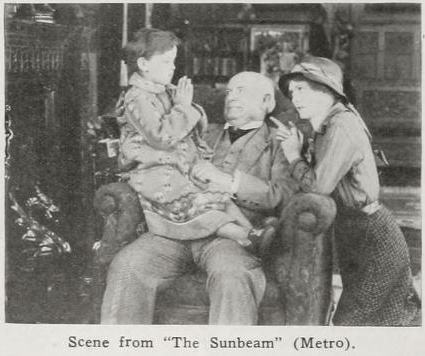
The performances in "The Sunbeam" are, as expected for the era, largely expressive and gestural, yet they convey a genuine emotional depth. Mabel Taliaferro as Prue imbues her character with an authentic warmth and an almost ethereal innocence, making her selfless act utterly believable and profoundly moving. Her eyes, often downcast in thought or sparkling with empathy, are a window into Prue's generous spirit. Raymond McKee, as Danny, portrays a man caught between good intentions and unfortunate impulses, eliciting sympathy even in his moments of error. His journey from desperation to eventual redemption is charted with a believable arc, allowing the audience to root for his eventual freedom and a chance at a better life. Helen Alexandria's portrayal of Ellen Rutherford effectively captures the quiet dignity of a woman grappling with immense hardship, while David Thompson's Mr. Rutherford undergoes a believable transformation from hardened patriarch to repentant grandfather.
June Mathis, a prolific and influential writer of the silent era, along with Shannon Fife, crafts a script that, while adhering to the melodramatic conventions of the time, avoids excessive sentimentality. The plot, though driven by a series of unfortunate events, feels organic, allowing character motivations to unfold naturally. The pacing is deliberate, allowing the emotional weight of each scene to fully register with the audience, a hallmark of well-executed silent storytelling. The narrative's strength lies in its ability to build tension through moral quandaries rather than mere physical action, compelling viewers to consider the intricate web of cause and effect.
The direction masterfully utilizes the visual grammar of silent film. Close-ups are employed judiciously to emphasize key emotional moments, drawing the audience into the characters' inner worlds. The contrast between the stark, gritty realism of the slum settings and the opulent, yet emotionally barren, world of the Rutherford mansion is visually striking, reinforcing the film's thematic exploration of class disparity. The cinematography, while perhaps not groundbreaking for its time, effectively serves the story, creating an atmosphere that is both somber and hopeful, depending on the scene's emotional tenor. One can observe a certain stylistic kinship with other contemporary social dramas, where the urban landscape itself becomes a character, dictating the struggles and small victories of its inhabitants.
Themes of sacrifice and redemption are, of course, central to "The Sunbeam." Prue's initial act of selflessness sets the moral compass for the entire film, demonstrating how a single act of kindness can ripple outwards, influencing countless lives. Danny's journey through crime and punishment, culminating in the promise of a second chance, speaks to the enduring belief in human fallibility and the potential for moral rebirth. Mr. Rutherford's transformation highlights the idea that even the most entrenched pride can be broken by genuine remorse and the pain of witnessing suffering. This delicate interplay of fate and choice, reminiscent of the intricate social tapestries woven in films like Broken Threads, elevates "The Sunbeam" beyond mere melodrama.
Furthermore, the film subtly explores the theme of intergenerational conflict and reconciliation. The rift between Mr. Rutherford and his deceased son, which continues to impact Ellen and Bobby, is a powerful undercurrent. The eventual mending of this familial divide, prompted by Bobby's accident, underscores the importance of forgiveness and understanding across generations. This aspect of the narrative offers a poignant commentary on the lasting impact of parental decisions and the possibility of healing old wounds, a sentiment that resonates with the hopeful undertones found in The Path of Happiness, where characters often navigate personal hardships towards a brighter future.
In an era dominated by lavish spectacles and star vehicles, "The Sunbeam" offers a more intimate, character-driven experience. It is a testament to the power of simple storytelling, proving that profound emotional impact can be achieved without grandiosity. The film's ability to elicit genuine empathy for its characters, even those who make questionable choices, is a testament to the nuanced writing and heartfelt performances. It reminds us that cinema, even in its nascent stages, was capable of holding a mirror to society, reflecting both its harsh realities and its enduring capacity for good.
"The Sunbeam" may not enjoy the widespread recognition of some of its silent era contemporaries, but it stands as a compelling example of early American melodrama done right. It's a film that, despite its black and white palette and lack of auditory dialogue, speaks volumes about the human condition. It champions the virtues of compassion, forgiveness, and the belief in second chances, themes that remain eternally relevant. For enthusiasts of silent film and anyone interested in the foundational narratives of cinematic storytelling, "The Sunbeam" is a viewing experience that will undoubtedly leave a lasting impression, a gentle reminder that even in the bleakest of settings, the smallest act of kindness can indeed be a brilliant sunbeam, cutting through the darkness and illuminating the path to hope and reconciliation.

IMDb —
1929
Community
Log in to comment.