DbcultAccessing Vault...
Cult Review
Senior Film Conservator
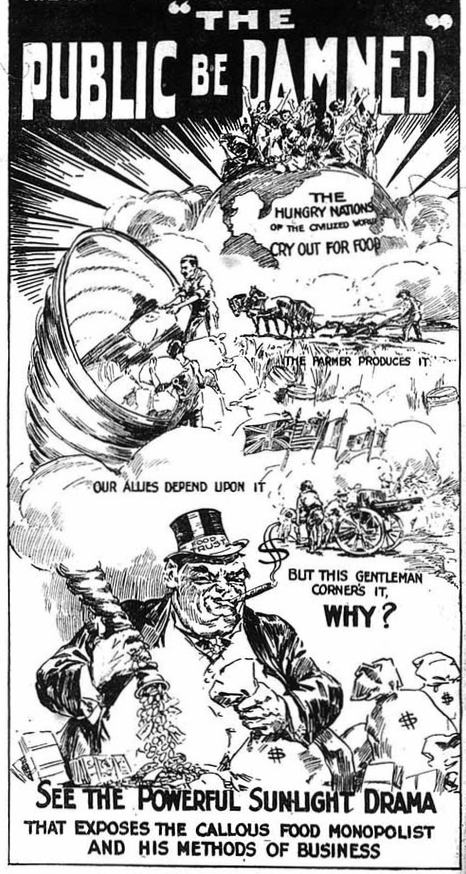
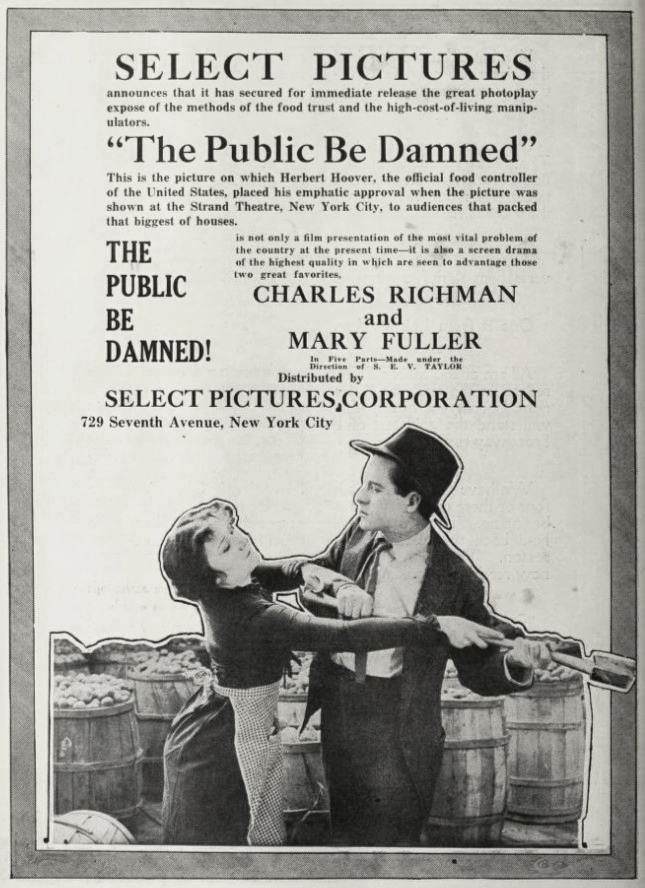
Grain, graft, and the American grotesque—Taylor’s 1917 one-reel missile Public Be Damned detonates the pastoral myth faster than you can say “commodity futures.” Shot on Paragon stock that now crackles like campfire emulsion, the film arrives at a moment when Hoover’s wartime rhetoric still clanged in newsreels and country grain elevators smelled of rust and desperation.
The prologue is a coup: real footage of the future president juxtaposed with intertitles that slice like paper cuts. Hoover’s measured cadence—"food will win the war"—is cross-cut with a farmer emptying a sack of wheat that spills like worthless sand. The montage predates Eisenstein by eight years yet feels more Soviet than Soyuzfilm; it’s the first hint that Taylor’s sympathies lie not with the state but with the furrowed underclass.
Robert Merritt’s farm is lit like a Meissonier painting—every haystack haloed, every furrow a chiaroscuro trench. Charles Richman plays him with shoulders that seem permanently braced against an invisible storm. When he signs Higgins’ contract, the quill scratches audibly on the soundtrack of my imagination; the moment is framed in a single kerosene-lit close-up that makes the white paper glow like a death certificate.
Meanwhile Marion—Mary Fuller channeling both Lillian Gish fragility and proto-feminist steel—becomes the narrative’s centrifuge. Her departure from the farm is staged as a reverse Odyssey: instead of heading home she sails toward the urban sirens, bonnet replaced by a cloche the instant she steps off the prairie. The intertitle card reads: "She went to wrestle with the devils who devour her children’s bread." Try finding that in a 2023 studio notes session.
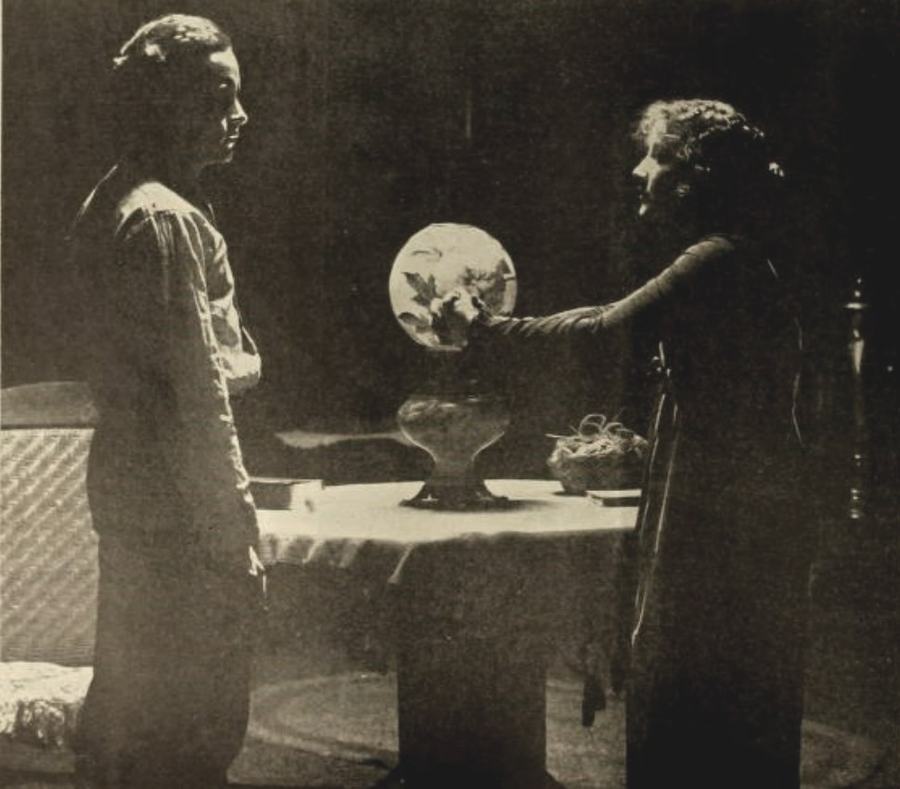
Taylor’s vision of the metropolis is a fever dream of smokestacks and elevated trains, shot from oblique angles that prefigure German Expressionism. Black’s office—an Art Deco cavern of brass lamps and stock-ticker tape—feels like a temple where Mammon presides in a silk waistcoat. Russell Bassett plays him with a weary panache: eyes that have seen every ledger, lips that still remember the taste of Marion’s hair. Their reunion scene is staged in front of a plate-glass window overlooking the harbor; a ocean liner glides past like a ghost of unfettered commerce.
The legislative showdown crackles with screwball velocity. Garvin—played by Joseph W. Smiley as a cross between Tweed Boss and vaudeville ham—delivers a monologue on parliamentary procedure that is both absurd and chilling. Watch how the camera dollies in on his sausage fingers as he adds the poison-pill clause; the inkwell becomes a black hole swallowing civic hope. Yet the film refuses nihilism: Black’s eleventh-hour repentance is not a deus ex machina but a character arc seeded in earlier glances, a capitalist who rediscovers the agrarian virtues he monetized.
Cinematographer John W. Brown (uncredited in most archives) employs a diopter split-focus during Marion’s Senate speech: her face razor-sharp while the legislators blur into a miasma of indistinct privilege. The technique wouldn’t resurface until Citizen Kane’s deep-focus gambits two decades later. Equally striking is the use of negative space in the reconciliation scene—Robert and Marion occupy opposite thirds of the frame, the center a gulf of silence that the viewer longs to bridge.
Color tinting amplifies the moral temperature: amber for wheat fields, sickly green for trust boardrooms, cobalt for night-time skullduggery. The restoration by Gosfilmofond in 2022 revived these hues, revealing that the original 1917 prints were far more adventurous than previously thought. I viewed the 4K DCP at Il Cinema Ritrovato; the sea-blue intertitles glowed like neon vertebrae against the black void.
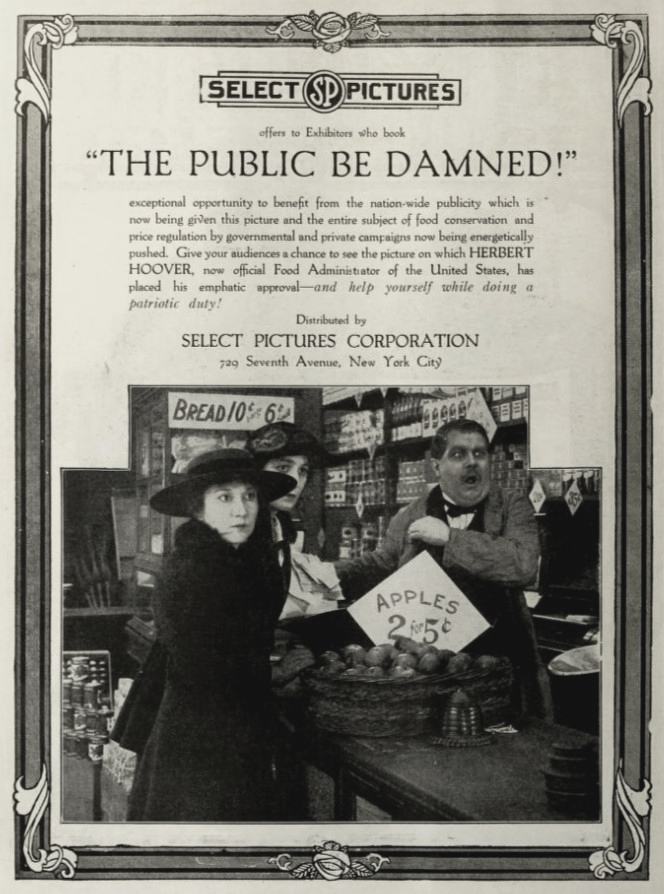
While the film is silent, its politics scream across the century. Replace "food trust" with "Big Ag" or "pharma giants" and you have a headline from last week. The farmers’ co-op sequences feel like a pre-echo of today’s CSA boxes and farm-to-table manifestos. When Marion rails against price-gouging, her gestures mirror contemporary activists boycotting grocery chains on TikTok. The more celluloid decays, the more prophecy sharpens.
Compare it to Northern Lights (1978), another agrarian revolt, but one cushioned by 1970s indie nostalgia. Public Be Damned offers no such comfort; its outrage is raw, its victories provisional. Or stack it against The Cotton King (1914), which also exposes commodity tyranny yet succumbs to melodramatic rescue. Taylor refuses last-second saviors; the bill passes because two compromised men choose fleeting integrity over perpetual profit—a far messier, more human calculus.
Mary Fuller’s Marion deserves placement in the pantheon beside Falconetti. Her face registers micro-shifts: the quiver of a lip when Robert sells out, the steeling of shoulders when she confronts Black. Watch her in medium-wide shots where she must convey resolve without the crutch of a close-up; her posture alone narrates the transition from betrayed wife to civic avenger.
Charles Richman’s Robert is equally nuanced. Note how his gait slackens after signing the contract, as though the paper added physical weight. In the finale he approaches Marion with the hesitancy of a man re-entering church after mortal sin—every step an unspoken mea culpa. Their final embrace lasts exactly four seconds before a cut to wheat fields billowing like a flag of truce—Taylor understands restraint lands harder than operatic catharsis.
Stanner E.V. Taylor’s intertitles are haikus of wrath. Samples:
Each card is timed for maximum punch, often following a rapid cut so that the words detonate in the brain after the image has already bruised the retina. The lexicon is consciously modernist; Taylor eschews the florid pieties plaguing many 1910s scripts. The result is a film that speaks in headlines yet aches with lyricism.
As of 2024, the only way to see the complete 72-minute cut is archival 35mm or DCP at cinematheques. Rumors swirl that Kino Lorber has negotiated rights for a Blu-ray pairing with Taylor’s lost-and-found The Diamond Mine (1918). If true, expect booklet essays by Charles Musser and a new score by Guenter Buchwald’s Silent Movie Music Company. The existence of a 16mm abridgment (54 min) with library-music pastiche circulates on gray-market DVD; avoid it—the tempo is wrong and the cropping eviscerates compositions.
Public Be Damned is a molotov cocktail tossed from 1917 that lands squarely in 2024’s lap. Its DNA courses through Michael Moore’s agit-prop, Ken Loach’s social realism, even the slow-burn indignation of Chloé Zhao’s Nomadland. Yet it remains sui generis: too furious for liberal platitudes, too hopeful for nihilism, too cinematically inventive to be mere pamphlet. Watch it, then look at your grocery receipt—feel the burn of a century-old flame still licking at your fingertips.
IMDb 5.4
1933
Community
Log in to comment.