DbcultAccessing Vault...
Cult Review
Senior Film Conservator
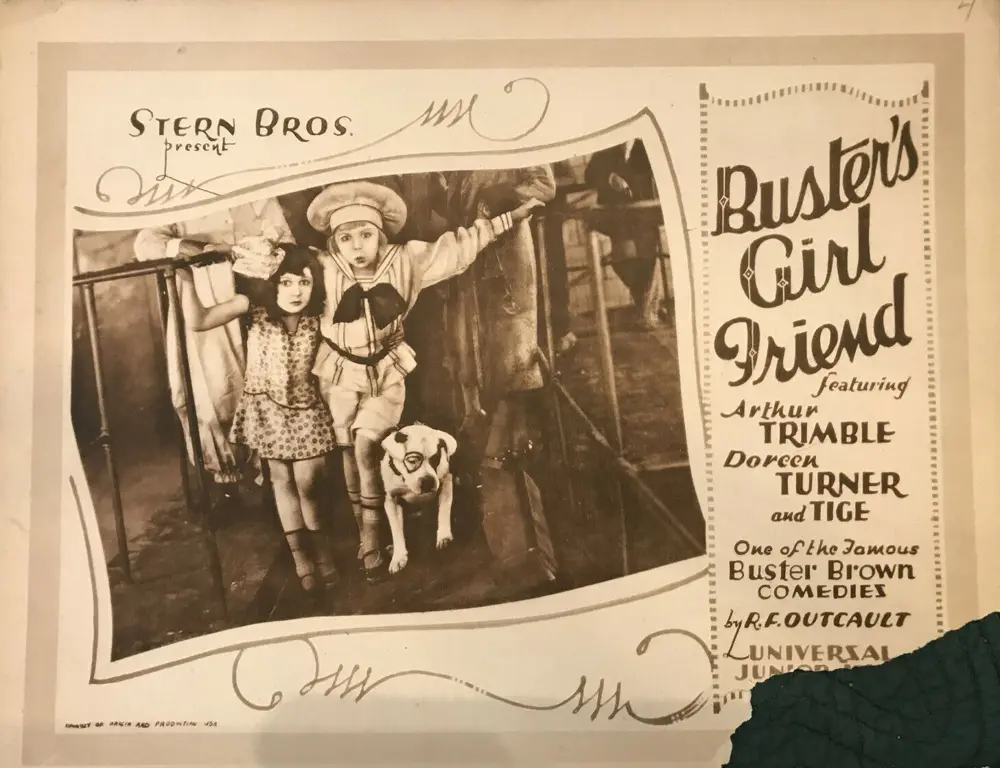
Is Buster's Girl Friend a hidden gem of the silent era that deserves a modern revival? Short answer: No, it is a fascinating historical curiosity rather than a comedic essential.
This film is primarily for silent film completionists and those interested in the evolution of the 'Buster Brown' comic strip into live-action media. It is definitely not for viewers who require the sophisticated narrative arcs of The Third Degree or the emotional weight found in The Song of the Soul.
To understand if this film is worth your twenty minutes, you have to appreciate it as a fragment of a bygone era of marketing and simple slapstick. It doesn't strive for art; it strives for a quick laugh and a bit of brand reinforcement for the Richard F. Outcault characters.
1) This film works because of the incredible training of Pal the Wonder Dog, who consistently outshines his human co-stars.
2) This film fails because the central conflict is resolved through a jarringly casual depiction of theft and gambling that feels out of place in a children’s short.
3) You should watch it if you want to see a raw, unvarnished look at 1920s amusement park culture.
The film opens with a 'show within a show,' a trope that allows for a meta-commentary on performance itself. Buster, played by Arthur Trimble, is earnest to a fault. However, the real energy comes from the disruption. When Albert Schaefer’s character—the 'fat boy'—starts hurling vegetables, the film shifts from a static play to a kinetic, if predictable, slapstick routine.
It’s a brutal form of comedy. Unlike the more nuanced physical humor seen in Never Say Die, the gags here are blunt. A tomato to the face is just a tomato to the face. There is no subtext. Yet, there is a charm in the DIY nature of the set, reflecting the actual backyard plays of the 1920s.
The pacing in this opening sequence is frantic. Directorially, the shots are mostly wide to capture the full scope of the vegetable-throwing chaos. It lacks the intimate close-ups that would later define the genre, but it captures a specific brand of childhood anarchy that was popular at the time.
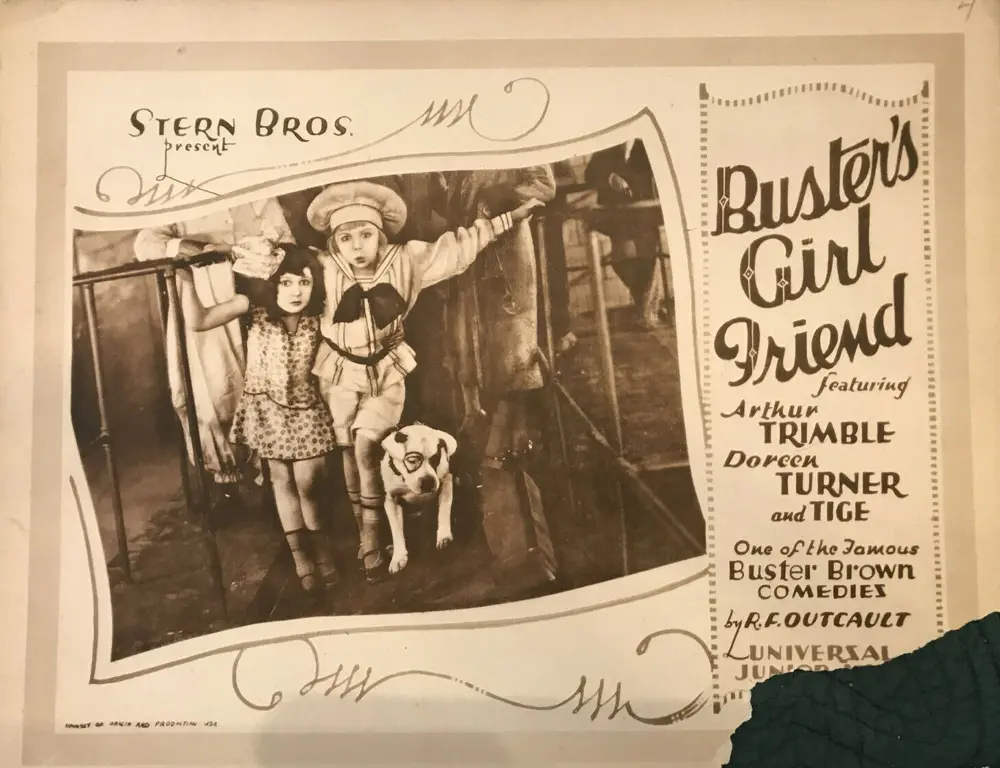
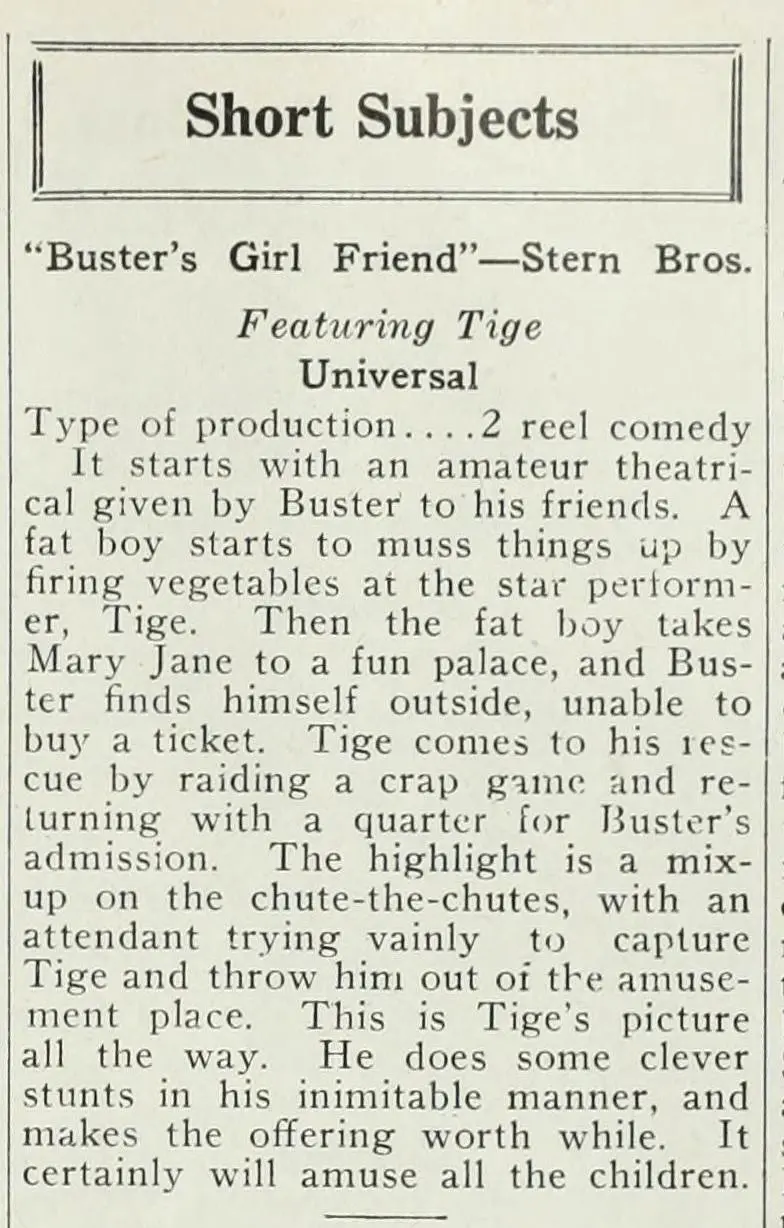
Let’s be honest: the humans are secondary. Pal the Wonder Dog, playing Tige, is the narrative engine of the film. While Buster is moping outside the Fun Palace, Tige is the one taking action. The scene where Tige raids a crap game is one of the most bizarre and memorable moments in 1920s short cinema.
It is a surprisingly gritty moment for a film based on a comic strip. Watching a dog disrupt a group of men gambling in an alleyway to steal a quarter is a level of 'street' humor you wouldn't expect. It works. But it’s flawed. The moral compass of the film is essentially: theft is fine as long as it gets you into the amusement park.
Compared to other animal-centric films of the period, like My Pal, the dog’s agency here is used for comedic mischief rather than sentimental heroism. Tige isn't saving a life; he's funding a date. This cynical edge gives the film a personality that sets it apart from the more saccharine 'Our Gang' shorts of the same era.
Once Buster gains admission, the film becomes a travelogue of 1920s leisure. The 'Fun Palace' is a treasure trove for historians. We see the mechanical slides, the rotating barrels, and the general lack of safety standards that defined the era's entertainment. It’s a stark contrast to the domestic drama of Castles for Two.
The cinematography here is utilitarian. The camera follows the characters through the various contraptions with little flair. However, the authenticity of the location provides a texture that a studio set could never replicate. You can almost smell the popcorn and the machine oil.
The rivalry between Buster and the 'fat boy' reaches its climax among these moving parts. It’s a physical confrontation that utilizes the environment well. The use of the rotating barrel to disorient the antagonist is a classic bit of slapstick geometry that still manages to elicit a small smile today.
If you are looking for a masterpiece of silent cinema, look elsewhere. This is a disposable piece of entertainment from a time when film was still figuring out its relationship with other media like comics. However, as a twenty-minute time capsule, it is fascinating.
The film succeeds in capturing the competitive nature of childhood. It fails in its repetitive gag structure. If you’ve seen one vegetable thrown, you’ve seen them all. Yet, the presence of Tige keeps the momentum going when the child actors start to falter.
Compared to the high-stakes drama of The Woman God Sent, this is light fare. But light fare has its place. It’s a reminder that even in 1926, audiences just wanted to see a bully get his comeuppance and a clever dog save the day.
The direction is largely anonymous. The film relies on the established popularity of the Buster Brown characters rather than any innovative filmmaking. The pacing is uneven; the opening theatrical scene drags on for too long, while the final resolution in the Fun Palace feels rushed.
However, the lighting in the outdoor scenes is surprisingly crisp for a low-budget short. The natural light of the amusement park provides a clarity that many indoor dramas of the time, such as Slaves of Pride, lacked. It gives the film a breezy, outdoor energy that fits the subject matter.
One surprising observation is the lack of intertitles. The film relies almost entirely on visual storytelling. This is a testament to the clarity of the slapstick, even if the 'story' being told is incredibly basic. It’s a pure form of cinema, unburdened by the need for complex dialogue.
Buster's Girl Friend is a B-tier silent comedy that is elevated by its canine star and its historical setting. It is not essential viewing, but it provides a charming, if slightly cynical, look at 1920s childhood. If you have twenty minutes to spare and an interest in how comic strips were adapted for the screen, it’s worth a look. Just don’t expect the brilliance of Keaton or Chaplin. It’s a minor work, but in the vast ocean of silent cinema, even the minor works have a story to tell.
IMDb 6.3
1935
Community
Log in to comment.