DbcultAccessing Vault...
Cult Review
Senior Film Conservator
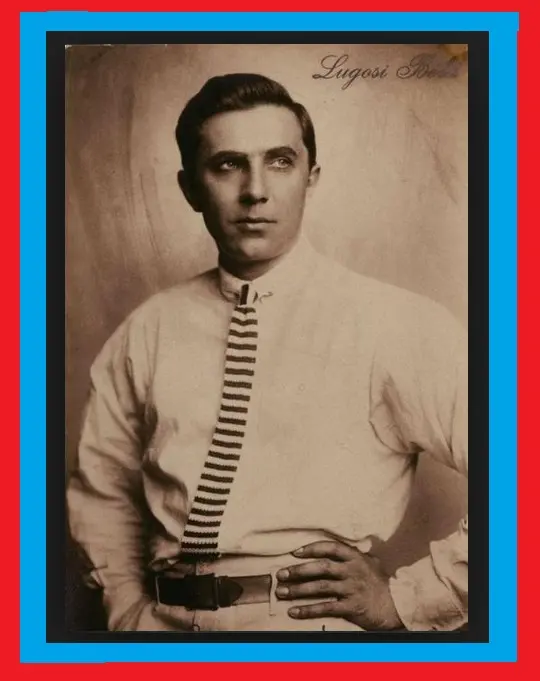
Is this film worth watching today? Short answer: yes, but primarily as a historical artifact rather than a narrative powerhouse.
Punchinello is for the cinematic archaeologist and the Bela Lugosi obsessive who wants to see the skeletal remains of a legend’s early craft. It is decidedly not for the casual viewer who requires a fast-paced plot or high-definition spectacle to remain engaged.
Long before the cape and the heavy accent defined his career, Bela Lugosi was a master of the body. In Punchinello, he plays Harlequin not as a whimsical jester, but as a calculated predator.
His movements are sharp, almost jagged. While Duncan Renaldo’s Punchinello moves with a softer, more rounded physicality, Lugosi cuts through the frame like a knife.
Consider the scene where Harlequin first confronts the young woman. Lugosi doesn't just walk; he looms. Even in a silent medium, his eyes convey a level of intent that makes the rivalry feel genuinely dangerous.
It is a performance that reminds one of the theatrical weight seen in The Star of Bethlehem, yet Lugosi adds a layer of secular, almost erotic tension that was rare for the time.
The film relies heavily on this contrast. If Lugosi were not in the frame, the movie might have faded into the background of silent history like so many other forgotten shorts.
The direction in Punchinello is functional, yet it lacks the experimental flair of the avant-garde movement blooming in Europe at the same time. The camera is often static, acting as a front-row seat to a stage play.
However, there is an intentionality to the blocking. The way the characters are positioned in the garden scenes creates a sense of depth that was often missing in lower-budget shorts like A One Cylinder Love Riot.
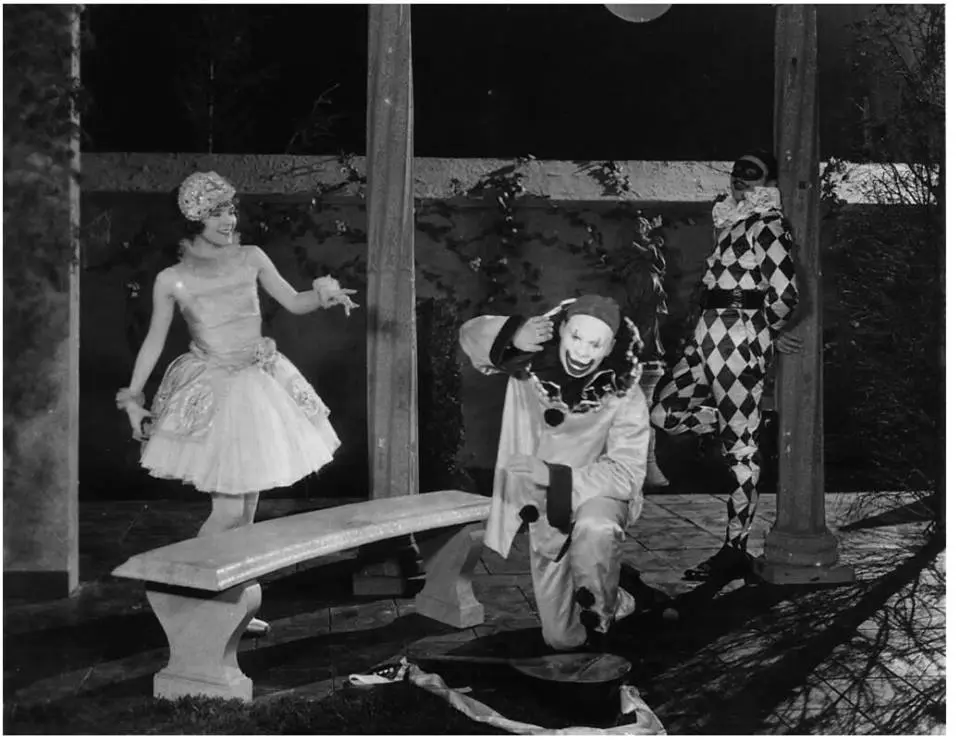
The pacing is deliberate. It doesn't rush to the punchline. Instead, it allows the tension between the two rivals to simmer, which is a bold choice for a film of this length.
One might compare the tonal shifts here to The Mystery of No. 47, where the atmosphere does more heavy lifting than the actual script.
Yet, the simplicity is also its weakness. There are moments where the film feels stagnant, waiting for the actors to find their next mark rather than flowing naturally from one beat to the next.
To answer the question of modern relevance: Punchinello is worth watching if you want to understand the DNA of early 20th-century performance art. It is a bridge between the 19th-century stage and the 20th-century screen.
If you go in expecting the narrative complexity of The House of Toys, you will be disappointed. This is a film of gestures, not subtext.
For the modern viewer, the enjoyment comes from the 'detective work'—spotting the mannerisms that Lugosi would later refine for his more famous roles. It is a primitive form of cinema, but primitive doesn't mean without value.
It works. But it’s flawed. It is a skeleton of a movie, held together by the charisma of a man who didn't yet know he would become an icon.
Pros:
Cons:
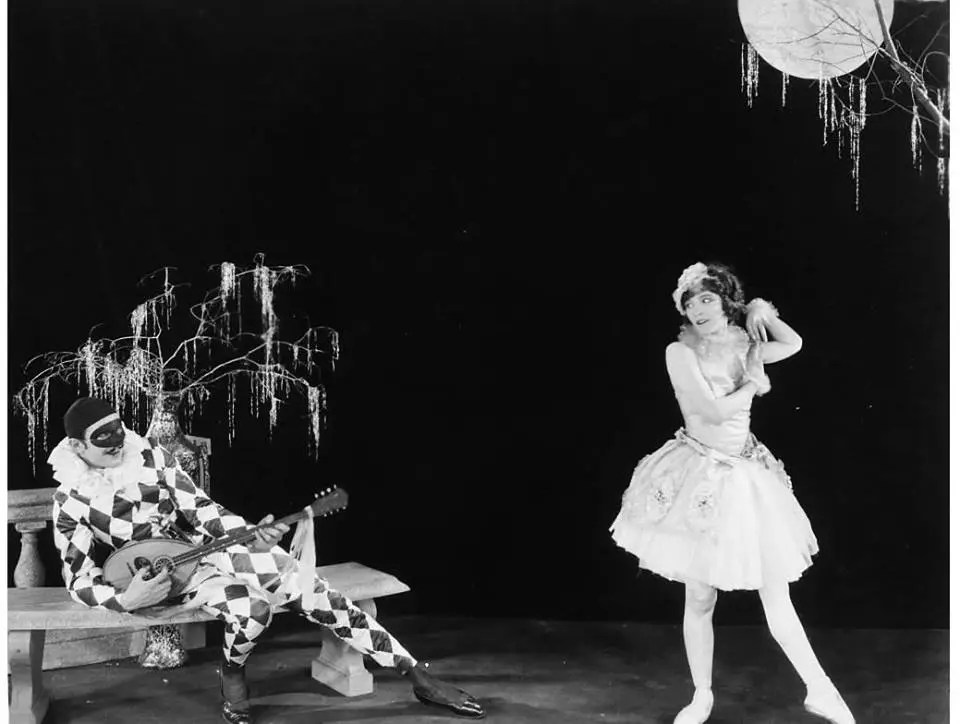
When we look at other films of the era, such as The Lamb and the Lion, we see a recurring theme of the 'strong vs the weak' or the 'cunning vs the innocent.' Punchinello fits perfectly into this mold.
The rivalry between Harlequin and Punchinello is more than just a fight over a girl; it’s a fight for dominance over the screen. Lugosi wins this fight easily. His screen presence is so large that it almost feels like the camera is struggling to keep him contained.
In contrast, films like Frou Frou or My Girl Suzanne focused more on the domestic or the whimsical. Punchinello has a darker edge, a byproduct of the Commedia dell'arte's often violent history.
This darkness is what makes it interesting. It isn't just a silly romp. There is a sense of genuine stakes, even if the stakes are just a kiss in a garden.
The pacing of Punchinello is its most 'human' element. It breathes. It doesn't have the frantic, mechanical speed of Shoe Palace Pinkus.
Instead, it allows for moments of stillness. These still moments are where Lugosi shines. He uses the silence to build a character that is both charming and repulsive. It is a masterclass in tone control.
The cinematography, while limited, does make good use of lighting in the exterior shots. The shadows in the garden foreshadow the gothic shadows Lugosi would later inhabit in his career.
We see similar attempts at atmospheric storytelling in In the Night or The Border Legion, but Punchinello feels more intimate because of its small cast and focused setting.
Punchinello is a fascinating, if slight, piece of cinema history. It isn't a masterpiece, and it doesn't try to be. It is a performance piece designed to showcase the physical talents of its stars.
Bela Lugosi is the clear winner here. His Harlequin is a prototype for the magnetism he would bring to the screen for decades to come. While the film lacks the narrative depth of The Miracle of Life or the high-stakes drama of Captain Swift, it remains a vital watch for those who want to see how a star is born in the silence.
Final thought: It is a curiosity that rewards the patient. It is a dance of shadows that still has the power to intrigue, nearly a century later.

IMDb 5.3
1926
Community
Log in to comment.