DbcultAccessing Vault...
Cult Review
Senior Film Conservator
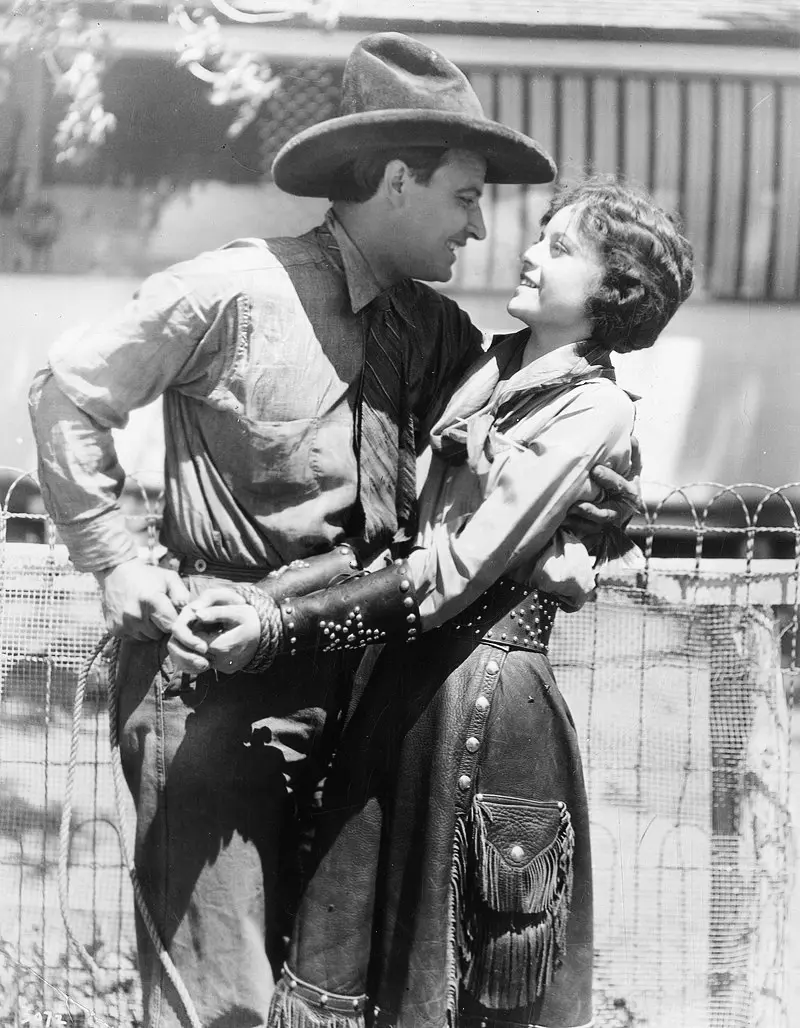
The 1920s represented a fascinating intersection in the American zeitgeist, a period where the lingering Victorian moralism of the previous century collided head-on with the burgeoning cynicism of the Jazz Age. Within this cultural friction, When a Man's a Man (1924) stands as a towering, if often overlooked, monument to the redemptive power of the frontier. Directed by Edward F. Cline—a man more frequently associated with the slapstick precision of Buster Keaton—this adaptation of Harold Bell Wright’s novel pivots away from the comedic to deliver a somber, visually arresting meditation on character and the geographic cure.
At the heart of this narrative is Lawrence Knight, portrayed with a nuanced trajectory by Robert Frazer. When we first encounter Knight, he is the embodiment of the 'lounge lizard'—a term of derision that, in the parlance of the era, suggested a man of leisure whose only labor was the maintenance of his social standing. His rejection by Helen Wakefield (Marguerite De La Motte) serves as the primary inciting incident, but more importantly, it functions as a philosophical critique of the modern urban male. Unlike the protagonists in The Career of Katherine Bush, who navigate social hierarchies through wit and charm, Knight is forced to abandon his hierarchy entirely.
His migration to the West is not a mere vacation; it is a spiritual stripping. By adopting the moniker 'Patches,' Knight engages in a form of class-erasure that was a recurring motif in silent-era Westerns. The rugged terrain of Arizona, captured with a stark, unembellished clarity, acts as a secondary character. The cinematography avoids the postcard romanticism often found in later Westerns, opting instead for a gritty realism that emphasizes the physical toll of the range. This transformation is far more grueling than the shifts seen in Her First Kiss, where social mobility is often a matter of serendipity.
The middle act of the film is a masterclass in building tension through labor. We see Knight struggling with the mechanics of the lasso and the brutality of the brand. This isn't the sanitized West; it is a place of sweat and danger. The subplot involving cattle rustlers and the false accusation of shooting a fellow cowpuncher adds a layer of melodrama that was essential for the commercial sensibilities of 1924, yet it serves a deeper thematic purpose. It forces Knight to defend his honor not through legalistic maneuvering, but through action. In many ways, this mirrors the grit found in The Bargain, though with a more explicitly moralistic bent characteristic of Harold Bell Wright’s authorship.
The supporting cast provides a rich tapestry of frontier archetypes. John Bowers and June Marlowe deliver performances that anchor the film in the domestic realities of ranch life. Their presence highlights the contrast between Knight’s former superficial world and this new, grounded existence. While films like The Little Fool deal with the intricacies of domestic misunderstanding, When a Man's a Man elevates these stakes to a matter of life, death, and reputation.
The climactic sequence—the encounter in the pasture—is a triumph of silent film editing. The arrival of Helen Wakefield into the rugged world she once challenged Knight to conquer creates a potent irony. She is no longer the arbiter of his worth; he has already proven it to himself and his peers. The attack by the ferocious bull is not just a moment of physical peril; it is the ultimate test of Knight's 'manly traits.' When he lassos the beast, saving her life, it is a visceral demonstration of his mastery over both nature and his former self.
However, the screenplay by Harry Carr and Walter Anthony takes a remarkably mature turn. In a lesser film, perhaps something akin to the lighter resolutions of Her Five-Foot Highness, the two would reunite and ride into the sunset. Instead, we learn that Helen has married. Her husband, a surveyor, represents the encroaching civilization that will eventually tame the very West that Knight has just mastered. This revelation is handled with a stoic restraint that is genuinely moving. Knight’s decision to 'set his jaw' and depart for another section of the country is the final proof of his transformation. He no longer needs Helen's validation; he has internalized the values she once accused him of lacking.
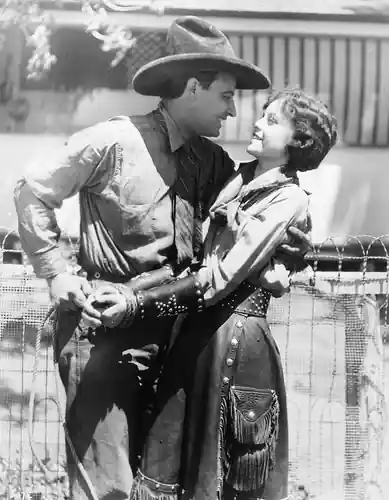
When comparing this work to contemporary features like The Alaskan, one notices a distinct difference in the treatment of the environment. While The Alaskan leans into the exoticism of the North, When a Man's a Man treats the Arizona desert as a moral purgatory. It shares a certain thematic DNA with Nan of Music Mountain, particularly in its depiction of the rugged individualist caught between personal desire and communal duty.
The technical aspects of the film deserve commendation. The lighting, particularly in the outdoor sequences, utilizes the natural harshness of the sun to create deep shadows and high-contrast frames that mirror the internal conflict of 'Patches.' This visual language is far more sophisticated than the theatrical staging of A Gentleman from Mississippi. Furthermore, the pacing, while deliberate, avoids the sluggishness often found in moralizing dramas like The Whistle. Cline ensures that every frame contributes to the inevitable collision of Knight’s past and present.
In the broader context of 1920s cinema, this film serves as a vital document of how the American male was being redefined. Following the trauma of World War I, there was a palpable anxiety about the 'softness' of modern life. When a Man's a Man addresses this anxiety by suggesting that manliness is not an inherent trait of birth or wealth, but a set of virtues—courage, labor, and self-sacrifice—that must be earned. It lacks the cynicism of Devil McCare or the whimsicality of In Bad, opting instead for a sincere, almost devotional approach to its subject matter.
Even when compared to the more socially conscious The Halfbreed, Cline’s film holds its own by focusing intensely on the individual’s psychological landscape. The film’s refusal to provide a tidy romantic ending is its greatest strength. It acknowledges that while a man can change his nature, he cannot always change his circumstances. The final shot of Knight riding away into the vast expanse is an iconic image of the American loner—a figure who finds peace not in the arms of a woman, but in the knowledge of his own resilience.
For the modern viewer, When a Man's a Man offers a window into a world where silence was not a limitation, but a canvas for profound emotional expression. The lack of dialogue forces the audience to focus on the physicality of the performances—the way Robert Frazer’s posture shifts from a slouch to a rigid, confident stance, or the way Marguerite De La Motte’s eyes convey a mixture of regret and admiration in the final act. It is a film that demands patience and rewards it with a deep sense of catharsis.
While it may not have the avant-garde flourishes of Blind Man's Holiday or the surrealist undertones of Robinson Crusoe Hours, it possesses a structural integrity that is rare. It is a story told with conviction, directed with a steady hand, and acted with a sincerity that transcends the decades. It remains a definitive example of the 'transformation Western,' a subgenre that continues to influence filmmakers today. In the end, the film suggests that the most difficult frontier to conquer is not the wild land, but the wilder impulses of the human heart. It is a journey of self-discovery that feels as relevant now as it did in the dust-choked theaters of 1924.
For those who appreciate the intersection of character study and rugged adventure, this film is an essential watch. It stands alongside Golden Dreams as a testament to the enduring power of the American mythos. In the silence of the desert, Lawrence Knight found his voice; in the silence of the film, we find a timeless story of what it truly means to be a man.
IMDb —
1931
Community
Log in to comment.