DbcultAccessing Vault...
6.6/10
Senior Film Conservator
A definitive 6.6/10 rating for a film that redefined the boundaries of cult cinema. Spirals remains a cornerstone of transgressive art.
So, is Oskar Fischinger's 'Spirals' worth watching today? Short answer: yes, but with a significant caveat. This isn't a film for everyone, nor is it designed to be. It is a potent, almost essential piece of cinematic history for those interested in the avant-garde, abstract art, or the foundational language of film itself. For others, it might prove to be a test of patience, a curiosity more than an entertainment.
This film works because it is a masterclass in visual rhythm and the sheer power of pure form. It fails, for some, because it demands an engagement beyond typical narrative expectations, offering no characters, no plot, and no overt emotional cues. You should watch it if you appreciate experimental art, the history of animation, or simply want to experience a truly unique form of cinematic hypnosis. Conversely, you should probably skip it if you prefer traditional storytelling, character development, or high-octane action.
Oskar Fischinger stands as a titan in the realm of abstract animation, a pioneer whose work often feels both timeless and startlingly modern. 'Spirals' is a definitive testament to his unique artistic philosophy: that film could be a medium for pure visual music, divorced from representation or narrative. Made in 35mm, the very materiality of the film stock contributes to its raw, visceral quality, a far cry from the pristine, often sterile digital abstractions we see today.
Fischinger wasn't just animating shapes; he was orchestrating motion, rhythm, and the profound psychological impact of geometric progression. His meticulous hand-crafting of each frame imbues 'Spirals' with an organic quality, a human touch that belies its mechanical precision. It’s a film that demands to be seen on a large screen, not merely glimpsed on a phone, to fully appreciate its immersive power.
The film's context is crucial. Emerging during a period when cinema was still defining its language, Fischinger pushed against the prevailing tide of narrative storytelling. While films like A Doll's House were exploring dramatic realism and The Last Laugh was perfecting visual storytelling, Fischinger was carving out an entirely different path, demonstrating cinema's capacity for pure abstraction, akin to non-objective painting or atonal music.
The visual language of 'Spirals' is deceptively simple: black and white. Yet, within this binary, Fischinger conjures an astonishing spectrum of visual complexity. The contrast isn't just a stylistic choice; it's the very engine of the film's dynamism. Sharp lines delineate forms, while gradients of grey (even if fleetingly perceived in 35mm) create depth and volume, transforming flat shapes into seemingly three-dimensional structures.
Consider, for instance, the opening moments where simple lines begin to undulate, gradually forming rudimentary arcs. These arcs don't just appear; they grow, shift, and combine with an almost biological imperative. This gradual accretion of complexity, from elemental lines to intricate patterns, is a hallmark of Fischinger's genius. He understands that the eye craves progression, even in the absence of a story.
The spirals themselves are not static motifs but living entities. They expand from a central point, drawing the viewer deeper into their vortex, only to then contract, dissolve, or morph into entirely new configurations. One particularly striking sequence involves a tight black spiral against a white background that suddenly inverts, becoming a white spiral on black, creating a jarring yet exhilarating perceptual flip. This isn't just clever animation; it's a profound manipulation of visual perception.
The pacing of 'Spirals' is relentless, a continuous flow that eschews traditional cinematic cuts for fluid, organic transitions. There's no narrative beat to follow, no dramatic crescendos or quiet lulls in the conventional sense. Instead, the rhythm is established by the speed of the geometric transformations, the rate at which patterns evolve and dissolve.
This unwavering tempo is what gives the film its hypnotic quality. Your eyes are constantly working to follow the evolving forms, to anticipate the next shift. It's an active viewing experience, demanding full immersion. Unlike a narrative film that allows for moments of passive observation, 'Spirals' requires constant visual engagement, almost like trying to track a complex mathematical equation unfolding in real-time.
I would argue that the film’s greatest strength lies precisely in this hypnotic quality. It bypasses intellectual analysis and goes straight for a primal, almost trance-like state. It's a sensation rarely achieved by traditional cinema, which often relies on emotional manipulation or intellectual stimulation. 'Spirals' offers something more akin to meditation or a drug-induced visual trip, a pure sensory experience.
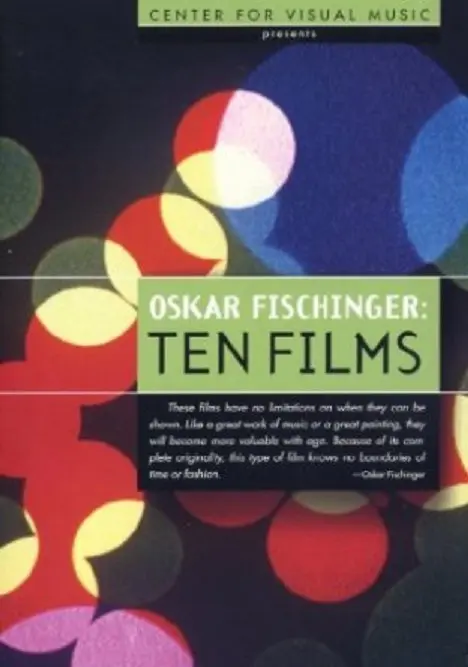
While 'Spirals' lacks a conventional emotional arc, it is far from devoid of feeling. The tone is one of precise, almost austere elegance. There's a sense of order, of mathematical beauty, that evokes a quiet awe. The ceaseless motion, however, also carries an underlying energy, a palpable sense of kinetic force that can be exhilarating.
For some, the experience might be one of profound calm, a surrender to the visual flow. For others, particularly those unaccustomed to abstract art, it could be frustrating or even unsettling. The lack of familiar reference points can be disorienting. This is where the film's niche appeal becomes evident; it requires a certain openness, a willingness to let go of narrative expectations and simply *experience* the visuals.
My unconventional observation about 'Spirals' is that it feels remarkably similar to listening to certain forms of minimalist music. Just as a piece by Philip Glass or Steve Reich builds complex structures from simple, repeating motifs, Fischinger builds an entire visual world from fundamental geometric shapes. The emotional resonance comes not from a story, but from the elegant unfolding of structure over time.
Absolutely, for the right audience. 'Spirals' is a foundational text in abstract animation and a powerful demonstration of cinema's potential beyond storytelling. It offers a unique, immersive visual experience that challenges conventional notions of film. It is a work of pure artistry. It demands engagement. It resonates with a specific kind of viewer.
The biggest challenge 'Spirals' faces in captivating a contemporary audience is its inherent abstraction. In an era dominated by hyper-narrative, character-driven content, a film that offers only shapes and movement can feel alienating. It doesn't offer easy answers or relatable situations, nor does it provide the escapism often sought in cinema.
Yet, its very difficulty is part of its enduring relevance. It forces viewers to engage with film on a fundamental level: as light, as motion, as rhythm. It's a reminder that cinema isn't just about what's *in* the frame, but how the frame itself is constructed and perceived. Its influence can be seen in everything from experimental music videos to advanced computer graphics, demonstrating how Fischinger's pioneering work laid groundwork for future visual explorations.
When we consider other films of the era, such as Pirates of the Sky or Why Hurry?, the stark contrast in purpose becomes clear. These films aimed to entertain with plot and character. 'Spirals' aimed to redefine the very act of seeing. This deliberate choice, to diverge so radically from popular cinema, is what makes Fischinger's work so vital for understanding the breadth of cinematic expression.
Pros:
- Pioneering work in abstract animation, offering invaluable historical insight.
- Mesmerizing and truly hypnotic visual experience.
- Showcases the raw power of pure form, motion, and contrast.
- Challenges conventional cinematic expectations, expanding the definition of film.
- A testament to the meticulous artistry of Oskar Fischinger.
Cons:
- Lack of narrative or characters can be off-putting for many viewers.
- Demands active engagement that some may find exhausting.
- Not an 'entertaining' film in the traditional sense, more an artistic exercise.
- Can feel repetitive if not viewed with an appreciation for subtle variation.
- Its short duration might leave some feeling unfulfilled if expecting a 'full' film experience.
Oskar Fischinger's 'Spirals' is not merely a film; it is a foundational experiment, a visual manifesto. It works. But it’s flawed, at least for a mass audience. Its brilliance lies in its uncompromising dedication to pure abstraction, its ability to craft a deeply engaging experience from the most basic elements of light, shadow, and movement. While it won't appeal to everyone, its historical significance and artistic integrity are undeniable.
For those willing to shed their preconceptions about what a 'movie' should be, 'Spirals' offers a rare and potent glimpse into the soul of cinematic art. It’s a film that doesn't just show you images; it invites you to feel them, to surrender to their rhythm, and to appreciate the profound beauty that can emerge from simple forms in motion. It's a challenging watch, yes, but one that rewards patience with a unique, almost transcendental, visual journey. Highly recommended for the curious and the cinephile.

IMDb 7.9
1930
Community
Log in to comment.