DbcultAccessing Vault...
Cult Review
Senior Film Conservator
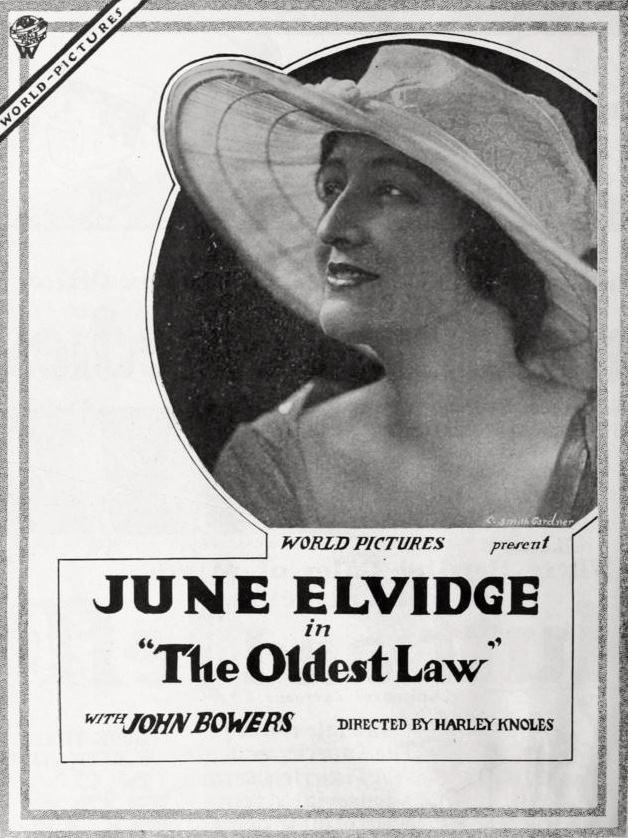
In the annals of silent cinema, certain films emerge not merely as historical artifacts but as resonant echoes of human experience, their narratives transcending the limitations of their medium to speak to universal truths. The Oldest Law, a 1920 production, stands as one such testament, weaving a compelling tapestry of resilience, chance, and the relentless currents of societal expectation. Penned by Virginia Tyler Hudson and Romena Rue, this cinematic endeavor, starring the luminous Eloise Clement, captures the precariousness of life for women navigating the early 20th-century urban landscape, a world both brimming with opportunity and fraught with peril. It's a journey from pastoral innocence to urban disillusionment, punctuated by moments of desperate defiance and unexpected salvation, all delivered with the nuanced emotionality characteristic of the era's finest performers.
The film introduces us to Jennie Cox, a young woman whose life is irrevocably altered by the sudden death of her father, a Maine trapper. This initial tragedy is not merely a plot device but a profound narrative catalyst, stripping Jennie of her familial anchor and forcing her into an unfamiliar world. The bucolic tranquility of her former life is starkly contrasted with the relentless churn of New York City, a metropolis that promises anonymity and opportunity in equal measure. Her migration is less a choice than a necessity, a desperate bid for survival in an economic reality that offered few safety nets. This abrupt transition immediately establishes a central theme: the brutal indifference of fate and the individual's struggle to carve out a new existence from the ashes of the old. Clement's portrayal of Jennie's initial disorientation and burgeoning resolve is remarkably understated, a masterclass in conveying inner turmoil through subtle gesture and expression.
Upon her arrival in the sprawling city, Jennie finds a fleeting semblance of stability through the kindness of Professor Rolfe, a close friend whose benevolence secures her a typing position. Rolfe represents a paternalistic, albeit temporary, buffer against the harsh realities awaiting her. His intervention is a lifeline, offering a brief respite from the relentless economic pressures. However, the film quickly dismantles this fragile support system. A jealous co-worker's insidious schemes orchestrate Jennie's dismissal, simultaneously with Professor Rolfe's untimely demise. This dual blow plunges Jennie back into an abyss of isolation and financial destitution, amplifying her vulnerability. The narrative here underscores the capricious nature of fortune, demonstrating how quickly even the most well-intentioned support can vanish, leaving one utterly exposed to the vagaries of circumstance. It’s a stark reminder of the social precariousness faced by unattached women in that period.
Facing utter destitution, with a mere three dollars to her name, Jennie makes a decision that is both desperate and profoundly defiant: she resolves to spend her last remaining funds on a luxurious meal at the elegant Claridge. This act, seemingly reckless, is in fact a powerful assertion of dignity in the face of despair, a refusal to succumb quietly to her circumstances. It is at this pivotal juncture that fate, or perhaps the 'oldest law' of human connection, intervenes. She encounters Billy West, a wealthy man embroiled in the complexities of a divorce. Their meeting is serendipitous, a collision of worlds that irrevocably alters Jennie's trajectory. Billy's subsequent offer of employment as his housekeeper, while seemingly pragmatic, hints at the subtle undercurrents of attraction and mutual need that will define their evolving relationship. The scene at the Claridge is a masterful stroke of storytelling, transforming a moment of impending collapse into the genesis of a new, albeit uncertain, beginning.
As Jennie settles into her role in Billy West's opulent yet emotionally turbulent household, she quickly discerns the underlying currents of his life: an avid, almost compulsive, gambler. Charles W. Charles portrays Billy with a blend of charm and recklessness, a man accustomed to privilege but also to the thrill of risk. Initially, Billy's gambling seems a moderate indulgence, a gentleman's vice. Yet, the film subtly builds the tension, portraying the insidious nature of addiction and its potential for catastrophic consequences. This aspect of Billy's character adds another layer of instability to Jennie's already precarious existence, reminding her that even in apparent security, the ground beneath can shift without warning. The narrative doesn't moralize excessively but rather presents the gambling as an inherent flaw, a ticking time bomb within their newfound arrangement.
The film's central conflict escalates dramatically when Billy's "moderate" losses transmute into a staggering $12,000 debt to the unscrupulous Henry Walker, played with suitable menace by Frank Norcross. This substantial sum, especially in the economic context of the early 20th century, represents not merely a setback but a potential ruin for Billy, and by extension, for Jennie whose fragile stability is now once again threatened. The gravity of this debt forces a reckoning, pushing Billy to the brink and exposing the vulnerability that lies beneath his veneer of wealth and nonchalance. The crisis is expertly crafted to highlight the destructive power of unchecked indulgence, transforming a personal failing into a shared predicament that demands immediate and decisive action. It’s a clear demonstration of how financial peril can quickly unravel even the most established lives.
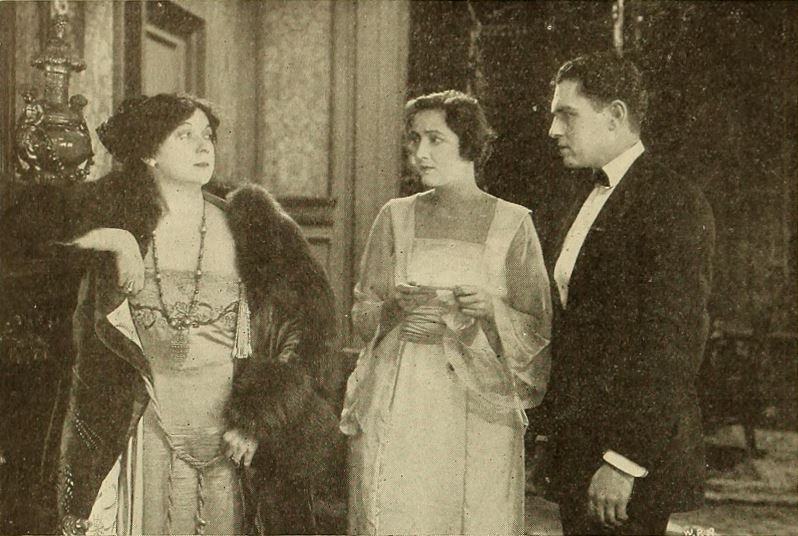
In a surprising and profoundly impactful turn, both Jennie and Billy's estranged wife, Cora (June Elvidge), rally to his rescue. This unexpected alliance of women, one an employee and the other an ex-wife, to salvage a man from his self-inflicted predicament, offers a fascinating commentary on female agency and solidarity. Cora's decisive action, providing the substantial sum needed, is not born of residual affection but perhaps a sense of responsibility or a desire to maintain a semblance of order amidst chaos. Jennie's role, though not financial, is one of steadfast support and quiet strength, demonstrating her loyalty and growing emotional investment. The scene underscores a powerful dynamic: while men like Billy may falter under pressure, the women in their lives often possess the practical fortitude to navigate and resolve crises. It's a subtle but potent subversion of traditional gender roles for its time.
The resolution of the debt crisis serves as the catalyst for the film's poignant climax. After Cora hands over the money and departs, leaving an air of unspoken finality, Billy turns to Jennie with a proposal of marriage. This moment, delivered without dialogue, is imbued with profound emotional weight. It is not a declaration of passionate, idealized love, but rather a realization born from shared adversity, a recognition of Jennie's unwavering loyalty and intrinsic worth. For Jennie, it represents the ultimate culmination of her journey from destitution to security, a surprising twist of fate that offers a stable future where none seemed possible. The proposal signifies more than just a romantic union; it's a testament to the forging of a bond under pressure, a partnership built on mutual respect and the quiet understanding gleaned from navigating life's unpredictable currents together. It’s the “oldest law” of companionship and survival manifesting.
Eloise Clement's portrayal of Jennie Cox is undoubtedly the beating heart of The Oldest Law. Without the luxury of spoken dialogue, Clement masterfully conveys a spectrum of emotions – from grief and desperation to quiet determination and burgeoning affection – through subtle facial expressions, posture, and gesture. Her eyes, often downcast in sorrow or bright with resilience, become the windows to Jennie's complex inner world. She embodies the 'new woman' of the era, forced by circumstance into independence, yet retaining a fundamental dignity and moral compass. Clement’s performance elevates Jennie beyond a mere damsel in distress, crafting a character who actively shapes her destiny, even when seemingly at the mercy of others. Her ability to command the screen with such understated power is a testament to her skill and the expressive potential of silent acting, making her a compelling figure for audiences then and now.
Thematic resonance pulses throughout The Oldest Law, exploring not just survival but the very essence of human connection forged in the crucible of adversity. The titular 'oldest law' can be interpreted in multiple ways: the primal instinct for self-preservation, the unspoken rules of societal interaction, or perhaps the fundamental human need for companionship and belonging. The film deftly navigates class distinctions, showcasing the stark disparities between Jennie's initial poverty and Billy's inherited wealth, and how these boundaries can blur under the pressure of shared crisis. Gender roles are subtly challenged, with women demonstrating significant agency and practical wisdom in contrast to male impulsiveness. It's a narrative that questions the role of pure chance versus individual will, suggesting that while fate may deal the cards, one's character ultimately determines the hand played. This rich tapestry of ideas positions the film as more than a simple melodrama; it's a thoughtful inquiry into the human condition.
From a cinematic perspective, The Oldest Law, while perhaps not groundbreaking in its technical innovation, is a solid example of early 20th-century narrative filmmaking. The direction, though often uncredited or attributed to the writers of the period, efficiently guides the viewer through Jennie's emotional arc. The use of intertitles is judicious, allowing Clement's performance to carry the bulk of the storytelling. The film's pacing, typical of the era, builds suspense and emotional intensity through carefully constructed scenes rather than rapid-fire editing. In its focus on a woman's journey through societal challenges, it shares thematic kinship with films like The Dancing Girl (1915), which also explores a woman's moral choices and societal standing, or even Mary Lawson's Secret (1917), where a protagonist navigates complex personal circumstances with a hidden past. These comparisons highlight a prevailing interest in female-centric narratives during this formative period of cinema.
The film also serves as a fascinating societal mirror, reflecting the anxieties and aspirations of post-WWI America. The burgeoning independence of women, spurred by their increased roles in the workforce during the war, is implicitly explored through Jennie's self-reliance and her journey towards economic and personal autonomy. The narrative touches upon the precariousness of the American Dream for those without inherent privilege, illustrating how quickly one can fall from grace. The moral implications of gambling, a pervasive concern of the time, are also woven into the fabric of the story, serving as both a plot driver and a cautionary tale. While not as overtly political as some contemporary films, its depiction of social mobility and the struggle for stability offers a window into the era's broader cultural dialogue, perhaps akin to the thematic undercurrents found in a film like Udenfor loven (Outside the Law), which, despite its Danish origin, also tackles individuals operating on the fringes of societal acceptance.
Ultimately, The Oldest Law endures not just as a relic of a bygone cinematic era, but as a compelling narrative that continues to resonate. Its exploration of human resilience, the unpredictable nature of fate, and the subtle ways in which individuals forge connections amidst chaos remains profoundly relevant. The film, through its economical yet potent storytelling and the compelling performance of Eloise Clement, reminds us that the fundamental struggles and triumphs of the human spirit are timeless. It's a quiet testament to the power of silent film to convey deep emotional truths, inviting contemporary audiences to appreciate the foundational artistry that shaped the medium. For those seeking to understand the roots of cinematic storytelling and the enduring appeal of character-driven drama, this film offers a richly rewarding experience, a true gem from the dawn of moving pictures.
IMDb 6.4
1935
Community
Log in to comment.