DbcultAccessing Vault...
7.8/10
Senior Film Conservator
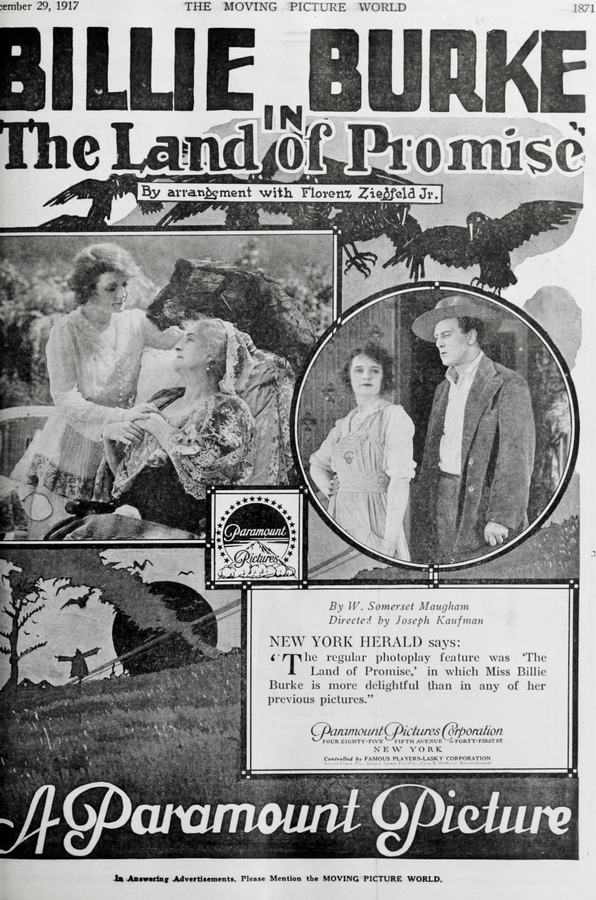
A definitive 7.8/10 rating for a film that redefined the boundaries of cult cinema. The Land of Promise remains a cornerstone of transgressive art.
Stepping back into the nascent years of cinematic storytelling, we encounter The Land of Promise (1917), a silent film that, despite its century-old vintage, retains a surprising resonance in its exploration of human resilience and the relentless grind of societal expectations. Directed by Joseph Kaufman and penned for the screen by Charles E. Whittaker from W. Somerset Maugham's 1913 play, this picture offers far more than a mere historical curiosity; it presents a poignant, often stark, character study of Nora Marsh, brought to life with understated power by the luminous Billie Burke. It’s a narrative that, even in its silent grandeur, speaks volumes about the choices women faced, the harsh realities of economic survival, and the transformative potential of adversity.
The film unfolds against a backdrop of stark contrasts: the suffocating gentility of urban pretense versus the raw, unvarnished truth of the Canadian frontier. Nora Marsh, a woman accustomed to a certain social standing, finds her world crumbling around her. Destitution looms, and with it, the specter of social ostracization. Her options are few, her pride wounded, and her spirit teetering on the brink of despair. This setup is not entirely unique for the era; silent cinema often reveled in melodramatic scenarios of fallen women or those facing difficult choices. However, what elevates The Land of Promise is its commitment to Nora’s psychological journey, eschewing simplistic heroics for a more nuanced portrayal of a woman grappling with her new, brutal reality.
At its core, The Land of Promise is an intense character study of Nora Marsh, a woman whose initial fragility belies a dormant strength waiting to be awakened. Billie Burke's portrayal is a masterclass in silent acting, conveying a spectrum of emotions through subtle gestures, expressive eyes, and carefully modulated body language. We witness Nora’s initial disdain for the rustic, unrefined existence on her brother-in-law's farm, a stark contrast to the comfortable, if ultimately hollow, life she once knew. Her arrival in the Canadian Prairies is less an embrace of opportunity and more a surrender to necessity. The film doesn't romanticize her plight; instead, it lays bare the sheer physical and emotional toll of her new environment.
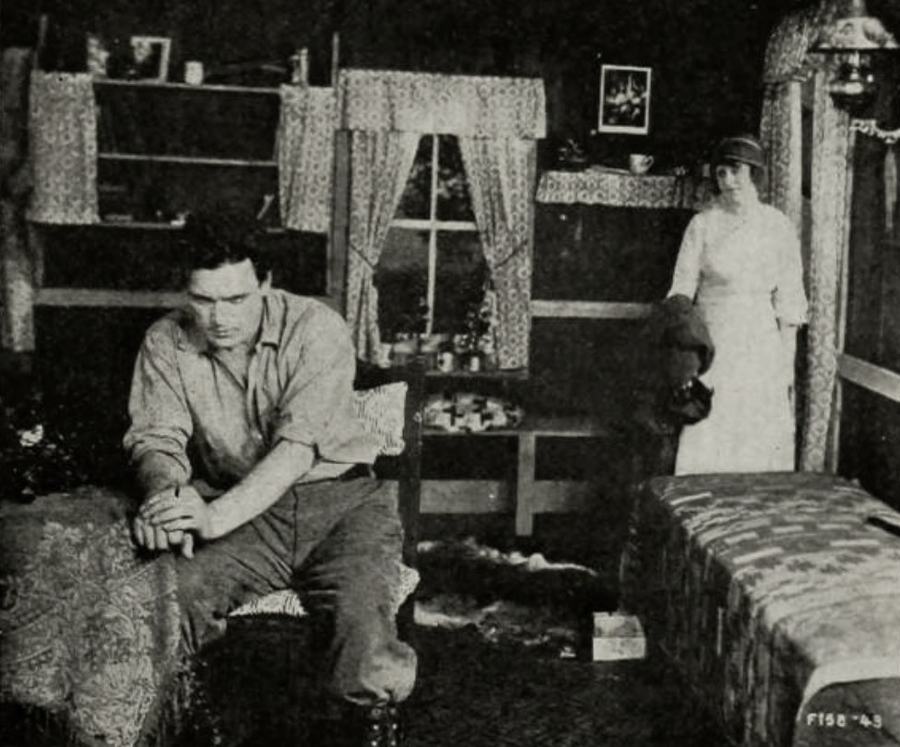
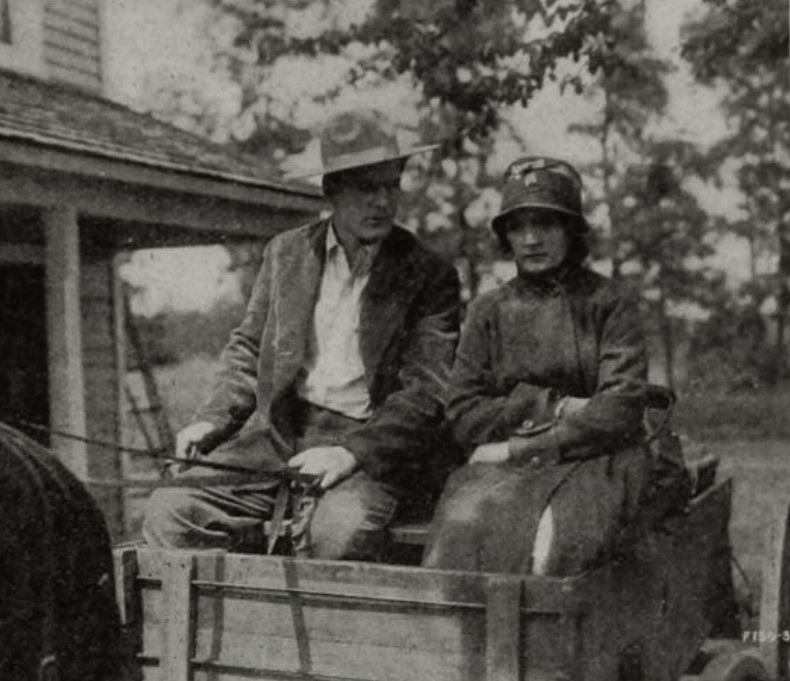
The pivotal relationship, and indeed the central conflict, arises from her marriage of convenience to Frank Yeardley (Thomas Meighan), a rugged, self-made farmer. This union is not born of love or even affection, but of a pragmatic agreement: Nora needs security, and Frank needs a wife to help run his homestead. Their dynamic is initially fraught with tension, a clash of sensibilities and expectations. Nora, still clinging to her former gentility, views Frank as crude and uncultured, while Frank sees her as delicate and perhaps a little useless for the harsh demands of farm life. This is where the film finds its dramatic richness, exploring how two vastly different individuals, bound by circumstance, slowly begin to understand, and perhaps even respect, one another.
The narrative’s strength lies in its refusal to offer easy answers or quick resolutions. Nora's transformation is gradual, painful, and entirely earned. She doesn't magically adapt to farm life overnight; rather, she struggles, falters, and occasionally rails against her fate. This authenticity in her struggle is what makes her journey so compelling. It's a testament to the script by Charles E. Whittaker and Maugham's original vision that Nora’s internal world is so vividly rendered, even without spoken dialogue. One might draw parallels to other silent films exploring female agency and societal constraints, such as A Daughter of the Sea, which also delves into a woman finding her footing outside conventional norms, or even The Morals of Hilda, contemplating the challenges faced by women navigating difficult social landscapes. However, The Land of Promise distinguishes itself with a raw, almost verité-like depiction of rural hardship.
The performances in The Land of Promise are truly the backbone of its enduring appeal. Billie Burke, perhaps best known to modern audiences as Glinda the Good Witch, demonstrates a dramatic range here that is both surprising and deeply moving. Her Nora Marsh is not a caricature; she is a complex individual, initially proud and somewhat petulant, but ultimately capable of immense strength and self-discovery. Burke masterfully uses her eyes – wide with despair, narrowed with defiance, eventually softening with understanding – to convey Nora’s evolving emotional landscape. Her physical comedy, often employed in later roles, is entirely absent here, replaced by a nuanced portrayal of a woman stripped bare by circumstance.
Thomas Meighan, as Frank Yeardley, provides the perfect foil. His rugged masculinity and stoic demeanor initially paint him as an almost antagonist figure, yet Meighan imbues Frank with a quiet dignity and a burgeoning tenderness that gradually emerges. He is not cruel, merely pragmatic and unaccustomed to the delicate sensibilities of a city woman. The chemistry between Burke and Meighan, though silent, is palpable, charting the difficult, often contentious path from mutual resentment to a grudging respect, and eventually, a deeper, more profound connection. Their interactions are a dance of wills, expressed through clipped intertitles, longing glances, and the subtle shifts in their physical proximity.
The supporting cast, including Helen Tracy and Walter McEwen, contribute effectively to the film’s atmosphere, painting a vivid picture of the small, close-knit, and often judgmental community. Their reactions to Nora, a perceived outsider, reinforce the challenges she faces in integrating into this new world. The film, through these performances, manages to convey the claustrophobia of societal expectations and the liberating, albeit harsh, freedom of self-reliance. It's a testament to the skill of these early actors that they could articulate such intricate emotional arcs without the benefit of spoken dialogue, relying solely on expression, gesture, and the rhythm of the cinematic narrative. This focus on character-driven drama, where the internal struggles are paramount, sets it apart from many of its contemporaries, which often relied more heavily on external action or overt melodrama.

Joseph Kaufman's direction, while perhaps not as stylistically groundbreaking as some of his contemporaries, is effective and serves the narrative with a clear, uncluttered vision. The cinematography, though limited by the technology of the era, manages to capture both the stark beauty and the unforgiving vastness of the Canadian Prairies. The wide shots of the landscape emphasize Nora’s isolation and the daunting scale of her new life, while tighter close-ups allow the audience to intimately connect with the characters' emotional states. The use of intertitles is judicious, providing essential dialogue and narrative exposition without overwhelming the visual storytelling. This balance is crucial in silent film, where too many intertitles can halt the flow, and too few can leave the audience adrift.
The pacing of The Land of Promise feels deliberate, allowing Nora's transformation to unfold organically. There are no sudden, unbelievable shifts in character; instead, we see her chipping away at her own prejudices and vulnerabilities, just as the land itself is slowly tamed through arduous labor. The editing supports this gradual unveiling, allowing scenes to breathe and emotions to register. In an era where filmmaking was still finding its language, Kaufman's approach here feels remarkably modern in its psychological realism. It avoids the theatricality that often plagued early adaptations of stage plays, instead striving for a more cinematic and immersive experience. While not a spectacle in the vein of, say, All for the Movies: Universal City, California, the Wonder City of the World, which was more about the grandeur of the industry itself, The Land of Promise focuses its visual power on the human element, making the interior landscape as compelling as the exterior one.
W. Somerset Maugham’s original play was, at its heart, a social commentary, and the film adaptation carries this torch with remarkable clarity. The Land of Promise delves into themes of class distinction, the rigid societal expectations placed upon women, and the myth versus reality of seeking a new life on the frontier. Nora’s initial struggles are deeply rooted in her inability to shed her preconceived notions of what constitutes a 'proper' life. She represents the clash between old-world gentility and new-world pragmatism, a common trope in early 20th-century literature and film, but here explored with particular depth.
The film critiques the superficiality of social standing, demonstrating how quickly such distinctions dissolve in the face of genuine hardship. Nora's journey is one of shedding these artificial layers, finding true value not in her lineage or education, but in her capacity for work, resilience, and genuine human connection. This narrative echoes sentiments found in other films of the period that explored social mobility or the challenges of adapting to new environments, such as A Pardoned Lifer, which also touched upon an individual's struggle to redefine themselves outside of past societal roles. However, in The Land of Promise, the focus remains squarely on Nora’s internal battle against her own pride and learned helplessness.
Furthermore, the film offers a powerful statement on gender roles. Nora is initially dependent, but through her trials, she discovers an agency she never knew she possessed. Her eventual partnership with Frank is not one of subjugation, but of mutual respect, forged in shared labor and understanding. It suggests that true strength for women, even in an era of restrictive social norms, could be found in self-sufficiency and the courage to challenge one's own limitations. This theme, while subtly conveyed, adds significant weight to the film's narrative, making it more than just a simple melodrama.
Adapting a W. Somerset Maugham play to the silent screen presents unique challenges. Maugham's strength often lay in his incisive dialogue, his psychological acuity, and his nuanced exploration of character through internal monologue. Charles E. Whittaker's screenplay for The Land of Promise, while necessarily stripping away the spoken word, remarkably retains much of the play's thematic depth and character integrity. The core conflict – Nora’s struggle with pride, poverty, and her eventual, hard-won acceptance of her new life – is preserved with admirable fidelity.
The cinematic language of 1917, with its reliance on visual storytelling, gestures, and intertitles, proves surprisingly adept at conveying Maugham's intricate character dynamics. The film understands that the drama of Nora’s journey is not just in external events, but in her internal shifts, her moments of despair, defiance, and eventual resignation leading to a quiet strength. While no silent adaptation can fully replicate the wit and verbal dexterity of a Maugham play, The Land of Promise captures its spirit, particularly its unsentimental view of human nature and its keen observation of social class. It's a testament to the power of visual storytelling that the emotional landscape of Maugham’s narrative translates so effectively to the silent medium, allowing the audience to infer much from the actors' expressions and the carefully constructed mise-en-scène. One could argue it is a more successful translation of literary material than many of its contemporaries, demonstrating a thoughtful approach to adapting complex narratives for a nascent art form.
Today, The Land of Promise stands as a compelling artifact of early American cinema, offering a window into the thematic concerns and artistic sensibilities of its time. It reminds us of the power of silent film to convey profound human drama through purely visual means, a skill often underestimated in our sound-dominated era. The film's enduring relevance lies in its universal themes: the struggle for self-definition, the clash between idealism and harsh reality, and the transformative power of adversity. Nora Marsh’s journey, from a life of perceived entitlement to one of arduous labor and self-reliance, resonates with anyone who has faced unexpected challenges and emerged stronger for them.
For enthusiasts of silent cinema, or indeed anyone interested in the evolution of storytelling, The Land of Promise is a valuable watch. It showcases Billie Burke’s remarkable range beyond her more famous whimsical roles and offers a thoughtful, unvarnished look at a woman’s journey of self-discovery against a challenging backdrop. It's a film that, despite its age, continues to speak to the human condition with an eloquence that transcends the absence of sound, leaving a lasting impression long after the final frame.
IMDb —
1919
Community
Log in to comment.